Songkran

ソンクラーン(タイの水かけ祭り)を英語で:読む・聞く・話す・遊ぶ

やさしい英語(CEFR A2)の読み物に音声つき。会話・単語カード・クイズ8問・ゲームで、ソンクラーン(タイの水かけ祭り)の英語をまるごと。

🔊Read in Englishソンクラーン(タイの水かけ祭り)を英語で読もう(CEFR A2・音声つき)

ソンクラーン(タイの水かけ祭り)を、やさしい英語で紹介する読み物です。▶で英文をタイトルから通して聞けます(アメリカ英語)。「和訳」ボタンで日本語訳の表示・非表示を切りかえられます。下線の語は下の単語カードにあります。

A Splash for the New Year

CEFR A2
0:00
278 words

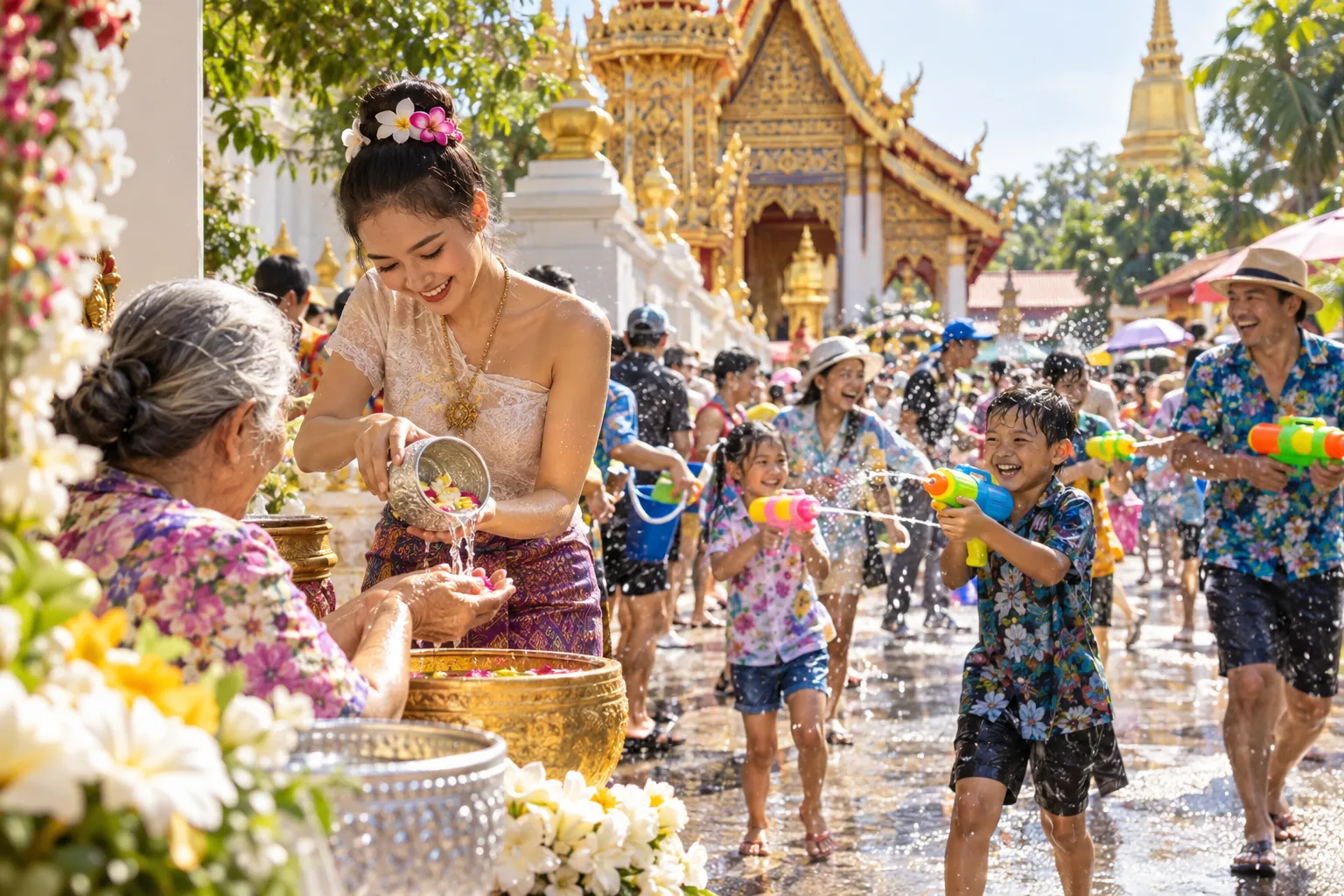
In mid-April, Bangkok is at its hottest. The average high is almost 36 degrees. Then, for three days, the whole city turns into a giant water fight. People fill the streets with buckets, hoses, and colorful water guns. Even strangers laugh and splash each other. This is Songkran, the traditional Thai New Year.

4月のなかば、バンコクは1年でいちばん暑くなります。平均の最高気温は36度近くです。そして3日間、町全体が巨大な水かけ合戦の場に変わります。人々はバケツやホース、色とりどりの水鉄砲を持って通りを埋めつくします。知らない人どうしでさえ、笑いながら水をかけ合います。これがタイの伝統的なお正月、ソンクラーンです。

The name Songkran comes from an old Indian word. It means moving or passing. At this time of year, the sun moves into a new star sign. For a long time, this was New Year's Day in Thailand. Today, Thailand uses January 1, but Songkran is still its biggest holiday. It runs from April 13 to 15.

ソンクラーンという名前は、古いインドの言葉から来ています。「移ること」「通り過ぎること」という意味です。1年のこの時期、太陽は新しい星座に移ります。長いあいだ、これがタイの元日でした。今のタイは1月1日を元日にしていますが、ソンクラーンは今でもいちばん大きな休みです。祭りは4月13日から15日まで続きます。

But the water fights are only one part of the story. In the old days, people poured water very gently. Young people poured sweet-smelling water over the hands of their parents and grandparents. Then the elders gave them a blessing for the new year. Families also visit temples and wash Buddha statues with flower water.

でも、水かけ合戦はこの話のほんの一部です。昔は、人々はとてもやさしく水を注いでいました。若い人たちは、両親や祖父母の手に、よい香りの水を注ぎました。すると年長者は、新しい年のための祝福を返してくれました。家族はお寺にも行き、花の香りの水で仏像を清めます。

There is also a strange old story behind the festival. A god lost a riddle contest to a clever boy, and he lost his head! The head was very dangerous. If it touched the ground, the world would catch fire. So his seven daughters take turns and carry it every year.

この祭りには、不思議な昔話もあります。ある神さまがかしこい少年になぞなぞ勝負で負け、首を失ってしまったのです!その首はとても危険でした。もし地面にふれたら、世界が燃えてしまうのです。そこで神さまの7人の娘が、毎年交代でその首を運んでいます。

Thailand is not the only country with a water festival. Myanmar, Laos, and Cambodia also welcome the new year in mid-April. In Japan, people pour sweet tea over a small Buddha statue on April 8. In many places, water means a fresh start. So if you get wet in Bangkok, just smile. Someone is wishing you good luck for the new year!

水かけ祭りがあるのはタイだけではありません。ミャンマー、ラオス、カンボジアも、4月なかばに新しい年を迎えます。日本では4月8日に、小さな仏像に甘茶をかけます。多くの場所で、水は新しい出発を意味するのです。だから、もしバンコクでぬれても、ただほほえんでください。誰かがあなたの新しい年の幸運を祈ってくれているのですから!

💬Dialogue英語の会話でソンクラーン(タイの水かけ祭り)

🎬 日本人学生のハルトが4月にチェンマイを訪れています。タイ人の友だちプロイが、ソンクラーンについて説明します。

0:00
Haruto

Ploy, why is everyone carrying water guns today?

プロイ、なんで今日はみんな水鉄砲を持っているの?

Ploy

It's Songkran, Haruto! It's our traditional New Year.

ソンクラーンだからよ、ハルト!私たちの伝統的なお正月なの。

Haruto

New Year in April? I thought Thailand used January 1.

4月にお正月?タイは1月1日だと思ってた。

Ploy

We do. But Songkran is still the biggest holiday of the year.

そうよ。でもソンクラーンは今でも1年でいちばん大きな休みなの。

Haruto

So I'll get wet if I walk to the market?

じゃあ市場まで歩いたら、ぬれちゃうってこと?

Ploy

Definitely! But that's a good thing. The water washes away bad luck.

間違いなくね!でもそれはいいことなのよ。水が悪運を洗い流してくれるの。

Haruto

That sounds fun. Can I splash anyone?

楽しそう。誰に水をかけてもいいの?

Ploy

Almost anyone. But please don't splash the monks.

ほとんど誰でもね。でもお坊さんには水をかけないでね。

Haruto

Got it. What did you do this morning?

わかった。今朝は何をしたの?

Ploy

I poured flower water over my grandmother's hands. Then she gave me a blessing.

おばあちゃんの手に花の香りの水を注いだの。そしたら祝福の言葉をくれたわ。

Haruto

That's beautiful. In Japan, we pour sweet tea on a little Buddha statue in April.

すてきだね。日本では4月に、小さな仏像に甘茶をかけるんだよ。

Ploy

Really? Then you're ready for Songkran. Here, take this water gun!

本当?じゃあソンクラーンの準備はできてるね。はい、この水鉄砲を持って!

🃏Word Cardsソンクラーン(タイの水かけ祭り)の英単語カード(12語)

カードをタップすると裏返って、意味と例文が出ます。

splash動詞・名詞
(水を)はねかける、ばしゃっとかけるThe kids splashed water on me.子どもたちが私に水をかけた。💡 水がはねる音から生まれた語。splash 人 で「人に水をかける」。
bucket名詞
バケツHe carried a bucket of water.彼はバケツ1杯の水を運んだ。💡 a bucket of ~で「バケツ1杯の~」。
stranger名詞
知らない人Don't talk to strangers.知らない人と話してはいけません。💡 strange(見なれない)+ er(人)。「その土地に不慣れな人」の意味もある。
traditional形容詞
伝統的なSongkran is a traditional festival.ソンクラーンは伝統的な祭りだ。💡 名詞は tradition(伝統)。
gently副詞
やさしく、そっとShe gently poured water on his hands.彼女は彼の手にそっと水を注いだ。💡 gentle(おだやかな)の副詞形。本文では very gently =とてもそっと。
pour動詞
注ぐPour the tea into the cup.お茶をカップに注いで。💡 過去形は poured。発音は「ポー」。splash(ばしゃっと)とのちがいに注意。
elder名詞
年長者、お年寄りWe show respect to our elders.私たちは年長者を敬う。💡 old の比較級の一つ。本文では parents and grandparents のこと。
blessing名詞
祝福、ありがたいお祈りMy grandmother gave me a blessing.祖母が私に祝福の言葉をくれた。💡 動詞は bless。くしゃみをした人に Bless you! と言うのも同じ語。
temple名詞
寺、寺院We visited a temple in the morning.私たちは朝、お寺を訪れた。💡 仏教の寺も古代ギリシャの神殿も temple。神社は shrine。
statue名詞
像There is a Buddha statue in the temple.その寺には仏像がある。💡 the Statue of Liberty(自由の女神像)でおなじみ。
riddle名詞
なぞなぞCan you answer this riddle?このなぞなぞに答えられる?💡 quiz より「ひねった問題」のイメージ。riddle contest =なぞなぞ勝負。
take turns熟語
交代でするWe take turns cleaning the room.私たちは交代で部屋をそうじする。💡 turn は「順番」。It's your turn.(君の番だよ)も覚えておこう。

✅Quizソンクラーン(タイの水かけ祭り)の英語クイズ(8問)

上の英文を読んでから答えてみよう。答えを選ぶとすぐに解説が出ます。全問正解でスタンプが金色に!

Q1. What is the reading mainly about?

この文章は主に何について書かれていますか。

文章全体が、ソンクラーンの水かけ・名前の意味・伝統・伝説・ほかの国の祭りについて書かれています。お寺や暑さは一部に出てくるだけです。

Q2. When is Songkran?

ソンクラーンはいつですか。

第2段落の最後に It runs from April 13 to 15 とあります。1月1日は今のタイの元日、4月8日は日本の花まつりです。

Q3. What does the word Songkran mean?

ソンクラーンという言葉はどういう意味ですか。

第2段落に It means moving or passing とあります。太陽が新しい星座へ移ることを指しています。

Q4. In the old days, what did young people do?

昔、若い人たちは何をしましたか。

第3段落に、若い人が両親や祖父母の手に香りのよい水を注いだとあります。首を運んだのは7人の娘です。

Q5. In paragraph 3, the word "gently" is closest in meaning to ...

第3段落の gently に最も近い意味はどれですか。

直後に、年長者の手に水を注ぐ場面が続きます。バケツで浴びせる水かけ合戦と対比されているので「そっと、やさしく」の意味です。

Q6. Which sentence is true about the reading?

本文の内容に合うものはどれですか。

第3段落に Families also visit temples とあります。ミャンマーなどにも祭りがあり、元日は1月1日、勝ったのは少年です。

Q7. Why are people not angry when strangers splash them?

知らない人に水をかけられても人々が怒らないのはなぜだと考えられますか。

第5段落の最後に、水は新しい出発を意味し、ぬれたら誰かが幸運を祈ってくれているとあります。ほかの選択肢は本文に根拠がありません。

Q8. In the dialogue, what did Ploy do in the morning?

会話で、プロイは朝に何をしましたか。

プロイは I poured flower water over my grandmother's hands と言っています。お坊さんには水をかけないように、と話しています。

🎮Gamesソンクラーン(タイの水かけ祭り)の英語ゲーム

タブを切りかえて遊べます。授業ではプロジェクターに映して、クラス対抗戦にしても盛り上がります。

📖Read Moreもっと読む:Tradition, Tourism and the Seven Dangerous Days

少し難しめ(B1〜B2)の英文で、ソンクラーン(タイの水かけ祭り)を違う角度から。

Tradition, Tourism and the Seven Dangerous Days

B1–B2
0:00
200 words

Songkran has become one of Thailand's most powerful tourist attractions. Every April, visitors from around the world crowd famous streets such as Khao San Road and Silom Road. In 2023, UNESCO added the festival to its list of the Intangible Cultural Heritage of Humanity, describing water pouring as a symbol of cleansing, respect and good fortune. The following year, the celebrations were stretched across most of April.

ソンクラーンは、タイで最も強い力を持つ観光の目玉の一つになりました。毎年4月、世界中からの観光客が、カオサン通りやシーロム通りといった有名な通りに押し寄せます。2023年、ユネスコはこの祭りを人類の無形文化遺産の一覧に加え、水を注ぐことを清め・敬い・幸運の象徴だと説明しました。翌年には、祝いの期間が4月の大部分にまで広げられました。

Yet the festival's popularity raises difficult questions. As the street parties grow louder, quieter customs, such as pouring water on elders' hands, receive less attention from visitors. Safety is another concern. Because so many people drive home and some drink alcohol, the holiday is known locally as the seven dangerous days. From 2009 to 2013, about 52 people died on the roads each day during Songkran, compared with about 27 on an average day.

しかし、祭りの人気は難しい問いも投げかけています。通りのパーティーがにぎやかになるほど、年長者の手に水を注ぐといった静かな習慣は、観光客から注目されにくくなります。安全も、もう一つの心配ごとです。とても多くの人が車で帰省し、中には酒を飲む人もいるため、この休みは地元で「危険な7日間」と呼ばれています。2009〜2013年の平均で、交通事故の死者はふだんの1日約27人に対し、ソンクラーンの期間には1日約52人にのぼりました。

The challenge for Thailand is to keep the festival joyful and welcoming without losing its meaning. Bangkok has introduced stricter rules for some water play zones, while families and temples continue to pass on the older rituals. In the end, Songkran's future may depend on whether visitors understand that behind every splash lies a wish for a better year.

タイにとっての課題は、祭りの意味を失わずに、楽しく開かれたものであり続けることです。バンコクは一部の水かけエリアにより厳しいルールを導入し、家族やお寺は古い儀式を受け継ぎ続けています。結局のところ、ソンクラーンの未来は、すべての水しぶきの裏に「より良い年」への願いがあることを、訪れる人が理解するかどうかにかかっているのかもしれません。

👋Useful Phrasesソンクラーン(タイの水かけ祭り)に使える英語フレーズ

Happy Songkran!ハッピー・ソンクラーン!英語でのいちばん簡単なあいさつ。タイの人にもよく通じる。
Happy Thai New Year!タイのお正月おめでとう!外国の友だちに説明をかねて言うときに。
Sawasdee Pi Mai!サワッディー・ピー・マイ(新年おめでとう)タイ語のあいさつ。ピー・マイは「新しい年」。
Don't worry, it's just water!大丈夫、ただの水だよ!水をかけたあとに笑って言う一言。
May the new year bring you good luck.新しい年があなたに幸運をもたらしますように。年長者の手に水を注いだあと、祝福の言葉として。

🗣️ 話し合ってみよう(Discussion)

  1. Would you like to join Songkran in Thailand? Why or why not?

    タイのソンクラーンに参加してみたいですか。その理由は。
  2. How do you show respect to older people in your family?

    あなたの家族では、年上の人にどのように敬意を表しますか。
  3. Why do you think water is used to welcome the new year in many countries?

    多くの国で新年を迎えるのに水が使われるのはなぜだと思いますか。
  4. Is it good or bad when a traditional festival becomes a big tourist event?

    伝統的な祭りが大きな観光イベントになるのは、良いことでしょうか、悪いことでしょうか。
  5. What rules would you make to keep a water festival safe and fun?

    水かけ祭りを安全で楽しいものにするために、どんなルールを作りますか。
💦
Songkran
スタンプ帳にソンクラーン(タイの水かけ祭り)のスタンプを押しました!
クイズで全問正解すると金のスタンプに。世界一周めざして集めよう。 スタンプ帳を見る →

授業アイデアとワークシートを見る →