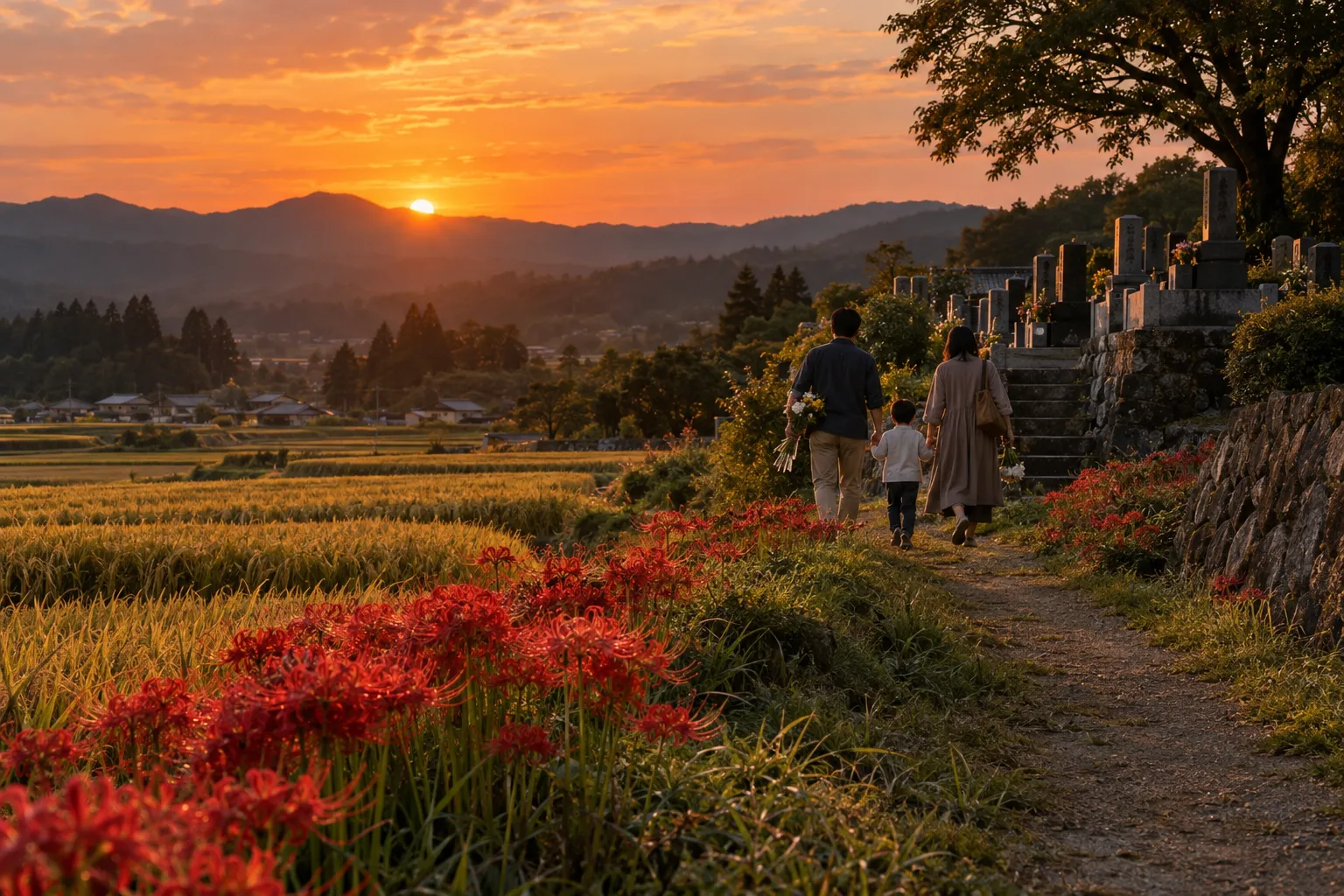
Autumnal Equinox Day
秋分の日の英語の授業アイデアとワークシート
印刷してすぐ使えるワークシート(PDF・Word・解答つき)と、授業の手順書。
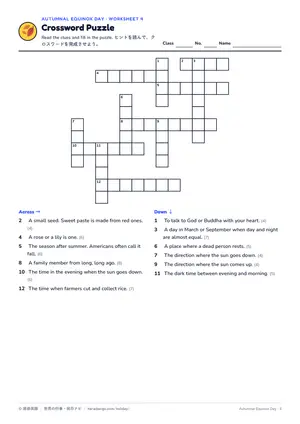
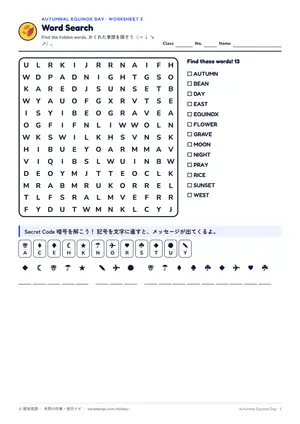
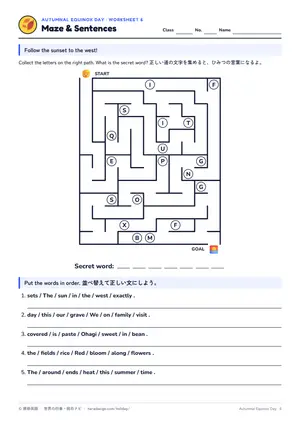
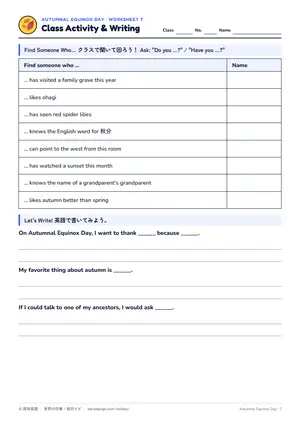
🖨️Worksheetsワークシート(無料・A4)
① 「中身を見る・印刷」で全ページを確認 → ② そのページ上の 🖨️ 印刷する でそのまま印刷できます。A4・無料。
🍎Lesson Ideas秋分の日を使った英語の授業アイデア
昼と夜、どっちが長い?データで確かめよう
🎯 日の出・日の入りの時刻から昼の長さを計算し、英語で結果を説明する。
- 国立天文台の暦計算室などで、秋分の日の地元の日の出・日の入りを調べる。
- 昼と夜の長さを計算し、予想(同じ)と結果をくらべる。
- The day is ___ minutes longer than the night. の形で英語で発表する。
- なぜ昼が長いのか、上の端の定義と光の屈折を日本語で確認する。
詳細版を開く(時間配分・Teacher Talk・板書)
equinox は「等しい夜」という意味だと伝え、「秋分の日、昼と夜の長さは同じ?」と聞いて、Yes / No で手を挙げさせる。予想をワークシートに書かせる。
🗣️ Equinox means equal night. / On the equinox, are day and night the same length? / Raise your hand. Yes or no? / Write your guess on the worksheet.
国立天文台 暦計算室のページで、地元の秋分の日の日の出・日の入りの時刻を調べさせる(端末がない場合は先生の表を配る)。sunrise / sunset の語を確認し、時刻を英語で読む練習をする(The sun rises at five thirty-one.)。
🗣️ Let's find the sunrise and sunset times for our town. / What time does the sun rise? / The sun rises at five thirty-one. Say it with me. / Now find the sunset time.
昼の長さ(日の入り−日の出)と夜の長さ(24時間−昼の長さ)を計算させ、差を出させる。参考に、記事にある2020年の春分の日の東京の例(昼が約12時間8分、夜が約11時間52分で、昼が約16分長い)を示す。予想と結果をくらべさせる。
🗣️ Day length is sunset minus sunrise. / Night length is 24 hours minus the day length. / Which is longer? How many minutes? / Was your guess right?
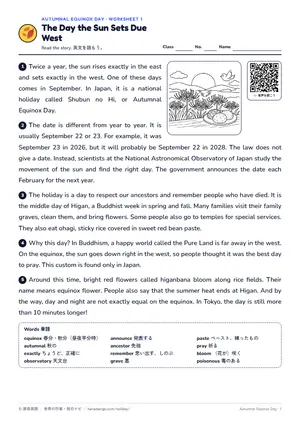
The day is ___ minutes longer than the night. の型を板書し、数人に結果を発表させる。英語ページ第5段落の音声を聞かせ、In Tokyo, the day is still more than 10 minutes longer! の文で答えを確かめる。
🗣️ Tell us your result. The day is ___ minutes longer than the night. / Listen to the last paragraph of the English page. / In Tokyo, the day is more than 10 minutes longer. Same as ours?
なぜ昼が長いのかを日本語で確認する。①日の出・日の入りは太陽の「上の端」が地平線にかかる瞬間と決められている、②空気がレンズのように光を曲げるので、太陽が実際より少し浮き上がって見える(屈折)。太陽と地平線の図で説明して終わる。
🗣️ Why is the day longer? There are two reasons. / One: sunrise starts when the top of the sun appears. / Two: the air bends the sunlight. / So the equinox is not really equal night!
Equinox = equal night ?

予想:Yes / No
sunrise _:_ sunset _:_
day = sunset − sunrise = _ h _ min
night = 24 h − day = _ h _ min

The day is _ minutes longer than the night.
(例:2020年春分・東京 day 約12h08m / night 約11h52m)

なぜ? ① 太陽の「上の端」で日の出・日の入り
       ② 空気が光を曲げる(屈折)
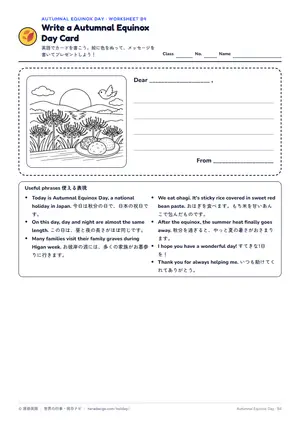
外国人に「お彼岸」を説明しよう
🎯 宗教的な行事を、相手に配慮したやさしい英語で説明する。
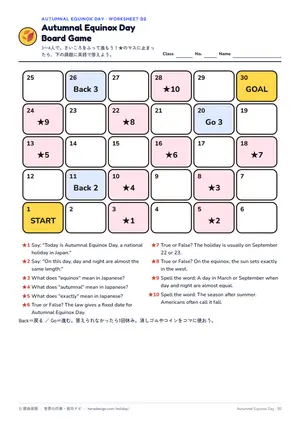
- 会話文を読み、お彼岸の説明に使われている表現(Buddhist week / remember our ancestors)を確認する。
- おはぎ・彼岸花・お墓参りのうち1つを選び、2〜3文で説明を書く。
- ペアで説明し合い、相手から1つ質問を受けて答える。
詳細版を開く(時間配分・Teacher Talk・板書)
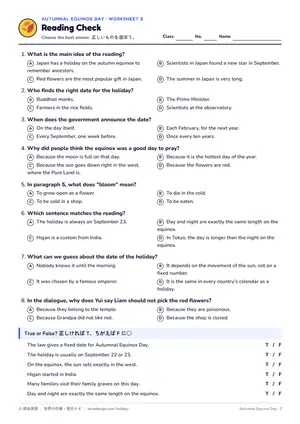
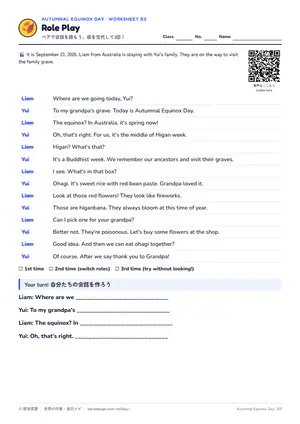
会話の音声を聞かせ、そのあとペアで読ませる。Liam が In Australia, it's spring now! と言う場面で、南半球では季節が逆になることも確認する。お彼岸の説明に使われている表現(a Buddhist week / remember our ancestors / visit their graves)に線を引かせる。
🗣️ Listen to Liam and Yui. Then read it with your partner. / Why does Liam say it's spring now? / Find the words Yui uses to explain Higan. / A Buddhist week. Remember our ancestors. Visit their graves.
おはぎ・彼岸花・お墓参りのうち1つを選ばせ、2〜3文の説明を書かせる。宗教の話は「みんなが信じている」と言い切らず、Many families in Japan ___. / Some people believe ___. のように主語をしぼると、相手の信仰を尊重できることを伝える。彼岸花は毒があるので摘まないことなど、相手の役に立つ情報を1つ入れるよう促す。
🗣️ Choose one: ohagi, higanbana, or visiting graves. / Write two or three sentences. / Say many families or some people, not everyone in Japan. / Add one useful tip. For example, don't pick higanbana. They are poisonous.
ペアで留学生役と説明役に分かれ、説明したあと留学生役が質問を1つする(Why do you eat ohagi? / Do I have to pray?)。説明役は答える。役を交代し、相手を変えてもう1回行う。先生は回りながら、相手を尊重したよい答え方を拾ってメモする。
🗣️ A is a student from abroad. B explains. / A, ask one question after you listen. / Do I have to pray? Good question. How will you answer? / Switch roles. Then find a new partner.
先生がメモしたよい答え方を紹介する(You don't have to pray. You can just stand with us. など)。祝日法の意味は「祖先をうやまい、なくなった人々をしのぶ」で、特定の宗教は指定されていないことを伝え、どんな人にも開かれた説明ができることを確認する。
🗣️ Here is a kind answer I heard. You don't have to pray. You can just stand with us. / By law, this day is for remembering people who have died. / Anyone can join, with any religion or no religion.
Higan = a Buddhist week in spring and fall

ohagi:sticky rice with sweet red bean paste
higanbana:red flowers along rice fields(poisonous!)
graves:Many families visit and clean their family graves.

配慮した言い方
Many families in Japan __.
Some people believe __.
It's a time to remember __.
You don't have to __.
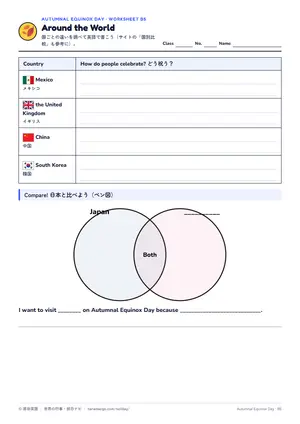
世界の秋分マップ
🎯 メキシコ・イギリス・中国・韓国などの秋分の過ごし方を比べ、天文と文化の関係を英語で議論する。
- 国別比べの表から担当を決め、英語の資料で詳しく調べる。
- 地図に各国の行事を書きこみ、共通点(収穫・祖先・太陽)を探す。
- "Why do so many cultures care about the equinox?" について小グループで議論し、要点を発表する。
詳細版を開く(時間配分・Teacher Talk・板書)
チチェン・イッツァのピラミッドの階段に三角形の影が並び、ヘビが降りてくるように見える写真を見せ、「なぜ古代の人はこの日に合わせて建物を作ったのか」と問う。担当の国・地域を割りふる。
🗣️ Look at this pyramid in Mexico. Do you see the snake of light? / It appears around the equinox. / Why did ancient people build this? / Today, each group will research one place.
国別比べの表を出発点に、英語の資料で担当の行事を詳しく調べさせる(日付・内容・始まり・天文とのつながり)。出典を1つ以上書かせ、観光情報だけでなく公式機関や百科事典を優先するよう指示する。韓国のチュソクは秋分そのものではなく旧暦8月15日であること、中国の農民豊作祭は2018年からであることなど、表の細部の正確さに注意させる。
🗣️ Research four points: date, what people do, origin, and the link to the sun. / Use English sources. Write at least one reference. / Be careful. Chuseok is not on the equinox itself. / It follows the lunar calendar.
各グループの代表が世界地図に付せんを貼り、行事を1分で紹介する。全員で地図を見ながら、共通点(収穫・祖先・太陽)ごとに付せんの色を変えて分類させる。
🗣️ Put your sticky note on the map and explain it in one minute. / Now let's sort them. Harvest, ancestors, or the sun? / Some events fit more than one group. / What patterns do you see?
4〜5人の小グループで "Why do so many cultures care about the equinox?" を議論させる。観点の例(農業の暦として・季節の変わり目の目印・東西という方角の意味)を示す。日本では秋は祖先、春は自然と意味が分けられていることや、お彼岸が日本独自の習わしであることも材料にしてよい。書記は要点を3つにまとめる。
🗣️ Discuss this question: Why do so many cultures care about the equinox? / Think about farming, seasons, and directions. / In Japan, the sun sets due west. Why is that important for Higan? / Write down three main points.
各グループが要点を1つずつ発表する。重なった論点を板書でまとめ、「天文の現象に、それぞれの文化が別の意味をつけてきた」ことを確認する。
🗣️ Each group, share one main point. / Many groups talked about the harvest. / The sky is the same, but each culture gives it a different meaning.
The Equinox around the World

Mexico   Chichen Itza:snake of light on the pyramid
UK       Stonehenge:free entry at sunrise
China    Farmers' Harvest Festival(2018〜)
Korea    Chuseok(旧暦8/15・秋分そのものではない)
USA      the first day of fall(not a holiday)
Japan    秋分の日(ancestors)/春分の日(nature)

分類:harvest / ancestors / the sun
Q: Why do so many cultures care about the equinox?
おはぎの名前クイズ
🎯 季節と花の英語を覚えながら、ぼたもち・おはぎの名前の由来を楽しむ。
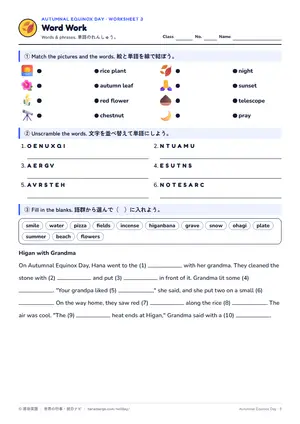
- spring / summer / autumn / winter と、peony(牡丹)・bush clover(萩)の絵カードを見せる。
- 「春のおもちは何の花の名前?」とクイズを出し、カードを合わせる。
- 夜船・北窓の別名も紹介し、季節の英単語を言いながらカードを並べる。
詳細版を開く(時間配分・Teacher Talk・板書)
季節の絵カードを1枚ずつ見せ、spring / summer / autumn / winter を発音させる。おはぎの写真を見せ、「お彼岸に食べるおやつ」と紹介する。
🗣️ What season is this? Spring! / Summer. Autumn. Winter. Say it with me. / Look at this sweet. It's ohagi. / People eat it in spring and autumn.
花の絵カード(peony と bush clover)を見せて名前を発音させる。「春のおもちは何の花の名前?」とクイズを出し、子どもに spring のカードの下に花のカードを置かせる。答えは、春は牡丹(peony)で「ぼたもち」、秋は萩(bush clover)で「おはぎ」と呼んだという説がよく知られていることを伝える。
🗣️ This flower is a peony. This one is bush clover. / Spring rice cake. Which flower? / Yes! Peony. So in spring, it's botamochi. / In autumn, bush clover. So it's ohagi.
夏は「夜船(よふね)」、冬は「北窓(きたまど)」と呼んだともいわれることを紹介する。おはぎはおもちのように「ぺったん」とつかずに作るので「つき知らず」。夜の船はいつ「着いた」かわからない、北の窓からは「月」が見えない、というしゃれだと、絵を見せながらやさしく説明する。最後に4つの名前を季節カードの下に並べ、季節の英語を言いながら確かめる。
🗣️ In summer, people called it night boat. / In winter, they called it north window. / Let's put the names under the seasons. / Spring, botamochi. Summer, night boat. Autumn, ohagi. Winter, north window.
季節カードを指して、子どもに季節の英語を言わせる。「同じおやつなのに名前が4つもある」ことを確認して終わる。
🗣️ Point and say the seasons. / One sweet, four names. Which name do you like?
One sweet, four names!

spring 🌸 → peony(牡丹)→ ぼたもち
summer ☀️ → night boat → 夜船
autumn 🍂 → bush clover(萩)→ おはぎ
winter ⛄ → north window → 北窓

※ つかずに作る =「つき知らず」のしゃれ(といわれる)