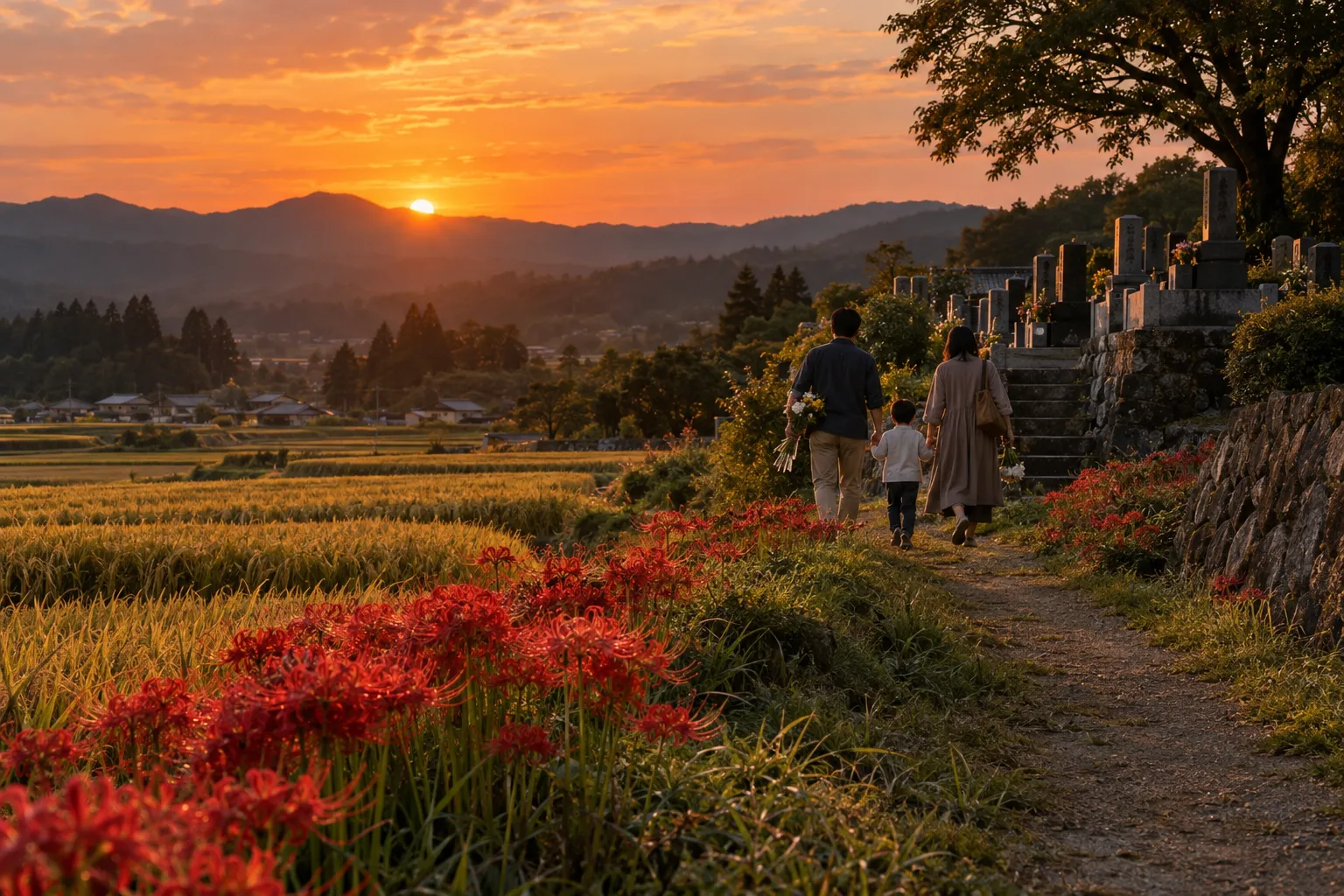
Autumnal Equinox Day

秋分の日を英語で:読む・聞く・話す・遊ぶ

やさしい英語(CEFR A2)の読み物に音声つき。会話・単語カード・クイズ8問・ゲームで、秋分の日の英語をまるごと。

🔊Read in English秋分の日を英語で読もう(CEFR A2・音声つき)

秋分の日を、やさしい英語で紹介する読み物です。▶で英文をタイトルから通して聞けます(アメリカ英語)。「和訳」ボタンで日本語訳の表示・非表示を切りかえられます。下線の語は下の単語カードにあります。

The Day the Sun Sets Due West

CEFR A2
0:00
267 words

Twice a year, the sun rises exactly in the east and sets exactly in the west. One of these days comes in September. In Japan, it is a national holiday called Shubun no Hi, or Autumnal Equinox Day.

1年に2回、太陽はちょうど真東から昇り、真西に沈みます。そのうちの1日は9月にやってきます。日本ではそれが「秋分の日」という国民の祝日です。

The date is different from year to year. It is usually September 22 or 23. For example, it was September 23 in 2026, but it will probably be September 22 in 2028. The law does not give a date. Instead, scientists at the National Astronomical Observatory of Japan study the movement of the sun and find the right day. The government announces the date each February for the next year.

日付は年によって違います。たいてい9月22日か23日です。たとえば2026年は9月23日でしたが、2028年はおそらく9月22日になります。法律には日付が書かれていません。代わりに、国立天文台の科学者たちが太陽の動きを調べて、正しい日を見つけます。政府は毎年2月に、翌年の日付を発表します。

The holiday is a day to respect our ancestors and remember people who have died. It is the middle day of Higan, a Buddhist week in spring and fall. Many families visit their family graves, clean them, and bring flowers. Some people also go to temples for special services. They also eat ohagi, sticky rice covered in sweet red bean paste.

この祝日は、祖先を敬い、亡くなった人々をしのぶ日です。春と秋にある仏教の1週間、お彼岸のまん中の日です。多くの家族がお墓参りに行き、お墓を掃除して花を供えます。お寺の特別な法要に行く人もいます。また、もち米を甘いあんこで包んだ「おはぎ」を食べます。

Why this day? In Buddhism, a happy world called the Pure Land is far away in the west. On the equinox, the sun goes down right in the west, so people thought it was the best day to pray. This custom is found only in Japan.

なぜこの日なのでしょう。仏教では、極楽浄土と呼ばれる幸せな世界が、はるか西にあるとされます。秋分の日には太陽がちょうど西に沈むので、人々は祈るのにいちばんよい日だと考えました。この習わしは日本にしかありません。

Around this time, bright red flowers called higanbana bloom along rice fields. Their name means equinox flower. People also say that the summer heat ends at Higan. And by the way, day and night are not exactly equal on the equinox. In Tokyo, the day is still more than 10 minutes longer!

このころ、彼岸花と呼ばれるまっ赤な花が田んぼのあぜに咲きます。その名前は「お彼岸の花」という意味です。人々はまた、夏の暑さはお彼岸で終わると言います。ところで、秋分の日の昼と夜は、ぴったり同じではありません。東京では、昼のほうがまだ10分以上長いのです!

💬Dialogue英語の会話で秋分の日

🎬 2026年9月23日。オーストラリアから来たリアムは、ゆいの家にホームステイしています。家族でお墓参りに向かうところです。

0:00
Liam

Where are we going today, Yui?

ゆい、今日はどこに行くの?

Yui

To my grandpa's grave. Today is Autumnal Equinox Day.

おじいちゃんのお墓だよ。今日は秋分の日なの。

Liam

The equinox? In Australia, it's spring now!

秋分?オーストラリアは今、春だよ!

Yui

Oh, that's right. For us, it's the middle of Higan week.

あ、そうか。私たちにとっては、お彼岸のまん中の日なんだ。

Liam

Higan? What's that?

お彼岸?それって何?

Yui

It's a Buddhist week. We remember our ancestors and visit their graves.

仏教の1週間で、ご先祖さまを思ってお墓参りをするの。

Liam

I see. What's in that box?

なるほど。その箱には何が入ってるの?

Yui

Ohagi. It's sweet rice with red bean paste. Grandpa loved it.

おはぎだよ。あんこで包んだ甘いお米。おじいちゃんの好物だったの。

Liam

Look at those red flowers! They look like fireworks.

あの赤い花を見て!花火みたいだね。

Yui

Those are higanbana. They always bloom at this time of year.

あれは彼岸花。毎年この時期に咲くんだ。

Liam

Can I pick one for your grandpa?

おじいちゃんのために1本つんでもいい?

Yui

Better not. They're poisonous. Let's buy some flowers at the shop.

やめたほうがいいよ。毒があるの。お店で花を買おう。

Liam

Good idea. And then we can eat ohagi together?

いいね。そのあと一緒におはぎを食べられる?

Yui

Of course. After we say thank you to Grandpa!

もちろん。おじいちゃんにありがとうを言ってからね!

🃏Word Cards秋分の日の英単語カード(12語)

カードをタップすると裏返って、意味と例文が出ます。

equinox名詞
春分・秋分(昼夜平分時)The autumn equinox is in September.秋分は9月にあります。💡 ラテン語 aequus(等しい)+ nox(夜)。「等しい夜」。
autumnal形容詞
秋のAutumnal Equinox Day is a national holiday.秋分の日は国民の祝日です。💡 autumn の形容詞形。日常会話では fall を使うことが多い。
exactly副詞
ちょうど、正確にThe sun sets exactly in the west.太陽はちょうど真西に沈みます。💡 not exactly で「ぴったり〜というわけではない」。
observatory名詞
天文台Scientists at the observatory study the sun.天文台の科学者は太陽を研究します。💡 observe(観察する)+ -atory(場所)。
announce動詞
発表するThe government announces the date each February.政府は毎年2月に日付を発表します。💡 announcement(発表、アナウンス)。
ancestor名詞
先祖We respect our ancestors on this day.この日、私たちは先祖を敬います。💡 反対は descendant(子孫)。
remember動詞
思い出す、しのぶWe remember people who have died.私たちは亡くなった人々をしのびます。💡 亡くなった人について使うと「しのぶ、追悼する」の意味になる。
grave名詞
墓We cleaned the grave and put flowers on it.お墓を掃除して花を供えました。💡 visit a grave で「墓参りをする」。
paste名詞
ペースト、練ったものOhagi is covered in sweet bean paste.おはぎは甘いあんこで包まれています。💡 あんこは red bean paste。toothpaste(歯みがき粉)の paste も同じ語。
pray動詞
祈るPeople pray for their families.人々は家族のために祈ります。💡 prey(えもの)と発音が同じなので注意。
bloom動詞
(花が)咲くRed flowers bloom along the rice fields.赤い花が田んぼに沿って咲きます。💡 in full bloom で「満開で」。
poisonous形容詞
毒のあるRed spider lilies are poisonous.彼岸花には毒があります。💡 poison(毒)+ -ous。

✅Quiz秋分の日の英語クイズ(8問)

上の英文を読んでから答えてみよう。答えを選ぶとすぐに解説が出ます。全問正解でスタンプが金色に!

Q1. What is the main idea of the reading?

この文章の主旨は何ですか。

第1段落で秋分の日という祝日を紹介し、第3段落でその意味が先祖を敬い亡くなった人をしのぶことだと説明しています。ほかの選択肢は本文の主題ではありません。

Q2. Who finds the right date for the holiday?

祝日の正しい日付を見つけるのはだれですか。

第2段落に scientists at the National Astronomical Observatory of Japan study the movement of the sun and find the right day とあります。

Q3. When does the government announce the date?

政府はいつ日付を発表しますか。

第2段落の最後に The government announces the date each February for the next year. とあります。

Q4. Why did people think the equinox was a good day to pray?

人々はなぜ秋分を祈るのによい日だと考えたのですか。

第4段落で、極楽浄土は西にあり、秋分には太陽がちょうど西に沈むので祈るのによいと考えた、と説明しています。

Q5. In paragraph 5, what does "bloom" mean?

第5段落の bloom はどういう意味ですか。

bright red flowers ... bloom along rice fields は「赤い花が田んぼのあぜに咲く」という意味です。

Q6. Which sentence matches the reading?

本文の内容に合うものはどれですか。

第5段落に In Tokyo, the day is still more than 10 minutes longer! とあります。日付は22日か23日、習わしは日本だけのもの、昼夜はぴったり同じではありません。

Q7. What can we guess about the date of the holiday?

祝日の日付について推測できることはどれですか。

第2段落で、法律に日付がなく、天文台が太陽の動きを調べて日を決めるとあるので、太陽の動きで決まると推測できます。前年の2月に発表されるので、当日まで不明ではありません。

Q8. In the dialogue, why does Yui say Liam should not pick the red flowers?

会話で、ゆいはなぜリアムに赤い花をつまないほうがいいと言っていますか。

ゆいは Better not. They're poisonous. と言っています。お店で花を買おうと提案しているので、お店は開いています。

🎮Games秋分の日の英語ゲーム

タブを切りかえて遊べます。授業ではプロジェクターに映して、クラス対抗戦にしても盛り上がります。

📖Read Moreもっと読む:A Holiday Set by the Sky, Not by Parliament

少し難しめ(B1〜B2)の英文で、秋分の日を違う角度から。

A Holiday Set by the Sky, Not by Parliament

B1–B2
0:00
196 words

Most national holidays are fixed by law to a calendar date or a weekday, but Japan's two equinox holidays are defined only by astronomy. Each year on February 1, the government publishes the next year's equinox dates in its official gazette, based on calculations by the National Astronomical Observatory. No other holiday in Japan works this way, except its spring twin. This means that calendar makers must wait for science before they can print anything.

多くの国民の祝日は法律で日付や曜日が決められていますが、日本の2つの分点の祝日は天文学によってのみ決められています。毎年2月1日、政府は国立天文台の計算にもとづき、翌年の春分・秋分の日付を官報に掲載します。春の双子の祝日を除けば、日本でこのような仕組みの祝日はほかにありません。つまりカレンダーを作る人は、何かを印刷する前に科学の答えを待たなければならないのです。

The system also reveals how the holiday was reshaped after the war. Before 1948, the autumn equinox was an imperial festival honoring the spirits of past emperors. Lawmakers kept the date but rewrote its purpose, turning it into a day for everyone to remember their own ancestors. It can be seen as a compromise between old traditions and the new rule that the state should stay separate from religion.

この仕組みは、祝日が戦後どのように作り直されたかも示しています。1948年以前、秋分は歴代天皇の霊をまつる皇室の祭日でした。議員たちは日付を残しつつ目的を書き換え、だれもが自分の祖先をしのぶ日にしました。これは、古い伝統と、国家は宗教から離れているべきだという新しい決まりとの折り合いと見ることができます。

Ironically, the astronomical idea behind the name is not quite true either. Even the word equinox, which means equal night, is only almost right. Because sunrise is measured from the top edge of the sun, and the air bends sunlight, daytime on the equinox is more than ten minutes longer than night.

皮肉なことに、名前の背後にある天文学の考えも、完全に正しいわけではありません。「等しい夜」を意味する equinox という言葉でさえ、ほぼ正しいにすぎません。日の出は太陽の上の端で測られ、空気が太陽の光を曲げるので、分点の日の昼は夜より10分以上長いのです。

👋Useful Phrases秋分の日に使える英語フレーズ

Today is Autumnal Equinox Day, a national holiday in Japan.今日は秋分の日で、日本の祝日です。まずはこの一言。
On this day, day and night are almost the same length.この日は、昼と夜の長さがほぼ同じです。almost を入れると正確。
Many families visit their family graves during Higan week.お彼岸の週には、多くの家族がお墓参りに行きます。お彼岸は Higan や the equinox week と説明できる。
We eat ohagi. It's sticky rice covered in sweet red bean paste.おはぎを食べます。もち米を甘いあんこで包んだものです。食べ物の説明は「何でできているか」を言うと伝わる。
After the equinox, the summer heat finally goes away.秋分を過ぎると、やっと夏の暑さがおさまります。「暑さ寒さも彼岸まで」を英語で言うなら。

🗣️ 話し合ってみよう(Discussion)

  1. What do you usually do during Higan week?

    あなたはお彼岸の週にふだん何をしますか。
  2. Do you like ohagi? What other autumn foods do you like?

    おはぎは好きですか。ほかにどんな秋の食べ物が好きですか。
  3. Is it a good idea for scientists, not lawmakers, to decide a holiday's date? Why?

    祝日の日付を、議員ではなく科学者が決めるのはよい考えでしょうか。それはなぜですか。
  4. Japan has a spring holiday for nature and an autumn holiday for ancestors. Why do you think they were given different meanings?

    日本には自然のための春の祝日と、祖先のための秋の祝日があります。なぜ違う意味が与えられたと思いますか。
  5. After the war, the holiday changed from an imperial festival to a day for all families. How should a country change old traditions?

    戦後、この祝日は皇室の祭日からすべての家族のための日に変わりました。国は古い伝統をどう変えていくべきでしょうか。

🗾Explain Japan in English秋分の日を海外の人に英語で説明するなら

姉妹サイト「日本文化ナビ」に、英語でかんたんに説明する例文(ひと言・30秒・スピーチ)と、外国の人によく聞かれる質問がまとまっています。日本語のページと、英語だけのページ(そのまま海外の人に見せられます)があります。

彼岸を英語で説明する(higan)彼岸(higan)を英語で説明するには。一言/30秒/スピーチの3段階の英文と和訳、外国人によく聞かれる質問と答え、そのまま使えるフレーズ、音声つき。JP 日本語で読むGB English page
日本の祝日を英語で説明する(nihon no shukujitsu)日本の祝日(nihon no shukujitsu)を英語で説明するには。一言/30秒/スピーチの3段階の英文と和訳、外国人によく聞かれる質問と答え、そのまま使えるフレーズ、音声つJP 日本語で読むGB English page
🍂
Autumnal Equinox D
スタンプ帳に秋分の日のスタンプを押しました!
クイズで全問正解すると金のスタンプに。世界一周めざして集めよう。 スタンプ帳を見る →

授業アイデアとワークシートを見る →