Midsummer
夏至祭(ミッドサマー)の英語の授業アイデアとワークシート
印刷してすぐ使えるワークシート(PDF・Word・解答つき)と、授業の手順書。
🖨️Worksheetsワークシート(無料・A4)
① 「中身を見る・印刷」で全ページを確認 → ② そのページ上の 🖨️ 印刷する でそのまま印刷できます。A4・無料。
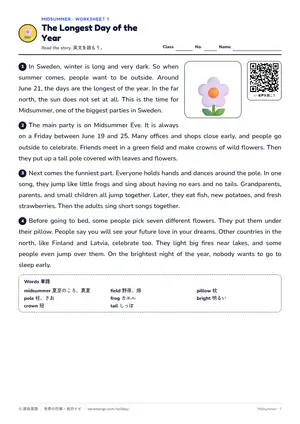
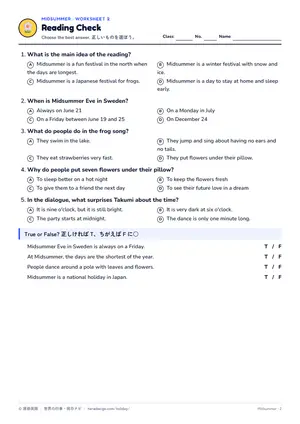
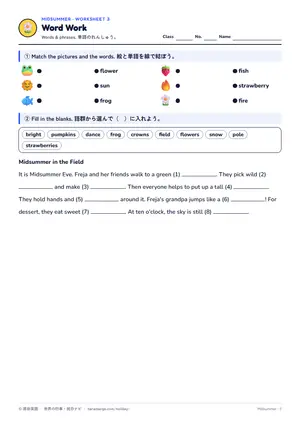
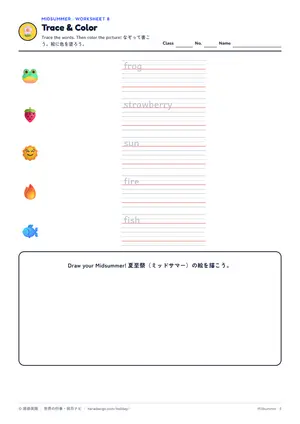
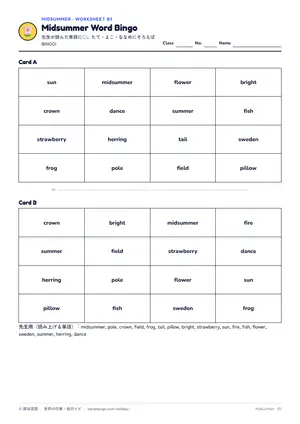
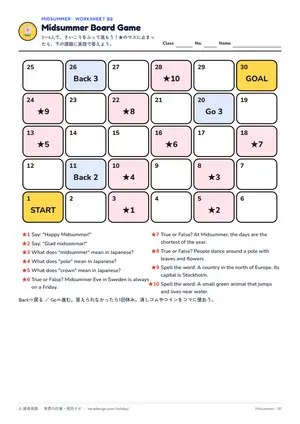
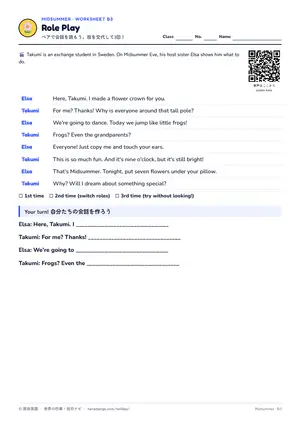
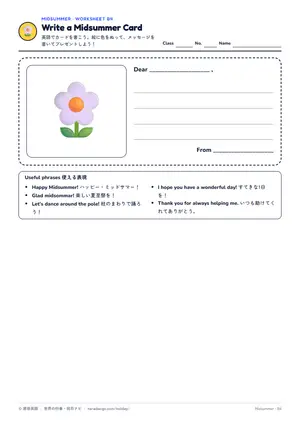
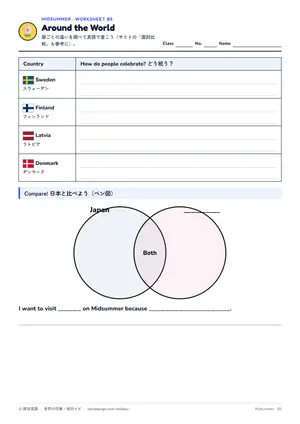
🍎Lesson Ideas夏至祭(ミッドサマー)を使った英語の授業アイデア
カエルのダンスで英語の体の部分
🎯 体の部分(ears, tail, hands など)の英語を、体を動かしながら覚える。
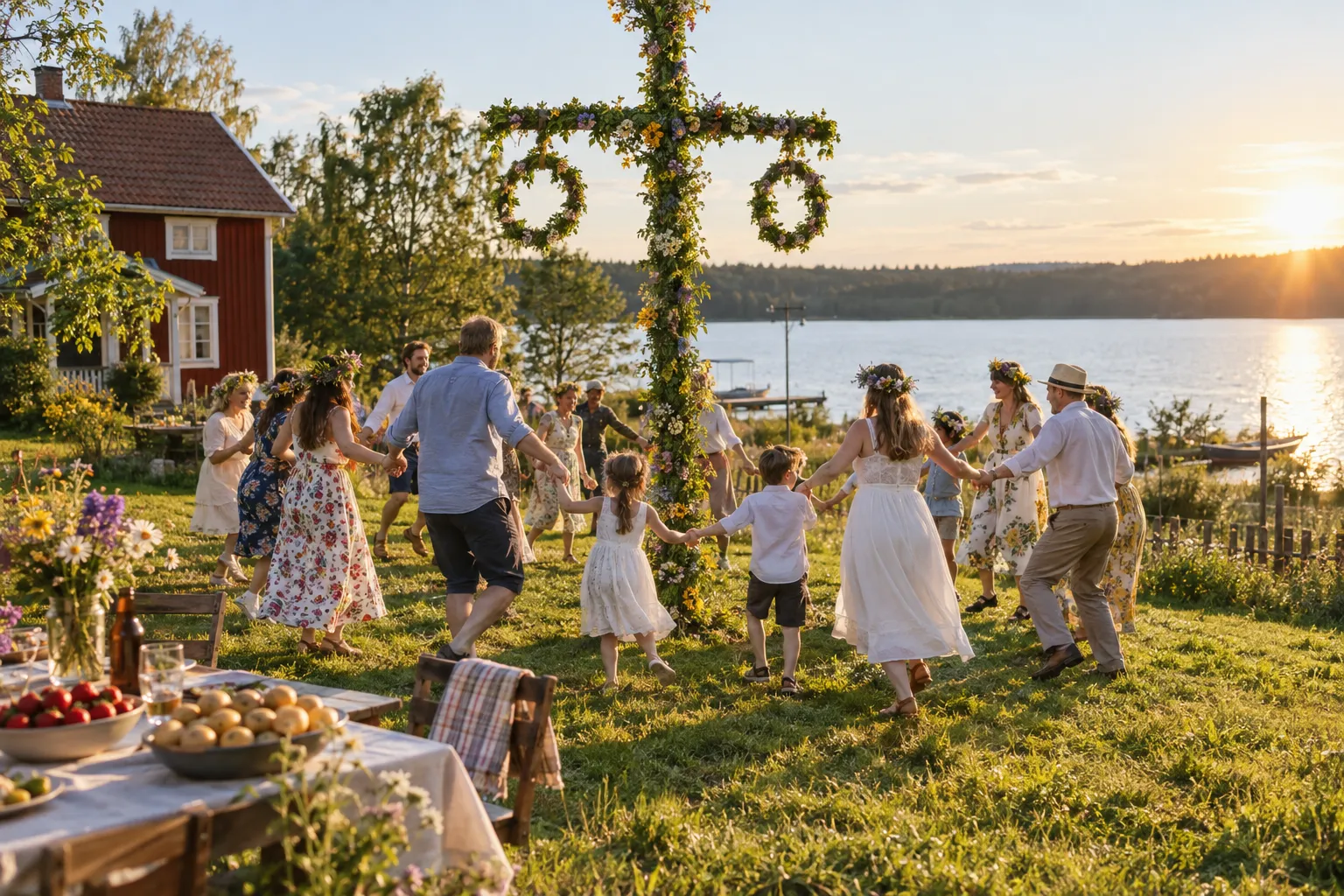
- スウェーデンの夏至祭の写真と、カエルのダンスの様子を見せる。
- No ears, no tail! のように、体の部分を指しながら英語で言う練習をする。
- 輪になってしゃがみ、先生の言う体の部分をさわりながらカエル跳びで回る。
詳細版を開く(時間配分・Teacher Talk・板書)
夏至祭の写真を見せ、スウェーデンでは夏の長い日に、葉と花で飾った高い柱のまわりで踊ることを紹介する。おじいさんやおばあさんも小さな子どももカエルのように跳ねることを伝え、先生が一度しゃがんで跳ねてみせる。
🗣️ Look. This is Sweden. / People dance around a tall pole. / They jump like little frogs! / Grandparents and children jump together.
体の部分の絵カードを1枚ずつ見せ、先生がその場所を指しながら英語で言い、子どもにまねさせる。カエルの歌では「耳もない、しっぽもない」と歌い、手を耳とおしりに当てることを伝え、No ears, no tail! を手の動きといっしょに練習する。
🗣️ Touch your ears. Ears! / Touch your head. Head! / In the frog song, they say "No ears, no tail!" / Hands on your ears. Now hands on your bottom. No ears, no tail!
輪になってしゃがませ、先生の合図でカエル跳びで少しずつ回らせる。先生が体の部分を英語で言ったら、止まってその場所をさわらせる。慣れてきたら No ears, no tail! の合図を入れ、全員で言いながら耳とおしりに手を当てさせる。2回目は子どもの1人に体の部分を言う役をさせる。
🗣️ Make a circle and sit down like frogs. / Jump, jump, jump! Stop! Touch your nose! / Everyone, say "No ears, no tail!" / Who wants to be the leader?
席に戻り、今日言えた体の部分を絵カードで確かめる。最後に Happy Midsummer! を全員で言って終える。
🗣️ What is this? Yes, ears! / Great dancing, everyone. / Happy Midsummer!
🌼 Midsummer(Sweden)
🐸 little frogs dance

ears head hands nose eyes tail

No ears, no tail!
(手を耳に → おしりに)

Happy Midsummer!
冬至と夏至:日本と北欧の行事比べ
🎯 気候と行事の関係を考え、英語で比較の文を書く。
- 日本の冬至(ゆず湯・かぼちゃ)と夏至(夫婦岩の夏至祭・夏至カレー)、スウェーデンの夏至祭を表にまとめる。
- なぜ北欧では夏至が大きな祭りで、日本では冬至の習慣が多いのか、日の長さや梅雨と結びつけて話し合う。
- In Sweden, ... but in Japan, ... の形で比較の文を3つ書き、発表する。
詳細版を開く(時間配分・Teacher Talk・板書)
「冬至の日に何をする?」「夏至の日には?」と聞く。冬至にはゆず湯やかぼちゃがあるのに、夏至の習慣はあまり思いつかないことに気づかせる。そのうえで、スウェーデンでは夏至祭がクリスマスに次ぐ大切な行事とも言われることを紹介する。
🗣️ What do you do on the winter solstice? / Some people take a yuzu bath and eat pumpkin. / What about the summer solstice? Not much, right? / In Sweden, Midsummer is one of the biggest parties of the year.
英語ページの本文を音声で聞かせてから読ませ、要点プリントとあわせて比較表を埋めさせる。スウェーデンは冬が長く暗いこと、北部では太陽が一晩じゅう沈まないこと、日本の夏至は梅雨のまっただ中であることを、天気や日の長さの欄に必ず入れさせる。
🗣️ Listen to the passage first. Then read it. / In Sweden, winter is long and very dark. / In the far north, the sun does not set at all. / In Japan, the summer solstice comes in the rainy season. / Fill in the table: weather and main customs.
グループで、なぜ北欧では夏至が大きな祭りで、日本では冬至の習慣のほうが多いのかを話し合わせる。表の天気と日の長さの欄を根拠にするよう指示する。Discussion の問い Japan has big events for winter, like New Year, but few for the summer solstice. Why do you think so? を板書し、英語で理由を2つ書かせる。
🗣️ Why is Midsummer a big festival in Sweden? / Why does Japan have more customs for the winter solstice? / Use the table. Think about the weather and the length of the day. / Write two reasons in English.
In Sweden, ... but in Japan, ... の形で比較の文を3つ書かせる。天気や日の長さ・食べ物・過ごし方のそれぞれで1文ずつ書くよう指示し、事実は表と照らし合わせて確かめさせる。
🗣️ Write three sentences with "In Sweden, ... but in Japan, ..." / One about the weather, one about food, and one about what people do. / In Sweden, people eat strawberries on Midsummer, but in Japan, some people eat pumpkin on the winter solstice.
各グループから1人ずつ、比較の文を1つと理由を1つ発表させる。全体の発表のあと、気候が行事の形を変えるという点を短くまとめる。
🗣️ Each group, read one sentence and one reason. / The weather and the sun change our festivals. / Good job, everyone.
Winter solstice / Summer solstice

   | weather・day | main customs
Japan 冬至 | ― | yuzu bath, pumpkin
Japan 夏至 | rainy season | Futami(Meoto Iwa), geshi curry
Sweden Midsummer | long dark winter → sun does not set(far north) | pole, frog dance, herring, strawberries

In Sweden, ___, but in Japan, ___.

Q. Why is Midsummer big in Sweden?
Q. Why does Japan have more winter customs?