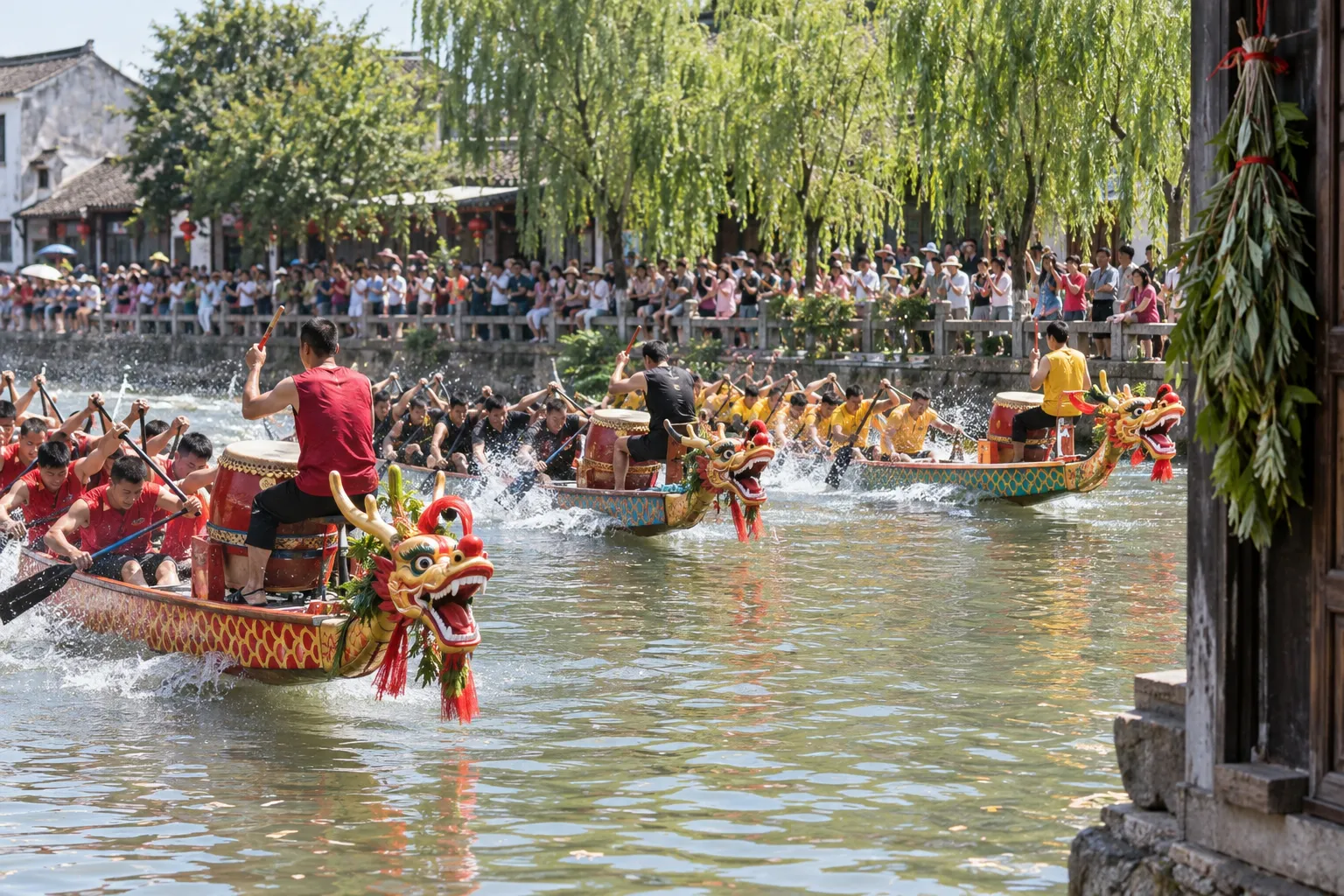
Dragon Boat Festival
端午節(ドラゴンボート祭り)の英語の授業アイデアとワークシート
印刷してすぐ使えるワークシート(PDF・Word・解答つき)と、授業の手順書。
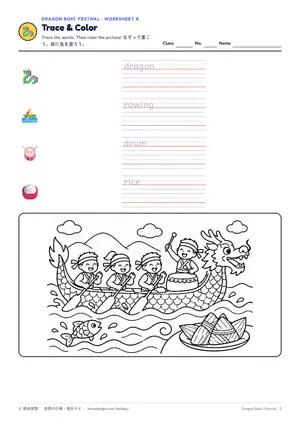
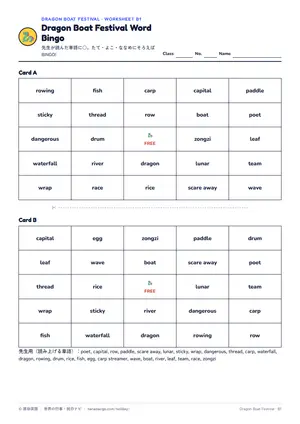
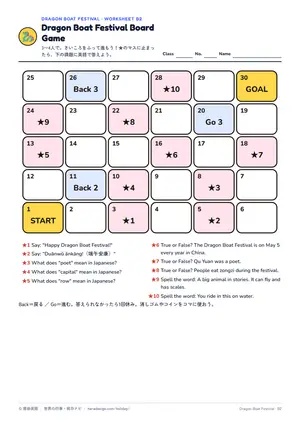
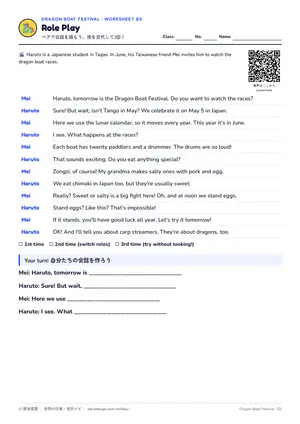
🖨️Worksheetsワークシート(無料・A4)
① 「中身を見る・印刷」で全ページを確認 → ② そのページ上の 🖨️ 印刷する でそのまま印刷できます。A4・無料。
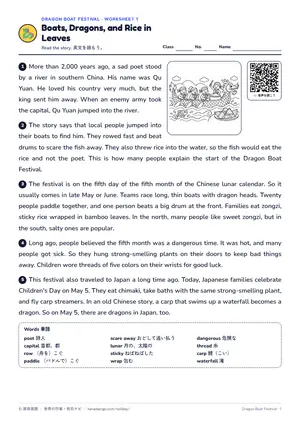
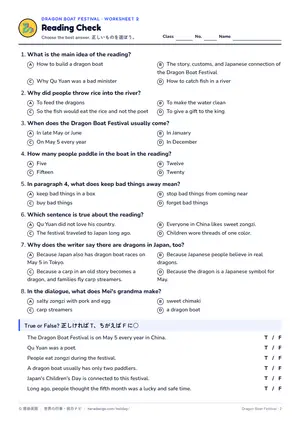
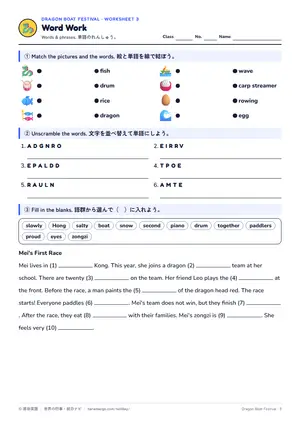
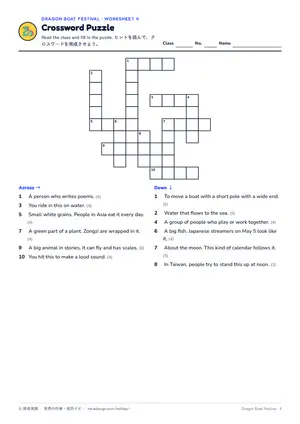
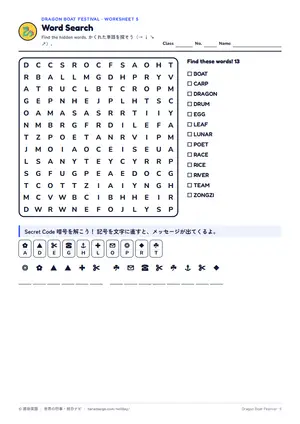
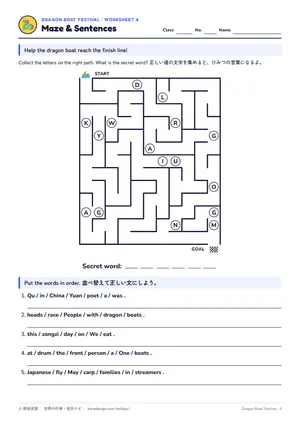
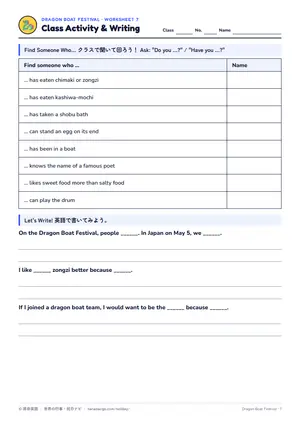
🍎Lesson Ideas端午節(ドラゴンボート祭り)を使った英語の授業アイデア
教室ドラゴンボート:リズムでこげ!
🎯 数字と動作の英語(Paddle! Left! Right! Stop!)を、体を動かしながら覚える。
- 机を舟の形に並べ、1チーム8〜10人で座る。
- 先頭の太鼓役が One, two! Paddle! と英語でリズムを出す。
- 全員で腕をこぐ動きをそろえ、太鼓役は Faster! / Slower! / Stop! と指示する。
- 最後に、こぎ手20人・太鼓1人・かじ取り1人の本物の舟の話をする。
詳細版を開く(時間配分・Teacher Talk・板書)
ドラゴンボートの写真や動画を見せ、竜の頭の舟をみんなで息を合わせてこぐ祭りが中国にあることを紹介する。指示カードの英語を動作つきでリピートさせる。
🗣️ Look! It's a dragon boat. / Many people paddle together. / Paddle! Like this. / Faster! Slower! Stop!
全員を席に座らせ、先生が指示を出して腕でこぐ動きをさせる。Left! Right! で片方ずつこぐなど、聞き分けが必要な指示を混ぜる。
🗣️ One, two! Paddle! / Left! Left! Right! / Faster! Faster! / Stop!
チームの舟に座らせ、先頭の太鼓役が英語でリズムと指示を出す。太鼓役を交代しながら、全員の動きがそろったチームをほめる。
🗣️ You are the drummer. Say One, two! Paddle! / Everyone, move together. / Your team is perfect! / Change drummers.
本物の舟には、こぎ手20人・太鼓1人・かじ取り1人の22人が乗ることを紹介する。全員の動きがそろわないと速く進めないことを伝える。
🗣️ A real dragon boat has twenty paddlers. / One person beats the drum, and one person steers. / How many people in all? Twenty-two! / Teamwork is everything.
🐉 Dragon boat
One, two! Paddle!
Left! / Right!
Faster! / Slower!
Stop!

20 paddlers + 1 drummer + 1 steerer = 22
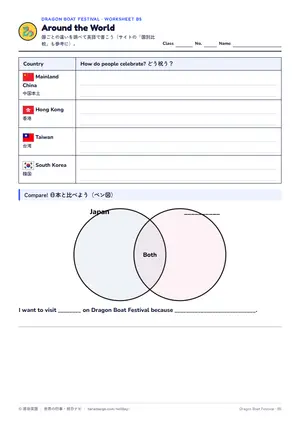
日本と中国の5月5日をくらべよう
🎯 比較の表現(both, but, different from)を使って、2つの行事を英語で説明できるようになる。
- ちまき・菖蒲(しょうぶ)・こいのぼり・ドラゴンボートの写真を見せ、日本と中国どちらのものか予想する。
- ベン図に Japan only / China only / Both を英語で書きこむ。
- Both Japan and China ___. / In China, ___, but in Japan, ___. の文を3つ作る。
- ペアで発表し、日本の端午の節句を英語で外国人に説明する練習をする。
詳細版を開く(時間配分・Teacher Talk・板書)
4枚の写真を見せ、日本と中国のどちらのものか予想させる。日本の端午の節句は、中国の端午節が伝わったものだと明かす。
🗣️ Look at these four pictures. / Is it from Japan or China? / What about chimaki? / Japan's May 5 came from China long ago.
ベン図に英語で書きこませる。ちまきと強い香りの草(菖蒲)は両方、こいのぼりは日本、ドラゴンボートレースは中国(ただし長崎のペーロンのように日本にもある)。中国は旧暦なので毎年日付が変わることも書かせる。
🗣️ Write the things in the circles. / People in both countries eat chimaki, or zongzi. / Carp streamers are only in Japan. / Dragon boats? Mostly in China, but Nagasaki has Peiron!
Both Japan and China ___. / In China, ___, but in Japan, ___. の型で3文作らせる。日付の文(In China, the date changes every year, but in Japan, it is always May 5.)も入れさせる。
🗣️ Make three sentences. / Both Japan and China have chimaki. / In China, people race dragon boats, but in Japan, we fly carp streamers. / Write about the date, too.
ペアで発表し合ったあと、日本の端午の節句を外国人に英語で説明する練習をさせる。こいのぼりの鯉は、滝をのぼると竜になるという中国の伝説から来ていて、5月5日は日本にも竜がいる、という本文の最後の一文を紹介する。
🗣️ Explain Children's Day to a friend from another country. / In an old Chinese story, a carp swims up a waterfall and becomes a dragon. / So there are dragons in Japan on May 5, too! / Try it with your partner.
Dragon Boat Festival(China)vs Tango no Sekku(Japan)
Both:chimaki(zongzi)/ strong-smelling plants(shobu)
China:dragon boat races / lunar calendar → 2026:June 19
Japan:carp streamers / always May 5

Both Japan and China ___.
In China, ___, but in Japan, ___.
🎏 carp → waterfall → 🐉
屈原の物語を4コマで英語にしよう
🎯 過去形を使って、物語の流れを順序よく英語で表現できるようになる。
- 本文の第1〜2段落を読み、出来事を4つに分ける。
- 4コマの絵を描き、各コマに過去形の英文を1〜2文つける。
- First, / Then, / After that, / Finally, のつなぎ言葉を入れる。
- グループで読み合い、「伝説」と「事実」のちがいについて一言ずつ意見を言う。
詳細版を開く(時間配分・Teacher Talk・板書)
本文の第1〜2段落を音声で聞かせ、2000年以上前の詩人・屈原の話だと確認する。屈原は実在の詩人で、2020年に打ち上げられた中国の火星探査機「天問1号」の名前も彼の詩から取られたと紹介する。
🗣️ This is a story from more than 2,000 years ago. / Who is the main character? A poet named Qu Yuan. / Where is the story? By a river in southern China. / China's Mars mission was named after one of his poems!
第1〜2段落を読ませ、出来事を4つに分けさせる。①王に追い出された ②敵が都をとり、川に身を投げた ③人々が舟をこぎ、太鼓で魚を追い払った ④魚が米を食べるように川に米を投げた。
🗣️ Read paragraphs one and two. / Find four events. / What happened first? / The king sent him away.
4コマの絵をかかせ、各コマに過去形の英文を1〜2文つけさせる。First, / Then, / After that, / Finally, を文の頭に入れさせる。机間指導で過去形の形を確認する。
🗣️ Draw four pictures. / Write one or two sentences under each picture. / Start with First, Then, After that, and Finally. / Check the past tense. Row, rowed. Throw, threw.
グループで4コマを読み合わせる。本文に This is how many people explain the start ... とあることに注目させ、屈原は実在の人物だが、舟で探した話は「伝説」として伝わっていることを確認する。伝説と事実のちがいについて一言ずつ意見を言わせる。
🗣️ Read your story to your group. / Look at this sentence: This is how many people explain the start. / Is it a fact or a legend? / Qu Yuan was real. The boat story is a legend.
Qu Yuan(a poet, more than 2,000 years ago)
First, the king sent him away.
Then, an enemy army took the capital, and he jumped into the river.
After that, people rowed boats and beat drums.
Finally, they threw rice into the water.

stand → stood / send → sent / take → took / row → rowed / throw → threw
fact(事実)vs legend(伝説)
ちまき論争ディベート:甘い派 vs しょっぱい派
🎯 身近なテーマで、理由と例をあげて英語で意見を述べる練習をする。
- 北と南のちまきのちがいを英語で確認する。
- 甘い派・しょっぱい派に分かれ、理由を英語で3つ考える(taste, health, tradition など)。
- 1分ずつ主張し、相手チームに1つ質問する。
- 最後に日本の柏餅(かしわもち)・ちまきの地域差(関東・関西)も紹介し、食文化の地域差を考える。
詳細版を開く(時間配分・Teacher Talk・板書)
2枚の写真を見せ、中国では北の甘いちまき派と南のしょっぱいちまき派の論争が毎年おなじみだと紹介する。どちらを食べてみたいか手を挙げさせて、2チームに分ける。
🗣️ In the north of China, many people like sweet zongzi. / In the south, salty zongzi is popular. / Which one do you want to try? / Sweet team over here. Salty team over there.
観点カードを使って、チームで理由を英語で3つ考えさせる。例を1つずつ加えさせる。
🗣️ Think of three reasons. / Use these words: taste, health, tradition. / Give an example for each reason. / Who will speak first?
各チーム1分ずつ主張させ、そのあと相手チームに1つ質問させる。これを話す人を替えて2回行う。先生はよい理由やよい質問を板書する。
🗣️ Sweet team, you have one minute. / Salty team, ask them one question. / Good question! Can you answer it? / Now change speakers.
日本にも食べ物の地域差があることを紹介する。端午の節句に関西を中心にちまきを食べる家があり、関東では日本生まれの柏餅がおなじみであることを伝え、食文化の地域差について一言ずつ意見を言わせる。
🗣️ Japan has differences, too. / Many families in Kansai eat chimaki on May 5. / In Kanto, kashiwa-mochi is more popular. / What food is special in your area?
Sweet zongzi(north):red beans, dates
Salty zongzi(south):egg yolk, pork

I think ___ zongzi is better because ___.
For example, ___.
Question:Why do you think ___?

日本:関西 → chimaki / 関東 → kashiwa-mochi(日本生まれ)
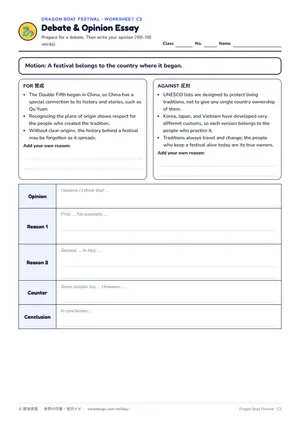
文化はだれのもの?端午をめぐるリサーチ
🎯 advanced の英文をもとに、無形文化遺産と文化の所有について調べ、論じる。
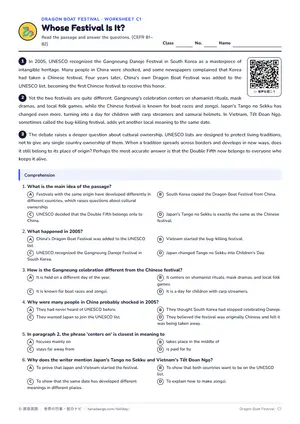
- advanced(Whose Festival Is It?)を読み、2005年と2009年の出来事を整理する。
- 中国・韓国・日本・ベトナムの端午の習慣を、英語の資料で分担して調べる。
- 「同じ起源の行事は誰のものか」について、グループで立場を決めて議論する。
- 自分の意見を英語150語程度のエッセイにまとめる。
詳細版を開く(時間配分・Teacher Talk・板書)
2005年に韓国の江陵端午祭がユネスコに認められたとき、中国で反発が起きたことを紹介する。「同じ起源の行事はだれのものか」という問いを示す。
🗣️ In 2005, UNESCO recognized a festival in South Korea. / Many people in China were shocked. Why? / Today's question: whose festival is it? / What do you think right now?
advanced の英文を読ませ、quiz で確認する。2005年と2009年の出来事を年表に整理させ、ユネスコの一覧の目的(living traditions を守ること)を確認する。
🗣️ Read the passage and answer the quiz. / What happened in 2005? In 2009? / What are UNESCO lists for? / Do they give ownership to one country?
4つのグループに分け、担当の国・地域の端午の習慣を英語の資料で調べさせる。観点の表を埋め、出典を必ずメモさせる。最後の5分で、ほかのグループに2分ずつ報告させる。
🗣️ Each group has one country. / Find the name, the date, the main customs, and the meaning. / Write down your sources. / Now share with the other groups in two minutes.
「同じ起源の行事は、始まった場所のものか、守り続ける人みんなのものか」について、グループで立場を決めて議論させる。本文の4つの例を根拠に使うよう求める。
🗣️ Does a festival belong to its place of origin? / Or to everyone who keeps it alive? / Use the four examples as evidence. / Respond to the other group's point.
自分の意見を英語150語程度のエッセイにまとめさせる。授業内で構成メモと最初の段落まで書かせ、残りは提出課題にする。
🗣️ Write an essay of about 150 words. / State your opinion first. / Use one example from your research. / Finish it by next class.
Q:Whose festival is it?
2005:UNESCO → Gangneung Danoje Festival(South Korea)→ shock in China
2009:China's Dragon Boat Festival → UNESCO list

Korea:shamanist rituals / mask dramas / folk games
China:boat races / zongzi
Japan:children / carp streamers / samurai helmets
Vietnam:Tết Đoan Ngọ(bug-killing festival)

UNESCO lists:protect living traditions ≠ ownership