Dragon Boat Festival

端午節(ドラゴンボート祭り)を英語で:読む・聞く・話す・遊ぶ

やさしい英語(CEFR A2)の読み物に音声つき。会話・単語カード・クイズ8問・ゲームで、端午節(ドラゴンボート祭り)の英語をまるごと。

🔊Read in English端午節(ドラゴンボート祭り)を英語で読もう(CEFR A2・音声つき)

端午節(ドラゴンボート祭り)を、やさしい英語で紹介する読み物です。▶で英文をタイトルから通して聞けます(アメリカ英語)。「和訳」ボタンで日本語訳の表示・非表示を切りかえられます。下線の語は下の単語カードにあります。

Boats, Dragons, and Rice in Leaves

CEFR A2
0:00
274 words

More than 2,000 years ago, a sad poet stood by a river in southern China. His name was Qu Yuan. He loved his country very much, but the king sent him away. When an enemy army took the capital, Qu Yuan jumped into the river.

2000年以上前、中国南部のある川のそばに、悲しみにくれた一人の詩人が立っていました。名前は屈原といいました。彼は国を深く愛していましたが、王は彼を都から追い出しました。敵の軍が都を奪ったとき、屈原は川に身を投げました。

The story says that local people jumped into their boats to find him. They rowed fast and beat drums to scare the fish away. They also threw rice into the water, so the fish would eat the rice and not the poet. This is how many people explain the start of the Dragon Boat Festival.

言い伝えによると、地元の人々は彼を探すために急いで舟に乗りこみました。人々は速く舟をこぎ、魚を追い払うために太鼓をたたきました。また、魚が詩人ではなく米を食べるように、米を川に投げ入れました。これが、多くの人が語る端午節の始まりです。

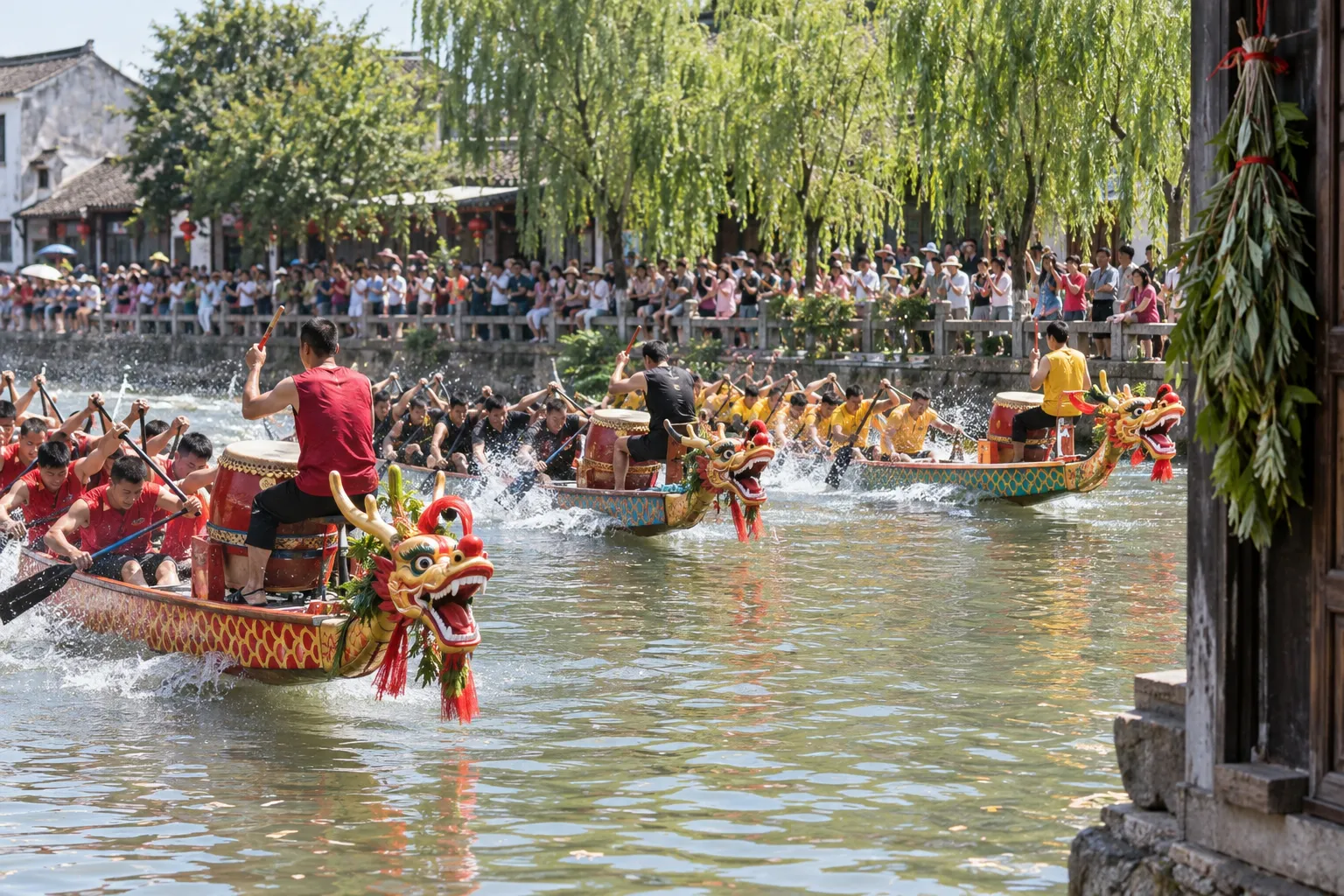
The festival is on the fifth day of the fifth month of the Chinese lunar calendar. So it usually comes in late May or June. Teams race long, thin boats with dragon heads. Twenty people paddle together, and one person beats a big drum at the front. Families eat zongzi, sticky rice wrapped in bamboo leaves. In the north, many people like sweet zongzi, but in the south, salty ones are popular.

この祭りは、中国の旧暦の5月5日にあります。そのため、たいてい5月下旬か6月に来ます。チームが、竜の頭をつけた細長い舟で競争します。20人がいっしょにこぎ、1人が先頭で大きな太鼓をたたきます。家族は、竹の葉で包んだもち米のちまきを食べます。北では甘いちまきが好きな人が多く、南ではしょっぱいちまきが人気です。

Long ago, people believed the fifth month was a dangerous time. It was hot, and many people got sick. So they hung strong-smelling plants on their doors to keep bad things away. Children wore threads of five colors on their wrists for good luck.

昔、人々は5月が危険な時期だと信じていました。暑くて、病気になる人がたくさんいたのです。そこで、悪いものを遠ざけるため、香りの強い草を門にかけました。子どもたちは、幸運を願って手首に五色の糸を結びました。

This festival also traveled to Japan a long time ago. Today, Japanese families celebrate Children's Day on May 5. They eat chimaki, take baths with the same strong-smelling plant, and fly carp streamers. In an old Chinese story, a carp that swims up a waterfall becomes a dragon. So on May 5, there are dragons in Japan, too.

この祭りは、ずっと昔に日本にも伝わりました。今、日本の家族は5月5日にこどもの日を祝います。ちまきを食べ、同じ香りの強い草を入れたお風呂に入り、こいのぼりをあげます。中国の古い物語では、滝をのぼった鯉は竜になります。だから5月5日には、日本にも竜がいるのです。

💬Dialogue英語の会話で端午節(ドラゴンボート祭り)

🎬 台北に留学中の陽翔。6月、台湾人の友だちメイが、ドラゴンボートレースを見に行こうと誘ってくれます。

0:00
Mei

Haruto, tomorrow is the Dragon Boat Festival. Do you want to watch the races?

陽翔、明日は端午節だよ。レースを見に行かない?

Haruto

Sure! But wait, isn't Tango in May? We celebrate it on May 5 in Japan.

行く!でも待って、端午って5月じゃないの?日本では5月5日に祝うよ。

Mei

Here we use the lunar calendar, so it moves every year. This year it's in June.

こっちは旧暦を使うから、毎年日にちが変わるの。今年は6月だよ。

Haruto

I see. What happens at the races?

なるほど。レースでは何があるの?

Mei

Each boat has twenty paddlers and a drummer. The drums are so loud!

どの舟にもこぎ手が20人と太鼓の人がいるの。太鼓がすごく大きな音なんだ!

Haruto

That sounds exciting. Do you eat anything special?

わくわくするね。何か特別なものを食べるの?

Mei

Zongzi, of course! My grandma makes salty ones with pork and egg.

もちろん、ちまき!おばあちゃんが豚肉と卵の入ったしょっぱいのを作ってくれるの。

Haruto

We eat chimaki in Japan too, but they're usually sweet.

日本でもちまきを食べるけど、たいてい甘いんだ。

Mei

Really? Sweet or salty is a big fight here! Oh, and at noon we stand eggs.

本当?甘いかしょっぱいかは、こっちでは大論争なんだよ!あ、それと正午に卵を立てるの。

Haruto

Stand eggs? Like this? That's impossible!

卵を立てる?こんなふうに?無理だよ!

Mei

If it stands, you'll have good luck all year. Let's try it tomorrow!

立ったら1年間幸運なんだって。明日やってみようよ!

Haruto

OK! And I'll tell you about carp streamers. They're about dragons, too.

いいよ!ぼくはこいのぼりの話をするね。あれも竜の話なんだ。

🃏Word Cards端午節(ドラゴンボート祭り)の英単語カード(12語)

カードをタップすると裏返って、意味と例文が出ます。

poet名詞
詩人Qu Yuan was a famous poet.屈原は有名な詩人だった。💡 poem(詩)、poetry(詩全体)とセットで覚えよう。
capital名詞
首都、都An enemy army took the capital.敵の軍が都を奪った。💡 「大文字」や「資本」の意味もある。もとはラテン語の caput(頭)。
row動詞
(舟を)こぐThey rowed fast to find him.彼らは彼を探すために速くこいだ。💡 名詞の row(列)と同じつづり。in a row で「連続で」。
paddle動詞
(パドルで)こぐTwenty people paddle together.20人がいっしょにこぐ。💡 名詞では「パドル(かい)」。ドラゴンボートは row より paddle を使うことが多い。
scare away熟語
おどして追い払うThey beat drums to scare the fish away.彼らは魚を追い払うために太鼓をたたいた。💡 scare は「こわがらせる」。scared(こわがって)もいっしょに。
lunar形容詞
月の、太陰のThe festival follows the lunar calendar.その祭りは旧暦(太陰暦)に従う。💡 ラテン語の luna(月)から。Lunar New Year(旧正月)。
sticky形容詞
ねばねばしたZongzi are made of sticky rice.ちまきはもち米でできている。💡 sticky rice で「もち米」。stick(くっつく)から。
wrap動詞
包むWe wrap the rice in bamboo leaves.私たちは米を竹の葉で包む。💡 w は読まない(ラップ)。gift wrapping(ギフト包装)。
dangerous形容詞
危険なPeople believed the fifth month was dangerous.人々は5月が危険だと信じていた。💡 名詞は danger。反対は safe。
thread名詞
糸Children wore threads of five colors.子どもたちは五色の糸を身につけた。💡 th の音に注意(スレッド)。SNS の「スレッド」も同じ言葉。
carp名詞
鯉(こい)Japanese families fly carp streamers.日本の家族はこいのぼりをあげる。💡 複数形も carp のままが一般的。carp streamer で「こいのぼり」。
waterfall名詞
滝The carp swims up a waterfall.鯉は滝をのぼる。💡 water(水)+ fall(落ちる)。

✅Quiz端午節(ドラゴンボート祭り)の英語クイズ(8問)

上の英文を読んでから答えてみよう。答えを選ぶとすぐに解説が出ます。全問正解でスタンプが金色に!

Q1. What is the main idea of the reading?

この文章の主旨は何ですか。

第1〜2段落で由来の物語、第3〜4段落で習慣、第5段落で日本とのつながりを説明しています。舟の作り方や魚のとり方は書かれていません。

Q2. Why did people throw rice into the river?

人々はなぜ川に米を投げ入れたのですか。

第2段落に so the fish would eat the rice and not the poet とあります。so(〜するように)のあとが目的です。

Q3. When does the Dragon Boat Festival usually come?

端午節はたいていいつ来ますか。

第3段落に it usually comes in late May or June とあります。毎年5月5日なのは日本のこどもの日です。

Q4. How many people paddle in the boat in the reading?

本文では、何人が舟をこぎますか。

第3段落に Twenty people paddle together とあります。太鼓をたたく人はこぎ手とは別に1人います。

Q5. In paragraph 4, what does keep bad things away mean?

第4段落の keep bad things away はどういう意味ですか。

keep A away は「Aを遠ざけておく」。危険な月に病気などが来ないように草を門にかけた、という流れから考えます。

Q6. Which sentence is true about the reading?

本文の内容と合っているのはどれですか。

第5段落に This festival also traveled to Japan a long time ago とあります。屈原は国を愛し、南ではしょっぱいちまきが人気で、糸は五色です。

Q7. Why does the writer say there are dragons in Japan, too?

筆者はなぜ日本にも竜がいると言っているのですか。

第5段落の最後の2文がヒントです。こいのぼりの鯉は、滝をのぼると竜になる鯉。だから So(だから)日本にも竜がいる、とつながっています。

Q8. In the dialogue, what does Mei's grandma make?

会話で、メイのおばあちゃんは何を作りますか。

メイは My grandma makes salty ones with pork and egg と言っています。甘いちまきは陽翔が話す日本のちまきです。

🎮Games端午節(ドラゴンボート祭り)の英語ゲーム

タブを切りかえて遊べます。授業ではプロジェクターに映して、クラス対抗戦にしても盛り上がります。

📖Read Moreもっと読む:Whose Festival Is It?

少し難しめ(B1〜B2)の英文で、端午節(ドラゴンボート祭り)を違う角度から。

Whose Festival Is It?

B1–B2
0:00
191 words

In 2005, UNESCO recognized the Gangneung Danoje Festival in South Korea as a masterpiece of intangible heritage. Many people in China were shocked, and some newspapers complained that Korea had taken a Chinese festival. Four years later, China's own Dragon Boat Festival was added to the UNESCO list, becoming the first Chinese festival to receive this honor.

2005年、ユネスコは韓国の江陵端午祭を無形遺産の傑作として認めました。中国では多くの人が衝撃を受け、「韓国に中国の祭りを取られた」と書く新聞もありました。4年後、中国の端午節もユネスコのリストに加わり、この栄誉を受けた初めての中国の祭りになりました。

Yet the two festivals are quite different. Gangneung's celebration centers on shamanist rituals, mask dramas, and local folk games, while the Chinese festival is known for boat races and zongzi. Japan's Tango no Sekku has changed even more, turning into a day for children with carp streamers and samurai helmets. In Vietnam, Tết Đoan Ngọ, sometimes called the bug-killing festival, adds yet another local meaning to the same date.

しかし、2つの祭りはかなりちがいます。江陵の祭りの中心は、シャーマンの儀式や仮面劇、地元の民俗遊びですが、中国の祭りはボートレースとちまきで知られています。日本の端午の節句はさらに変化し、こいのぼりや兜を飾る子どものための日になりました。ベトナムのテト・ドアン・ゴは「虫退治の祭り」とも呼ばれ、同じ日付にまた別の土地ならではの意味を加えています。

The debate raises a deeper question about cultural ownership. UNESCO lists are designed to protect living traditions, not to give any single country ownership of them. When a tradition spreads across borders and develops in new ways, does it still belong to its place of origin? Perhaps the most accurate answer is that the Double Fifth now belongs to everyone who keeps it alive.

この議論は、文化はだれのものか、というより深い問いを投げかけます。ユネスコのリストは生きている伝統を守るためのもので、どこか一つの国に所有権を与えるためのものではありません。伝統が国境をこえて広がり、新しい形に発展したとき、それはまだ発祥の地のものなのでしょうか。おそらく最も正確な答えは、端午は今や、それを生き続けさせているすべての人のもの、ということなのかもしれません。

👋Useful Phrases端午節(ドラゴンボート祭り)に使える英語フレーズ

Happy Dragon Boat Festival!端午節おめでとう!英語での一般的なあいさつ。
Duānwǔ ānkāng!(端午安康)端午節、無事で健康に過ごせますように!中国語のあいさつ。もとは「毒の月」をはらう日なので、「おめでとう」より「健康で」を願う言い方を好む人もいる。
Let's watch the dragon boat races!ドラゴンボートレースを見に行こう!watch the races で「レースを見る」。
Do you like sweet zongzi or salty zongzi?甘いちまき派?しょっぱいちまき派?中国の友だちとの会話がもり上がる定番の質問。
In Japan, May 5 is Children's Day. It comes from the same festival.日本では5月5日はこどもの日。同じお祭りから来ているんだよ。外国の友だちに日本との関係を説明する一言。

🗣️ 話し合ってみよう(Discussion)

  1. Which do you want to try, sweet zongzi or salty zongzi? Why?

    甘いちまきとしょっぱいちまき、どちらを食べてみたいですか。それはなぜですか。
  2. How is Japan's Children's Day different from the Dragon Boat Festival? How is it the same?

    日本のこどもの日は端午節とどうちがいますか。どこが同じですか。
  3. In a dragon boat, twenty people must move together. What other activities need good teamwork?

    ドラゴンボートでは20人が息を合わせる必要があります。ほかにチームワークが大切な活動には何がありますか。
  4. Japan moved most traditional festivals from the lunar calendar to the solar calendar. Was this a good idea?

    日本は多くの伝統行事を旧暦から新暦に移しました。それは良い考えだったと思いますか。
  5. Can a festival belong to one country? Discuss using the UNESCO case of Danoje.

    祭りは一つの国のものになりうるでしょうか。端午祭のユネスコの例を使って話し合ってください。

🗾Explain Japan in English日本の端午節(ドラゴンボート祭り)を英語で説明するなら

姉妹サイト「日本文化ナビ」に、英語でかんたんに説明する例文(ひと言・30秒・スピーチ)と、外国の人によく聞かれる質問がまとまっています。日本語のページと、英語だけのページ(そのまま海外の人に見せられます)があります。

こどもの日を英語で説明する(kodomo no hi)こどもの日(kodomo no hi)を英語で説明するには。一言/30秒/スピーチの3段階の英文と和訳、外国人によく聞かれる質問と答え、そのまま使えるフレーズ、音声つき。JP 日本語で読むGB English page
🐉
Dragon Boat Festiv
スタンプ帳に端午節(ドラゴンボート祭り)のスタンプを押しました!
クイズで全問正解すると金のスタンプに。世界一周めざして集めよう。 スタンプ帳を見る →

授業アイデアとワークシートを見る →