Christmas
クリスマスの英語の授業アイデアとワークシート
印刷してすぐ使えるワークシート(PDF・Word・解答つき)と、授業の手順書。
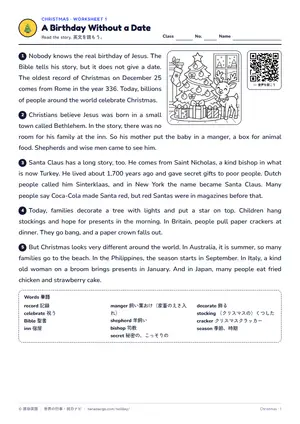
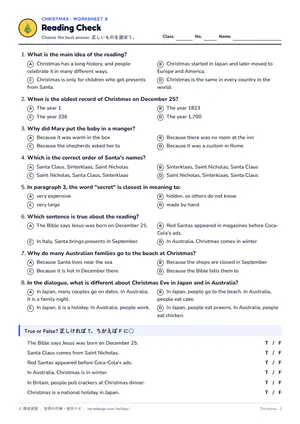
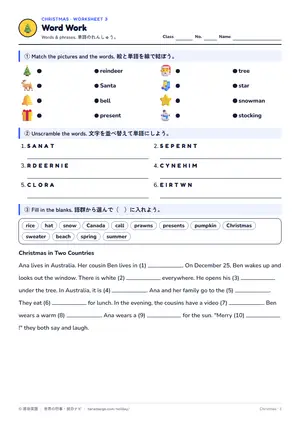
🖨️Worksheetsワークシート(無料・A4)
① 「中身を見る・印刷」で全ページを確認 → ② そのページ上の 🖨️ 印刷する でそのまま印刷できます。A4・無料。
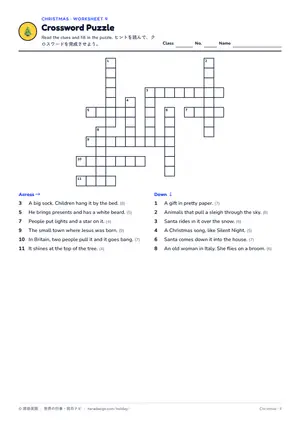
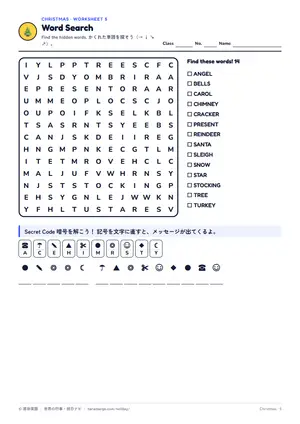
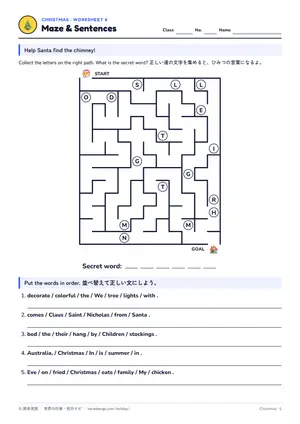
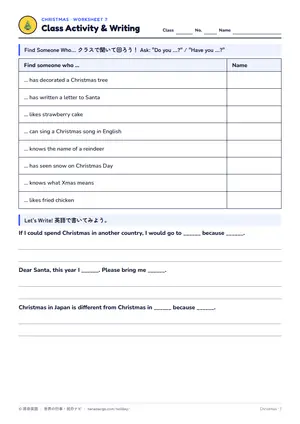
🍎Lesson Ideasクリスマスを使った英語の授業アイデア
世界のサンタ比較プレゼン
🎯 国ごとの「プレゼントを運ぶ人」を調べ、英語で紹介・比較する。
- 班ごとに担当を決める(ベファーナ、シンタクラース、ユール・ラッズ、ジェド・マロース、三賢者、ティオなど)。
- Who? / When? / How? / What gifts? の4点を英語でカードにまとめる。
- 1班1分で発表:In Italy, an old woman called the Befana brings gifts on January 5.
- 全体で表にし、いちばん早い日・遅い日、いちばん変わった人をクラスで決める。
詳細版を開く(時間配分・Teacher Talk・板書)
本文の第3段落を音声で聞かせ、サンタクロースが聖ニコラウスから来ていることを確認する。続けて第5段落の In Italy, a kind old woman on a broom brings presents in January. の文を聞かせ、「サンタが来ない国もある」と伝えて、今日の課題を示す。
🗣️ Where does Santa Claus come from? Listen. / Yes, Saint Nicholas, a kind bishop. / Now listen again. Who brings presents in Italy? / Santa doesn't go to every country! Let's find out who does.
班ごとに担当カードを1枚引かせ、記事のプリントから Who? / When? / How? / What gifts? の4点を調べさせる。カードには英語で短く書き、絵も描かせる。例:Who? an old woman on a broom / When? the night of January 5 / How? comes down the chimney / What gifts? sweets, or coal for bad children(炭は黒い砂糖菓子)。
🗣️ Each group, pick one card. / Find four things. Who? When? How? What gifts? / Write short English answers. Draw a picture, too. / You have fifteen minutes.
1班1分で発表させる。型は In __, __ called __ brings gifts on __. He/She comes __. 先生は比較表に When と How を書きこみ、聞く側は自分の表を埋める。
🗣️ Group one, please come to the front. You have one minute. / Start like this. In Italy, an old woman called the Befana brings gifts on January 5. / Listeners, write the date and how they come.
完成した表を見て、いちばん早い日(オランダのシンタクラース、12月5日の夜)と遅い日(スペインの三賢者、1月6日)を確認する。最後に「いちばん変わった人」を挙手で決め、理由を英語で1人に言わせる。
🗣️ Which one comes first? Which one comes last? / Sinterklaas comes on the night of December 5. The Three Kings come on January 6. / Now vote. Who is the most unusual gift-bringer? / Why do you think so?
日本のクリスマスでプレゼントを運ぶのはだれかを聞き、日本ならどんな人物がいたら面白いかを考えさせる。In Japan, __ brings gifts on __. の1文を書かせて終わる。
🗣️ Who brings presents in Japan? / If Japan had its own gift-bringer, who would it be? / Write one sentence. In Japan, ... brings gifts on ...
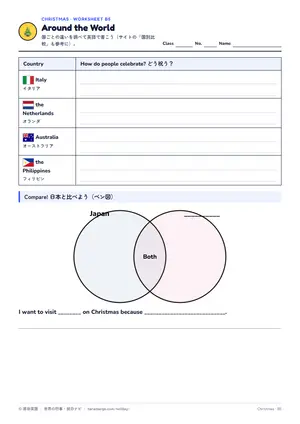
Who brings presents? 国 / Who? / When? / How? / What gifts?Italy / the Befana / Jan 5(night)/ on a broom, down the chimney / sweets(coal = black sugar candy)
Netherlands / Sinterklaas / Dec 5(night)/ by steamboat "from Spain" / chocolate letters
Iceland / 13 Yule Lads / from Dec 12, one each night / shoes in the window / small gifts
Russia / Ded Moroz + Snegurochka / New Year's Eve
Spain / the Three Kings / Jan 6 Catalonia / Tió(a log)/ Christmas Eve or Day / hit it and sing → sweets In __, __ called __ brings gifts on __.
コカ・コーラとサンタ:ファクトチェック新聞
🎯 俗説を資料で確かめ、根拠を示して英語で書く力をつける。
- 「コカ・コーラがサンタを赤くした」「Xmasはキリストを消した」など4つの説を配る。
- グループで Myth / Fact を予想し、理由を書く。
- 年号(1823年の詩、1863年のナスト、1900年代初めの雑誌、1931年の広告)を年表に並べて検証する。
- A4一枚の英語の「ファクトチェック新聞」にまとめ、見出しを工夫する。
詳細版を開く(時間配分・Teacher Talk・板書)
本文の第3段落の最後の文 Many people say Coca-Cola made Santa red, but red Santas were in magazines before that. を読ませ、「みんなはどちらを信じていた?」と聞く。よく聞く話を資料で確かめることを今日の目標にする。
🗣️ Read the last sentence of paragraph three. / Did you believe Coca-Cola made Santa red? Raise your hand. / Today, you are fact-checkers. Let's look at the evidence.
4つの説のカードを配り、グループで Myth か Fact かを予想させ、理由を英語で1文書かせる。この段階では資料を見せない。
🗣️ Here are four claims. Myth or fact? / Talk with your group and decide. / Write one reason for each. We think it is a myth because ...
年表カードを配り、年の順に並べさせる。赤いサンタが1931年のコカ・コーラの広告より前の雑誌にすでにいたことを確かめさせる。あわせて資料のコピーで、Xmas の X はギリシア語の「キリスト」の頭文字であること、Jingle Bells は1857年に冬のそり遊びの歌として出版されたこと、ボストンでは1659〜1681年にクリスマスが禁止されていたことを確認させる。
🗣️ Put the cards in order by year. / When did Coca-Cola's Santa start? And when was the red Santa in Puck magazine? / So, did Coca-Cola invent the red Santa? / Now check the other claims with the handout.
班でA4一枚の英語の「ファクトチェック新聞」を作らせる。4つの説を1つずつ記事にし、各記事に CLAIM / VERDICT(MYTH または FACT)/ EVIDENCE の3つを入れる。読みたくなる見出しを工夫させる(例:Santa Was Red Before the Soda!)。
🗣️ Make a fact-check newspaper on one sheet. / Each article needs three parts: the claim, the verdict, and the evidence. / Write a catchy headline. For example, Santa Was Red Before the Soda! / Use years as evidence. Numbers make your article strong.
新聞を教室の壁にはり、ギャラリーウォークでほかの班の見出しを読ませる。いちばんよい見出しに付せんで投票させる。「コカ・コーラが果たした役割は、赤いサンタを発明したことではなく、太って笑顔のやさしい姿を世界に広めたこと」と確認して終わる。
🗣️ Walk around and read the other newspapers. / Put a sticky note on the best headline. / Coca-Cola didn't invent the red Santa. But its ads spread a friendly, smiling Santa around the world.
Fact Check: Christmas

1823 poem A Visit from St. Nicholas(8 reindeer, sleigh, chimney)
1863 Thomas Nast(Harper's Weekly)
1900s Puck magazine → red and white Santa
1915 White Rock ad
1931 Coca-Cola ad(Haddon Sundblom)

A. Coca-Cola made Santa red → MYTH
B. Xmas crosses out Christ → MYTH(X = Greek letter chi)
C. Jingle Bells was written as a Christmas song → MYTH(1857, a winter sleigh song)
D. Christmas was against the law in Boston → FACT(1659–1681)

CLAIM / VERDICT / EVIDENCE
クリスマスクラッカーのジョークを作ろう
🎯 英語のなぞなぞ・ダジャレのしくみを楽しみながら、語彙を広げる。
- イギリスのクラッカーと、中に入っているジョークを紹介する。
- 例を読む:What do you call a reindeer with no eyes? No idea! (no-eye-deer)
- ペアでクリスマスの単語を使ったなぞなぞを1つ作る。
- 紙で作ったクラッカーに入れて交換し、読み上げる。
詳細版を開く(時間配分・Teacher Talk・板書)
本文の第4段落 In Britain, people pull paper crackers at dinner. They go bang, and a paper crown falls out. を読み、写真を見せる。2人で両端を引っぱること、中に紙の王冠とジョークが入っていること、1847年にロンドンの菓子職人トム・スミスが考えたと言われることを紹介する。
🗣️ This is a Christmas cracker. Two people pull it, one at each end. / It goes bang! Then a paper crown and a joke fall out. / People in Britain wear the crown during Christmas dinner. / The jokes are usually very silly. Let's read some.
例 What do you call a reindeer with no eyes? No idea! を読み、答えが no-eye-deer と聞こえることを説明する。ほかに先生が調べて用意した snowman や Santa のジョークも紹介し、音が似ている語を使うしくみを確認する。
🗣️ What do you call a reindeer with no eyes? / No idea! Say it slowly. No eye deer. / Here is another one. Listen to the answer carefully. / These jokes use words that sound alike.
ペアで単語リストから1語を選び、What do you call ...? / Why did ...? の形でなぞなぞを1つ作らせる。ダジャレがむずかしいペアには、答えに意外性があればよいと伝える。できたら細長い紙に書かせる。
🗣️ Choose one word from the list. / Make a riddle with your partner. What do you call ...? Why did ...? / It doesn't need to be a pun. A funny answer is fine. / Write it on the paper strip.
芯と包装紙で簡単なクラッカーを作り、ジョークの紙を中に入れる。別のペアと交換し、2人で引っぱって開け、中のジョークを読み上げる。答えを当てられたら拍手する。
🗣️ Put your joke inside and wrap the tube. / Swap crackers with another pair. / Pull it together. Ready? One, two, three! / Read the riddle. Can you guess the answer?
Christmas cracker 🎉(Britain, Tom Smith, 1847?)
pull → bang! → a paper crown + a joke

Q. What do you call a reindeer with no eyes?
A. No idea!(No idea = no-eye-deer:目のない(no eye)シカ(deer))

Q. (snowman・Santa の例:先生が用意)

What do you call __?  Why did __?
reindeer / snowman / Santa / elf / tree / bells / present / sleigh
「クリスマスの12日間」で算数
🎯 1〜12の数と足し算を英語で楽しむ。
- 歌 The Twelve Days of Christmas を聞き、出てくる数を数える。
- On the first day ... one, On the second day ... two and one と、毎日のプレゼント数を英語で言う。
- グループで12日間の合計を計算する(答え:364個)。
- 自分版の「12日間」を考え、1日目と2日目を絵に描く。
詳細版を開く(時間配分・Teacher Talk・板書)
歌の1日目から3日目を聞かせ、出てくる数を聞き取らせる。「毎日、新しいプレゼントがその日の数だけ増え、前の日のプレゼントもまたもらえる歌」と説明する。
🗣️ Listen to this song. What numbers can you hear? / On the first day, one present. / On the second day, two and one!
絵カードを使い、On the first day ... one. On the second day ... two and one. On the third day ... three, two, and one. と毎日のプレゼントの数を全員で英語で言う。その日に何個もらったか(1、3、6)を計算表に書かせる。
🗣️ On the third day: three, two, and one. / How many presents on the third day? Six! / Let's write it in the table.
グループで計算表を12日目まで埋めさせる。その日のプレゼントの数(1, 3, 6, 10, 15 …)を出したら、最後に全部を足す。速く終わったグループには、ほかのグループの答えと比べさせる。
🗣️ Work with your group. Go to Day 12. / Then add them all up. / How many presents in twelve days?
答え364個を発表させ、「ほぼ1年分の数」であることに気づかせる。最後に、自分版の「12日間」の1日目と2日目のプレゼントを考え、絵に描かせる(On the first day, I got one __.)。
🗣️ The answer is three hundred sixty-four! / That is almost the number of days in a year. / Now draw your own song. On the first day, I got one ... / On the second day, I got two ...
The Twelve Days of Christmas 🎄

Day 1:1 = 1
Day 2:2+1 = 3
Day 3:3+2+1 = 6
Day 4:= 10
Day 5:= 15
…
Day 12:= 78

全部で? → 364 presents!(ほぼ1年分)

On the first day, I got one __.
On the second day, I got two __.
なぜ日本のクリスマスはこうなった?ミニ・リサーチ
🎯 日本独自のクリスマスの成り立ちを、歴史と商業の両面から英語で分析する。
- 1552年の山口、出島の「オランダ正月」、1900年の明治屋、1927〜1947年の大正天皇祭を年表にする。
- 1970年代以降の広告(チキン・ケーキ・イブのデート)が果たした役割を調べる。
- 海外のクリスマスと比べ、何が「ローカル化」されたかを英語で議論する。
- 300語の英語レポートにまとめる。
詳細版を開く(時間配分・Teacher Talk・板書)
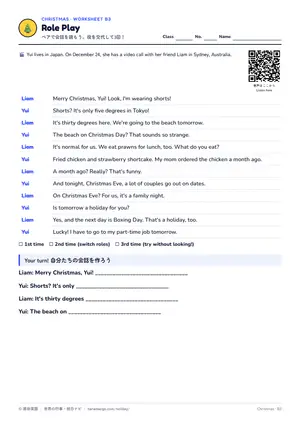
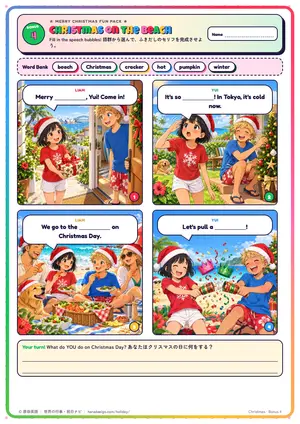
英語ページの会話を聞かせ、日本とオーストラリアのクリスマスのちがい(チキンとケーキ、イブはデート、25日は休みではない)をメモさせる。「海外の人には、日本のクリスマスはどう見えるか」をペアで2分話させ、今日の問いにつなげる。
🗣️ Listen to Yui and Liam. Write down the differences. / Fried chicken, strawberry cake, and dates on Christmas Eve. Is that normal? / How does Christmas in Japan look to people from other countries? / Today's question: Why did Christmas in Japan become like this?
記事の節を読ませ、1552年の山口でのミサ、江戸時代の禁止と出島の「オランダ正月」、1900年の明治屋の銀座進出、1927〜1947年の大正天皇祭(12月25日が休日)を年表にまとめさせる。各出来事が宗教・商業・政治のどれに当たるかも分類させる。
🗣️ Read the section and make a timeline. / Start with 1552 in Yamaguchi. / Why did December 25 become a day off from 1927? / Label each event: religion, business, or politics.
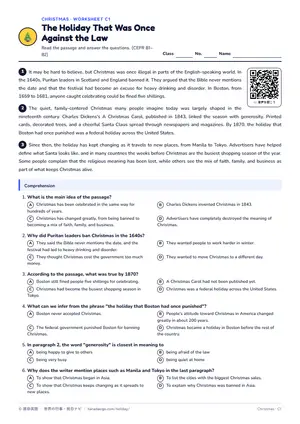
advanced の英文を読ませ、イギリスやアメリカでもクリスマスが禁止から19世紀の家族の行事、そして商業の季節へと変わったことを確認する。そのうえでグループごとに、1970年代以降の日本の広告(チキン・ケーキ・イブのデート)がどんな役割を果たしたかを、「日本のクリスマス」のページや信頼できる資料で調べさせる。
🗣️ Read the passage. How did Christmas change in Britain and America? / Advertisers have helped define Santa. What about in Japan? / Research the ads from the 1970s. Chicken, cake, and Christmas Eve dates. / Use reliable sources and note where you found the information.
「何がローカル化されたか」をテーマに、グループで英語で議論させる。①何が残り何が消えたか(宗教の意味、家族の夜)②何が加わったか(恋人の日、チキン)③それは本文第3段落の the mix of faith, family, and business とどう関係するか、の3点を順に話し合い、各グループが3分で報告する。
🗣️ What stayed, what disappeared, and what was added in Japan? / Compare Japan with Manila or Sydney. What is different? / Is Japan's Christmas a copy, or something new? / Each group, report in three minutes.
300語の英語レポートの構成(序論で問い、本論で歴史の要因と商業の要因、結論で自分の評価)を示し、アウトラインを授業中に書かせる。出典の書き方も確認し、本文は次回までの課題とする。
🗣️ Your report is 300 words. / Introduction, two main points, and your conclusion. / One point is history. The other is business. / List your sources at the end.
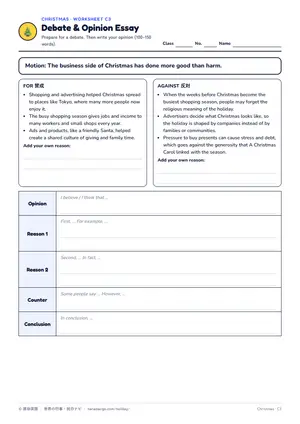
Why did Christmas in Japan become like this?

年 / 出来事 / 分類
1552 / Yamaguchi, the first Christmas Mass / religion
Edo period / Christianity banned → "Dutch New Year" at Dejima / religion・politics
1900 / Meidi-ya in Ginza, Christmas sales / business
1927–1947 / Dec 25 = Taisho Tenno-sai(holiday)/ politics
1970s〜 / ads:chicken, cake, Christmas Eve dates / business

Passage:banned(1640s)→ family holiday(19th c.)→ shopping season

What stayed? What disappeared? What was added?