Carnival & Mardi Gras
カーニバル(マルディグラ・パンケーキデー)の英語の授業アイデアとワークシート
印刷してすぐ使えるワークシート(PDF・Word・解答つき)と、授業の手順書。
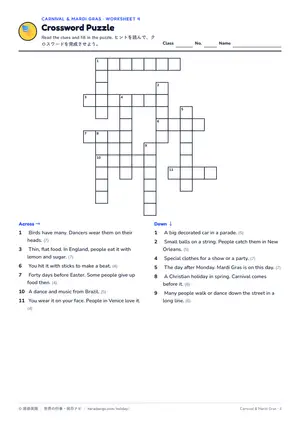
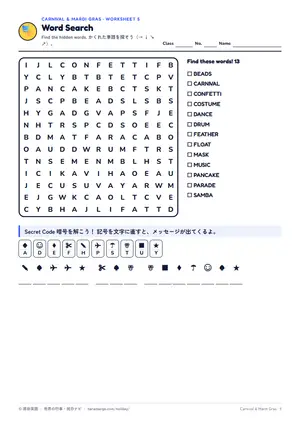
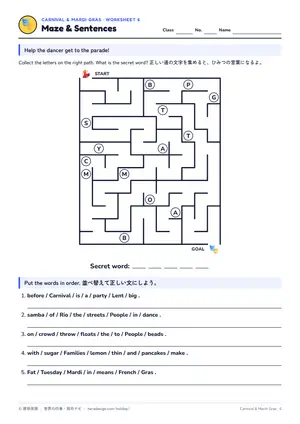
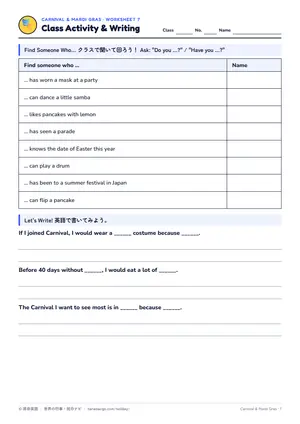
🖨️Worksheetsワークシート(無料・A4)
① 「中身を見る・印刷」で全ページを確認 → ② そのページ上の 🖨️ 印刷する でそのまま印刷できます。A4・無料。
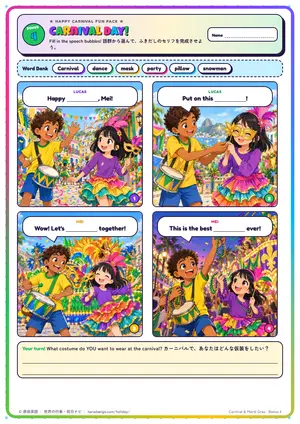
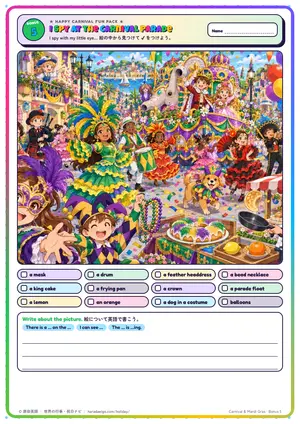
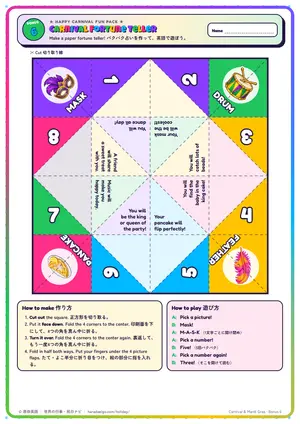
🍎Lesson Ideasカーニバル(マルディグラ・パンケーキデー)を使った英語の授業アイデア
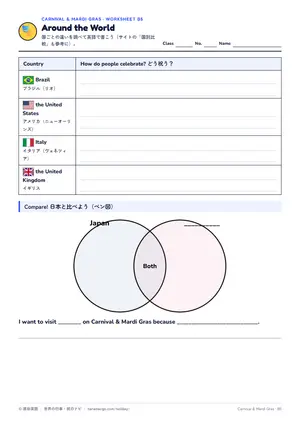
世界カーニバル・ガイドツアー
🎯 都市ごとのカーニバルの特徴を英語で読み取り、旅行ガイドとして紹介できる。
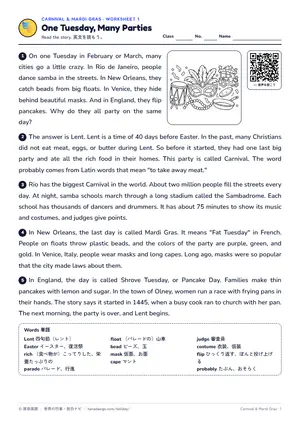
- リオ・ニューオーリンズ・ヴェネツィア・オルニー・ケルン・バンシュの英文カードを班に1枚ずつ配る。
- 班で「何をする?何を食べる?何を着る?」の3点を英語でメモする。
- In Binche, men throw oranges. Don't throw them back! のように、ガイド役が30秒で紹介する。
- クラスで「いちばん行ってみたいカーニバル」を投票する。
詳細版を開く(時間配分・Teacher Talk・板書)
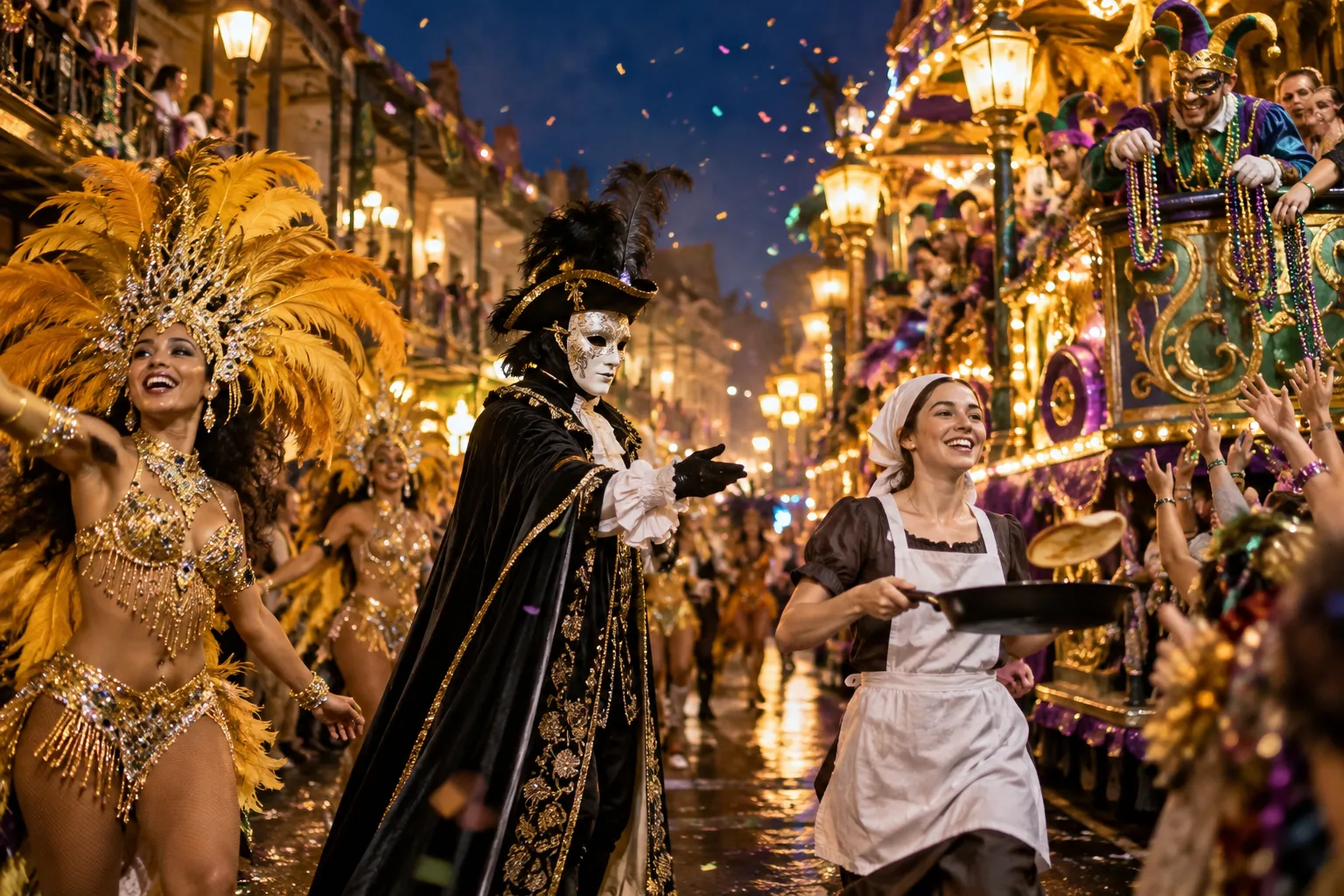
英語ページ本文の第1段落を音声で聞かせ、「同じ火曜日に、世界の町がちょっとおかしくなる」場面をつかませる。写真を見せながら、どの町で何をしているかを確かめる。
🗣️ Listen. On one Tuesday, many cities go a little crazy. / What do people do in Rio? In New Orleans? In Venice? / Today, you are tour guides. Let's visit six Carnivals.
6班に都市の英文カードを1枚ずつ配り、「何をする?何を食べる?何を着る?」の3点を英語でメモさせる。カードにない項目は写真や記事から補ってよいが、書いていないことは作らないよう伝える。
🗣️ Read your card. Find three things. / What do people do? What do they eat? What do they wear? / Write short notes in English. / Don't make things up. Use the card and the photos.
ガイド役が30秒で都市を紹介する(Welcome to Binche! Men called Gilles throw oranges. Don't throw them back!)。最後に一言、旅行者への注意やおすすめを入れさせる。聞き手は各都市の特徴を1語ずつメモする。
🗣️ Guides, you have thirty seconds. / Start with: Welcome to Rio! / End with a tip for tourists. Don't throw the oranges back! / Listeners, write one key word for each city.
「いちばん行ってみたいカーニバル」に投票させ、結果を発表する。何人かに I want to go to 〜 because 〜. で理由を言ってもらう。
🗣️ Which Carnival do you want to see most? Vote now. / The winner is ...! / Tell us why. I want to go to Venice because I like masks.
World Carnival TourRio:samba, two million people a day, samba schools
New Orleans:beads from floats, purple, green, gold, king cake
Venice:masks and long capes
Olney:pancakes, a race with frying pans
Cologne:tons of candy, starts at 11:11 on November 11
Binche:Gilles throw oranges → Don't throw them back! Welcome to __! People __. They eat __. They wear __. I want to go to __ because __.
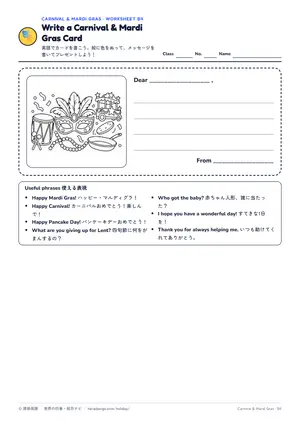
ヴェネツィア仮面を作って自己紹介
🎯 仮面をつけたまま、英語で自分の好きなもの・できることを伝える。
- バウタ・モレッタ・ペスト医師などの仮面の写真を見せ、仮面の名前を確認する。
- 画用紙で自分の仮面を作り、羽根やシールで飾る。
- 仮面をつけて I like ___. I can ___. と言い、誰かを当ててもらう。
詳細版を開く(時間配分・Teacher Talk・板書)
ヴェネツィアの仮面の写真を見せ、名前(バウタ・モレッタ・ペスト医師)を紹介する。「顔をかくすと、だれだかわからなくなる」ことを確かめ、モレッタは裏のボタンを歯でくわえてつけたので、つけている間はしゃべれなかったという話をする。
🗣️ Look at these masks. They are from Venice, in Italy. / This one is a moretta. Women held it with their teeth! / So they could not talk. Can you talk with a mask on? / Today, let's make our own masks.
型紙を切り取り、羽根やシールで飾らせる。作りながら色の英語(What color is it? / It's gold.)で声をかける。輪ゴムかわりばしをつけて、顔に固定できるようにする。
🗣️ Cut out your mask. Be careful with the scissors. / Decorate it. Use feathers and stickers. / What color is your mask? It's gold and purple. Beautiful!
例文カードと語群を黒板にはり、I like 〜. I can 〜. を1つずつ考えさせる。自分の正体がばれにくい内容を選ぶよう伝え、小さな声で練習させる。
🗣️ Think of two sentences. I like ... I can ... / For example: I like cats. I can swim. / Don't make it too easy! Practice quietly.
4〜5人ずつ前に出て仮面をつけ、声を少し変えて2文を言う。ほかの子は Are you 〜? で正体を当てる。全員が言い終わったら、仮面を教室に飾る。
🗣️ Put on your mask. Say your two sentences. / Who is it? Ask: Are you Kenta? / Yes, I am! / No, I'm not! / Great job! Let's put the masks on the wall.
Venice Carnival masks 🎭
bauta / moretta / plague doctor

I like __.
I can __.

Who is it?
Are you __?
Yes, I am. / No, I'm not.
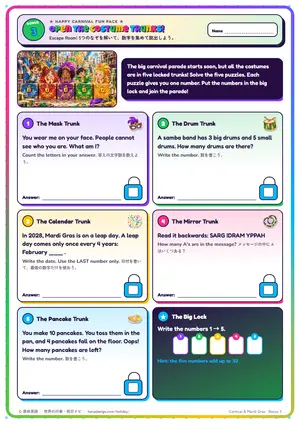
マルディグラの日付を計算しよう
🎯 日付・曜日・序数の英語に慣れ、行事が動く仕組みを理解する。
- 2025〜2028年のイースターの日付を英語で板書する(April 20, April 5, March 28, April 16)。
- カレンダーを使い、47日前の火曜日を班で数える。
- Mardi Gras in 2028 is on February 29. のように英語で答え、うるう日と重なる年を発見する。
- なぜ毎年変わるのかを日本語で説明し合う。
詳細版を開く(時間配分・Teacher Talk・板書)
英語ページの会話を聞かせ、「リオのカーニバルはいつ?」「なぜ毎年変わる?」の答え(47 days before Easter, and Easter moves every year)を聞き取らせる。四旬節(Lent)の前の最後のお祭りであることも確かめる。
🗣️ Listen to Yuto and Ana. When is Carnival in Rio? / Why does the date change? / Yes. It's 47 days before Easter, and Easter moves every year.
イースターの日付カードを英語で読み上げ、板書する。班にカレンダーを配り、各年のイースターから47日さかのぼってマルディグラ(火曜日)を見つけさせる。答えが火曜日になっているかで確かめられることを伝える。
🗣️ Easter in 2026 is on April 5. Count back 47 days. / Your answer must be a Tuesday. Check the day. / Work in groups. Find Mardi Gras for each year.
Mardi Gras in 2026 is on February 17. の形で答えを発表させ、序数の読み方(seventeenth, ninth, twenty-ninth)を確かめる。2028年が February 29(うるう日)になることに気づかせる。
🗣️ When is Mardi Gras in 2025? / Mardi Gras in 2025 is on March fourth. / Look at 2028. February twenty-ninth! What is special about that day?
「なぜマルディグラの日付は毎年変わるのか」をペアで日本語で説明し合わせる。イースターが月の満ち欠けで決まることにもふれて終わる。
🗣️ Why does Mardi Gras move every year? Explain to your partner. / Easter moves with the moon, so Mardi Gras moves too.
Mardi Gras = 47 days before Easter(Tuesday)

Easter → Mardi Gras
2025  April 20 → March 4(fourth)
2026  April 5 → February 17(seventeenth)
2027  March 28 → February 9(ninth)
2028  April 16 → February 29(twenty-ninth)← leap day!

Mardi Gras in __ is on __.
パンケーキデー・レシピ英語
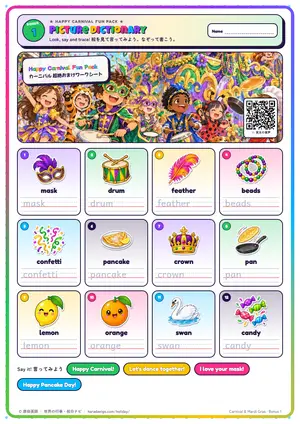
🎯 命令文と料理の動詞(mix, pour, flip)を使ってレシピを説明する。
- パンケーキの材料(eggs, milk, flour, butter)とその理由(四旬節の前に使い切る)を確認する。
- 絵カードを並べかえ、Mix the eggs and milk. のようにレシピを英語で言う。
- ペアで1人がシェフ、1人が料理人になり、指示どおりにジェスチャーで「調理」する。
- 最後にオルニーのパンケーキ競走の動画を見て、ルールを英語で3つ書く。
詳細版を開く(時間配分・Teacher Talk・板書)
材料の絵カードを見せて名前を確かめる。英語ページ本文の第2段落を聞かせ、「四旬節の前に、卵・牛乳・バターを使い切るためにパンケーキを焼いた」ことを確認する。イギリスではレモンと砂糖をかけた薄いパンケーキが定番だと伝える。
🗣️ What do we need for pancakes? Eggs, milk, flour, and butter. / Why did people make pancakes on this Tuesday? / Before Lent, they used up all the eggs, milk, and butter. / In England, people eat thin pancakes with lemon and sugar.
手順の絵カードをばらばらに配り、ペアで正しい順に並べさせる。動詞カードを絵に合わせ、Mix the eggs and milk. / Pour the batter into the pan. / Flip the pancake. のように命令文で言わせる。
🗣️ Put the pictures in order. / Now say each step. Mix the eggs, milk, and flour. / Melt the butter in the pan. Pour the batter. / Flip the pancake! Squeeze some lemon on top.
ペアで1人がシェフ、1人が料理人になる。シェフが英語で指示し、料理人はジェスチャーで「調理」する。順番をわざとまちがえたら、料理人が Wait! That's not right. と言ってよいルールにする。役を交代する。
🗣️ One of you is the chef. The other is the cook. / Chef, give instructions. Cook, use gestures. / If the order is wrong, say: Wait! That's not right. / Now change roles.
オルニーのパンケーキ競走の動画を見せる。1445年に忙しい料理人がフライパンを持ったまま教会へ走ったのが始まりという言い伝えを紹介し、動画からわかるレースのルールを英語で3つ書かせる(You must hold a frying pan. / You must flip the pancake. など)。
🗣️ Watch the pancake race in Olney. / The story says it started in 1445. / Write three rules. You must hold a frying pan. / What other rules did you see?
Pancake Day(Shrove Tuesday)
Why? Before Lent → use up eggs, milk, butter

1. Mix the eggs, milk, and flour.
2. Melt the butter in the pan.
3. Pour the batter into the pan.
4. Cook it for one minute.
5. Flip the pancake!
6. Squeeze lemon and sprinkle sugar on top.

Olney Pancake Race(since 1445?)
You must __.
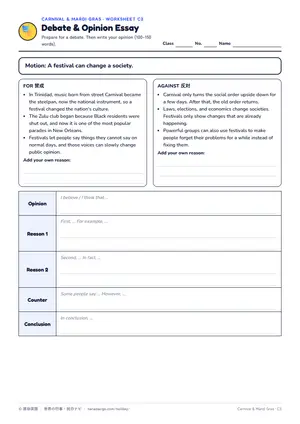
祭りと社会:トリニダードとニューオーリンズを読む
🎯 カーニバルが社会的弱者の表現の場になってきた歴史を英語で読み、議論する。
- advanced の英文を読み、planter・steelpan・Zulu の意味を確認する。
- 班ごとに「祭りが社会を変えた例」を他の国・日本から探す。
- Can a festival change a society? について、例を2つ挙げて3分で発表する。
- 発表後、英語で200語のリアクションペーパーを書く。
詳細版を開く(時間配分・Teacher Talk・板書)
スチールパンの演奏を聞かせ、「この楽器は何から生まれた?」と予想させる。ドラム缶から生まれ、トリニダード・トバゴの国民楽器になったことを伝え、本文につなげる。
🗣️ Listen to this music. What instrument is it? / It's a steelpan. What do you think it was made from? / The answer is in today's passage.
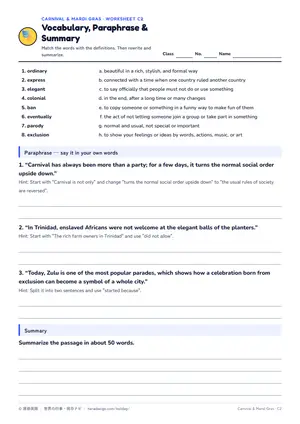
本文を個人で読ませ、planter・steelpan・Zulu の意味を語句確認シートで確かめる。ペアで、トリニダードとニューオーリンズの例について「だれが・何から排除され・どう表現したか・今どうなったか」を表にまとめさせる。
🗣️ Read the passage. Check the words planter, steelpan, and Zulu. / Who was shut out, and from what? / How did they express themselves? / What happened in the end?
班ごとに「祭りが社会を変えた例」をほかの国や日本から1つずつ探させる。本文の2例と同じ構造(排除 → 表現 → 社会の変化)があるかを確かめさせ、3分の発表を準備させる。
🗣️ Find one more example from another country or from Japan. / Does it follow the same pattern? Exclusion, expression, change. / Prepare a three-minute presentation. / Your question is: Can a festival change a society?
各班が3分で発表する。本文の例と自分たちの例の2つを挙げて答えることを条件にする。発表ごとに聞き手から英語の質問を1つ受ける。
🗣️ Group one, three minutes. Give two examples. / Any questions from the floor? / Did the festival change the society, or only show the change?
本文第1段落の it turns the normal social order upside down を読み直し、今日の議論とのつながりを確かめる。200語のリアクションペーパーの書き出しを授業内で書かせ、残りは宿題にする。
🗣️ Read the first paragraph again. Carnival turns the social order upside down. / Is that still true today? / Start your 200-word reaction paper now. Finish it at home.
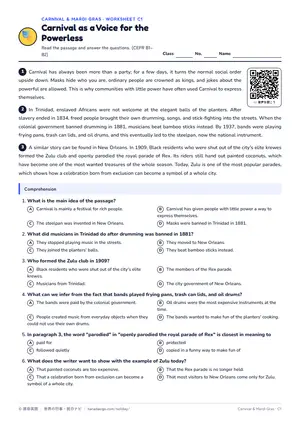
Carnival as a Voice for the Powerless

Trinidad:enslaved Africans × planters' balls → after 1834:drumming, songs, stick-fighting in the streets
1881 drumming banned → bamboo sticks → 1937 frying pans, trash can lids, oil drums → steelpan(national instrument)

New Orleans:1909 Black residents × elite krewes → Zulu club → parodied Rex → painted coconuts → one of the most popular parades

排除 → 表現 → 社会の変化?
Can a festival change a society?