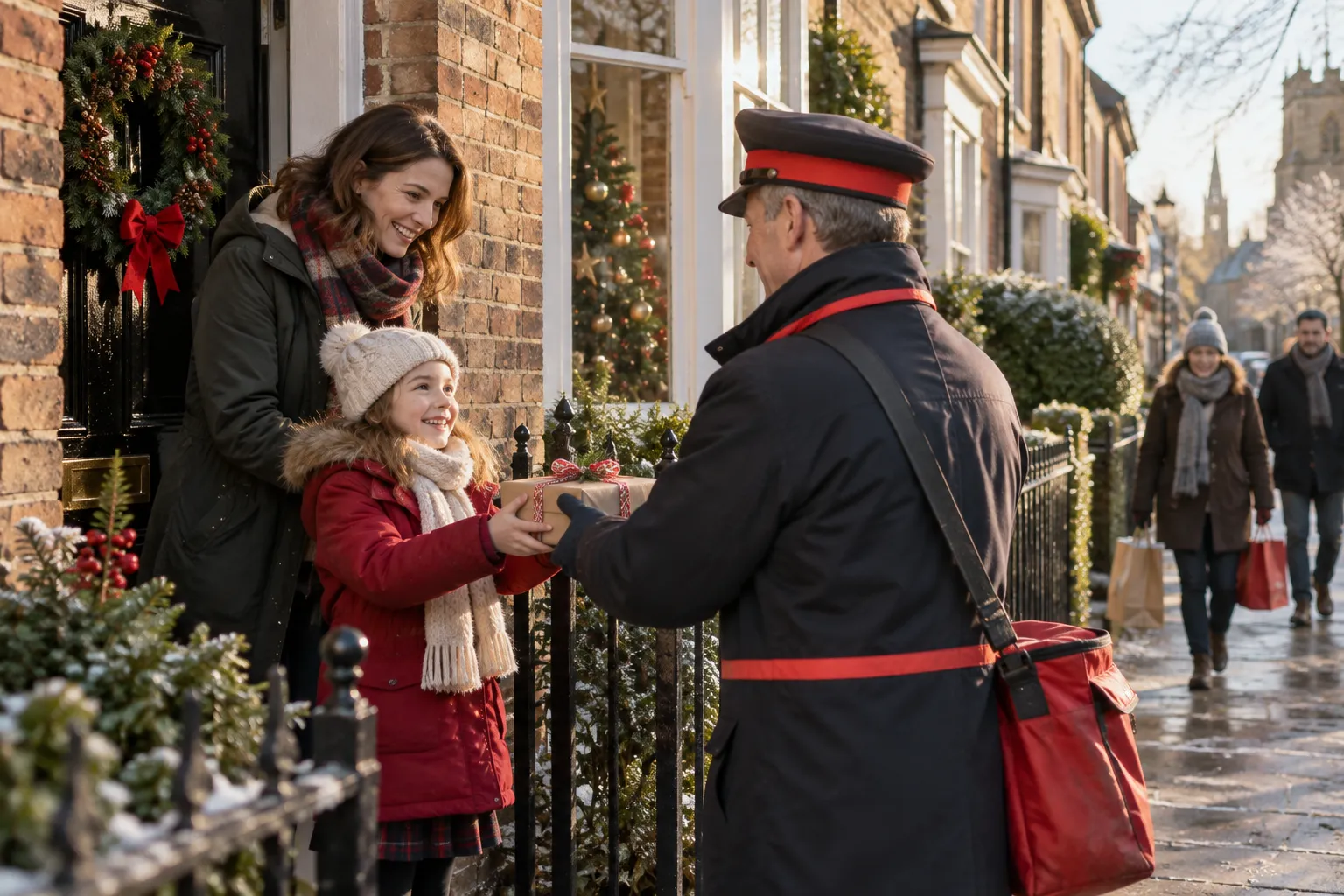
Boxing Day
ボクシング・デーの英語の授業アイデアとワークシート
印刷してすぐ使えるワークシート(PDF・Word・解答つき)と、授業の手順書。
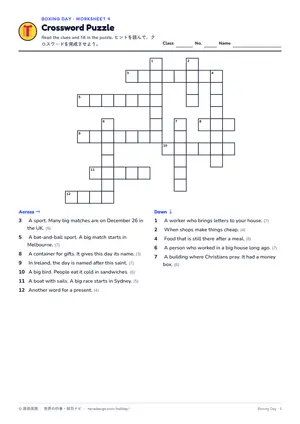
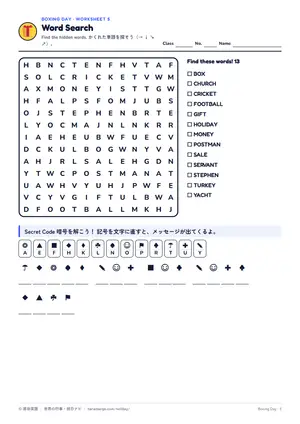
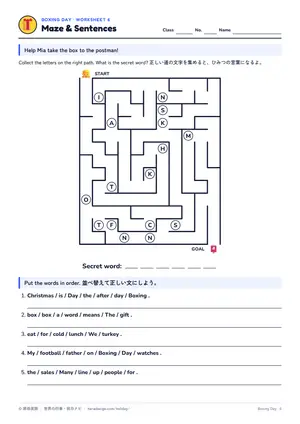
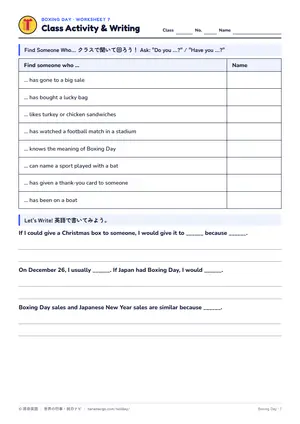
🖨️Worksheetsワークシート(無料・A4)
① 「中身を見る・印刷」で全ページを確認 → ② そのページ上の 🖨️ 印刷する でそのまま印刷できます。A4・無料。
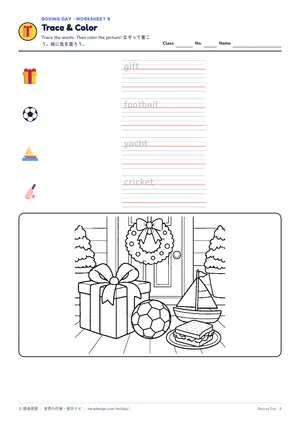
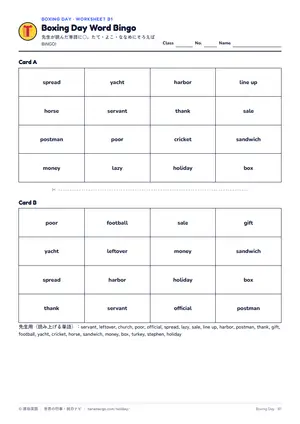
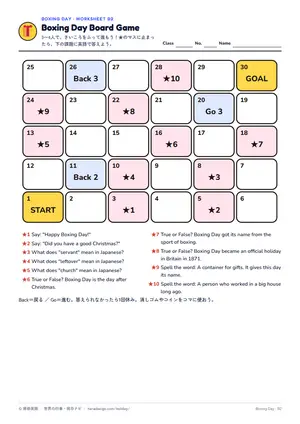
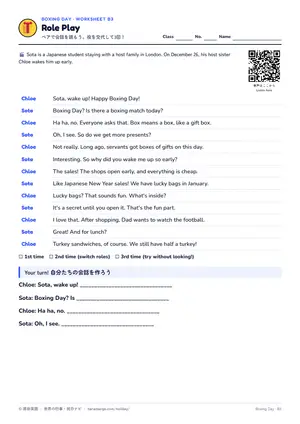
🍎Lesson Ideasボクシング・デーを使った英語の授業アイデア
「箱の正体」説比べディベート
🎯 複数の説を根拠とともに英語で比べ、「確かなこと」と「説」を区別する力をつける。
- 3つの説(使用人の箱・職人への心づけ・教会の献金箱)をグループに1つずつ割り当てる。
- We think ... because ... の形で、その説を支持する理由を3つ考える。
- 全体で発表し、確かな事実(1743年の記録、1871年の休日化)と、説の部分を板書で分ける。
- 最後に Which idea do you believe most? と各自が一文で書く。
詳細版を開く(時間配分・Teacher Talk・板書)
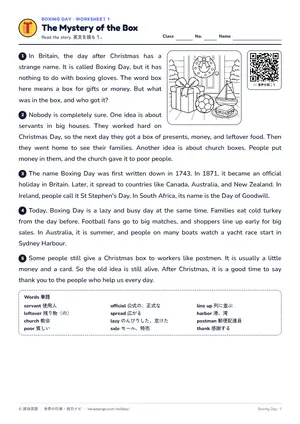
ボクシンググローブの絵を見せ、「12月26日は Boxing Day。ボクシングの日?」と聞く。本文の第1段落を音声で聞かせ、box が「贈り物やお金の箱」であることを確認し、But what was in the box, and who got it? の問いを板書する。
🗣️ December 26 is called Boxing Day. Is it a day for boxing matches? / Listen. What does box mean here? / A box for gifts or money. But what was in the box, and who got it? / Nobody is completely sure. There are three ideas.
3つの説をグループに1つずつ割り当て、記事のコピーと本文の第2段落を読ませる。We think ... because ... の形で、自分たちの説を支持する理由を3つ英語で書かせる。理由には、記事の中の具体的な記録(ピープスの1663年の日記など)を使ってよいと伝える。
🗣️ Each group has one idea. Read about it. / Write three reasons. We think ... because ... / Use facts from the text. Dates and names are strong reasons. / You have ten minutes.
各グループが2分ずつ自分たちの説を発表し、ほかのグループは1つ質問か反論をする(But there is no record of ... / How do you know ...?)。同じ説のグループが複数ある場合は、理由の重ならないものを優先して発表させる。
🗣️ Group one, tell us your idea and your reasons. / Other groups, ask one question or give one counterpoint. / For example, how do you know that? / Thank you. Next group, please.
黒板を「確かなこと」と「説」の2つに分け、発表に出た内容を生徒に振り分けさせる。確かなこと:Christmas box という言葉が17世紀には使われていたこと、Boxing Day の最古の記録は1743年、1871年の銀行休日法で法定休日になったこと。説:箱の正体。3つの説は「クリスマスのあとに立場の弱い人へお金や物を回す」点で共通していることも確認する。
🗣️ Is this a fact or an idea? Where should it go? / 1743 is a fact. It is in the Oxford English Dictionary. / 1871 is a fact, too. It became an official holiday. / What do the three ideas have in common?
Which idea do you believe most? と問い、自分の担当とは関係なく、いちばん納得した説を理由つきで1文書かせる。「1つが正解というより、いくつかの習慣が重なって名前になったと考えるのが自然」という記事の見方を紹介して終わる。
🗣️ Which idea do you believe most? Why? / Write one sentence. I believe ... because ... / Maybe the name came from more than one custom.
Boxing Day(December 26)→ box = a box for gifts or money

説(ideas)
① servants in big houses → a box of presents, money, leftover food
② workers and tradespeople → Christmas tips(Pepys's diary, 1663)
③ church boxes → money for poor people
共通点:クリスマスのあとに、立場の弱い人へお金や物を回す

確かなこと(facts)
Christmas box:17世紀には使われていた
1743 → Boxing Day の最古の記録
1871 → an official holiday in Britain

I believe __ because __.
ありがとうの Christmas box カードを作ろう
🎯 身近で働く人に英語で感謝を伝える。
- Christmas box の由来を絵で紹介する(使用人・郵便配達の人など)。
- 学校で働く人(給食の人、用務員さんなど)を1人選ぶ。
- Thank you for ______. のカードを書き、紙の小箱に入れる。
- 実際に渡せる場合は渡し、もらった人の反応をクラスで共有する。
詳細版を開く(時間配分・Teacher Talk・板書)
Christmas box の絵を見せ、「イギリスでは昔、クリスマスの次の日に、いつも働いてくれる人へ箱に入れた贈り物やお金を渡した」と話す。今でも郵便配達の人などに小さなお金とカードを渡すことがあると伝える。
🗣️ Look at this picture. This is a Christmas box. / In Britain, people gave a box to workers after Christmas. / Today, some people give a card to the postman. It means thank you.
学校で働く人の絵カードを見せながら、Who helps us at school? と聞く。言葉カードを使って Thank you for the lunch. / Thank you for cleaning the school. などを全員で言う。だれにカードを書くかを1人ずつ決めさせる。
🗣️ Who helps us at school every day? / Thank you for the lunch. Say it together. / Thank you for cleaning the school. / Choose one person. Who will you write to?
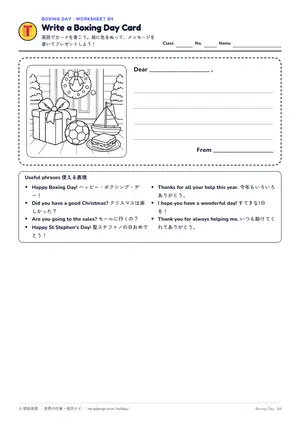
カードに To __, Thank you for __. From __ を書かせ、余白に絵を描かせる。書けたら小箱を組み立て、カードを中に入れる。机間指導で for のあとの言葉を一緒に考える。
🗣️ Write To and the person's name. / Then write Thank you for ... / Draw a picture, too. / Make your box and put the card inside.
何人かに自分のカードを読ませる。実際に渡せる相手には、休み時間や給食のときに渡しに行く計画を立てる。後日、もらった人の反応をクラスで共有する時間をとることを伝える。
🗣️ Who wants to read your card? / When can you give it? At lunch time? After school? / Next time, tell us what they said!
Christmas box 🎁(イギリス・12月26日 Boxing Day)
いつも働いてくれる人に「ありがとう」の箱

To __,
Thank you for __.
From __

the lunch / cleaning the school / the books / your help / driving the bus
ボクシング・デーのセールで買い物ロールプレイ
🎯 値段・割引・買い物の英語表現を使えるようにする。
- 50% off / half price / How much is it? などの表現を確認する。
- 店員役と客役に分かれ、セール品のカードを使って会話する。
- 予算内でいちばんお得に買えた人を発表する。
- 日本の初売り・福袋を英語で説明する一文を作る。
詳細版を開く(時間配分・Teacher Talk・板書)
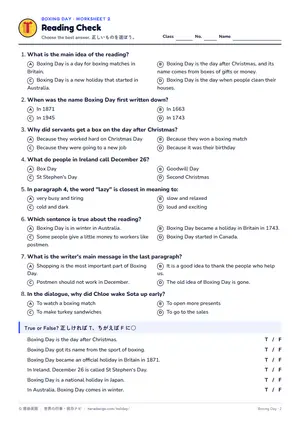
英語ページの会話を音声で聞かせ、クロエがソウタを朝早く起こした理由(セール)と、ソウタが日本の何に似ていると言ったか(福袋)を聞き取らせる。
🗣️ Why did Chloe wake Sota up so early? Listen. / The sales! The shops open early, and everything is cheap. / What does Sota say is similar in Japan? / Yes, lucky bags in January.
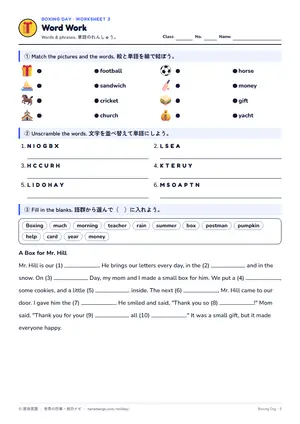
50% off / half price / 20% off / How much is it? / I'll take it. / That's too expensive. を板書し、全員で発音する。£60 の50% off はいくらかなど、2〜3問を全体で計算して言わせる。
🗣️ Fifty percent off means half price. / This jacket is sixty pounds. It's fifty percent off. How much is it now? / Thirty pounds! Good. / If you want it, say I'll take it.
店員役と客役に分かれ、セール品カードを使って会話させる。客役は£50の予算でできるだけお得に買い、買い物メモに記録する。5分で役を交代する。
🗣️ Shop staff, show your sale items. / Customers, you have fifty pounds. Ask, How much is it? / Write what you bought and how much you paid. / Time's up. Change roles.
予算内でいちばんお得に買えた人(元の値段の合計と払った金額の差がいちばん大きい人)を発表させる。最後に、日本の初売り・福袋を説明する英文を1文書かせる(例:In Japan, people buy lucky bags at New Year sales. You don't know what is inside.)。
🗣️ Who saved the most money? Tell us. / Now explain Japanese New Year sales in English. / For example, in Japan, people buy lucky bags. You don't know what is inside!
Boxing Day sales 🛍(イギリス・カナダなど/12月26日)

How much is it?
It's 60 pounds. But it's 50% off.(= half price)
I'll take it. / That's too expensive.

50% off → £60 × 1/2 = £30

日本では?
In Japan, people buy lucky bags at New Year sales.
You don't know what is inside.
12月26日の世界地図
🎯 同じ日でも国によって過ごし方がちがうことを、地理と結びつけて英語で発表する。
- 班ごとにイギリス・アイルランド・オーストラリア・カナダ・南アフリカ・ドイツを担当する。
- Weather / Name of the day / What people do の3点を調べる。
- 世界地図に付せんで貼り、On December 26, people in ... の形で発表する。
- 南半球と北半球のちがいについて気づいたことを話し合う。
詳細版を開く(時間配分・Teacher Talk・板書)
本文の第3段落を音声で聞かせ、アイルランドでは St Stephen's Day、南アフリカでは the Day of Goodwill と呼ぶことを聞き取らせる。「同じ12月26日でも、国によって名前も過ごし方もちがう」と伝える。
🗣️ Listen. What do people in Ireland call December 26? / St Stephen's Day. And in South Africa? / The Day of Goodwill. Same day, different names!
班ごとに担当国を決め、記事のコピーから Weather / Name of the day / What people do の3点を調べさせる。Weather は、その国が北半球か南半球かを地図で確かめて書かせる(例:Australia → summer, hot)。
🗣️ Each group has one country. / Find three things. The weather, the name of the day, and what people do. / Is your country in the north or the south? Check the map. / Write short English answers.
各班が世界地図の担当国に付せんをはり、On December 26, people in __ __. It is __ there. の形で1分ずつ発表する。聞く側はワークシートの表を埋める。
🗣️ Put your sticky note on the map. / Say, On December 26, people in Australia watch a yacht race. / Then tell us the weather. It is summer there. / Listeners, fill in your table.
地図を見て、南半球(オーストラリア・南アフリカ)と北半球の国で過ごし方がどうちがうかを話し合わせる。夏の国は外で過ごす行事(ヨットレース・クリケット)が多いことに気づかせ、日本の12月26日(クリスマスの飾りがお正月の飾りに替わる日)とも比べて終わる。
🗣️ Look at the map. What is different in the south? / It's summer, so people go outside. Yacht races and cricket! / What happens in Japan on December 26?
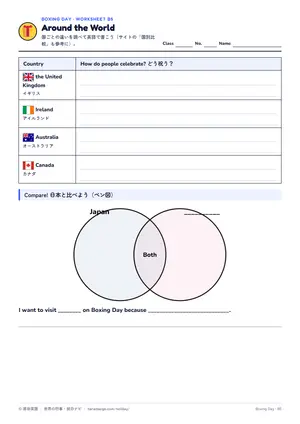
December 26 around the world 🌍 国 / Weather / Name / What people doUK / winter / Boxing Day / leftovers, football, horse racing, sales
Ireland / winter / St Stephen's Day / Wren Boys go from house to house
Australia / summer / Boxing Day / Sydney yacht race, cricket in Melbourne
Canada / winter / Boxing Day / Boxing Week sales
South Africa / summer / Day of Goodwill
Germany / winter / the second day of Christmas On December 26, people in __ __. It is __ there.
小売カレンダーの変化を読み解く
🎯 ブラックフライデーの広がりと地域の伝統の関係を、データをもとに英語で論じる。
- advanced の英文を読み、2009年・2015年・2010年代カナダのデータを整理する。
- 日本の初売りや福袋がネット通販でどう変わったかを調べる。
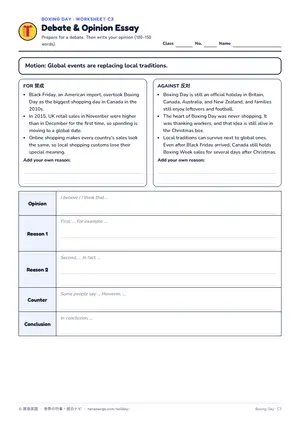
- Global events are replacing local traditions. に賛成・反対の立場で議論する。
- 議論をふまえて200語の英文エッセイを書く。
詳細版を開く(時間配分・Teacher Talk・板書)
「1年でいちばん物が売れる日はいつだと思う?」と聞き、日本・イギリス・カナダについて予想させる。カナダでは長いあいだボクシング・デーだったと伝え、「今はどうか」を本文で確かめる問いにする。
🗣️ What is the biggest shopping day of the year in Japan? / What about Britain and Canada? / For a long time, it was Boxing Day in Canada. Is it still true?
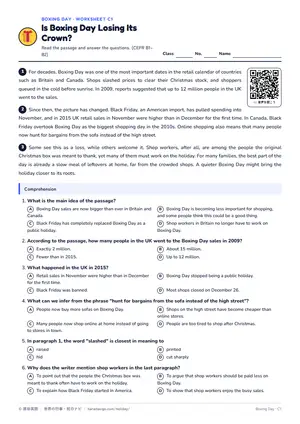
本文を個人で黙読させ、データ整理表に2009年(イギリスでセールに最大1200万人)、2015年(イギリスで11月の小売売上が初めて12月を上回った)、2010年代(カナダでブラックフライデーがボクシング・デーを抜いた)を整理させる。ペアで答え合わせをし、本文第3段落の「静かなボクシング・デーは、この祝日を原点に近づけるかもしれない」という見方も確認する。
🗣️ Read the passage. Fill in the table with the three pieces of data. / What happened in 2009? In 2015? In Canada in the 2010s? / What does the writer say about shop workers? / Why might a quieter Boxing Day be closer to its roots?
グループで、日本の初売りや福袋がネット通販の広がりでどう変わったかを調べさせる。企業の発表や新聞記事など、出典がはっきりした資料を使い、年・出来事・出典をメモさせる。
🗣️ Now look at Japan. How have New Year sales and lucky bags changed? / Think about online shopping. / Use reliable sources. Write the source for each fact.
論題 Global events are replacing local traditions. を示し、賛成・反対に分けて議論させる。立論(各3分)→ 作戦タイム(2分)→ 反論(各3分)→ 最終弁論(各2分)。本文のデータと日本の調べた例を必ず1つずつ使わせる。
🗣️ The motion is: Global events are replacing local traditions. / Use one piece of data from the passage and one example from Japan. / For team, three minutes. Please begin. / Against team, answer their strongest point.
議論をふりかえり、どちらの立場の根拠が強かったかを全体で確認する。200語の英文エッセイの構成(立場・データ・日本の例・結論)を示し、授業中は書き出しの段落まで書かせて、残りを課題にする。
🗣️ Which side had stronger evidence? Why? / Write a 200-word essay on the motion. / Give your position, the data, a Japanese example, and a conclusion. / Start your first paragraph now.
Is Boxing Day Losing Its Crown?

年 / 国 / 出来事
2009 / UK / up to 12 million people went to the sales
2015 / UK / November retail sales > December(first time)
2010s / Canada / Black Friday overtook Boxing Day
+ online shopping:from the sofa instead of the high street

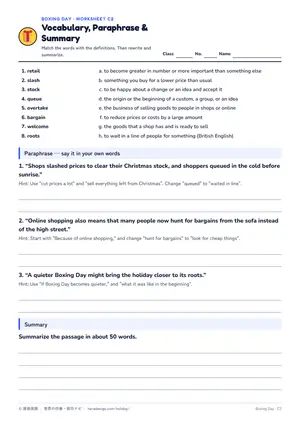
Writer:A quieter Boxing Day might bring the holiday closer to its roots.
(shop workers = the people the Christmas box was meant to thank)

日本:初売り・福袋 × ネット通販 → ?

Motion: Global events are replacing local traditions.