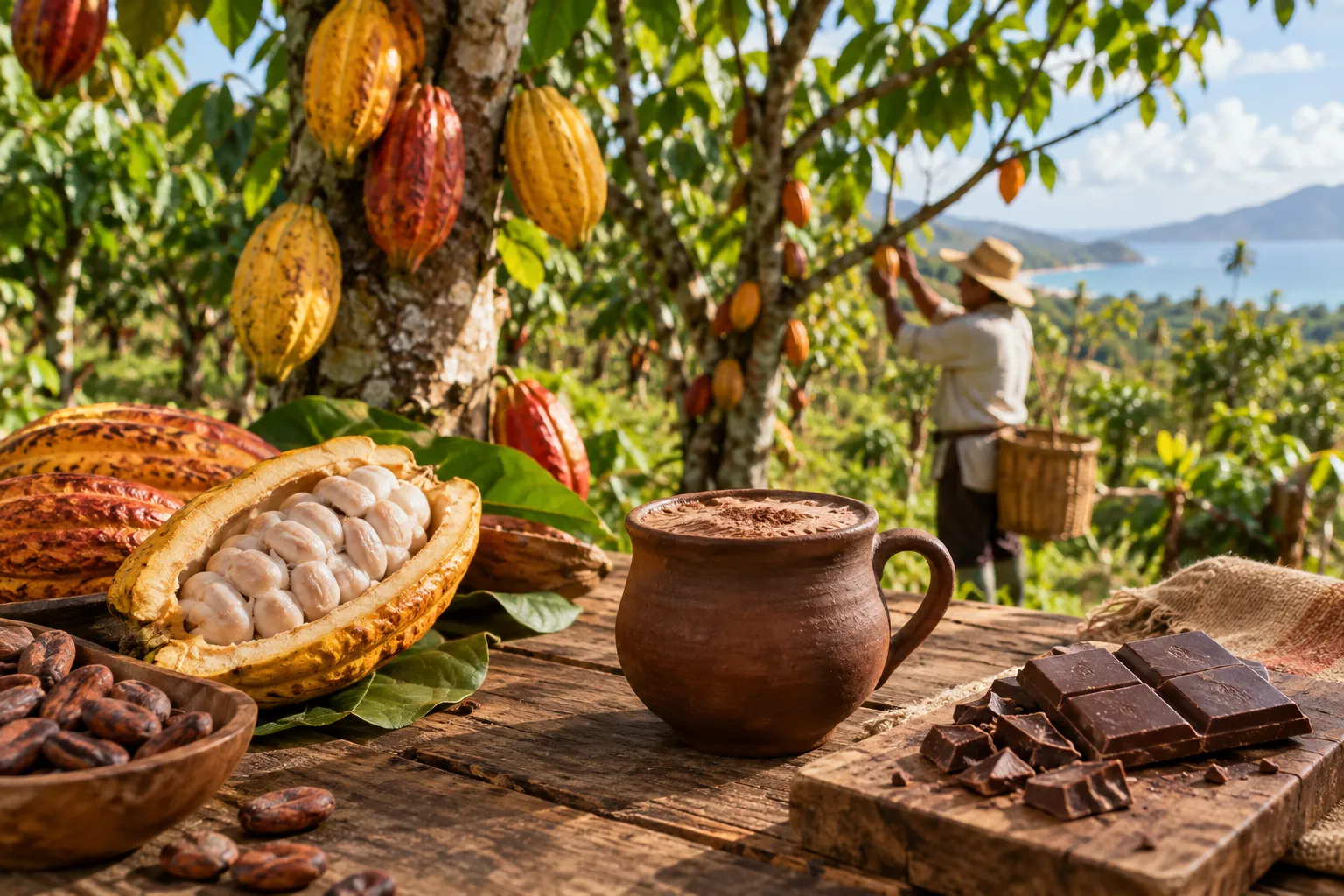
World Chocolate Day
世界チョコレートデーの英語の授業アイデアとワークシート
印刷してすぐ使えるワークシート(PDF・Word・解答つき)と、授業の手順書。
🖨️Worksheetsワークシート(無料・A4)
① 「中身を見る・印刷」で全ページを確認 → ② そのページ上の 🖨️ 印刷する でそのまま印刷できます。A4・無料。
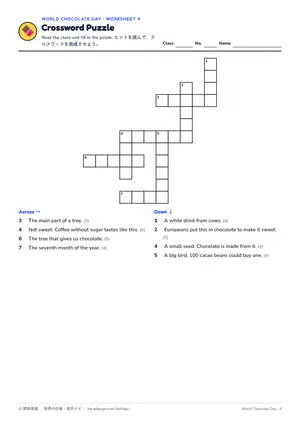
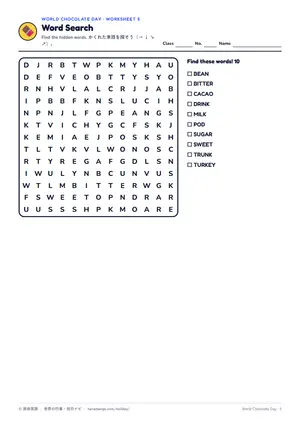
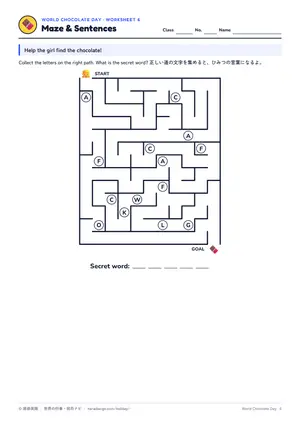
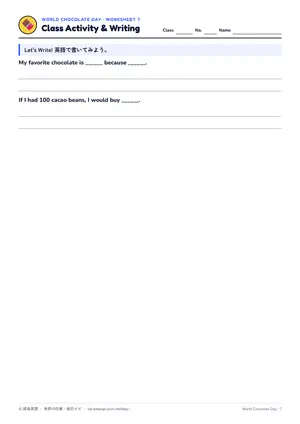
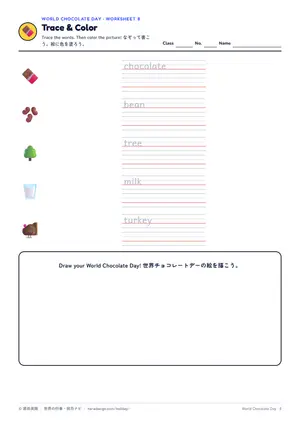
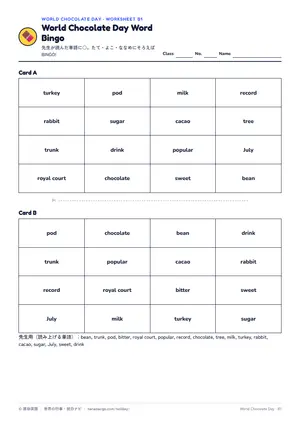
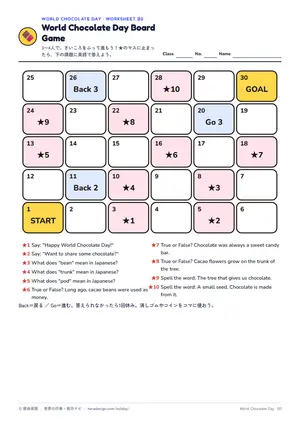
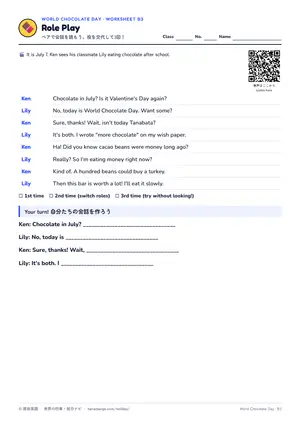
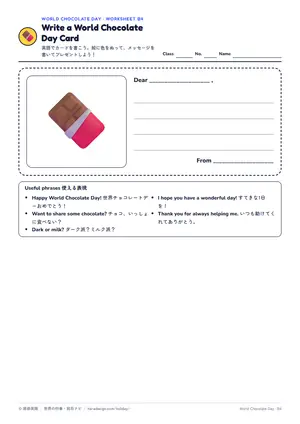
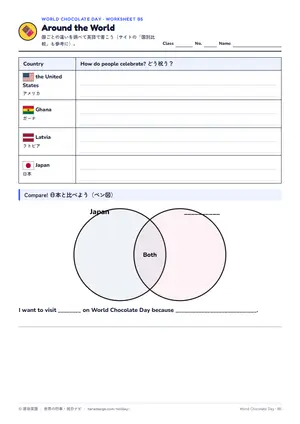
🍎Lesson Ideas世界チョコレートデーを使った英語の授業アイデア
カカオ豆で買い物ゲーム
🎯 数字と買い物の英語を、アステカの「豆のお金」で楽しく練習する。
- 1545年の記録(ウサギ30粒、トマト1粒、七面鳥100粒)を紹介する。
- ペアで店員と客になり、How many beans is this rabbit? / It's thirty beans. と会話する。
- 教師が値段カードを増やし、合計の豆の数を英語で計算する。
- 最後に「今なら豆100粒で何を買う?」を1文で発表する。
詳細版を開く(時間配分・Teacher Talk・板書)
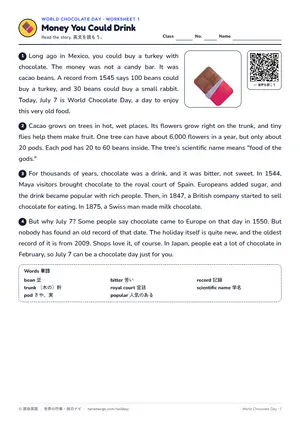
英語ページ本文の第1段落を聞かせ、昔のメキシコではチョコレートの原料のカカオ豆で七面鳥が買えたことを確認する。1545年の記録として、ウサギ30粒・トマト1粒・七面鳥100粒の値段カードを黒板にはる。
🗣️ Long ago in Mexico, you could buy a turkey with chocolate. / The money was cacao beans. / A record from 1545 says 100 beans could buy a turkey. / A small rabbit was 30 beans.
How many beans is this rabbit? / It's thirty beans. の会話を板書し、先生が客、クラス全体が店員になって3つの品物で練習する。thirty と thirteen、hundred の発音のちがいに気をつけさせる。1粒のときは It's one bean. と単数になることも確認する。
🗣️ How many beans is this rabbit? / It's thirty beans. Not thirteen. Thirty! / How many beans is this tomato? It's one bean. / Repeat after me.
ペアで店員と客になり、3つの品物で買い物の会話をさせる。客は Can I have a rabbit, please? と頼み、店員が値段を言い、客が紙のチップかメモで豆をはらう。1分ごとに役を交代させる。
🗣️ Work in pairs. One is the shopkeeper. One is the customer. / Customers, ask "How many beans is this?" / Then say "Can I have one, please?" / Change roles.
注文カードをペアに配り、組み合わせの合計の豆の数を計算させる(例:two rabbits and three tomatoes = 63 beans)。店員役が That's sixty-three beans. と英語で言えたら次のカードに進ませる。複数形(rabbits / tomatoes / turkeys)にも気をつけさせる。
🗣️ Here is an order card. Two rabbits and three tomatoes. / How many beans in total? / That's sixty-three beans! / Next card, please.
「今なら豆100粒で何を買う?」と聞き、I would buy ___ with 100 beans. の形で1文ずつ発表させる。昔は豆100粒で七面鳥1羽だったことと比べて、クラスの答えを楽しむ。
🗣️ You have 100 beans. What would you buy today? / I would buy a new bag with 100 beans. / Long ago, 100 beans could buy a turkey!
🫘 Cacao beans were money!(a record from 1545)

🐇 a small rabbit … 30 beans
🍅 a big tomato … 1 bean
🦃 a turkey … 100 beans

A:How many beans is this rabbit?
B:It's thirty beans.
A:Can I have one, please?

2 rabbits + 3 tomatoes = 63 beans
That's sixty-three beans.

thirty(30)⇔ thirteen(13)
I would buy ___ with 100 beans.
記念日ファクトチェック
🎯 「よく言われる由来」を資料で確かめ、根拠を示して英語で説明する。
- 「7月7日は1550年にチョコがヨーロッパに来た日」という説を示す。
- グループで1544年・1585年の記録と比べ、説が確かかどうかを話し合う。
- This story is (true / not proven) because ... の形で英語にまとめる。
- ほかの「変わった記念日」の由来も1つ調べて紹介し合う。
詳細版を開く(時間配分・Teacher Talk・板書)
説のカードを黒板にはり、「本当だと思う人は?」と手を挙げさせる。インターネットでよく見る記念日の由来でも、確かめる方法があることを伝え、今日は資料で確かめる「ファクトチェック」をすると説明する。
🗣️ Some people say chocolate came to Europe on July 7, 1550. / Do you think this is true? Raise your hand. / How can we check? / Today, we will be fact-checkers.
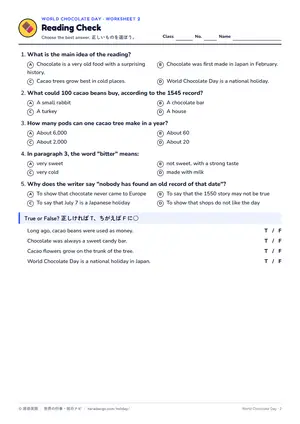
英語ページ本文の第3・第4段落を音声で聞かせてから読ませる。グループに根拠カード4枚を配り、それぞれのカードが説を支えるか、支えないかを分けさせる。1544年の記録は1550年より前であること、1550年の日付を書いた当時の記録はないことに注目させる。
🗣️ Read paragraphs 3 and 4. / In 1544, Maya visitors brought chocolate to the royal court of Spain. / Nobody has found an old record of the 1550 date. / Does each card support the story or not?
グループで説が true か not proven かを話し合わせる。「記録が見つかっていない」ことは「うそだと証明された」ことと同じではないので、false ではなく not proven という言い方があることを示す。英語版ウィキペディアも「そう言う人もいる」という書き方にとどめていることを紹介する。
🗣️ Is the story true or not proven? / "Not proven" is different from "false." / No record does not always mean it is a lie. / Talk in your group and decide.
This story is (true / not proven) because ... の形で、根拠を2つ入れた英文を書かせる。根拠には根拠カードの年を必ず1つ使うよう指示する。
🗣️ Write your answer in English. / This story is not proven because no record from 1550 has been found. / Use at least one year from the cards.
各グループが判定と根拠を発表する。続けて、ほかの記念日の記事の「由来」の節をグループで読み、その日がなぜその日付なのかを英語で1〜2文にまとめて紹介し合う。記念日の由来には、記録で確かめられるものとそうでないものがあることをまとめる。
🗣️ Each group, tell us your answer and your reasons. / Now read about another special day. / Why is it on that date? Tell the class in one or two sentences. / Always check the facts.
FACT CHECK 🍫

The story:Chocolate came to Europe on July 7, 1550.

Evidence
・1550:no record from that time
・1544:Maya visitors → chocolate at the royal court of Spain
・1585:first record of cacao beans as cargo to Europe
・2009:oldest record of World Chocolate Day(a holiday marketing guide)

true / not proven / false
※ not proven ≠ false

This story is ___ because ___.