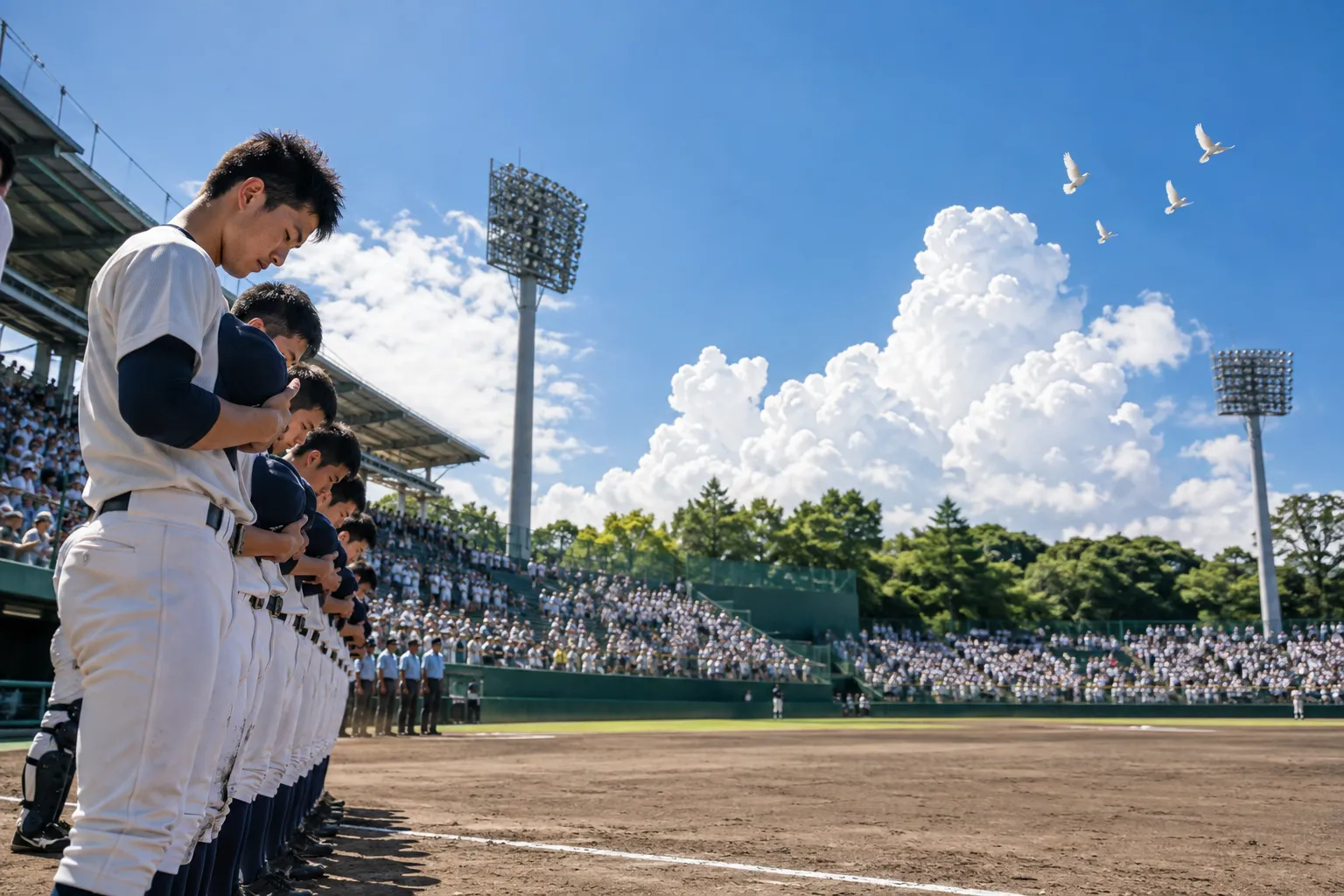
End of the War Memorial Day
終戦の日(8月15日)の英語の授業アイデアとワークシート
印刷してすぐ使えるワークシート(PDF・Word・解答つき)と、授業の手順書。
🖨️Worksheetsワークシート(無料・A4)
① 「中身を見る・印刷」で全ページを確認 → ② そのページ上の 🖨️ 印刷する でそのまま印刷できます。A4・無料。
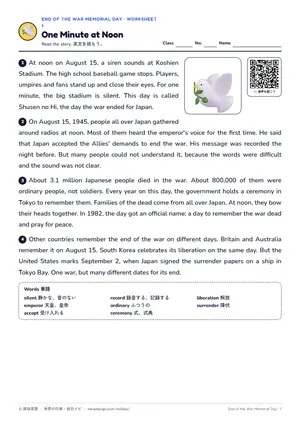
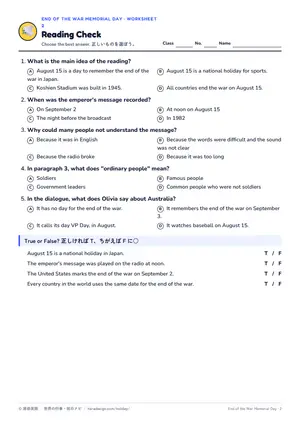
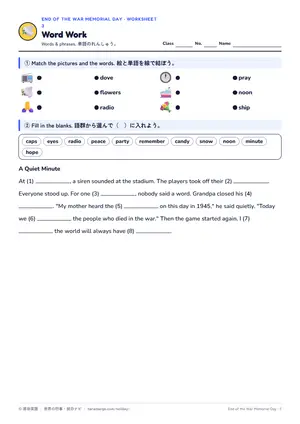
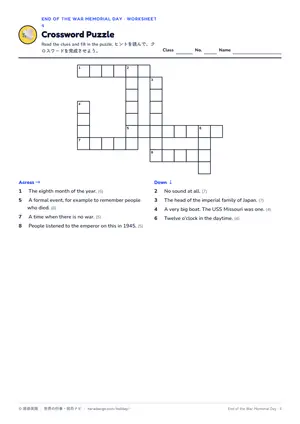
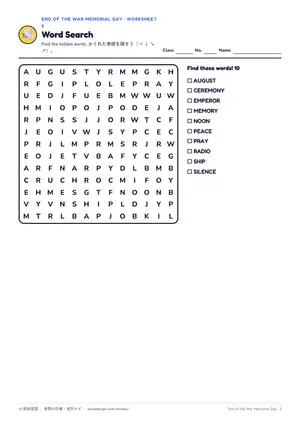
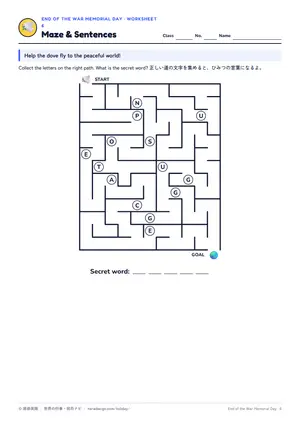
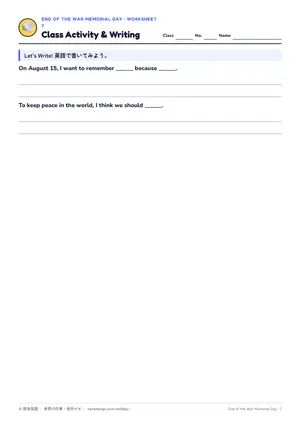
🍎Lesson Ideas終戦の日(8月15日)を使った英語の授業アイデア
おじいちゃん・おばあちゃんに聞いた話を英語で
🎯 身近な人から聞いた戦争や戦後の暮らしの話を、過去形の短い英文3〜4文で伝える。
- 夏休み前に、家族や地域のお年寄りに「子どものころの暮らし」を聞いてくる宿題を出す(つらい話を無理に聞かないよう伝える)。
- My grandmother was ~ years old in 1945. She lived in ~. She ate ~. の型で英文を書く。
- 4人グループで発表し合い、聞いた人は Thank you for sharing. と一言返す。
- 最後に「今の暮らしとちがうこと」を英語で1つずつ挙げてクラスで共有する。
詳細版を開く(時間配分・Teacher Talk・板書)
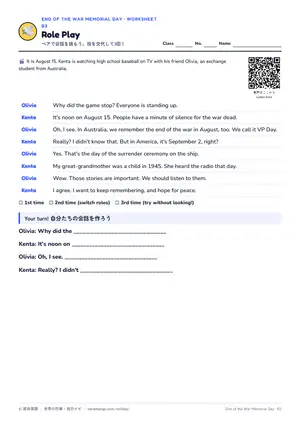
英語ページの会話の後半を聞かせる。ケンタの曾祖母が1945年に子どもで、その日ラジオを聞いたこと、オリビアが Those stories are important. と言っていることを確認する。今日は聞いてきた話を英語で伝え合うと予告する。
🗣️ Listen to Kenta and Olivia. / Kenta's great-grandmother was a child in 1945. / Olivia says, Those stories are important. / Today, you will share the stories you heard.
聞き取りメモをもとに、型を使って英文を3〜4文書かせる。過去形の動詞の一覧を見ながら書いてよいと伝える。聞いてこられなかった生徒は、本や資料館で知った話、または家族に聞いた今の暮らしとちがう点で書いてよい。机間指導で過去形の使い方を確認する。
🗣️ Look at your notes. Write three or four sentences. / Use the past tense. Lived, ate, played. / My grandmother was ten years old in 1945. She lived in Osaka. / Raise your hand if you need help.
4人グループで1人ずつ発表させる。聞いた人は Thank you for sharing. と一言返すことを約束にする。話の内容によっては、聞き手がしんみりすることもあるので、ゆっくり読むよう伝える。
🗣️ Read your sentences to your group. Read slowly. / After each story, say, Thank you for sharing. / Listen carefully. These are real stories.
「今の暮らしとちがうこと」を英語で1つずつ挙げさせ、クラスで共有する。先生は In 1945, ... Now, ... の形で板書する。最後に、毎年8月15日の正午に1分間の黙とうがあることを伝える。
🗣️ What is different from our life today? / For example, in 1945, my grandmother walked to school. Now, I take the bus. / On August 15 at noon, people in Japan have a minute of silence.
Stories from 1945

My grandmother was __ years old in 1945.
She lived in __.
She ate __.
She __.

過去形:lived / ate / played / went / heard / worked

聞いた人 → Thank you for sharing.

In 1945, __. Now, __.
8月15日・9月2日・9月3日:国によってちがう「終戦の日」
🎯 同じ出来事でも国によって記念する日付や名前がちがうことを、英語の資料から読み取り、理由を説明する。
- 日本・アメリカ・イギリス・オーストラリア・韓国・中国の6か国を班に割り当てる。
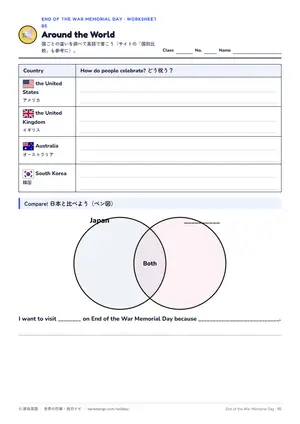
- 本文と compare の英文を読み、その国の日付・呼び名(V-J Day, VP Day, Gwangbokjeol など)・意味を表にまとめる。
- In ___, the end of the war is remembered on ___ because ___. の文で班ごとに発表する。
- 「日付がちがうと、記念する意味はどう変わるか」を英語で短く話し合う。
詳細版を開く(時間配分・Teacher Talk・板書)
「第二次世界大戦が終わった日はいつ?」と聞く。8月15日と答える生徒が多いところで、本文第4段落の最後の一文 One war, but many different dates for its end. を見せ、国によって日付がちがうことを予告する。
🗣️ When did World War II end? / Many of you said August 15. / But read this. One war, but many different dates for its end. / Why are the dates different?
基本セット p.1 の第4段落を音声で聞かせたあと、6つの班に国を1つずつ割り当て、国別カードを配る。本文とカードの英文を読み、その国の日付・呼び名(V-J Day, VP Day, Gwangbokjeol など)・意味を表にまとめさせる。
🗣️ Listen to paragraph 4. / Each group has one country. / Find three things. The date, the name, and the meaning. / Write them in the table.
In ___, the end of the war is remembered on ___ because ___. の文で、班ごとに発表させる。ほかの班は自分の表の空欄を埋めながら聞く。9月2日は東京湾の戦艦ミズーリで降伏文書に署名した日、8月15日は日本国内で戦争の終わりが伝えられた日、という区切りのちがいを板書で整理する。
🗣️ Use this sentence. In ..., the end of the war is remembered on ... because .... / Other groups, fill in your table. / September 2 is the day of the surrender papers. / August 15 is the day people in Japan heard the news.
「日付がちがうと、記念する意味はどう変わるか」を班で英語で短く話し合わせる。勝利を祝う日、解放を祝う日、亡くなった人を追悼する日など、同じ出来事でも立場によって意味が変わることに気づかせる。
🗣️ How does the meaning change with the date? / For some countries, it is a day of victory. / For South Korea, it is a day of liberation. / For Japan, it is a day to remember the war dead and pray for peace.
One war, many dates 8月15日Japan:the day people heard the emperor on the radio
the UK:V-J Day
Australia:VP Day(Victory in the Pacific)
South Korea:Gwangbokjeol(光復節・liberation) 9月2日
the U.S.:V-J Day(surrender papers on a ship) 9月3日
China In __, the end of the war is remembered on __ because __. 日付がちがう → 意味がちがう(victory / liberation / remembering the dead)