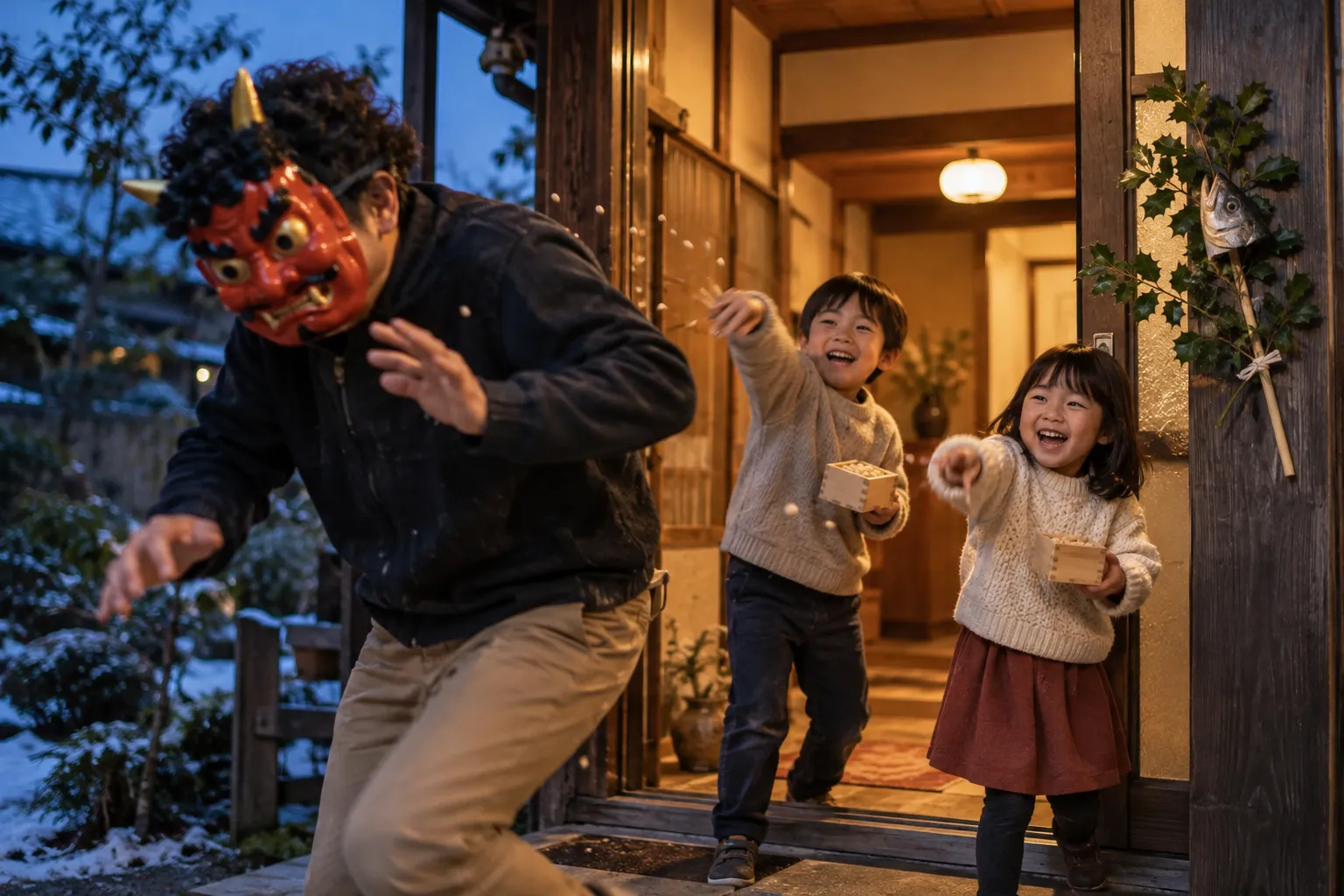
Setsubun

節分を英語で:読む・聞く・話す・遊ぶ

やさしい英語(CEFR A2)の読み物に音声つき。会話・単語カード・クイズ8問・ゲームで、節分の英語をまるごと。

🔊Read in English節分を英語で読もう(CEFR A2・音声つき)

節分を、やさしい英語で紹介する読み物です。▶で英文をタイトルから通して聞けます(アメリカ英語)。「和訳」ボタンで日本語訳の表示・非表示を切りかえられます。下線の語は下の単語カードにあります。

Demons Out, Luck In!

CEFR A2
0:00
263 words

On a cold night in early February, Japanese families open the front door and throw beans into the dark. They shout, 'Oni wa soto! Fuku wa uchi!' It means 'Demons out! Luck in!' This is Setsubun. Then they quickly close the door, so the demons cannot come back in.

2月はじめの寒い夜、日本の家族は玄関の戸を開けて、暗やみに豆を投げます。「鬼は外!福は内!」とさけびます。それは「鬼は外へ!幸運は中へ!」という意味です。これが節分です。それから鬼がもどってこられないように、すぐに戸を閉めます。

Setsubun means the line between two seasons. Long ago, there were four Setsubun days each year, one before each season. Today, people only celebrate the day before the first day of spring. It is usually February 3, but not always. In 2021 and 2025, it was on February 2.

節分は、2つの季節の間の線という意味です。昔は、それぞれの季節の前に1回ずつ、1年に4回の節分がありました。今では、春の始まりの日の前の日だけを祝います。たいてい2月3日ですが、いつもではありません。2021年と2025年は2月2日でした。

The custom began at the palace more than 1,000 years ago. People held a ceremony to chase away demons that brought sickness. A man in a scary mask with four eyes chased the demons. He also carried a spear and a big shield. But later, people began to see this man as a demon himself!

この習慣は、1000年以上前に宮中で始まりました。人々は、病気を運ぶ鬼を追い払うための儀式を行いました。4つの目があるこわい仮面をつけた男が、鬼を追いかけました。彼はほこと大きな盾も持っていました。でも後に、人々はこの男そのものを鬼だと思うようになりました!

Today, people throw roasted soybeans. After that, each person eats one bean for each year of their age. Some people eat one more for good luck. So a grandmother who is 80 has a lot of beans to eat! In snowy places like Hokkaido, many families throw peanuts, because they are easy to find in the snow.

今日、人々は炒った大豆をまきます。そのあと、一人ひとりが自分の年の数だけ豆を食べます。幸運のためにもう1つ食べる人もいます。だから80歳のおばあちゃんは、たくさんの豆を食べなければなりません!北海道のような雪の多い場所では、多くの家族が落花生をまきます。雪の中でも見つけやすいからです。

Many people also eat ehomaki, a thick sushi roll. They face the lucky direction of the year and eat the whole roll without talking. People say this custom came from Osaka. In 1989, a convenience store in Hiroshima gave it the name ehomaki, and by the 2000s the whole country was eating it.

多くの人は、太い巻きずしの恵方巻も食べます。その年の縁起のよい方角を向いて、しゃべらずに1本まるごと食べます。この習慣は大阪から来たと言われています。1989年、広島のコンビニがそれに恵方巻という名前をつけ、2000年代には国じゅうで食べられるようになりました。

💬Dialogue英語の会話で節分

🎬 2月3日。ハルトが、アメリカからの留学生でクラスメイトのミアを、家での節分にさそいます。

0:00
Haruto

Mia, do you want to throw beans at my dad tonight?

ミア、今夜うちのお父さんに豆を投げない?

Mia

What? Why would I throw beans at your dad?

えっ?なんでお父さんに豆を投げるの?

Haruto

Don't worry. He wears a demon mask. It's Setsubun!

大丈夫。お父さんは鬼のお面をかぶるんだ。節分だからね!

Mia

Oh, I've heard of that. You shout something, right?

ああ、聞いたことある。何かさけぶんだよね?

Haruto

Yes. 'Oni wa soto! Fuku wa uchi!' It means 'Demons out! Luck in!'

うん。「鬼は外!福は内!」。「鬼は外へ!幸運は中へ!」って意味だよ。

Mia

That sounds fun! Then what do we do?

楽しそう!そのあとは何をするの?

Haruto

We eat one bean for each year of our age.

年の数だけ豆を食べるんだ。

Mia

I'm 16, so 16 beans. That's easy.

私は16歳だから16粒ね。簡単!

Haruto

And we eat ehomaki. We face south-southeast this year.

それから恵方巻を食べるよ。今年は南南東を向くんだ。

Mia

Why south-southeast?

どうして南南東なの?

Haruto

It's the lucky direction for this year. And you can't talk while you eat.

今年の縁起のいい方角なんだ。それに、食べている間はしゃべっちゃだめだよ。

Mia

No talking? That will be hard for me!

しゃべっちゃだめ?それは私には難しそう!

Haruto

Ha ha. Try it. It's good luck!

はは。やってみて。縁起がいいんだから!

🃏Word Cards節分の英単語カード(12語)

カードをタップすると裏返って、意味と例文が出ます。

demon名詞
鬼、悪魔The demon has two horns.その鬼には角が2本あります。💡 日本の鬼は oni とそのまま言い、a kind of demon or ogre と説明するとよい。
throw動詞
投げる、まくWe throw beans out the door.ドアの外に豆を投げます。💡 過去形 threw、過去分詞 thrown。bean-throwing(豆まき)。
roasted形容詞
炒った、焼いたWe use roasted soybeans.炒った大豆を使います。💡 roast(焼く、炒る)の過去分詞。roasted coffee beans。
soybean名詞
大豆Tofu is made from soybeans.豆腐は大豆から作られます。💡 soy sauce(しょうゆ)も同じ soy。
chase away熟語
追い払うWe chase away bad luck.私たちは悪い運を追い払います。💡 chase は「追いかける」。away がつくと「追い払う」。
luck名詞
運、幸運Beans bring good luck.豆は幸運を運んできます。💡 Good luck!(がんばって!)。形容詞は lucky。
season名詞
季節Spring is my favorite season.春はいちばん好きな季節です。💡 Setsubun = the line between seasons。
direction名詞
方角、方向Face the lucky direction.縁起のよい方角を向いて。💡 north, south, east, west。south-southeast(南南東)。
mask名詞
お面、仮面My dad wears a demon mask.父は鬼のお面をかぶります。💡 wear a mask(お面をかぶる、マスクをつける)。
custom名詞
習慣、風習Eating ehomaki is a new custom.恵方巻を食べるのは新しい習慣です。💡 customs(複数形)は「税関」の意味もある。
ceremony名詞
儀式、式The palace held a ceremony to chase demons.宮中は鬼を追う儀式を行いました。💡 a tea ceremony(茶道)。
sickness名詞
病気People believed demons brought sickness.人々は鬼が病気を運んでくると信じていました。💡 sick(病気の)+ -ness。illness とほぼ同じ意味。

✅Quiz節分の英語クイズ(8問)

上の英文を読んでから答えてみよう。答えを選ぶとすぐに解説が出ます。全問正解でスタンプが金色に!

Q1. What is the main idea of the reading?

この文章の主旨は何ですか。

第1段落で「鬼は外、福は内」と豆を投げる日と紹介し、第2段落で春の始まりの前の日だと説明しています。大阪は恵方巻の発祥の話で、夏祭りではありません。

Q2. How many Setsubun days were there each year long ago?

昔は1年に何回の節分がありましたか。

第2段落に there were four Setsubun days each year, one before each season とあります。今は春の前の1回だけが残っています。

Q3. What did the man in the four-eyed mask do at first?

4つ目の仮面の男は、はじめ何をしていましたか。

第3段落に A man in a scary mask with four eyes chased the demons とあります。病気を運んだのは鬼のほうです。

Q4. How many beans should a 13-year-old eat?

13歳の人は豆をいくつ食べるべきですか。

第4段落に one bean for each year of their age とあり、もう1つ多く食べる人もいます。だから13歳なら13粒か14粒です。80粒はおばあちゃんの例です。

Q5. In paragraph 3, 'chase away' means:

第3段落の chase away の意味は?

chase は「追いかける」、away は「離れて」。合わせて「追い払う」という意味です。病気を運ぶ鬼を去らせるための儀式だったことからもわかります。

Q6. Which is true according to the reading?

本文の内容と合うものはどれですか。

第5段落に eat the whole roll without talking とあります。節分は2月2日の年もあり、北海道では落花生をまき、恵方巻は大阪から来たとされています。

Q7. Why do you think families in snowy places throw peanuts?

雪の多い地域の家族はなぜ落花生をまくのだと思いますか。

第4段落に because they are easy to find in the snow とあります。殻つきで大きい落花生は、雪の上でも見つけやすく拾いやすいと推測できます。

Q8. In the dialogue, how many beans will Mia eat?

会話で、ミアは豆をいくつ食べるつもりですか。

ミアは I'm 16, so 16 beans と言っています。80は本文のおばあちゃんの例です。

🎮Games節分の英語ゲーム

タブを切りかえて遊べます。授業ではプロジェクターに映して、クラス対抗戦にしても盛り上がります。

📖Read Moreもっと読む:When the Demon Hunter Became the Demon

少し難しめ(B1〜B2)の英文で、節分を違う角度から。

When the Demon Hunter Became the Demon

B1–B2
0:00
212 words

Setsubun's bean-throwing has roots in tsuina, a court ritual imported from China and recorded in Japan as early as 706. Its central figure, the hososhi, wore a golden four-eyed mask and a bearskin, and his job was to drive invisible disease-carrying spirits out of the palace. In 866, the court even ordered that a man about 190 centimeters tall be sent from eastern Japan to play the role.

節分の豆まきのルーツは追儺(ついな)にあります。中国から取り入れられた宮中の儀式で、日本では706年にはすでに記録があります。その中心人物である方相氏は、4つ目の金色の仮面と熊の毛皮を身につけ、病気を運ぶ目に見えない霊を宮中から追い出すのが役目でした。866年には、この役を演じさせるため、身長約190cmの男性を東国から出させるよう朝廷が命じたほどでした。

Over the Heian period, however, something curious happened. Records suggest that the peach-wood bows and reed arrows once aimed at the spirits began to be aimed at the hososhi himself. Some historians believe that the frightening mask gradually turned the protector into the very monster he was supposed to fight. By the time bean-throwing appears in records in the 1400s, the idea of driving a visible demon out of the house was already familiar.

しかし平安時代のあいだに、奇妙なことが起こりました。記録によると、かつて霊に向けられていた桃の木の弓と葦の矢が、方相氏そのものに向けられるようになっていったようです。一部の研究者は、そのおそろしい仮面のせいで、守り手がしだいに、自分が戦うはずの怪物そのものになっていったと考えています。1400年代の記録に豆まきが登場するころには、目に見える鬼を家から追い出すという考え方は、すでになじみのあるものになっていました。

The story raises a question that goes beyond folklore: how do societies decide who the outsider or the enemy is? A figure who looks strange or frightening can easily be cast as the villain, whatever his real role may be. Even today, the answer differs from place to place. Some temples refuse to shout 'Demons out,' saying that demons can change their ways, while some shrines welcome demons as guardians.

この話は、民間伝承をこえた問いを投げかけます。社会は、だれをよそ者や敵と決めるのでしょうか。見た目が変わっていたり恐ろしかったりする人は、本当の役割が何であれ、たやすく悪役にされてしまいます。今でも、その答えは場所によって違います。鬼も心を改められるとして「鬼は外」と言わないお寺もあれば、鬼を守り神として迎える神社もあります。

👋Useful Phrases節分に使える英語フレーズ

Oni wa soto! Fuku wa uchi!鬼は外!福は内!英語では "Demons out! Luck in!" と説明する。
Setsubun is the day before the first day of spring.節分は春の始まりの日の前の日です。外国の人に最初に伝えたい一文。
We throw roasted beans to chase away bad luck.炒った豆を投げて、悪いものを追い払います。chase away(追い払う)が便利。
Eat one bean for each year of your age.年の数だけ豆を食べてね。豆を渡しながら言う一言。
Face the lucky direction and eat it without talking!恵方を向いて、しゃべらずに食べてね!恵方巻のルールを伝える。

🗣️ 話し合ってみよう(Discussion)

  1. What bad thing do you want to chase away this year?

    今年、追い払いたい悪いものは何ですか。
  2. Do you like ehomaki? What is your favorite filling?

    恵方巻は好きですか。好きな具は何ですか。
  3. Ehomaki became popular because of stores. Is it still a true tradition? Why or why not?

    恵方巻はお店によって広まりました。それでも本当の伝統と言えるでしょうか。
  4. Compare Setsubun with a custom in another country that chases away evil. What is similar?

    節分と、悪いものを追い払うほかの国の習慣をくらべましょう。何が似ていますか。
  5. The demon hunter became the demon. What does this story tell us about how people see others?

    鬼を追う人が鬼になった。この話は、人が他人をどう見るかについて何を教えてくれますか。

🗾Explain Japan in English節分を海外の人に英語で説明するなら

姉妹サイト「日本文化ナビ」に、英語でかんたんに説明する例文(ひと言・30秒・スピーチ)と、外国の人によく聞かれる質問がまとまっています。日本語のページと、英語だけのページ(そのまま海外の人に見せられます)があります。

節分を英語で説明する(setsubun)節分(setsubun)を英語で説明するには。一言/30秒/スピーチの3段階の英文と和訳、外国人によく聞かれる質問と答え、そのまま使えるフレーズ、音声つき。JP 日本語で読むGB English page

恵方巻を英語で説明する(ehomaki)恵方巻(ehomaki)を英語で説明するには。一言/30秒/スピーチの3段階の英文と和訳、外国人によく聞かれる質問と答え、そのまま使えるフレーズ、音声つき。JP 日本語で読むGB English page
鬼を英語で説明する(oni)鬼(oni)を英語で説明するには。一言/30秒/スピーチの3段階の英文と和訳、外国人によく聞かれる質問と答え、そのまま使えるフレーズ、音声つき。JP 日本語で読むGB English page
👹
Setsubun
スタンプ帳に節分のスタンプを押しました!
クイズで全問正解すると金のスタンプに。世界一周めざして集めよう。 スタンプ帳を見る →

授業アイデアとワークシートを見る →