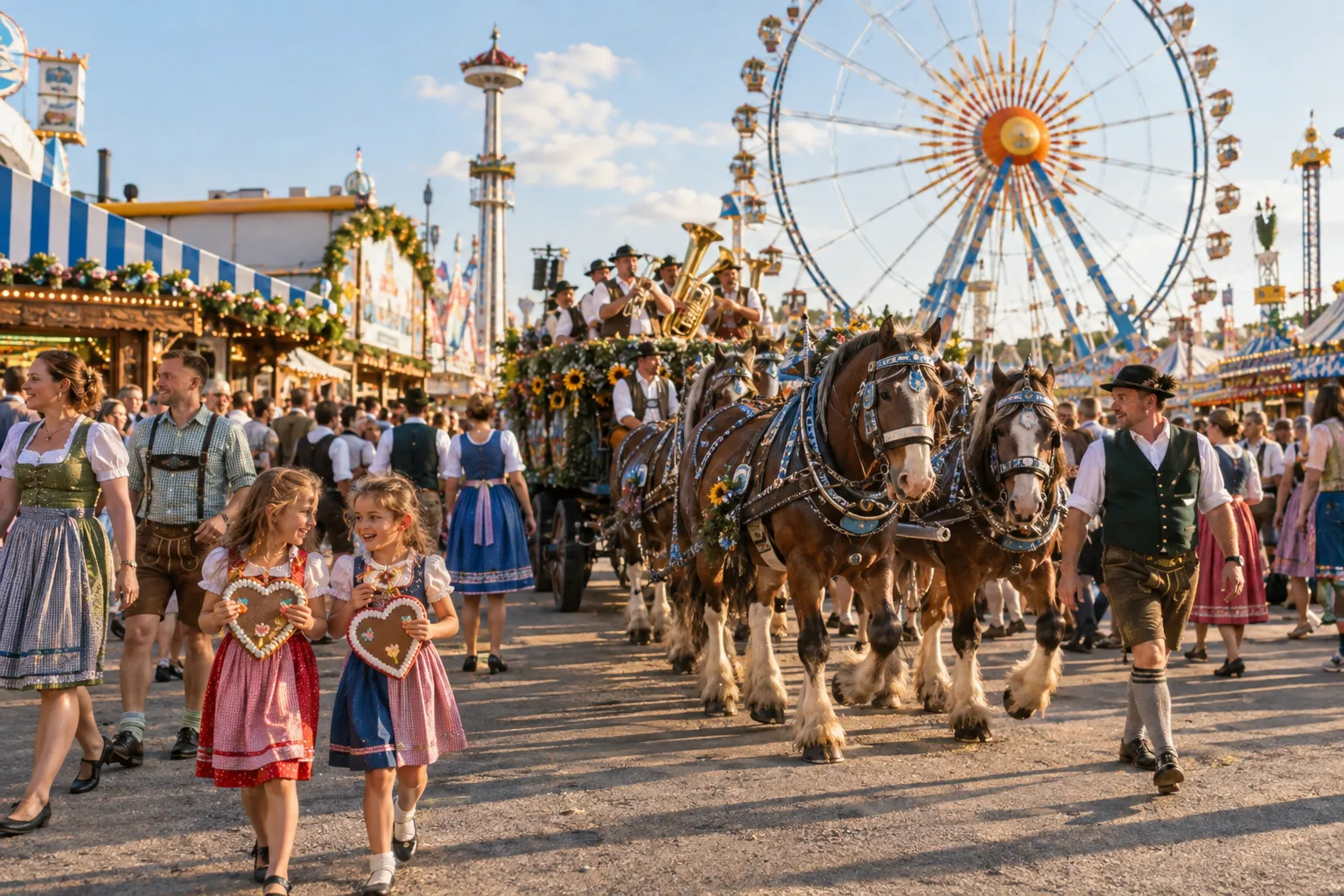
Oktoberfest
オクトーバーフェストの英語の授業アイデアとワークシート
印刷してすぐ使えるワークシート(PDF・Word・解答つき)と、授業の手順書。
🖨️Worksheetsワークシート(無料・A4)
① 「中身を見る・印刷」で全ページを確認 → ② そのページ上の 🖨️ 印刷する でそのまま印刷できます。A4・無料。
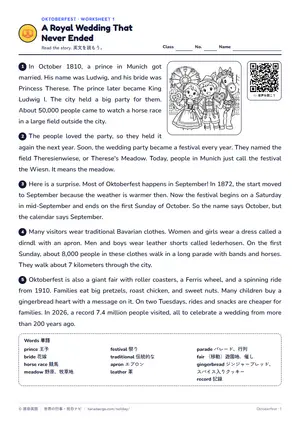
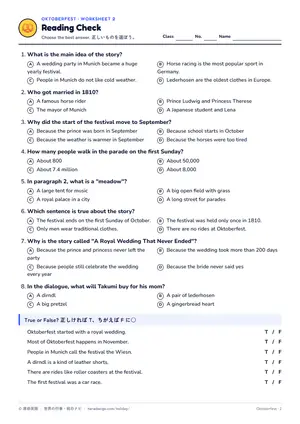
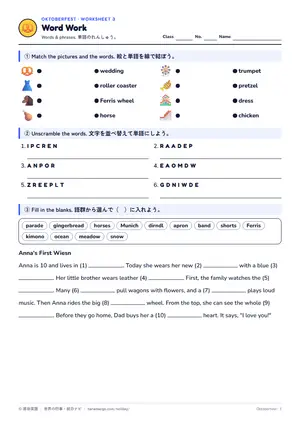
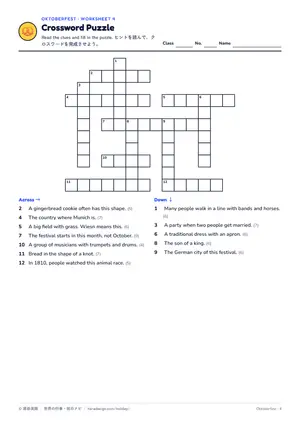
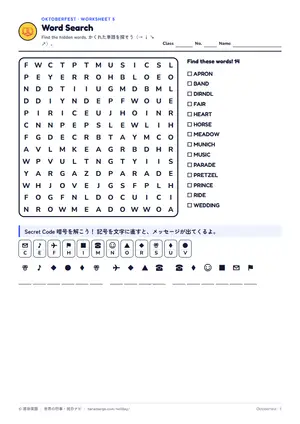
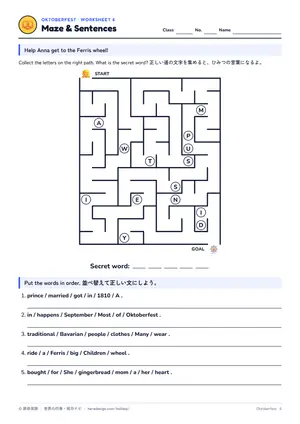
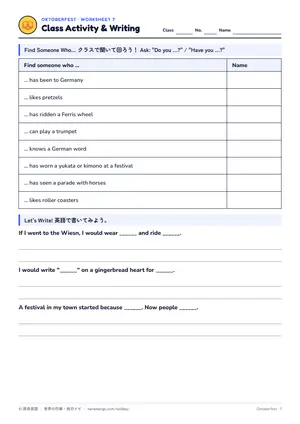
🍎Lesson Ideasオクトーバーフェストを使った英語の授業アイデア
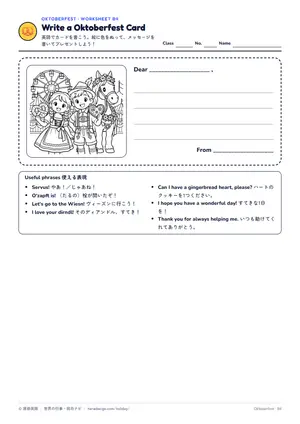
ハートのクッキーにメッセージを書こう
🎯 短い英語のメッセージを書いて、相手に気持ちを伝える。
- ハート形の紙を配り、レープクーヘンのハートの写真を見せる。
- I love you. / Thank you! / You are my best friend. などの例文を紹介する。
- 家族や友だちにあてたメッセージをハートに書いて色をぬる。
- ペアで読み合い、教室に飾る。
詳細版を開く(時間配分・Teacher Talk・板書)
ハートのお菓子の写真を見せ、「ドイツのミュンヘンのお祭りでは、文字が書かれた大きなハートのクッキーを首にかけて歩く」と紹介する。「何て書いてあると思う?」と聞く。
🗣️ Look! This is a gingerbread heart from Germany. / People wear it around their neck at a big festival. / There is a message on it. What does it say?
例文カードを1枚ずつ見せ、全員で言う。意味をジェスチャーで確認する。どれを誰に言いたいか、手を挙げさせる。
🗣️ Say it with me. Thank you! / You are my best friend. / Who do you want to say this to?
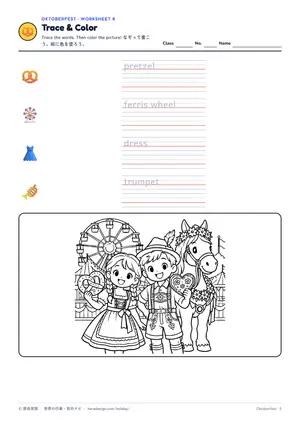
なぞり書きで例文を練習させてから、ハートの紙にメッセージを書いて色をぬらせる。家族や友だちなど、渡したい人を自由に選んでよいことにする。
🗣️ Trace the words first. / Now write your message on the heart. / Color it. Make it beautiful!
ペアでハートを見せ合い、メッセージを読み合う。読み終えたら Thank you! と返させる。ハートは教室に飾り、後日持ち帰らせる。
🗣️ Show your heart to your partner. Read it. / Say Thank you! / Let's put them on the wall.
Gingerbread heart(ドイツのハートのお菓子)

I love you.
Thank you!
You are my best friend.
You are kind.

To ___(だれに書いてもOK)
民族衣装ファッションショー:世界の伝統衣装
🎯 服を表す語と色・形容詞を使って、衣装を英語で説明する。
- ディアンドルとレーダーホーゼンの写真を見せ、apron / leather / shorts を確認する。
- 班ごとに世界の伝統衣装(着物・チマチョゴリ・サリーなど)を1つ選ぶ。
- This is a ___. It has a ___. People wear it at ___. の形で説明文を作る。
- 絵や写真を見せながら、ファッションショー形式で発表する。
詳細版を開く(時間配分・Teacher Talk・板書)
ディアンドルとレーダーホーゼンの写真を見せ、第4段落の音声を聞かせる。dirndl は apron(エプロン)つきのドレス、lederhosen は leather(革)の shorts(半ズボン)であることを確認する。
🗣️ This is a dirndl. It's a dress with an apron. / These are lederhosen. They are leather shorts. / Listen. How many people walk in the parade?
班ごとに世界の伝統衣装を1つ選ばせ、写真を見て色や形を英語で書き出させる(red / long / wide sleeves / belt など)。わからない語は先生に聞いてよいことにする。
🗣️ Choose one costume for your group. / What color is it? Is it long or short? / Need a word? Ask me.
型を使って説明文を作らせる。This is a kimono. It has long sleeves. People wear it at festivals and weddings. のように3文以上書かせる。モデル役と説明役を決め、発表の練習をさせる。
🗣️ Use this pattern. This is a ... It has a ... People wear it at ... / Write three sentences or more. / Who will be the model? Who will talk?
ファッションショー形式で、写真を持ったモデル役が前に出て、説明役が英語で紹介する。聞いている班は I like the ___. と一言感想を返す。
🗣️ Welcome to our fashion show! / Group 1, please come up. / Tell them one thing you like. I like the colors.
dirndl = dress + apron
lederhosen = leather shorts

This is a ___.
It has a ___.(long sleeves / an apron / a belt)
People wear it at ___.(festivals / weddings)

I like the ___.
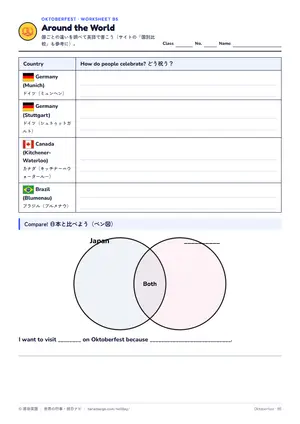
なぜ10月祭が9月に?理由を説明しよう
🎯 because を使って、出来事の理由を英語で説明する。
- 名前と日程のずれをクイズにして出す(Is Oktoberfest in October?)。
- 本文第3段落を読み、理由の部分に線を引く。
- 日本の行事で「名前と時期がずれているもの」を探す(例:旧暦の行事)。
- It is called ___, but it is in ___ because ___. の形で発表する。
詳細版を開く(時間配分・Teacher Talk・板書)
Is Oktoberfest in October? とクイズを出し、Yes / No で手を挙げさせる。答えはまだ言わない。Oktober がドイツ語で10月であることだけ確認する。
🗣️ Oktober means October in German. / So, is Oktoberfest in October? Yes or no? / Let's read and find out.
第3段落を音声で聞かせ、読ませる。祭りが9月中旬の土曜日に始まり10月の第1日曜日に終わること、1872年に暖かい9月に移ったことを確認し、理由の部分(because the weather is warmer then)に線を引かせる。
🗣️ Listen and read paragraph 3. / When does the festival start? / Why did it move? Underline the reason. / Because the weather is warmer then.
日本にも名前と時期がずれている行事があることを伝え、行事カードを見せる。十五夜は旧暦の8月15日なので、今の暦では9月〜10月になることなどを確認する。班で、ほかにも例がないか探させる。
🗣️ Japan has the same kind of thing. / Jugoya is on the 15th day of the 8th month of the old calendar. / But it comes in September or October now. Why?
It is called ___, but it is in ___ because ___. の型で、オクトーバーフェストか日本の行事について1文書かせ、何人かに発表させる。
🗣️ Write one sentence. It is called ..., but it is in ... because ... / It is called Oktoberfest, but it is in September because the weather is warmer. / Who can try with a Japanese event?
Is Oktoberfest in October?
→ Most of it is in September!
9月中旬の土曜日 〜 10月の第1日曜日
1872 9月に移る(because the weather is warmer then)

日本の例:十五夜(旧暦8月15日 → 今は9月〜10月)

It is called ___, but it is in ___ because ___.
祭りの企画会議:結婚式から生まれた祭りを作るなら
🎯 過去の出来事をもとに、新しい行事を英語で企画・提案する。
- 1810年の結婚祝いが毎年の祭りになった経緯を確認する。
- 班で、町の歴史上の出来事を1つ選び、それを記念する祭りを考える。
- 名前・日程・衣装・食べ物・乗り物や出し物を英語で企画書にまとめる。
- 2分のプレゼンをし、クラスで投票する。
詳細版を開く(時間配分・Teacher Talk・板書)
第1・第2段落を聞かせ、1810年の王子の結婚祝いの競馬に約5万人が集まり、翌年も開かれて毎年の祭りになった流れを確認する。会場の野原がテレーゼの名前からテレージエンヴィーゼと名づけられたことも伝える。
🗣️ In 1810, Prince Ludwig married Princess Therese. / About 50,000 people came to a horse race. / People loved it, so they did it again the next year. / Now it's one of the biggest festivals in the world.
班で、町の歴史上の出来事を1つ選ばせる(駅ができた日、学校ができた日、橋がかかった日など)。資料を見て、その出来事の年・内容・祝う理由を英語でメモさせる。
🗣️ Choose one event from our town's history. / When did it happen? Why is it important? / Write notes in English.
企画書の型に沿って、祭りの名前・日程・衣装・食べ物・出し物を英語で書かせる。日程は「なぜその時期か」も書かせる(オクトーバーフェストが暖かい9月に移ったように)。2分のプレゼンの担当も決めさせる。
🗣️ Fill in the plan. Name, date, clothes, food, and shows. / Why that date? Think about the weather, like Oktoberfest. / Decide who will talk in the presentation.
各班が2分でプレゼンする。聞く側はいちばん行きたい祭りを1つ選び、最後に投票する。優勝した班の祭りのいちばん良かった点を全体で確認する。
🗣️ Each group has two minutes. / Which festival do you want to go to? Vote! / Why did this one win?
1810 Prince Ludwig & Princess Therese の結婚
→ horse race(約5万人)→ 翌年も → 毎年の祭り
会場:Theresienwiese(テレーゼの野原)= the Wiesn
1872 暖かい9月に移る

Our festival plan
Name / Date(why?)/ Clothes / Food / Rides and shows
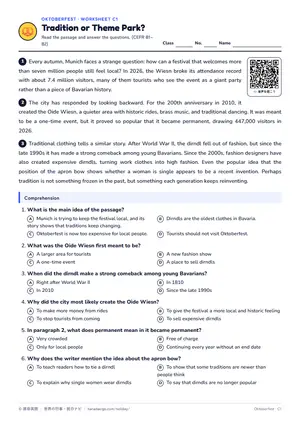
伝統は作られる?ディアンドルとエプロンの話
🎯 「創られた伝統」という考え方を、具体例をもとに英語で議論する。
- advanced を読み、オイデ・ヴィーズンとディアンドル復活の流れをまとめる。
- 日本で最近広まった「伝統」の例(恵方巻など)を挙げる。
- Is a new tradition less real than an old one? について班で議論する。
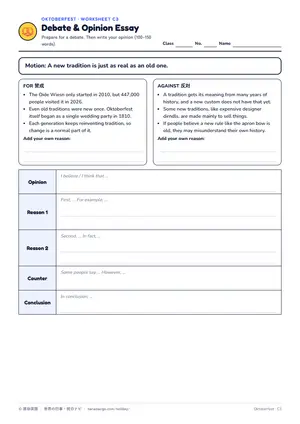
- 結論を英語で150語のエッセイにまとめる。
詳細版を開く(時間配分・Teacher Talk・板書)
advanced を読ませ、2010年の200周年で生まれたオイデ・ヴィーズン(1回限りの予定が定番になり、2026年に44万7,000人)と、ディアンドルの流行の変化(戦後すたれ、1990年代末から若者に復活、2000年代からデザイナーの高級品)をシートにまとめさせる。エプロンのリボンの位置の話が最近の発明らしいことも確認する。
🗣️ Read the text. When was the Oide Wiesn created? / What happened to the dirndl after World War II? / What about the apron bow? Is it an old rule?
日本で最近広まった「伝統」の例を付せんに書かせる(恵方巻はコンビニの販売をきっかけに全国に広まったと言われる、など)。黒板に貼り、「いつごろから」「誰が広めたか」で分類する。
🗣️ Can you think of a new tradition in Japan? / Write it on a sticky note. / When did it start? Who spread it?
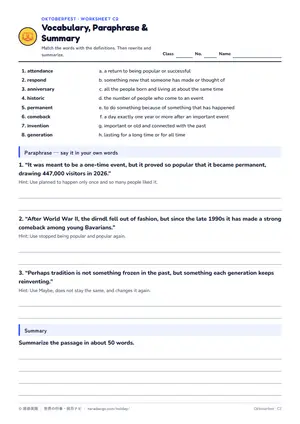
Is a new tradition less real than an old one? について班で議論させる。advanced の最後の文(tradition is something each generation keeps reinventing)に賛成か反対かを出発点にする。最後に班の結論を1文にまとめさせる。
🗣️ Is a new tradition less real than an old one? / Do you agree with the last sentence of the text? / Use examples from Munich and Japan. / Write your group's conclusion.
各班の結論を発表させたあと、150語のエッセイを書かせる。主張・例2つ(ミュンヘンと日本)・反対の見方への答え・結論の構成を示す。終わらない分は課題にする。
🗣️ Share your conclusion. / Now write an essay of about 150 words. / Use one example from Munich and one from Japan.
Tradition or Theme Park?

2026 来場者 約740万人(過去最多)
2010 200周年 → Oide Wiesn(1回限りの予定 → 定番・2026年 44.7万人)

dirndl
 戦後すたれる → 1990年代末 若者に復活 → 2000年代 高級ファッション
 エプロンのリボンの位置=独身か既婚か → 最近の発明らしい

日本:恵方巻 など
Q. Is a new tradition less real than an old one?