Oktoberfest

オクトーバーフェストを英語で:読む・聞く・話す・遊ぶ

やさしい英語(CEFR A2)の読み物に音声つき。会話・単語カード・クイズ8問・ゲームで、オクトーバーフェストの英語をまるごと。

🔊Read in Englishオクトーバーフェストを英語で読もう(CEFR A2・音声つき)

オクトーバーフェストを、やさしい英語で紹介する読み物です。▶で英文をタイトルから通して聞けます(アメリカ英語)。「和訳」ボタンで日本語訳の表示・非表示を切りかえられます。下線の語は下の単語カードにあります。

A Royal Wedding That Never Ended

CEFR A2
0:00
264 words

In October 1810, a prince in Munich got married. His name was Ludwig, and his bride was Princess Therese. The prince later became King Ludwig I. The city held a big party for them. About 50,000 people came to watch a horse race in a large field outside the city.

1810年10月、ミュンヘンの王子が結婚しました。名前はルートヴィヒ、花嫁はテレーゼ王女でした。この王子はのちに国王ルートヴィヒ1世になります。町は2人のために大きなお祝いを開きました。約5万人が、町の外の広い野原で開かれた競馬を見に来ました。

The people loved the party, so they held it again the next year. Soon, the wedding party became a festival every year. They named the field Theresienwiese, or Therese's Meadow. Today, people in Munich just call the festival the Wiesn. It means the meadow.

人々はこのお祝いが大好きになり、次の年もまた開きました。まもなく、結婚祝いは毎年のお祭りになりました。その野原はテレージエンヴィーゼ、つまり「テレーゼの野原」と名づけられました。今では、ミュンヘンの人たちはこのお祭りを単に「ヴィーズン」と呼びます。「野原」という意味です。

Here is a surprise. Most of Oktoberfest happens in September! In 1872, the start moved to September because the weather is warmer then. Now the festival begins on a Saturday in mid-September and ends on the first Sunday of October. So the name says October, but the calendar says September.

ここで驚きの事実です。オクトーバーフェストのほとんどは9月に行われるのです!1872年、9月のほうが暖かいので、始まりが9月に移りました。今では、お祭りは9月なかばの土曜日に始まり、10月の第1日曜日に終わります。つまり、名前は10月なのに、カレンダーは9月なのです。

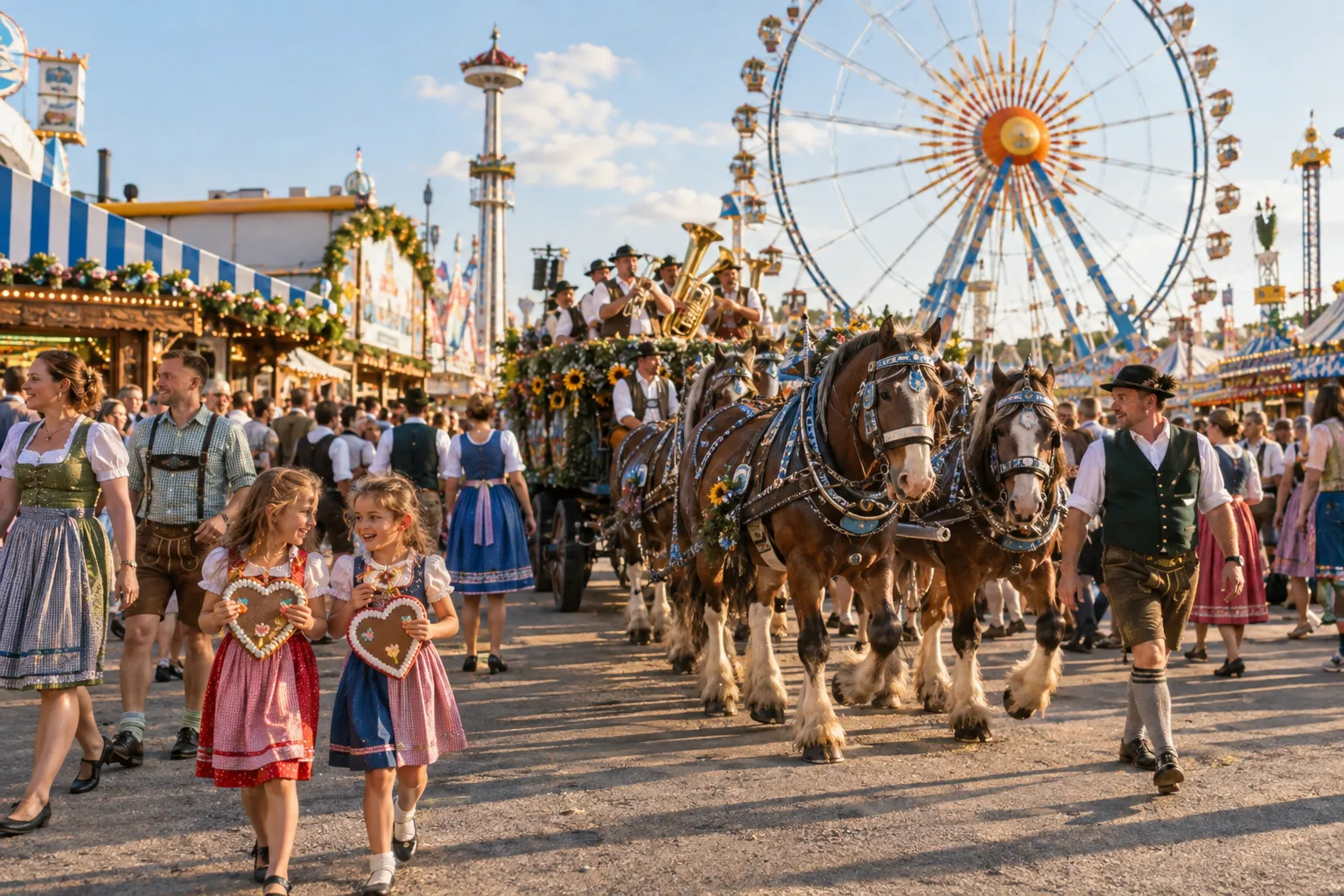
Many visitors wear traditional Bavarian clothes. Women and girls wear a dress called a dirndl with an apron. Men and boys wear leather shorts called lederhosen. On the first Sunday, about 8,000 people in these clothes walk in a long parade with bands and horses. They walk about 7 kilometers through the city.

多くの来場者が、バイエルンの伝統的な服を着ます。女性や女の子は、ディアンドルという服にエプロンをつけます。男性や男の子は、レーダーホーゼンという革の半ズボンをはきます。最初の日曜日には、こうした服を着た約8,000人が、楽隊や馬といっしょに長いパレードを歩きます。彼らは町の中を約7km歩きます。

Oktoberfest is also a giant fair with roller coasters, a Ferris wheel, and a spinning ride from 1910. Families eat big pretzels, roast chicken, and sweet nuts. Many children buy a gingerbread heart with a message on it. On two Tuesdays, rides and snacks are cheaper for families. In 2026, a record 7.4 million people visited, all to celebrate a wedding from more than 200 years ago.

オクトーバーフェストは、ジェットコースターや観覧車、1910年からある回転する乗り物がそろう巨大な移動遊園地でもあります。家族連れは大きなプレッツェルやローストチキン、甘いナッツを食べます。多くの子どもが、メッセージの書かれたハート形のクッキーを買います。火曜日のうち2日は、家族向けに乗り物や軽食が安くなります。2026年には過去最多の740万人が訪れました。200年以上前の結婚式を祝うためにです。

💬Dialogue英語の会話でオクトーバーフェスト

🎬 拓海はミュンヘンに留学中の日本人の高校生。ホストファミリーのお姉さんレナが、彼をヴィーズンに連れていきます。

0:00
Lena

Servus, Takumi! Are you ready for the Wiesn?

セルヴス、拓海!ヴィーズンに行く準備はできた?

Takumi

The Wiesn? I thought we were going to Oktoberfest.

ヴィーズン?オクトーバーフェストに行くんだと思ってた。

Lena

It's the same thing. People in Munich call it the Wiesn.

同じものよ。ミュンヘンの人はヴィーズンって呼ぶの。

Takumi

But it's September. Why is it called Oktoberfest?

でも今は9月だよ。なんでオクトーバーフェストって言うの?

Lena

It started in October 1810, but later they moved it. September is warmer.

1810年の10月に始まったけど、あとで日程を移したの。9月のほうが暖かいから。

Takumi

I see. Wow, your dress is beautiful!

なるほど。わあ、そのドレスきれいだね!

Lena

Thanks! It's a dirndl. My grandma gave it to me.

ありがとう!ディアンドルっていうの。おばあちゃんにもらったのよ。

Takumi

Should I wear lederhosen too?

ぼくもレーダーホーゼンをはいたほうがいい?

Lena

You don't have to, but my brother has an extra pair for you.

はかなくてもいいけど、弟が予備を1本貸してくれるって。

Takumi

Great! What should we do first?

やった!最初に何をしようか?

Lena

Let's ride the Devil's Wheel. It's been there since 1910.

「悪魔の輪」に乗ろう。1910年からある乗り物なの。

Takumi

Since 1910? Then I'll buy a gingerbread heart for my mom after that.

1910年から?じゃあそのあとで、お母さんにハートのクッキーを買うよ。

🃏Word Cardsオクトーバーフェストの英単語カード(12語)

カードをタップすると裏返って、意味と例文が出ます。

prince名詞
王子The prince married a princess.王子は王女と結婚しました。💡 女性形は princess。crown prince は「皇太子」。
bride名詞
花嫁The bride wore a white dress.花嫁は白いドレスを着ました。💡 花婿は groom または bridegroom。
horse race名詞
競馬The first festival was a horse race.最初のお祭りは競馬でした。💡 race は「競走」。car race、boat race などにも使う。
meadow名詞
野原、牧草地Cows eat grass in the meadow.牛は野原で草を食べます。💡 発音は「メドウ」。ドイツ語では Wiese。
festival名詞
祭りThe festival lasts about 16 days.その祭りは約16日間続きます。💡 ドイツ語の Fest も同じ仲間の語。
traditional形容詞
伝統的なShe wears traditional clothes.彼女は伝統的な服を着ています。💡 名詞は tradition(伝統)。
apron名詞
エプロンA dirndl has an apron.ディアンドルにはエプロンがついています。💡 発音は「エイプロン」。日本語の「エプロン」と少し違う。
leather名詞
革Lederhosen are made of leather.レーダーホーゼンは革でできています。💡 ドイツ語の Leder と形がよく似ている。
parade名詞
パレード、行列About 8,000 people walk in the parade.約8,000人がパレードを歩きます。💡 walk in a parade で「パレードで歩く」。
fair名詞
(移動)遊園地、催しWe rode a roller coaster at the fair.私たちは遊園地でジェットコースターに乗りました。💡 形容詞の fair(公平な)と同じつづり。
gingerbread名詞
ジンジャーブレッド、スパイス入りクッキーI bought a gingerbread heart.私はハート形のクッキーを買いました。💡 ginger(しょうが)+ bread。ドイツではレープクーヘンと呼ぶ。
record名詞
記録A record number of people came.記録的な数の人が来ました。💡 名詞は RE-cord、動詞(録音する)は re-CORD と読む。

✅Quizオクトーバーフェストの英語クイズ(8問)

上の英文を読んでから答えてみよう。答えを選ぶとすぐに解説が出ます。全問正解でスタンプが金色に!

Q1. What is the main idea of the story?

この文章の主旨は何ですか?

1810年の結婚祝いが毎年開かれるようになり、今では740万人が来る祭りになった、という流れです。ほかの選択肢は本文の一部の話か、書かれていない内容です。

Q2. Who got married in 1810?

1810年に結婚したのは誰ですか?

第1段落に a prince in Munich got married. His name was Ludwig, and his bride was Princess Therese. とあります。

Q3. Why did the start of the festival move to September?

祭りの始まりはなぜ9月に移ったのですか?

第3段落に because the weather is warmer then とあります。then は9月のことです。

Q4. How many people walk in the parade on the first Sunday?

最初の日曜日にパレードを歩くのは何人ですか?

第4段落に about 8,000 people in these clothes walk in a long parade とあります。5万人は1810年の見物人、740万人は2026年の来場者数です。

Q5. In paragraph 2, what is a "meadow"?

第2段落の meadow の意味は?

第1段落の a large field outside the city を、第2段落で Therese's Meadow と呼んでいます。field と同じく「野原」のことです。

Q6. Which sentence is true about the story?

本文の内容と合うものはどれですか?

第3段落に ends on the first Sunday of October とあります。次の年も開かれ、女性も衣装を着て、乗り物もあります。

Q7. Why is the story called "A Royal Wedding That Never Ended"?

タイトルが「終わらなかった王室の結婚式」なのはなぜだと考えられますか?

最後の文に all to celebrate a wedding from more than 200 years ago とあります。結婚のお祝いが今も毎年続いている、という意味のタイトルです。

Q8. In the dialogue, what will Takumi buy for his mom?

会話で、拓海はお母さんに何を買うと言っていますか?

拓海は最後に I'll buy a gingerbread heart for my mom と言っています。ディアンドルはレナが祖母にもらった物、レーダーホーゼンは弟が貸してくれる物です。

🎮Gamesオクトーバーフェストの英語ゲーム

タブを切りかえて遊べます。授業ではプロジェクターに映して、クラス対抗戦にしても盛り上がります。

📖Read Moreもっと読む:Tradition or Theme Park?

少し難しめ(B1〜B2)の英文で、オクトーバーフェストを違う角度から。

Tradition or Theme Park?

B1–B2
0:00
188 words

Every autumn, Munich faces a strange question: how can a festival that welcomes more than seven million people still feel local? In 2026, the Wiesn broke its attendance record with about 7.4 million visitors, many of them tourists who see the event as a giant party rather than a piece of Bavarian history.

毎年秋、ミュンヘンは不思議な問いに向き合います。700万人以上を迎える祭りが、どうすれば地元の祭りらしさを保てるのか、という問いです。2026年、ヴィーズンは約740万人で来場者数の記録を更新しました。その多くは、この行事をバイエルンの歴史の一部というより巨大なパーティーと見る観光客です。

The city has responded by looking backward. For the 200th anniversary in 2010, it created the Oide Wiesn, a quieter area with historic rides, brass music, and traditional dancing. It was meant to be a one-time event, but it proved so popular that it became permanent, drawing 447,000 visitors in 2026.

市は、過去をふり返ることでこれに応えました。2010年の200周年に、市は「オイデ・ヴィーズン」を作りました。昔の乗り物、ブラス音楽、伝統の踊りがある静かなエリアです。1回限りの予定でしたが、とても人気が出たため常設になり、2026年には44万7,000人が訪れました。

Traditional clothing tells a similar story. After World War II, the dirndl fell out of fashion, but since the late 1990s it has made a strong comeback among young Bavarians. Since the 2000s, fashion designers have also created expensive dirndls, turning work clothes into high fashion. Even the popular idea that the position of the apron bow shows whether a woman is single appears to be a recent invention. Perhaps tradition is not something frozen in the past, but something each generation keeps reinventing.

民族衣装も、似た物語を語っています。第二次世界大戦の後、ディアンドルは流行遅れになりましたが、1990年代末から若いバイエルンの人々の間で力強く復活しました。2000年代からは、ファッションデザイナーも高価なディアンドルを作るようになり、仕事着が高級ファッションに変わりました。エプロンのリボンの位置で独身かどうかがわかる、というよく知られた話でさえ、最近生まれたものらしいのです。伝統とは過去に凍りついたものではなく、世代ごとに作り直され続けるものなのかもしれません。

👋Useful Phrasesオクトーバーフェストに使える英語フレーズ

Servus!やあ!/じゃあね!バイエルンのあいさつ。会ったときにも別れるときにも使える。
O'zapft is!(たるの)栓が開いたぞ!初日の正午に市長が叫ぶ開幕の合図。「お祭りが始まった!」の意味で使われる。
Let's go to the Wiesn!ヴィーズンに行こう!地元ではオクトーバーフェストを Wiesn と呼ぶ。
I love your dirndl!そのディアンドル、すてき!衣装をほめるのはお祭りの定番の会話。男性なら I love your lederhosen!
Can I have a gingerbread heart, please?ハートのクッキーを1つください。屋台での注文に。Can I have ..., please? は何にでも使える。

🗣️ 話し合ってみよう(Discussion)

  1. Which do you want to try at Oktoberfest: the rides, the food, or the costumes? Why?

    オクトーバーフェストで乗り物・食べ物・衣装のどれを試したいですか?なぜ?
  2. Do you have a traditional costume in your family? When do you wear it?

    あなたの家には伝統的な衣装がありますか?いつ着ますか?
  3. Oktoberfest started as a wedding party. What event in your town could become a festival?

    オクトーバーフェストは結婚祝いから始まりました。あなたの町のどんな出来事なら祭りになりそうですか?
  4. Japanese Oktoberfest events are different from the one in Munich. Is it OK to borrow another country's festival? Why?

    日本のオクトーバーフェストは本場と違います。他の国の祭りを借りるのはよいことだと思いますか?
  5. Is a tradition still real if it was invented recently, like the apron bow rule? Discuss.

    エプロンのリボンのように最近作られた習わしでも「本物の伝統」と言えるでしょうか。話し合ってください。
🥨
Oktoberfest
スタンプ帳にオクトーバーフェストのスタンプを押しました!
クイズで全問正解すると金のスタンプに。世界一周めざして集めよう。 スタンプ帳を見る →

授業アイデアとワークシートを見る →