Obon
お盆の英語の授業アイデアとワークシート
印刷してすぐ使えるワークシート(PDF・Word・解答つき)と、授業の手順書。
🖨️Worksheetsワークシート(無料・A4)
① 「中身を見る・印刷」で全ページを確認 → ② そのページ上の 🖨️ 印刷する でそのまま印刷できます。A4・無料。
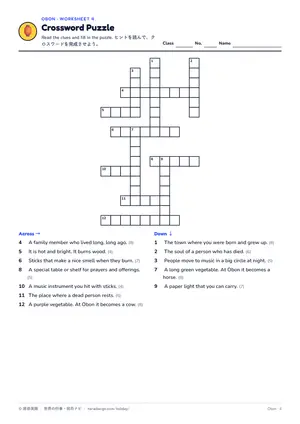
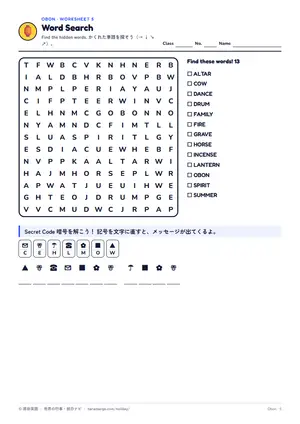
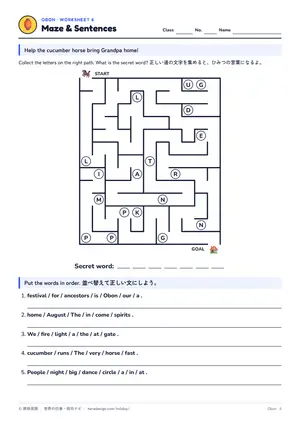
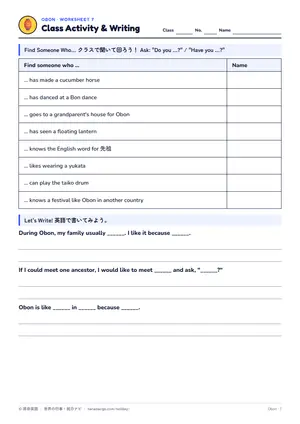
🍎Lesson Ideasお盆を使った英語の授業アイデア
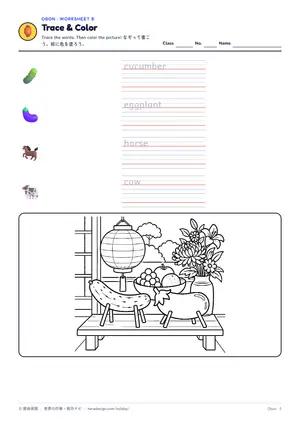
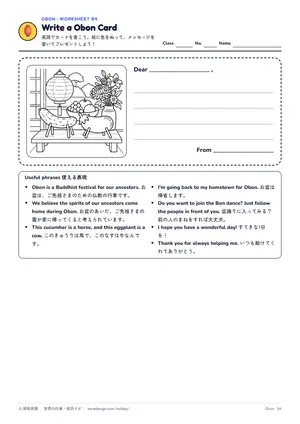
精霊馬で英語プレゼン
🎯 身近な飾りを手に、お盆の意味を英語3〜4文で説明できるようにする。
- 精霊馬の写真(または実物)を見せ、何に見えるか英語で予想させる(It looks like a horse.)。
- 本文の第1・2段落を音読し、馬と牛の意味を確認する。
- This is a ___. It is ___, so ___. の型で、ペアで説明文を作る。
- ALT や友だちに向けて30秒で発表する。
詳細版を開く(時間配分・Teacher Talk・板書)
足のついたきゅうりの写真(実物)を見せ、「これは何に見える?」と英語で聞く。It looks like a ___. の形で予想を言わせ、いくつか出たところで「馬」だと明かす。続けてなすの牛も見せ、同じように予想させる。
🗣️ Look at this. It's a cucumber. But it has legs! / What does it look like? It looks like a ___. / A dog? A horse? Yes, it's a horse. / And this eggplant? What animal is it?
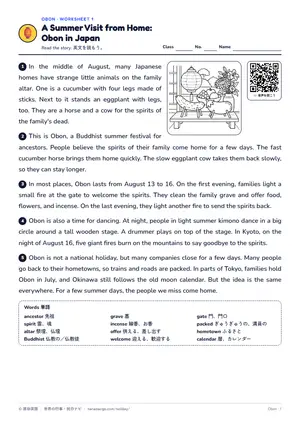
英語ページ本文の第1・2段落を音声のあとについて音読する。The fast cucumber horse brings them home quickly. と The slow eggplant cow takes them back slowly, so they can stay longer. の2文に線を引かせ、馬は「早く帰ってきてほしい」、牛は「ゆっくり帰ってほしい」という気持ちを表すことを確認する。spirit / ancestor の意味も押さえる。
🗣️ Let's read paragraphs 1 and 2 after the audio. / Why a horse? A horse is fast. The spirits come home quickly. / Why a cow? A cow is slow. So the spirits can stay longer. / Spirit means 霊. Ancestor means 先祖.
型(This is a ___. It is ___, so ___.)を板書し、ペアで馬と牛の説明文を作らせる。4文目に Obon is a festival for our ancestors. を足すとわかりやすいと伝える。でき上がったら、精霊馬(写真)を手に持つ練習をしながら2回読ませる。
🗣️ Make your speech with your partner. / This is a horse. It is fast, so the spirits come home quickly. / Add one more sentence. Obon is a festival for our ancestors. / Practice twice. Hold the picture and show it.
ALT(いなければ先生)や別のペアに向けて30秒で発表させる。聞く側は Why a cucumber? などと質問を1つする。最後に「お盆は祝日ではないが、多くの会社が休みになる」ことを補足して終わる。
🗣️ Show your horse and cow to the ALT. You have 30 seconds. / Listeners, ask one question. Why a cucumber? / Great job! Your speech was easy to understand. / Remember, Obon is not a national holiday, but many companies close.
Obon = a Buddhist summer festival for ancestors(先祖)

🥒 cucumber → horse  fast → The spirits come home quickly.
🍆 eggplant → cow    slow → The spirits go back slowly.

This is a __. It is __, so __.
Obon is a festival for our ancestors.

質問:Why a cucumber? / Why a cow?
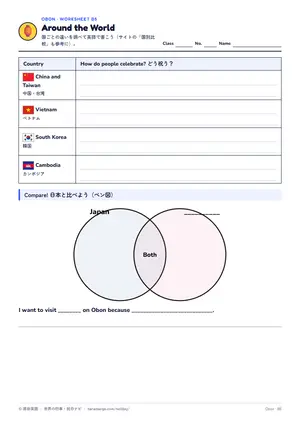
世界の「霊が帰ってくる日」比較ポスター
🎯 お盆と中元節・チュソク・死者の日などを比べ、共通点と違いを英語でまとめる。
- グループごとに国別比べの表から1つの行事を担当する。
- 日付・期間・飾り・食べ物・考え方の5項目を英語で調べてまとめる。
- お盆と比べて、Both ___ and Obon ___. / But ___. の文を3つ書く。
- ポスターを掲示し、ギャラリーウォークで他班の行事にコメントを書く。
詳細版を開く(時間配分・Teacher Talk・板書)
英語ページの会話で、ソフィーが It sounds like the Day of the Dead in Mexico. と言う場面を聞かせる。「亡くなった人が帰ってくる日は、世界にいくつもある」と伝え、班ごとに担当の行事を1つ決める。
🗣️ Listen to Sophie. What does she say about Obon? / She says it sounds like the Day of the Dead in Mexico. / Many countries have days when the dead come home. / Each group will make a poster about one festival.
国別比べの表をもとに、日付・期間・飾り・食べ物・考え方の5項目を英語でまとめさせる。表にない情報は端末で調べてよいが、出典を1つ書かせる。たとえばカンボジアのプチュム・バンは15日間で、7代前までの先祖のためにお米のだんごを空中に投げて供える、など具体的な細部を入れるよう促す。
🗣️ Fill in five boxes: date, length, decorations, food, and beliefs. / Use the table first. Then check one more source online. / Write short sentences. Pchum Ben lasts 15 days. / Find one detail that will surprise your classmates.
お盆と担当の行事を比べ、Both ___ and Obon ___. / But ___. の文を3つ書かせる。例を板書する(Both Chuseok and Obon are times to go home. But Chuseok is in autumn.)。ポスターに5項目の表と3つの比較文、絵や写真を入れて仕上げさせる。
🗣️ Now compare your festival with Obon. Write three sentences. / Both Chuseok and Obon are times to go back home. / But Chuseok is in autumn, and Obon is in summer. / Put your table, your sentences, and a picture on the poster.
ポスターを教室の壁に貼り、ギャラリーウォークをする。各班1人がポスターの前に残って説明し、ほかの生徒は回りながら付せんに英語のコメントや質問を書いて貼る(I didn't know ___. / Why do people ___?)。途中で説明役を交代させる。
🗣️ Put your posters on the wall. Walk around and read. / Write a comment on a sticky note. I didn't know that people throw rice balls! / You can also ask a question. Why do people wear a white rose? / Speakers, change now. Let your partner explain.
各班に、もらったコメントを1つ読み上げさせる。最後に「どの行事にも共通していたことは何か」を全体に聞き、Families remember the dead. / They come home. などの答えを板書してまとめる。
🗣️ Read one comment that you got. / What do all these festivals have in common? / Yes. People remember the dead, and families get together.
Festivals for the dead around the world

観点:date / length / decorations / food / beliefs

China・Taiwan  Ghost Festival(旧暦7/15)paper money
Vietnam  Vu Lan  red rose / white rose
Korea  Chuseok(旧暦8/15)go home, clean graves
Cambodia  Pchum Ben  15 days, rice balls in the air
Mexico  Day of the Dead(11/1・2)marigolds

Both __ and Obon __.
But __.
コメント:I didn't know __. / Why do people __?
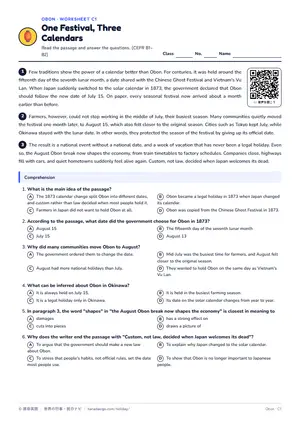
なぜ日付が3つ?暦の謎解き
🎯 1873年の改暦とお盆の日付の関係を理解し、英語で原因と結果を説明する。
- 7月盆・8月盆・旧盆の地図を見せ、なぜ違うのか予想させる。
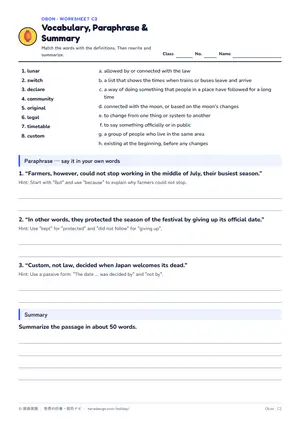
- advanced の英文を読み、because / so / however に印をつける。
- 原因と結果を1枚の図にまとめ、英語で1分説明する。
詳細版を開く(時間配分・Teacher Talk・板書)
色分けした地図を見せ、「同じお盆なのに、なぜ地域で日付が違うの?」と問う。ペアで30秒予想させ、何人かに言わせる。「答えは1873年にある」とだけ伝えて、英文を配る。
🗣️ Look at this map. Some places have Obon in July. Most places have it in August. / Okinawa follows the old moon calendar. / Why are there three dates? Guess with your partner. / Here is a hint. The answer is in 1873.
発展セットの英文を黙読させ、原因・結果・対比を示すことば(however / while / In other words / Even so、そして When で始まる文)に印をつけさせる。印をつけた文がそれぞれ何と何をつないでいるかを、ペアで日本語で確認させる。
🗣️ Read the passage silently. / Circle the linking words. However, while, in other words, even so. / What does however connect? Talk with your partner. / The government said July 15. However, farmers were too busy.
ワークシートに原因と結果の図を書かせる(1873年 太陽暦へ → 政府は7月15日に → 7月は農作業がいちばん忙しい → 多くの地域が8月15日へ/東京は7月のまま/沖縄は旧暦のまま → 法律上の休日がないまま、8月のお盆休みが経済を動かす)。矢印の上に because / so を書き込ませる。
🗣️ Make a chart. Start with 1873. / Japan switched to the solar calendar, so the government said Obon should be on July 15. / July was the busiest season for farmers, so many towns moved it to August. / Write because or so on each arrow.
図を見ながら、ペアで1分ずつ英語で説明させる(交代して2回)。最後に英文の最後の文 Custom, not law, decided when Japan welcomes its dead. を全員で読み、意味を確認して終わる。
🗣️ Explain your chart to your partner. You have one minute. / Now switch roles. / Let's read the last sentence together. Custom, not law, decided when Japan welcomes its dead. / So who decided the date of Obon? The people, not the government.
Why three dates?

1873 solar calendar(太陽暦へ)
  ↓ so
Government: Obon on July 15
  ↓ however
July = farmers' busiest season
  ↓ so
8月盆:most places → August 15
7月盆:Tokyo(一部)→ July 15
旧盆:Okinawa → lunar date(2026年は8月27日)
  ↓
No legal holiday, but the August break shapes the economy.
Custom, not law, decided the date.
盆踊りを英語の指示で踊ろう
🎯 動作の英語(clap, step, turn)を体で覚え、日本の踊りを楽しむ。
- 炭坑節など簡単な盆踊りの動きを、clap your hands / step forward / turn around などの英語で指示する。
- 先生のまねをしながら輪になって踊る。
- 子どもが交代で英語の指示を出す。
詳細版を開く(時間配分・Teacher Talk・板書)
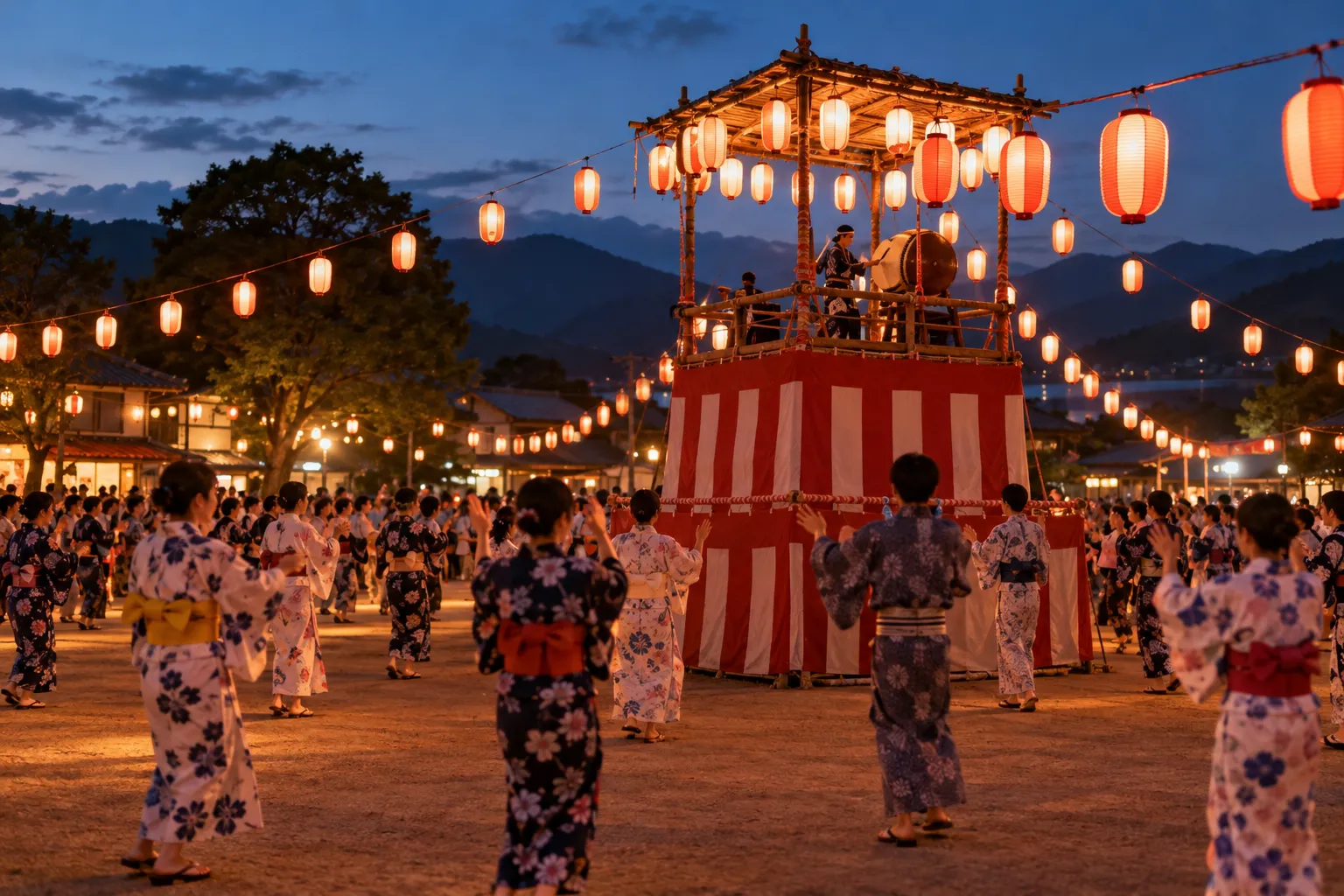
盆踊りの写真を見せ、真ん中の高い台(やぐら)と太鼓をたたく人を指さす。「お盆の夜、大きな輪になって踊る」ことを伝え、動作の絵カードを見せながら clap / step / turn を発音する。
🗣️ Look! People are dancing in a big circle. / A man is playing the drum on the stage. / This is Bon dancing. Let's learn some moves. / Clap. Step. Turn. Say it with me.
先生がやってみせながら、英語で指示を出す。最初は音楽なしでゆっくり、1つずつ(Clap your hands. / Step forward. / Step back. / Turn around.)。炭坑節の「掘って掘って」は Dig, dig. 、「押して押して」は Push, push. のように動作を英語にする。慣れたら輪になり、音楽に合わせて踊る。
🗣️ Watch me. Clap your hands. Clap, clap, clap. / Step forward. Step back. / Dig, dig! Push, push! / Now make a big circle. Let's dance to the music!
子どもを数人前に出し、絵カードを見せながら英語の指示を出させる。ほかの子は指示どおりに動く。指示を出す子はカードを順番に選んでよい。全員が1回は指示を出せるよう、グループに分けて行ってもよい。
🗣️ Who wants to be the teacher? Come here. / Choose a card and say it. Everyone, listen and move. / Turn around! Great! / Next teacher, please.
最後にもう一度全員で輪になって踊る。「盆踊りは、お盆に帰ってくるご先祖さまを迎えて供養するための踊り」と伝え、今日覚えた動作の英語をカードで確認して終わる。
🗣️ One more time, everyone! / Bon dancing is for summer nights at Obon. / What did we learn today? Clap, step, turn, dig, and push.
Bon Dance 🥁

👏 Clap your hands.
👣 Step forward. / Step back.
🔄 Turn around.
⛏️ Dig, dig.
🛒 Push, push.

輪になって踊る:Let's dance in a big circle!
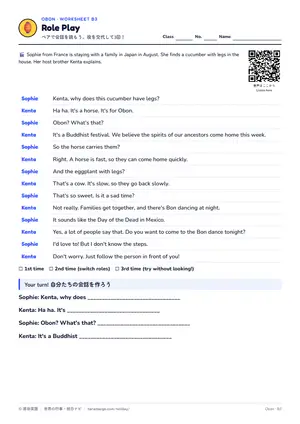
外国人のホストにお盆を説明するロールプレイ
🎯 会話文をもとに、質問に答えながらお盆を説明する力をつける。
- 会話文を役割を決めて読み、説明の流れ(何か→意味→過ごし方)をつかむ。
- 質問カード(Is it a holiday? / Is it sad? / Why a cucumber?)を引いて答える練習をする。
- 自分の家のお盆の過ごし方を入れて、オリジナルの会話を作り発表する。
詳細版を開く(時間配分・Teacher Talk・板書)
会話の音声を聞かせ、そのあと役を決めてペアで読ませる。説明の流れを「何か(It's a Buddhist festival.)→意味(The spirits of our ancestors come home.)→過ごし方(Bon dancing at night)」の3つに分けて板書し、会話のどの行にあたるか線を引かせる。
🗣️ Listen to Kenta and Sophie. / Now read it in pairs. A is Kenta. B is Sophie. / Kenta explains in three steps: what it is, what it means, and what people do. / Find each step in the dialogue.
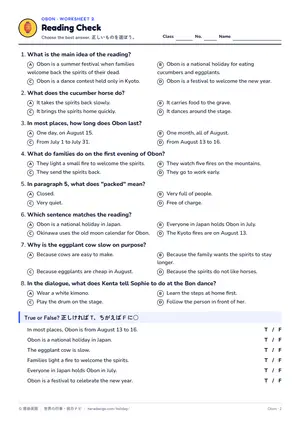
質問カードを裏返しに置き、1人が引いて読み、もう1人が答える。答え方の例を板書する(Is it a holiday? → It's not a national holiday, but many companies close. / Is it sad? → Not really. Families get together.)。答えたら役を交代して次のカードを引く。
🗣️ Pick a card and read the question. / Is it a holiday? It's not a national holiday, but many companies close. / Is it sad? Not really. Families get together. / Take turns. Try to answer in two sentences.
自分の家のお盆の過ごし方(帰省先・お墓参り・食べるもの・盆踊りなど)を入れて、オリジナルの会話を作らせる。会話の後半(Do you want to come to the Bon dance tonight? の部分)を自分の家の話に入れ替えるとよいと助言する。できたペアから2組ずつ前で発表する。
🗣️ Now make your own dialogue. Use your family's Obon. / Where do you go? What do you do? What do you eat? / For example, I go to my grandma's house in Niigata. We visit the grave together. / Let's perform. Who wants to go first?
発表で使われたよい表現(I'm going back to my hometown for Obon. など)を板書し、全員で言う。「帰省する」は go back to my hometown と言えることを確認して終わる。
🗣️ Here is a useful sentence. I'm going back to my hometown for Obon. / Say it together. / Next time someone asks you about Obon, you can answer!
How to explain Obon

① What is it?  It's a Buddhist festival for our ancestors.
② Meaning      The spirits of our ancestors come home.
③ What we do   We visit the grave. / Bon dancing at night.

Q: Is it a holiday? → It's not a national holiday, but many companies close.
Q: Is it sad? → Not really. Families get together.

帰省する:I'm going back to my hometown for Obon.