Obon

お盆を英語で:読む・聞く・話す・遊ぶ

やさしい英語(CEFR A2)の読み物に音声つき。会話・単語カード・クイズ8問・ゲームで、お盆の英語をまるごと。

🔊Read in Englishお盆を英語で読もう(CEFR A2・音声つき)

お盆を、やさしい英語で紹介する読み物です。▶で英文をタイトルから通して聞けます(アメリカ英語)。「和訳」ボタンで日本語訳の表示・非表示を切りかえられます。下線の語は下の単語カードにあります。

A Summer Visit from Home: Obon in Japan

CEFR A2
0:00
257 words

In the middle of August, many Japanese homes have strange little animals on the family altar. One is a cucumber with four legs made of sticks. Next to it stands an eggplant with legs, too. They are a horse and a cow for the spirits of the family's dead.

8月のなかば、日本の多くの家では、仏壇に不思議な小さな動物が置かれます。一つは、棒で作った4本の足がついたきゅうりです。その横には、やはり足のついたなすが立っています。それらは、その家の亡くなった人たちの霊のための馬と牛なのです。

This is Obon, a Buddhist summer festival for ancestors. People believe the spirits of their family come home for a few days. The fast cucumber horse brings them home quickly. The slow eggplant cow takes them back slowly, so they can stay longer.

これがお盆、ご先祖さまのための夏の仏教行事です。人々は、家族の霊が数日間家に帰ってくると信じています。足の速いきゅうりの馬が、霊を急いで家に連れてきます。足の遅いなすの牛は、霊をゆっくり送り返すので、霊は長くいられます。

In most places, Obon lasts from August 13 to 16. On the first evening, families light a small fire at the gate to welcome the spirits. They clean the family grave and offer food, flowers, and incense. On the last evening, they light another fire to send the spirits back.

多くの地域で、お盆は8月13日から16日まで続きます。最初の夕方、家族は門口で小さな火をたいて霊を迎えます。お墓を掃除し、食べ物や花、線香を供えます。最後の夕方には、もう一度火をたいて霊を送り返します。

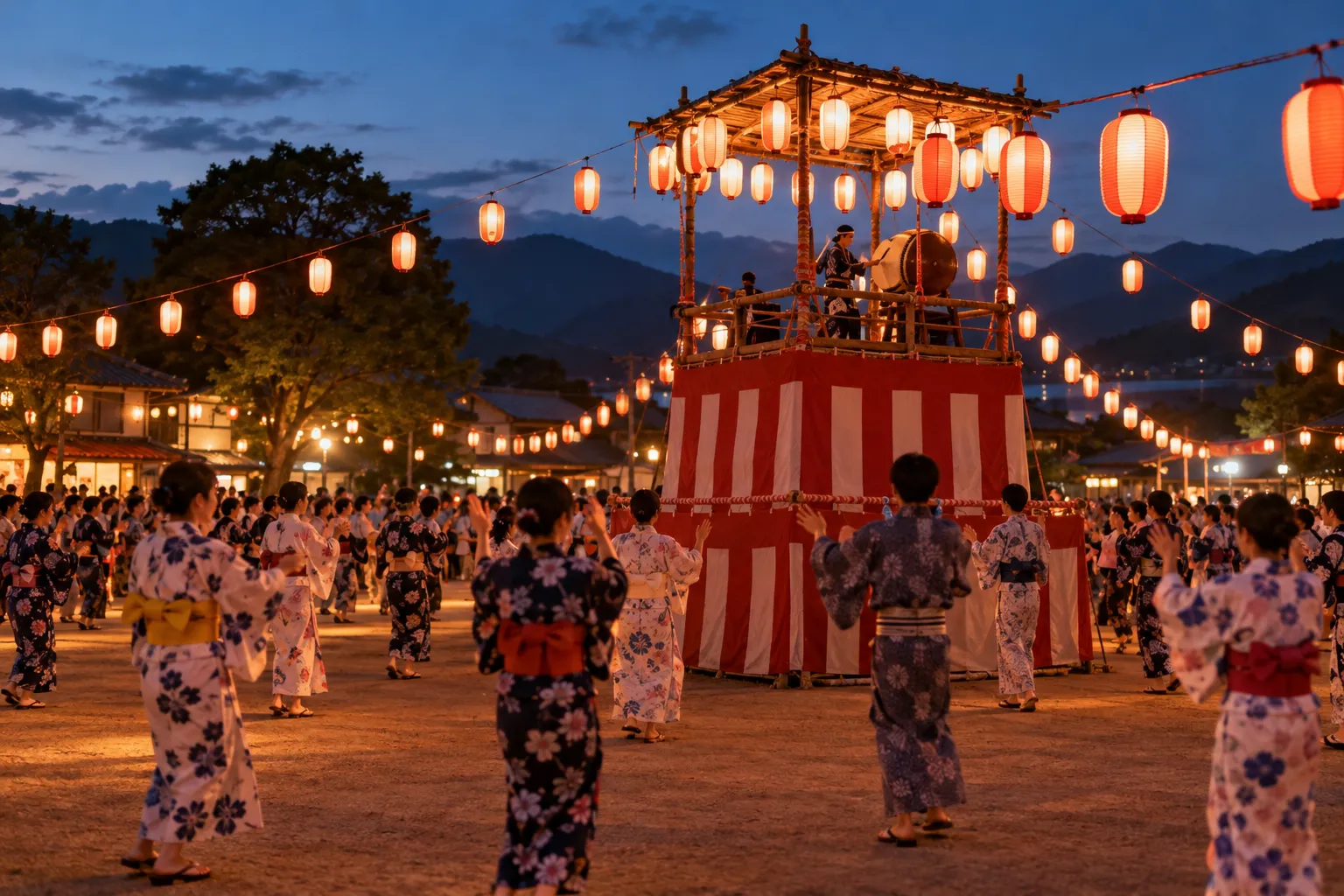
Obon is also a time for dancing. At night, people in light summer kimono dance in a big circle around a tall wooden stage. A drummer plays on top of the stage. In Kyoto, on the night of August 16, five giant fires burn on the mountains to say goodbye to the spirits.

お盆は踊りの季節でもあります。夜、浴衣を着た人たちが、高い木の台のまわりで大きな輪になって踊ります。台の上では太鼓が鳴ります。京都では8月16日の夜、霊にさよならを言うために、山の上で5つの大きな火が燃えます。

Obon is not a national holiday, but many companies close for a few days. Many people go back to their hometowns, so trains and roads are packed. In parts of Tokyo, families hold Obon in July, and Okinawa still follows the old moon calendar. But the idea is the same everywhere. For a few summer days, the people we miss come home.

お盆は国の祝日ではありませんが、多くの会社が数日間休みになります。多くの人がふるさとへ帰るので、電車も道路もぎゅうぎゅうになります。東京の一部では7月にお盆をする家があり、沖縄は今も昔の月の暦に従っています。でも、考え方はどこでも同じです。夏の数日間、会いたい人たちが帰ってくるのです。

💬Dialogue英語の会話でお盆

🎬 8月、フランスから来たソフィーは日本の家庭にホームステイしています。家の中で足のついたきゅうりを見つけ、ホストブラザーの健太が説明します。

0:00
Sophie

Kenta, why does this cucumber have legs?

健太、どうしてこのきゅうりに足があるの?

Kenta

Ha ha. It's a horse. It's for Obon.

はは。それは馬なんだ。お盆のためのものだよ。

Sophie

Obon? What's that?

お盆?それって何?

Kenta

It's a Buddhist festival. We believe the spirits of our ancestors come home this week.

仏教の行事だよ。今週、ご先祖さまの霊が家に帰ってくると考えられているんだ。

Sophie

So the horse carries them?

じゃあ、馬が霊を運ぶの?

Kenta

Right. A horse is fast, so they can come home quickly.

そう。馬は速いから、早く帰ってこられるんだ。

Sophie

And the eggplant with legs?

じゃあ、足のついたなすは?

Kenta

That's a cow. It's slow, so they go back slowly.

それは牛。のんびり歩くから、ゆっくり帰っていくんだ。

Sophie

That's so sweet. Is it a sad time?

すてきね。悲しい時期なの?

Kenta

Not really. Families get together, and there's Bon dancing at night.

そうでもないよ。家族が集まるし、夜は盆踊りもあるんだ。

Sophie

It sounds like the Day of the Dead in Mexico.

メキシコの死者の日みたいね。

Kenta

Yes, a lot of people say that. Do you want to come to the Bon dance tonight?

うん、よくそう言われるよ。今夜の盆踊りに来る?

Sophie

I'd love to! But I don't know the steps.

行きたい!でも踊り方がわからないの。

Kenta

Don't worry. Just follow the person in front of you!

大丈夫。前の人のまねをすればいいよ!

🃏Word Cardsお盆の英単語カード(12語)

カードをタップすると裏返って、意味と例文が出ます。

ancestor名詞
先祖We visit the graves of our ancestors during Obon.お盆には先祖のお墓参りをします。💡 ラテン語の antecessor(先を行く人)が語源。「子孫」は descendant。
spirit名詞
霊、魂The spirits come home for a few days.霊が数日間家に帰ってきます。💡 ghost はこわいイメージ。お盆の霊は spirit がぴったり。
altar名詞
祭壇、仏壇Grandma put flowers on the family altar.祖母は仏壇に花を供えました。💡 仏壇は Buddhist altar、家の仏壇は family altar と言える。
Buddhist形容詞・名詞
仏教の/仏教徒Obon is a Buddhist festival.お盆は仏教の行事です。💡 Buddhism(仏教)+ -ist。発音は「ブーディスト」に近い。
grave名詞
墓We cleaned the grave and lit incense.お墓を掃除して線香をあげました。💡 visit a grave で「墓参りをする」。
incense名詞
線香、お香The smell of incense filled the room.線香のにおいが部屋に広がりました。💡 数えるときは a stick of incense。
offer動詞
供える、差し出すThey offer food and flowers to the spirits.霊に食べ物や花を供えます。💡 offering(名詞)は「お供え物」。
welcome動詞
迎える、歓迎するWe light a fire to welcome the spirits.霊を迎えるために火をたきます。💡 迎え火は welcoming fire と訳せる。
gate名詞
門、門口Dad lit a small fire at the gate.父は門口で小さな火をたきました。💡 空港の「ゲート」も同じ語。
packed形容詞
ぎゅうぎゅうの、満員のThe trains are packed during Obon.お盆は電車が満員です。💡 pack(詰める)から。crowded より「すし詰め」の感じが強い。
hometown名詞
ふるさとMany people go back to their hometowns for Obon.お盆には多くの人がふるさとへ帰ります。💡 go back to one's hometown で「帰省する」。
calendar名詞
暦、カレンダーOkinawa uses the old moon calendar for Obon.沖縄はお盆に昔の月の暦を使います。💡 旧暦は the lunar calendar(または the old calendar)。

✅Quizお盆の英語クイズ(8問)

上の英文を読んでから答えてみよう。答えを選ぶとすぐに解説が出ます。全問正解でスタンプが金色に!

Q1. What is the main idea of the reading?

この文章の主旨は何ですか。

第2段落で、お盆は先祖のための夏の仏教行事で、霊が家に帰ってくると説明しています。お盆は祝日ではなく(第5段落)、京都だけの行事でもありません。

Q2. What does the cucumber horse do?

きゅうりの馬は何をしますか。

第2段落に The fast cucumber horse brings them home quickly. とあります。ゆっくり送り返すのはなすの牛です。

Q3. In most places, how long does Obon last?

多くの地域で、お盆はどのくらい続きますか。

第3段落に In most places, Obon lasts from August 13 to 16. とあります。7月に行う地域もありますが、7月まるごとではありません。

Q4. What do families do on the first evening of Obon?

お盆の最初の夕方、家族は何をしますか。

第3段落に On the first evening, families light a small fire at the gate to welcome the spirits. とあります。霊を送るのは最後の夕方、五山の火は16日です。

Q5. In paragraph 5, what does "packed" mean?

第5段落の packed はどういう意味ですか。

直前に Many people go back to their hometowns とあり、多くの人が移動するので電車や道路が「満員」という意味になります。

Q6. Which sentence matches the reading?

本文の内容に合うものはどれですか。

第5段落に Okinawa still follows the old moon calendar とあります。お盆は祝日ではなく、7月にするのは東京の一部、京都の火は16日です。

Q7. Why is the eggplant cow slow on purpose?

なすの牛がわざと遅いのはなぜですか。

第2段落の so they can stay longer から、家族が霊にゆっくりしていってほしいと願っていることがわかります。値段や作りやすさの話は本文にありません。

Q8. In the dialogue, what does Kenta tell Sophie to do at the Bon dance?

会話で、健太はソフィーに盆踊りでどうすればいいと言っていますか。

健太は最後に Just follow the person in front of you! と言っています。家で練習するようには言っていません。

🎮Gamesお盆の英語ゲーム

タブを切りかえて遊べます。授業ではプロジェクターに映して、クラス対抗戦にしても盛り上がります。

📖Read Moreもっと読む:One Festival, Three Calendars

少し難しめ(B1〜B2)の英文で、お盆を違う角度から。

One Festival, Three Calendars

B1–B2
0:00
196 words

Few traditions show the power of a calendar better than Obon. For centuries, it was held around the fifteenth day of the seventh lunar month, a date shared with the Chinese Ghost Festival and Vietnam's Vu Lan. When Japan suddenly switched to the solar calendar in 1873, the government declared that Obon should follow the new date of July 15. On paper, every seasonal festival now arrived about a month earlier than before.

お盆ほど、暦の力をよく示す伝統は少ないでしょう。何百年もの間、お盆は旧暦7月15日ごろに行われ、その日付は中国の中元節やベトナムのヴーランと同じでした。1873年に日本が急に太陽暦に切り替えたとき、政府はお盆を新しい7月15日に行うよう定めました。書類の上では、季節の行事がすべて以前より1か月ほど早く来ることになりました。

Farmers, however, could not stop working in the middle of July, their busiest season. Many communities quietly moved the festival one month later, to August 15, which also felt closer to the original season. Cities such as Tokyo kept July, while Okinawa stayed with the lunar date. In other words, they protected the season of the festival by giving up its official date.

しかし農家は、いちばん忙しい7月なかばに仕事を止めることができませんでした。多くの地域はひっそりと1か月遅らせて8月15日に移し、そのほうが元の季節にも近く感じられました。東京などの都市は7月を守り、沖縄は旧暦の日付のままにしました。つまり人々は、公式の日付をあきらめることで、行事の季節を守ったのです。

The result is a national event without a national date, and a week of vacation that has never been a legal holiday. Even so, the August Obon break now shapes the economy, from train timetables to factory schedules. Companies close, highways fill with cars, and quiet hometowns suddenly feel alive again. Custom, not law, decided when Japan welcomes its dead.

その結果、国中の行事なのに全国共通の日付がなく、一度も法律上の休日になったことのない休暇週間が生まれました。それでも今では、8月のお盆休みが、電車の時刻表から工場の予定まで経済を動かしています。会社は休み、高速道路は車であふれ、静かなふるさとは急ににぎやかになります。日本がいつ死者を迎えるかを決めたのは、法律ではなく習わしだったのです。

👋Useful Phrasesお盆に使える英語フレーズ

Obon is a Buddhist festival for our ancestors.お盆は、ご先祖さまのための仏教の行事です。ancestor=先祖。まずこの一言で説明できる。
We believe the spirits of our ancestors come home during Obon.お盆のあいだ、ご先祖さまの霊が家に帰ってくると考えられています。spirit=霊。ghost より穏やかでよい意味。
This cucumber is a horse, and this eggplant is a cow.このきゅうりは馬で、このなすは牛なんです。精霊馬を見せながら言うと、たいてい笑顔で質問が返ってくる。
I'm going back to my hometown for Obon.お盆は帰省します。「帰省する」は go back to my hometown。
Do you want to join the Bon dance? Just follow the people in front of you.盆踊りに入ってみる?前の人のまねをすれば大丈夫。盆踊りに誘うときの一言。

🗣️ 話し合ってみよう(Discussion)

  1. What do you do during Obon? Tell your partner.

    お盆にあなたは何をしますか。ペアに話しましょう。
  2. If you made a spirit animal from a vegetable, which vegetable and animal would you choose? Why?

    野菜で精霊馬を作るなら、どの野菜でどの動物にしますか。それはなぜですか。
  3. Obon and the Day of the Dead are both festivals for the dead. How are they similar and different?

    お盆と死者の日は、どちらも亡くなった人のための行事です。似ている点と違う点は何ですか。
  4. Should Obon become an official national holiday? Why or why not?

    お盆を正式な国民の祝日にすべきだと思いますか。理由も述べましょう。
  5. Many young people now live far from their family graves. How might Obon change in the future?

    今は多くの若者が家のお墓から遠くに住んでいます。お盆はこれからどう変わっていくでしょうか。

🗾Explain Japan in Englishお盆を海外の人に英語で説明するなら

姉妹サイト「日本文化ナビ」に、英語でかんたんに説明する例文(ひと言・30秒・スピーチ)と、外国の人によく聞かれる質問がまとまっています。日本語のページと、英語だけのページ(そのまま海外の人に見せられます)があります。

お盆を英語で説明する(obon)お盆(obon)を英語で説明するには。一言/30秒/スピーチの3段階の英文と和訳、外国人によく聞かれる質問と答え、そのまま使えるフレーズ、音声つき。JP 日本語で読むGB English page

盆踊りを英語で説明する(bon odori)盆踊り(bon odori)を英語で説明するには。一言/30秒/スピーチの3段階の英文と和訳、外国人によく聞かれる質問と答え、そのまま使えるフレーズ、音声つき。JP 日本語で読むGB English page
🏮
Obon
スタンプ帳にお盆のスタンプを押しました!
クイズで全問正解すると金のスタンプに。世界一周めざして集めよう。 スタンプ帳を見る →

授業アイデアとワークシートを見る →