Lantern Festival
元宵節(ランタン・フェスティバル)の英語の授業アイデアとワークシート
印刷してすぐ使えるワークシート(PDF・Word・解答つき)と、授業の手順書。
🖨️Worksheetsワークシート(無料・A4)
① 「中身を見る・印刷」で全ページを確認 → ② そのページ上の 🖨️ 印刷する でそのまま印刷できます。A4・無料。
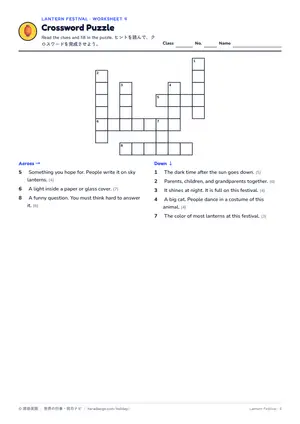
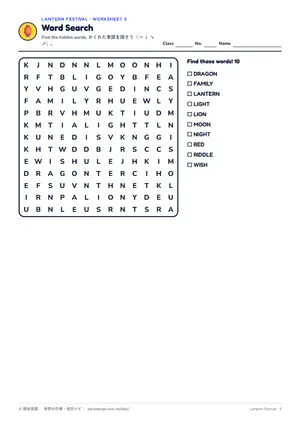
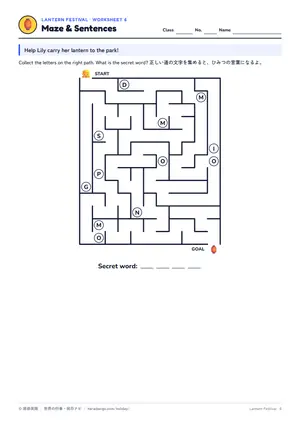
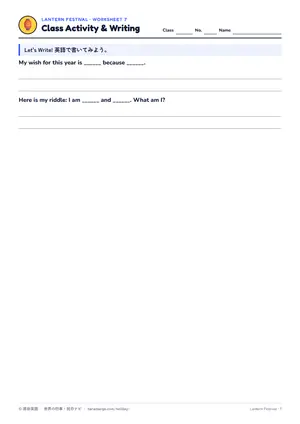
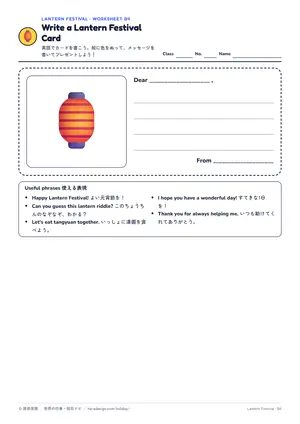
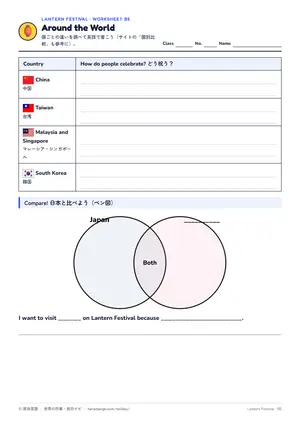
🍎Lesson Ideas元宵節(ランタン・フェスティバル)を使った英語の授業アイデア
英語のちょうちんなぞなぞ大会
🎯 I am ~. I have ~. What am I? の形で英語のなぞなぞを作り、解き合う。
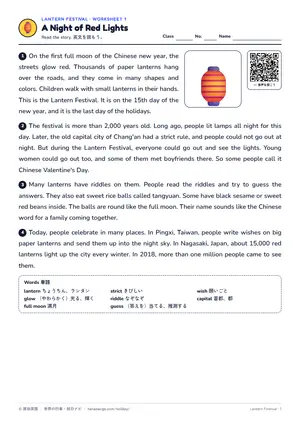
- 元宵節の「ちょうちんになぞなぞを書く」習慣を写真で紹介する。
- ちょうちん型の紙に、動物や食べ物を答えにした3文のなぞなぞを書く。
- 教室につるして見て回り、答えを What am I? カードに書いて当て合う。
- いちばんむずかしかったなぞなぞを全員で解く。
詳細版を開く(時間配分・Teacher Talk・板書)
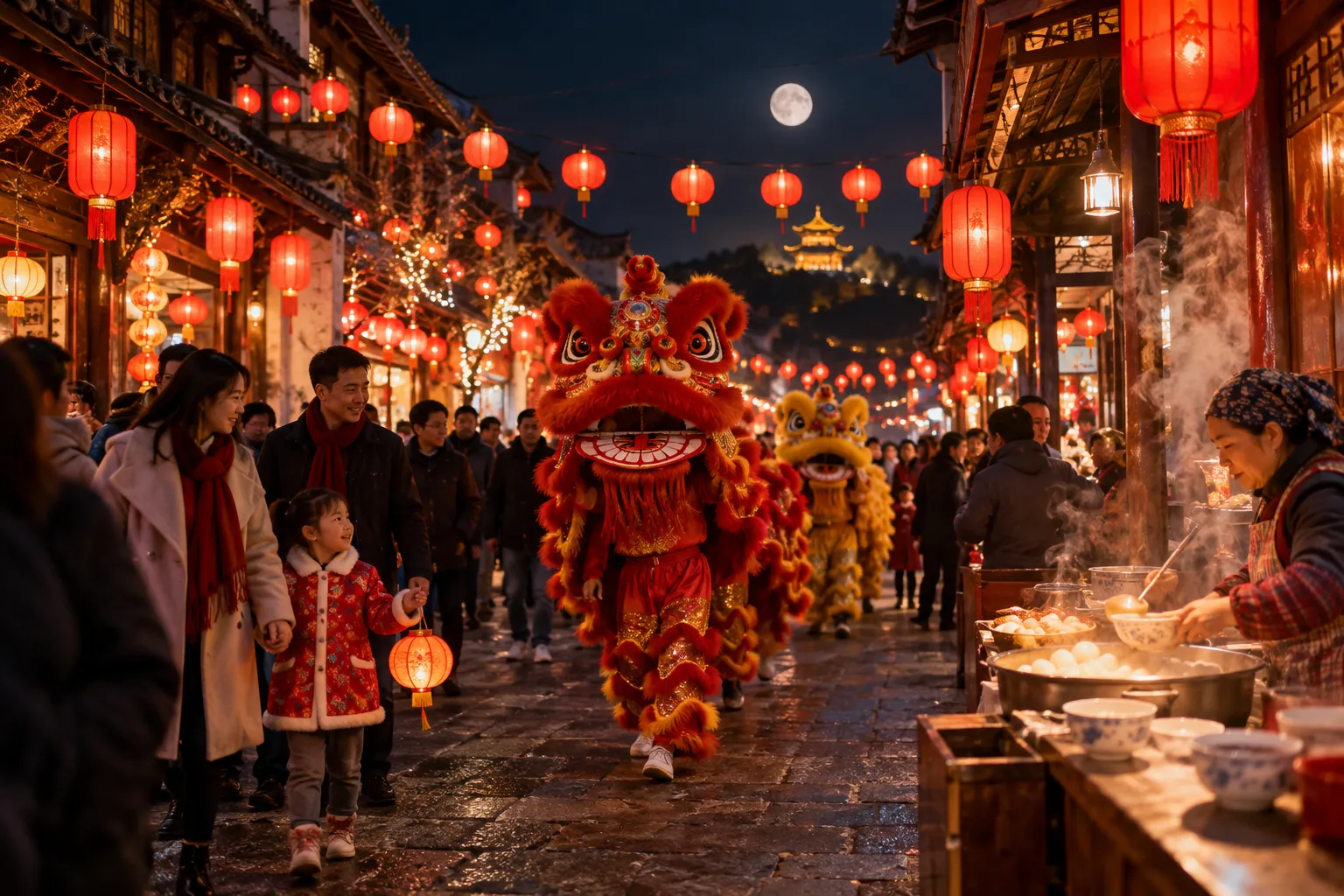
赤いちょうちんの通りの写真を見せ、元宵節が旧正月から15日目、新年最初の満月の夜であることを伝える。英語ページの音声で本文の第3段落を聞かせ、ちょうちんになぞなぞが書かれていて、人々が答えを当てようとすることを確認する。
🗣️ Look at all these red lanterns! / This is the Lantern Festival in China. / Many lanterns have riddles on them. / People read the riddles and try to guess the answers.
先生の見本のなぞなぞを2つ出して、全員で答えさせる(I am round. I am white and sweet. I have black sesame inside. What am I? → tangyuan / I am a big cat. I have a big head. People dance in my costume. What am I? → lion)。I am のあとに色・形・大きさ、I have のあとに体の部分や中身を続けることを確認する。
🗣️ Here is my riddle. I am round. I am white and sweet. / I have black sesame inside. What am I? / Yes! Tangyuan, sweet rice balls. / Use "I am" for color and shape. Use "I have" for parts.
答えにする動物か食べ物を1つ決めさせ、ちょうちん型の紙に3文のなぞなぞを書かせる。答えは紙の裏に書かせる。最後の文は必ず What am I? にする。書けた生徒の紙に番号をつけ、教室につるさせる。
🗣️ Choose an animal or a food. / Write three sentences and "What am I?" / Write the answer on the back. / Hang your lantern on the string.
全員に What am I? カードを配り、教室を見て回ってなぞなぞを読み、番号と答えを英語で書かせる。わかった答えは書いた本人に Is it a ~? とたずねて確かめさせ、本人は Yes, it is. / No, it isn't. で答えさせる。
🗣️ Walk around and read the riddles. / Write the number and your answer. / Ask the writer. Is it a panda? / Answer, "Yes, it is" or "No, it isn't."
答えがいちばん出なかったなぞなぞを1つ選び、先生が読み上げて全員で解く。解けたら、書いた生徒に答えを言ってもらう。最後に Happy Lantern Festival! と全員で言って終える。
🗣️ This riddle was the hardest. Let's try it together. / Can you guess this lantern riddle? / Happy Lantern Festival!
🏮 Lantern Festival(the 15th day of the Chinese new year)
🌕 the first full moon

Lantern riddles
I am ___.(色・形・大きさ)
I have ___.(体の部分・中身)
What am I?

例:I am round. I am white and sweet.
I have black sesame inside. What am I?
→ tangyuan

Is it a ___? Yes, it is. / No, it isn't.
アジアの満月の夜比べ
🎯 国ごとの行事を英文で読み取り、共通点とちがいを英語でまとめる。
- 中国・台湾・マレーシア・韓国・日本(長崎・小正月)の1月15日の行事をグループで分担して読む。
- それぞれ What do people do? / What do they eat? を英語で表にまとめる。
- Both ~ and ~ celebrate the full moon, but ~. の形で発表する。
- 中秋節との「まぎらわしさ」についても確認する。
詳細版を開く(時間配分・Teacher Talk・板書)
元宵節は旧暦1月15日、新年最初の満月の夜であることを確認する。「満月の夜にちょうちんを楽しむ行事は、アジアのほかの国にもある?」と問い、日本では同じ日が小正月にあたり、長崎にはちょうちんの祭りがあることを紹介する。
🗣️ The Lantern Festival is on the first full moon of the Chinese new year. / Do other countries celebrate this night too? / Let's read and compare.
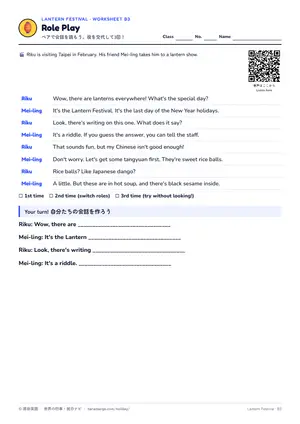
5人グループで英文カードを1人1枚分担して読ませる。読んだら、自分の国で人々が何をするか、何を食べるかを、グループの仲間に英語で説明させる。食べ物が書かれていないカードは not in the text と言わせる。台湾は B3 の会話でメイリンが湯圓(タンユエン)を食べに誘うことにも気づかせる。
🗣️ Each person reads one card. / What do people do? What do they eat? / If the card doesn't say, say "not in the text." / Now tell your group.
聞いた内容を表にまとめさせる。中国は赤いちょうちんとなぞなぞで、北では元宵・南では湯圓を食べる、台湾は平渓で願いを書いた天灯を飛ばす、マレーシア・シンガポールはみかんを水に投げて出会いを願う、と確認していく。韓国は大ボルムとして満月を祝い、日本は長崎で約1万5000個のちょうちんがかざられることも書かせる。
🗣️ Fill in the table with your group. / In Taiwan, what do people write on the lanterns? / In Malaysia, what do some women throw into the water? / Check the cards again.
Both China and South Korea celebrate the full moon, but in China people also hang red lanterns and guess riddles. を例に、2つの国を選んで共通点とちがいを表す文を書かせる。各グループ1文ずつ発表させる。
🗣️ Choose two countries. / Both China and South Korea celebrate the full moon, but ... / Write what is the same and what is different. / Group 1, please read your sentence.
「ランタン・フェスティバル」は1つではないことを確認する。インドネシアやマレーシア、シンガポールでは秋の中秋節(旧暦8月15日)もランタン・フェスティバルと呼ばれることがあり、どちらも満月の夜にちょうちんを楽しむ、べつの祭りであることを伝える。
🗣️ Is there only one Lantern Festival? / The Mid-Autumn Festival is on the 15th day of the eighth month. / Both have a full moon and lanterns, but they are different festivals.
Full moon nights in Asia(the 15th day of the first month)

  | What do people do? | What do they eat?
China | red lanterns, riddles, lion dance | yuanxiao(north)/ tangyuan(south)
Taiwan | sky lanterns with wishes(Pingxi) | tangyuan(dialogue)
Malaysia / Singapore | throw oranges into the water | not in the text
South Korea | Daeboreum:the big full moon | not in the text
Japan | Nagasaki:about 15,000 lanterns / Koshogatsu | not in the text

Both ___ and ___ celebrate the full moon, but ___.

元宵節(1月15日)≠ 中秋節(8月15日)