Labor Thanksgiving Day

勤労感謝の日を英語で:読む・聞く・話す・遊ぶ

やさしい英語(CEFR A2)の読み物に音声つき。会話・単語カード・クイズ8問・ゲームで、勤労感謝の日の英語をまるごと。

🔊Read in English勤労感謝の日を英語で読もう(CEFR A2・音声つき)

勤労感謝の日を、やさしい英語で紹介する読み物です。▶で英文をタイトルから通して聞けます(アメリカ英語)。「和訳」ボタンで日本語訳の表示・非表示を切りかえられます。下線の語は下の単語カードにあります。

From New Rice to Thank You

CEFR A2
0:00
264 words

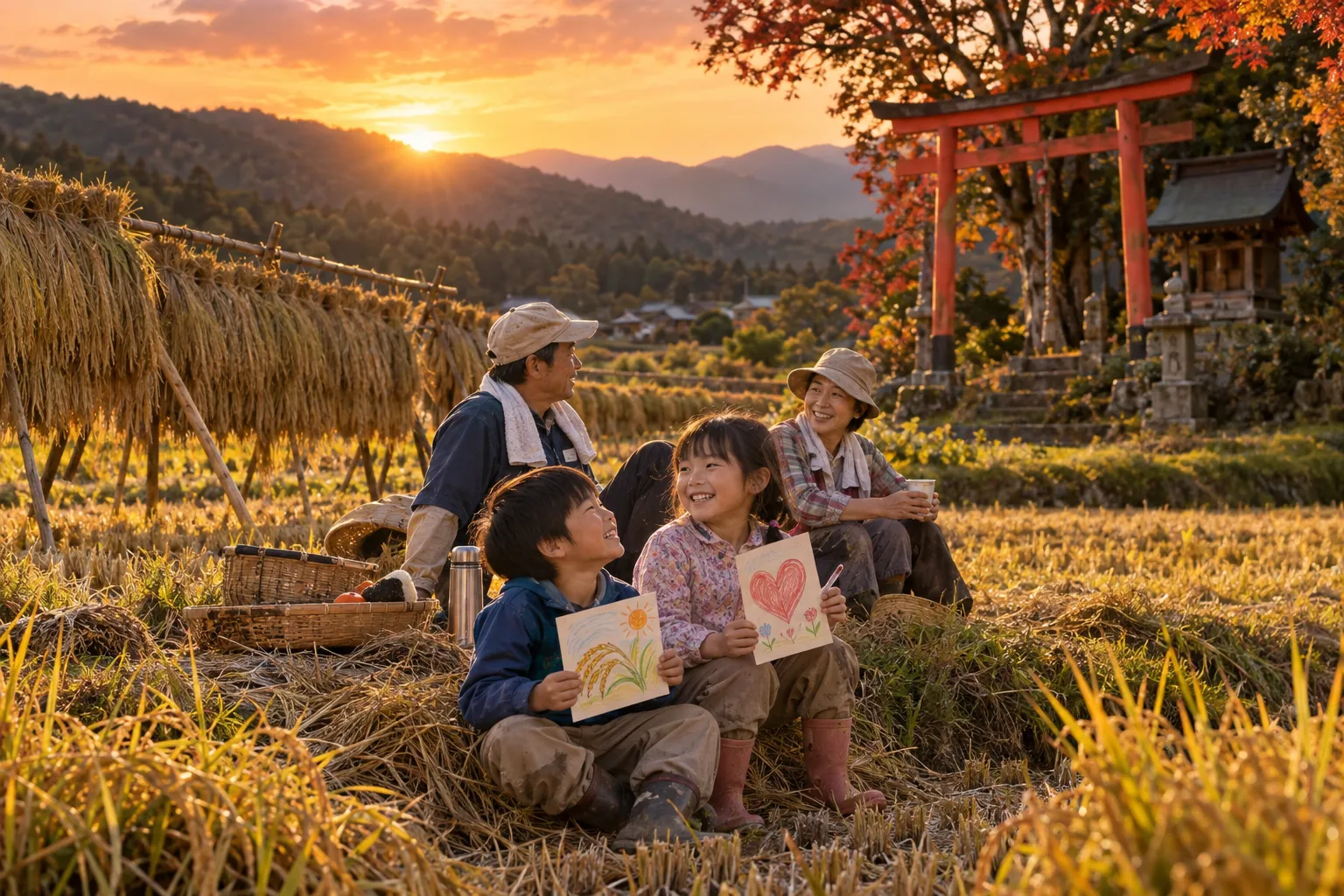
On the night of November 23, a very old ceremony takes place inside the Imperial Palace in Tokyo. By the light of torches, the emperor offers the year's new rice to the gods. Then he eats some of it himself. This ceremony is called Niinamesai, and it is more than 1,000 years old.

11月23日の夜、東京の皇居の中で、とても古い儀式が行われます。たいまつの明かりの中で、天皇がその年の新しいお米を神々に供えるのです。そして、それを自分も少し食べます。この儀式は新嘗祭(にいなめさい)と呼ばれ、1000年以上の歴史があります。

Long ago, the date changed every year. It was held on the second Day of the Rabbit in the eleventh month of the old calendar. In 1873, Japan started using a new calendar. That year, the second Day of the Rabbit in November was the 23rd, and the date never moved again.

昔は、日付が毎年変わりました。旧暦の11月の、2回目の卯の日に行われていたのです。1873年、日本は新しい暦を使い始めました。その年の11月の2回目の卯の日が23日で、それ以来、日付は二度と動きませんでした。

After World War II, Japan made new national holidays. Lawmakers talked a lot about a new name for November 23. Ideas included New Grain Festival and simply Thanks Day. But some said, thanks for what? In 1948, they chose Kinro Kansha no Hi, or Labor Thanksgiving Day. The law says it is a day to respect work, celebrate production, and thank each other.

第二次世界大戦の後、日本は新しい国民の祝日を作りました。国会議員たちは、11月23日の新しい名前について何度も話し合いました。案の中には「新穀祭」や、シンプルな「感謝の日」もありました。でも、「何への感謝なの?」と言う人もいました。1948年、彼らは「勤労感謝の日」を選びました。法律は、この日を勤労を大切にし、生産を祝い、おたがいに感謝しあう日だとしています。

Today, many children write thank-you cards for police officers, firefighters, and their own parents. In Nagano, people enjoy a big fireworks show on this night. In Japan, people often say otsukaresama to each other after work. It is hard to translate, but it means something like thank you for your hard work.

今では、多くの子どもたちが、警察官や消防士、自分の親に感謝のカードを書きます。長野では、この夜に大きな花火大会を楽しみます。日本では、仕事のあとに「お疲れさま」と言い合うことがよくあります。訳すのは難しいですが、「がんばってくれてありがとう」のような意味です。

Some people compare this day to Thanksgiving in the United States. Both started with thanks for the harvest. In 2028, they will even fall on the same day, November 23. So this year, why not say thank you to someone who works for you?

この日をアメリカの感謝祭とくらべる人もいます。どちらも収穫への感謝から始まりました。2028年には、両方が同じ11月23日になります。だから今年は、あなたのために働いてくれている人に「ありがとう」を言ってみませんか。

💬Dialogue英語の会話で勤労感謝の日

🎬 グレースはアメリカ出身で、日本で英語を教えています。同僚の颯太が11月23日の祝日について話します。

0:00
Grace

Sota, the calendar says November 23 is Labor Thanksgiving Day. What is that?

颯太、カレンダーに11月23日は勤労感謝の日って書いてあるけど、それは何?

Sota

It's a national holiday to thank people for their work.

人々の働きに感謝する祝日だよ。

Grace

Thanksgiving in November? Do you eat turkey?

11月に感謝祭?七面鳥を食べるの?

Sota

Ha ha, no. There's no special food. It's different from American Thanksgiving.

ははは、食べないよ。決まった料理はないんだ。アメリカの感謝祭とは違うよ。

Grace

So where did it come from?

じゃあ、どこから来たの?

Sota

It was an old rice festival. The emperor offers new rice to the gods on this day.

古いお米のお祭りだったんだ。この日に天皇が新米を神さまに供えるんだよ。

Grace

Really? He still does that today?

本当?今でもそうしてるの?

Sota

Yes, every year at night in the Imperial Palace.

うん、毎年夜に、皇居の中でね。

Grace

Wow. So what do people do on the holiday?

わあ。それで、みんなは祝日に何をするの?

Sota

Kids often make thank-you cards for their parents or for firefighters.

子どもたちは、よく親や消防士さんに感謝のカードを作るよ。

Grace

That's sweet. Maybe our students can do that in English class!

かわいいね。英語の授業で生徒たちにもやってもらえるかも!

Sota

Great idea. By the way, Grace, otsukaresama.

いいね。ところでグレース、お疲れさま。

Grace

Otsukaresama? What does that mean?

お疲れさま?どういう意味?

Sota

It means thank you for your hard work. Perfect for this holiday!

「がんばってくれてありがとう」っていう意味。この祝日にぴったりの言葉だよ!

🃏Word Cards勤労感謝の日の英単語カード(12語)

カードをタップすると裏返って、意味と例文が出ます。

ceremony名詞
儀式The ceremony takes place at night.その儀式は夜に行われる。💡 take place は「行われる」。セットで覚えよう。
offer動詞
供える、差し出すThe emperor offers new rice to the gods.天皇は新米を神々に供える。💡 offer A to B で「AをBに差し出す」。
harvest名詞
収穫This year's harvest was good.今年の収穫はよかった。💡 動詞で「収穫する」にもなる。harvest festival は収穫祭。
grain名詞
穀物Rice and wheat are grains.米と小麦は穀物だ。💡 新嘗祭の「新穀」は new grain。
calendar名詞
暦、カレンダーJapan changed its calendar in 1873.日本は1873年に暦を変えた。💡 the old calendar で「旧暦」。
labor名詞
労働、勤労Farm labor is hard.農作業はきつい。💡 イギリス英語のつづりは labour。
thanksgiving名詞
感謝、感謝祭We had a thanksgiving dinner.私たちは感謝のごちそうを食べた。💡 thanks + giving。大文字の Thanksgiving はアメリカ・カナダの祝日。
respect動詞
大切にする、尊重するWe should respect all kinds of work.あらゆる仕事を大切にすべきだ。💡 祝日法の「勤労をたっとび」は respect work と言える。
production名詞
生産Rice production is important in Japan.日本では米の生産が大切だ。💡 動詞は produce。product は「製品」。
firefighter名詞
消防士Firefighters work day and night.消防士は昼も夜も働く。💡 fire(火)+ fighter(戦う人)。fireman より今はこちらが一般的。
translate動詞
翻訳する、訳すThis word is hard to translate.この言葉は訳すのが難しい。💡 translate A into B で「AをBに訳す」。
fireworks名詞
花火We watched the fireworks by the river.私たちは川のそばで花火を見た。💡 普通複数形で使う。fire + works。

✅Quiz勤労感謝の日の英語クイズ(8問)

上の英文を読んでから答えてみよう。答えを選ぶとすぐに解説が出ます。全問正解でスタンプが金色に!

Q1. What is the passage mainly about?

この文章は主に何について書かれていますか。

新嘗祭から始まり、日付・名前の決まり方・今の過ごし方まで、勤労感謝の日全体を説明しています。

Q2. What does the emperor do in the Niinamesai ceremony?

新嘗祭で天皇は何をしますか。

第1段落に the emperor offers the year's new rice to the gods. Then he eats some of it himself とあります。

Q3. Why did the date become November 23?

なぜ日付が11月23日になったのですか。

第2段落に the second Day of the Rabbit in November was the 23rd とあります。

Q4. When did lawmakers choose the name Labor Thanksgiving Day?

国会議員たちが勤労感謝の日という名前を選んだのはいつですか。

第3段落に In 1948, they chose Kinro Kansha no Hi とあります。1873年は日付が決まった年です。

Q5. In paragraph 4, the word translate is closest in meaning to ____.

第4段落の translate に最も意味が近いのはどれですか。

translate は「訳す」。お疲れさまを英語にするのが難しい、という文脈です。

Q6. Which is true about the passage?

本文の内容に合うものはどれですか。

第3段落に But some said, thanks for what? とあります。儀式は夜、新しい暦は1873年なので、ほかは誤りです。

Q7. Why might people compare this day to American Thanksgiving?

人々がこの日をアメリカの感謝祭とくらべるのはなぜだと考えられますか。

第5段落に Both started with thanks for the harvest とあります。日本では七面鳥は食べず、日付も11月23日固定です。

Q8. In the dialogue, what idea does Grace have for her students?

会話で、グレースは生徒たちのためにどんなアイデアを思いつきましたか。

グレースは Maybe our students can do that in English class! と言っています。that は感謝のカードを作ることです。

🎮Games勤労感謝の日の英語ゲーム

タブを切りかえて遊べます。授業ではプロジェクターに映して、クラス対抗戦にしても盛り上がります。

📖Read Moreもっと読む:From Rice to Work: How a Harvest Rite Became a Labor Holiday

少し難しめ(B1〜B2)の英文で、勤労感謝の日を違う角度から。

From Rice to Work: How a Harvest Rite Became a Labor Holiday

B1–B2
0:00
199 words

When Japan rewrote its national holidays in 1948, November 23 posed a delicate problem. For decades it had been Niinamesai, an imperial Shinto rite, but the new constitution separated religion from the state, and lawmakers said they had removed the colors of State Shinto from the new holidays. The challenge was to keep a beloved autumn day off while giving it a meaning that every citizen could share.

1948年に日本が国民の祝日を作り直したとき、11月23日は難しい問題をかかえていました。何十年もの間、この日は皇室の神道儀式である新嘗祭でした。しかし新しい憲法は宗教と国家を分け、議員たちは新しい祝日から国家神道の色彩を取り除いたと説明しました。課題は、人々に親しまれた秋の休日を残しながら、すべての国民が共有できる意味を与えることでした。

The Diet records show how hard that was. One proposal focused on production, including fishing and forestry, not only rice. Another simply called it Thanks Day, which critics found too vague. When the word kinro, meaning work or labor, was added, one member objected that thanking only workers might encourage class conflict.

国会の記録は、それがいかに難しかったかを示しています。ある案は、お米だけでなく漁業や林業も含めた「生産」に焦点を当てました。別の案は単に「感謝の日」と呼びましたが、あいまいすぎると批判されました。勤労という言葉が加えられると、ある議員は、働く人だけに感謝するのは階級対立をあおりかねないと反対しました。

The final law avoids that trap by asking citizens to thank one another. In this way, a ritual centered on one person offering rice became a holiday about mutual gratitude, though the ancient ceremony still continues quietly inside the palace on the same night. Today, many people enjoy the holiday without knowing its roots at all. For them, it is simply a quiet day off in late autumn, a chance to rest before the busy end of the year.

最終的な法律は、国民がおたがいに感謝しあうことを求めることで、その落とし穴を避けています。こうして、一人の人が米を供える儀式を中心とした日は、おたがいへの感謝の祝日になりました。ただし古い儀式そのものは、同じ夜に宮中で静かに続いています。今では、多くの人がそのルーツをまったく知らないまま、この祝日を楽しんでいます。その人たちにとって、この日はただの晩秋の静かな休日であり、忙しい年末の前にひと休みする機会なのです。

👋Useful Phrases勤労感謝の日に使える英語フレーズ

Labor Thanksgiving Day is a national holiday on November 23.勤労感謝の日は11月23日の祝日です。まずはこの一言。
It's a day to thank people for their work.人々の働きに感謝する日です。祝日の意味を一言で。
Thank you for your hard work.お疲れさまです/いつもありがとう。「お疲れさま」にぴったりの英語はないが、この言い方で気持ちが伝わる。
It started as an old rice harvest festival.もとは古いお米の収穫のお祭りでした。新嘗祭は Niinamesai, the harvest festival of new rice と説明できる。
It's not the same as American Thanksgiving, but the spirit is similar.アメリカの感謝祭とは違うけれど、気持ちは似ています。よく聞かれる質問への答え方。

🗣️ 話し合ってみよう(Discussion)

  1. Who do you want to thank on Labor Thanksgiving Day? Why?

    勤労感謝の日に、だれに感謝したいですか。それはなぜですか。
  2. What jobs in your town are important but not often noticed?

    あなたの町で、大切なのにあまり気づかれない仕事は何ですか。
  3. Is studying a kind of work? Should students be thanked on this day too?

    勉強は勤労の一つでしょうか。生徒もこの日に感謝されるべきでしょうか。
  4. How would you explain otsukaresama to someone from another country?

    「お疲れさま」を外国の人にどう説明しますか。
  5. Should a national holiday keep its religious roots, or change to a meaning everyone can share?

    国民の祝日は宗教的なルーツを保つべきでしょうか、それともだれもが共有できる意味に変えるべきでしょうか。

🗾Explain Japan in English勤労感謝の日を海外の人に英語で説明するなら

姉妹サイト「日本文化ナビ」に、英語でかんたんに説明する例文(ひと言・30秒・スピーチ)と、外国の人によく聞かれる質問がまとまっています。日本語のページと、英語だけのページ(そのまま海外の人に見せられます)があります。

勤労感謝の日を英語で説明する(kinro kansha no hi)勤労感謝の日(kinro kansha no hi)を英語で説明するには。一言/30秒/スピーチの3段階の英文と和訳、外国人によく聞かれる質問と答え、そのまま使えるフレーズ、音声つJP 日本語で読むGB English page
新嘗祭と勤労感謝の日を英語で説明する(niinamesai)新嘗祭と勤労感謝の日(niinamesai)を英語で説明するには。一言/30秒/スピーチの3段階の英文と和訳、外国人によく聞かれる質問と答え、そのまま使えるフレーズ、音声つき。JP 日本語で読むGB English page
🌾
Labor Thanksgiving
スタンプ帳に勤労感謝の日のスタンプを押しました!
クイズで全問正解すると金のスタンプに。世界一周めざして集めよう。 スタンプ帳を見る →

授業アイデアとワークシートを見る →