kinro kansha no hi
Labor Thanksgiving Day, November 23rd
勤労感謝の日(きんろうかんしゃのひ)
In one line
The shortest answer that works
Kinro kansha no hi, or Labor Thanksgiving Day, is a November 23rd holiday for valuing work and giving thanks.
勤労感謝の日とは、働くことをたっとび、たがいに感謝する11月23日の祝日です。
In 30 seconds
The standard explanation
November 23rd is Labor Thanksgiving Day. The law defines it as a day to value labor, celebrate what it produces, and give thanks to one another. Despite the English name, it is not related to American Thanksgiving. The date comes from Niinamesai, a harvest rite at which the emperor offers the year's new rice, held on this date.
11月23日は勤労感謝の日です。法律では、勤労をたっとび、生産を祝い、国民がたがいに感謝しあう日と定められています。英語の名前に反して、アメリカの感謝祭とは関係がありません。日付は、天皇がその年の新米を供える収穫の祭りである新嘗祭の日に由来します。
As a short speech
A full paragraph you can read aloud
November 23rd is Labor Thanksgiving Day in Japan, and the English name causes a predictable confusion. It has nothing to do with American Thanksgiving: no turkey, no family gathering, no shared origin story. The date comes from Niinamesai, a harvest ritual in which the emperor offers the first rice of the year and eats some of it himself.
It is an ancient rite, once held in the eleventh month of the old lunar calendar, and fixed to November 23rd in 1873. After the war, holidays with explicit imperial and religious framing were rewritten, and in 1948 this one was renamed and redefined as a day to value work, celebrate production and give thanks to each other. The rite itself still takes place.
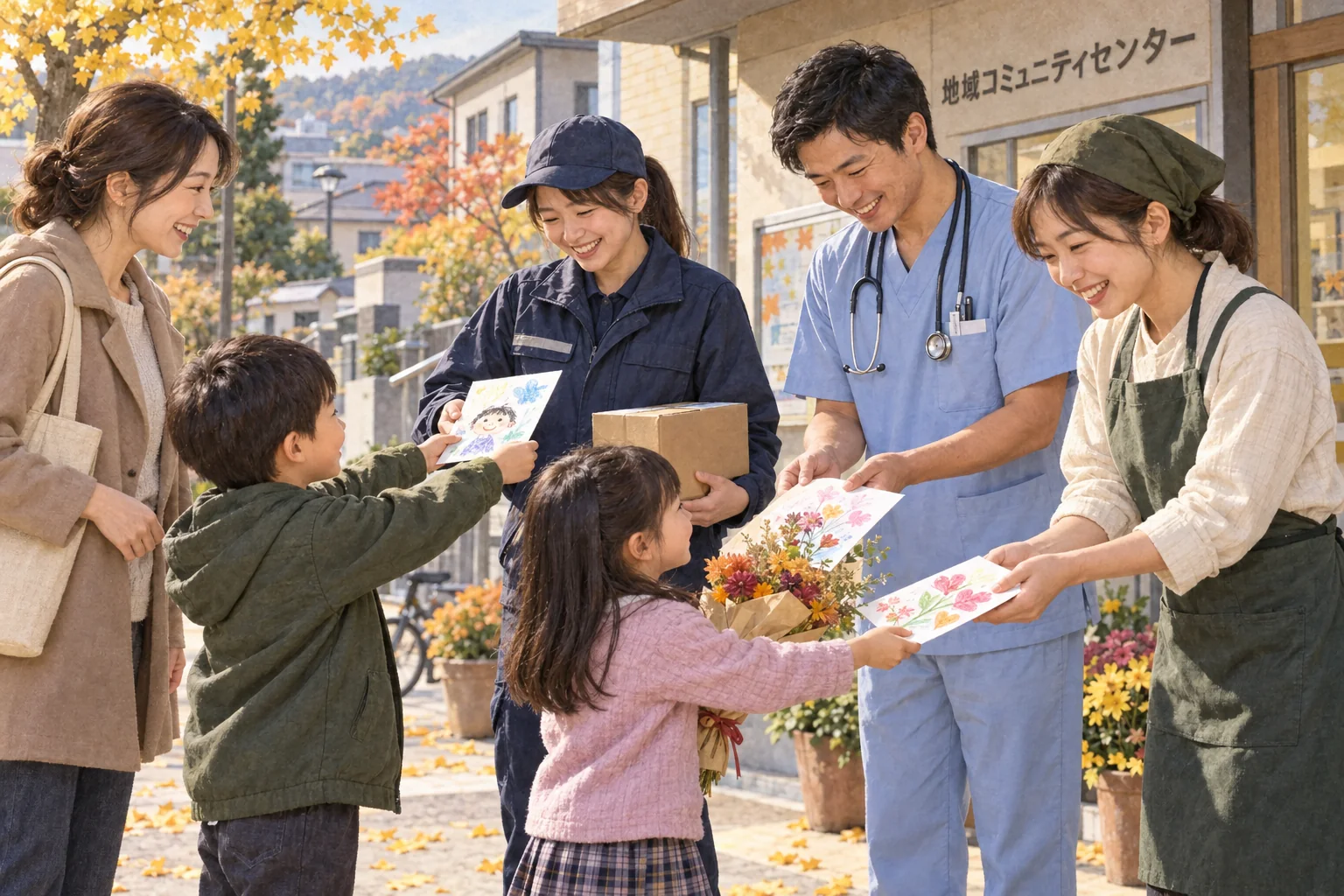
What does an ordinary person do? Not much, honestly. It is a day off in late November. Schools sometimes have children make cards for people whose work they rely on, such as police officers or firefighters. If a foreigner asks whether this is Japan's Thanksgiving, the accurate answer is that it is a harvest festival that was turned into a labor holiday.
11月23日は勤労感謝の日で、英語名のせいで毎回同じ混乱が起きます。アメリカの感謝祭とは何の関係もありません。七面鳥もなければ、家族が集まる習慣もなく、由来も別です。日付は新嘗祭に由来します。天皇がその年の新米を供え、自らも食べる収穫の儀式です。
古くは旧暦11月に行われ、1873年に11月23日に定まりました。戦後、天皇と宗教に直接結びついた祝日は書き換えられ、1948年にこの日は名を変え、勤労をたっとび、生産を祝い、たがいに感謝する日と定義し直されました。儀式そのものは今も行われています。
普通の人が何をするかというと、正直なところ、特に何もしません。11月下旬の休みです。学校では、警察官や消防士など、お世話になっている人に子どもがカードを書くことがあります。これは日本の感謝祭かと聞かれたら、収穫の祭りが勤労の祝日に変えられたものです、と答えるのが正確です。
Questions people actually ask
And how to answer them.
Is it Japan's Thanksgiving?
No. The English name invites the comparison, but there is no shared origin, no special meal and no tradition of gathering. It is a harvest rite that was redefined as a labor holiday after the war.
違います。英語名のせいで比べられますが、由来も、決まった食事も、集まる習慣もありません。収穫の儀式が、戦後に勤労の祝日として定義し直されたものです。
Does the harvest rite still happen?
Yes. Niinamesai is still performed at the imperial palace on this date. The first one of a new reign is called Daijosai and is a much larger affair, held once per emperor.
行われています。新嘗祭はいまも同じ日に宮中で行われます。天皇が代替わりして最初のものは大嘗祭と呼ばれ、規模がはるかに大きく、一代に一度です。
Do workers get anything special?
No. There is no bonus, ceremony or custom attached to it for employees. It is simply a public holiday, and people who work in service industries often work through it anyway.
ありません。働く人向けの手当も式典も慣習もありません。単なる祝日で、接客業の人はその日も働いていることが多いです。
A common misunderstanding
MYTHLabor Thanksgiving Day is Japan's version of Thanksgiving.
FACTThey are unrelated. The Japanese holiday grew out of Niinamesai, an imperial harvest rite on the same date, and was redefined as a labor holiday in 1948.
Phrases you can use
- It isn't related to American Thanksgiving at all.アメリカの感謝祭とはまったく関係ありません。
- The date comes from a harvest rite at the palace.日付は、宮中の収穫の儀式に由来します。
- The law calls it a day to value work and give thanks.法律では、勤労をたっとび、感謝しあう日とされています。
- Honestly, most people just have the day off.正直なところ、多くの人にとってはただの休みです。
- There's no special meal for it.決まった食事はありません。
Words you need
- labor勤労
- harvest収穫
- rite, ritual儀式、祭祀
- give thanks感謝する
- new rice新米
Watch
From YouTubeBackground (Japanese)
11月23日は、戦前は新嘗祭という名の祝日だった。新嘗祭は天皇がその年の新穀を神に供え、自らも食する宮中祭祀で、古くは旧暦11月の卯の日に行われ、1873年の改暦後に11月23日に固定された。現在も同じ日に行われている。1948年の祝日法で勤労感謝の日と改められ、「勤労をたつとび、生産を祝い、国民がたがひに感謝しあう」日と定められた。天皇の代替わりのあと最初に行われる新嘗祭は大嘗祭と呼ばれ、一代に一度の大規模な儀式となる。なおアメリカの Thanksgiving との関係はないが、英語名が Labor Thanksgiving Day であるため、しばしば混同される。