niinamesai
the harvest rite behind a public holiday
新嘗祭と勤労感謝の日(にいなめさいときんろうかんしゃのひ)
In one line
The shortest answer that works
Niinamesai, the imperial harvest rite of offering new rice, is the origin of the November 23rd public holiday.
新嘗祭と勤労感謝の日とは、天皇が新穀を供える宮中の祭りと、それを起源とする十一月二十三日の祝日です。
In 30 seconds
The standard explanation
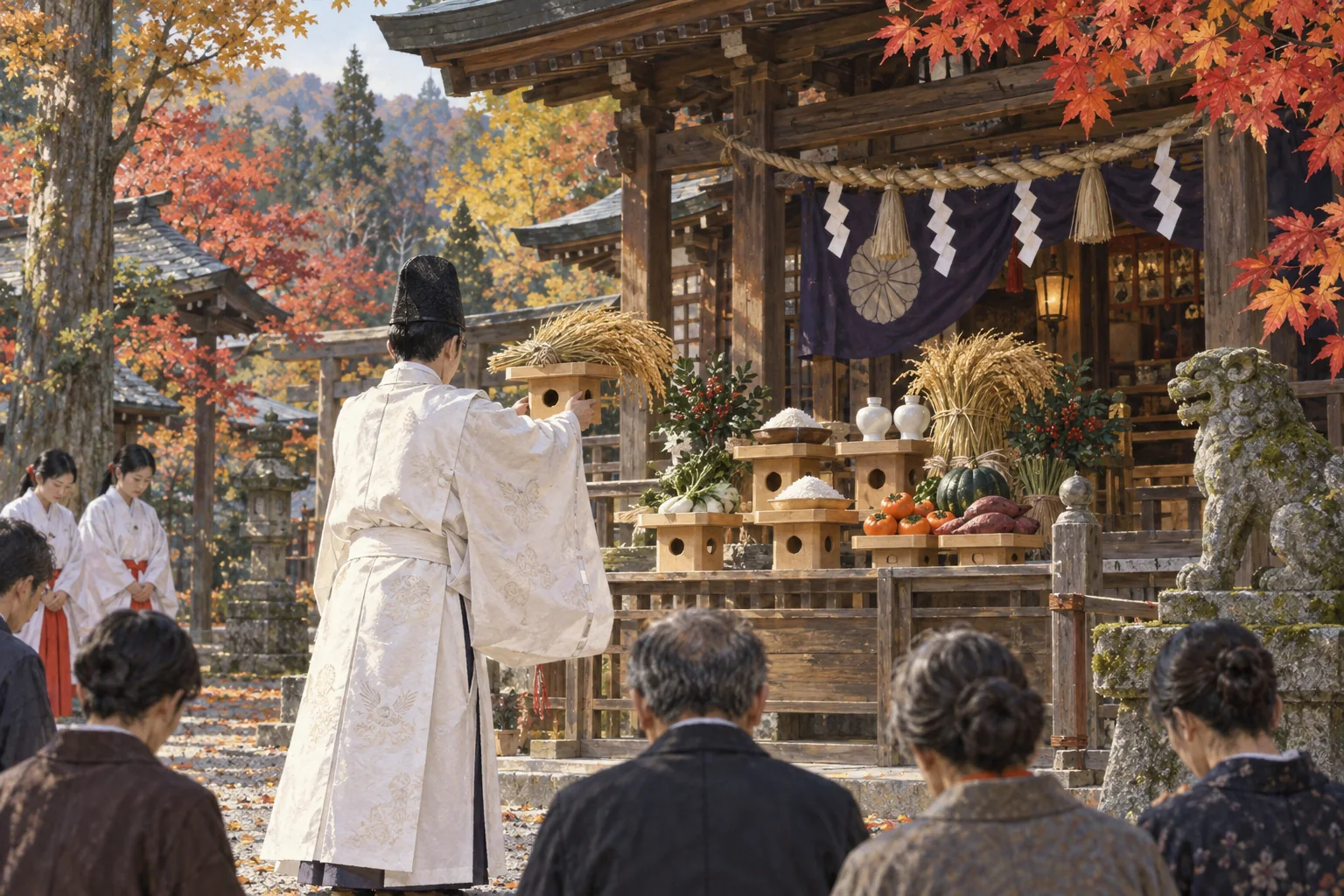
Niinamesai is the rite in which the emperor offers the year's new rice to the deities and eats it himself. It is held on November 23rd, which became the public holiday Labor Thanksgiving Day in 1948. Shrines across the country hold their own harvest rites on the same date.
新嘗祭は、天皇がその年の新穀を神に供え、自らも食する祭りです。十一月二十三日に行われ、この日は1948年に勤労感謝の日という祝日になりました。同じ日に、全国の神社でもそれぞれの収穫の祭りが行われます。
As a short speech
A full paragraph you can read aloud
November 23rd is a public holiday in Japan called Labor Thanksgiving Day, and many people treat it as a day off without knowing what it replaced. The date belongs to niinamesai, one of the oldest and most important rites of the imperial court: the emperor offers newly harvested rice to the deities, thanks them for the year's crop, and eats the new rice himself. It has been performed for centuries, and the first such rite of a new emperor's reign, called daijosai, is a larger ceremony conducted once as part of the accession.
After the war, when the constitution separated the state from Shinto, the holiday was renamed and redefined in 1948 as a day to value labor, celebrate production and thank one another. Shrines throughout the country still hold harvest rites on the same date, and if you visit one on the morning of the 23rd you may find an offering of the year's rice, vegetables and sake set out before the hall.
十一月二十三日は勤労感謝の日という日本の祝日で、多くの人は、それが何に代わったものかを知らないまま休みとして過ごします。この日付は新嘗祭のものです。宮中で最も古く、最も重い祭りの一つで、天皇がその年に採れた新穀を神に供え、収穫に感謝し、自らもその新米を食します。
何百年も続けられてきました。新しい天皇の治世で最初に行われるものは大嘗祭と呼ばれ、即位に伴って一度だけ行われる大きな祭祀です。戦後、憲法が国家と神道を分けたことを受け、この祝日は1948年に名を改められ、勤労をたっとび、生産を祝い、国民が互いに感謝しあう日と定められました。
全国の神社では今も同じ日に収穫の祭りが行われており、二十三日の朝に訪れると、その年の米や野菜、酒が拝殿の前に供えられているのを見ることができます。
Questions people actually ask
And how to answer them.
Is the holiday still religious?
The public holiday is not; it is defined in law as valuing labor and production. The imperial rite continues as a private ceremony of the imperial house, funded separately from state ceremonial.
祝日そのものは宗教的なものではなく、法律では勤労をたっとび生産を祝う日と定められています。宮中の祭祀は皇室の私的な行事として続けられ、国事行為とは費用の扱いが分けられています。
What is daijosai?
The first niinamesai of a new reign, held once after an accession on a larger scale with specially built halls. The government has paid for it as a public event of the imperial house, while some argue this conflicts with the separation of state and religion.
新しい治世で最初の新嘗祭で、即位のあとに一度だけ、専用の建物を設けて大きな規模で行われます。政府は皇室の公的な行事として費用を公費から支出してきましたが、政教分離に反するという意見もあります。
Can the public see any of it?
Not the imperial rite, which is held at night within the palace grounds. Local shrine harvest rites on the same date are often open, and some serve the new rice afterwards.
宮中の祭祀は夜に皇居の中で行われ、一般には公開されません。同じ日の地域の神社の収穫の祭りは公開されていることが多く、新米が振る舞われる例もあります。
Phrases you can use
- The twenty-third is a public holiday.二十三日は祝日です。
- It began as a harvest rite.もとは収穫の祭りでした。
- The new rice is offered first.まず新穀を供えます。
- The shrine holds its own ceremony.神社でも祭りが行われます。
- Thank you for your work this year.一年のお働きに感謝します。
Words you need
- harvest rite新嘗祭
- newly harvested rice新穀
- public holiday祝日
- accession rite大嘗祭
- offering供えもの
Watch
From YouTubeBackground (Japanese)
新嘗祭は、天皇が新穀を神々に供え、自らも食する宮中の祭祀で、十一月二十三日に行われます。天皇が即位して最初に行う新嘗祭は大嘗祭と呼ばれ、一代に一度の大規模な祭祀となります。戦前はこの日が祭日でしたが、1948年の祝日法により勤労感謝の日と定められ、勤労をたっとび、生産を祝い、国民がたがいに感謝しあう日とされました。全国の神社でも同じ日に新嘗祭が行われ、その年の収穫が供えられます。