ujigami and ujiko
the local guardian deity and its parishioners
氏神と氏子(うじがみとうじこ)
In one line
The shortest answer that works
Ujigami and ujiko are the guardian deity of a locality and the people who live there.
氏神と氏子とは、その土地を守る神と、そこに住む人々のことです。
In 30 seconds
The standard explanation
An ujigami is the deity of a particular area, enshrined at the local shrine, and the households in that area are its ujiko. Originally the word referred to a clan's ancestral deity, but it shifted to mean the guardian of a place. In practice it means that wherever you live, one nearby shrine is treated as yours.
氏神とは特定の土地の神で、その地域の神社に祀られ、その区域の家々が氏子です。もとは一族の祖先神を指す語でしたが、土地の守り神を意味するように変わりました。実際には、住んでいる場所ごとに、近くのある神社が自分の社として扱われるということです。
As a short speech
A full paragraph you can read aloud
Ujigami and ujiko describe the relationship between a place, its shrine and the people who live there. The word ujigami originally meant a clan's own ancestral deity, but over centuries it came to mean the deity that protects a particular district, and the households in that district became its ujiko, its parishioners. In practice this means Japanese people traditionally have a shrine that is theirs by geography rather than by choice: the one that covers the area they live in.
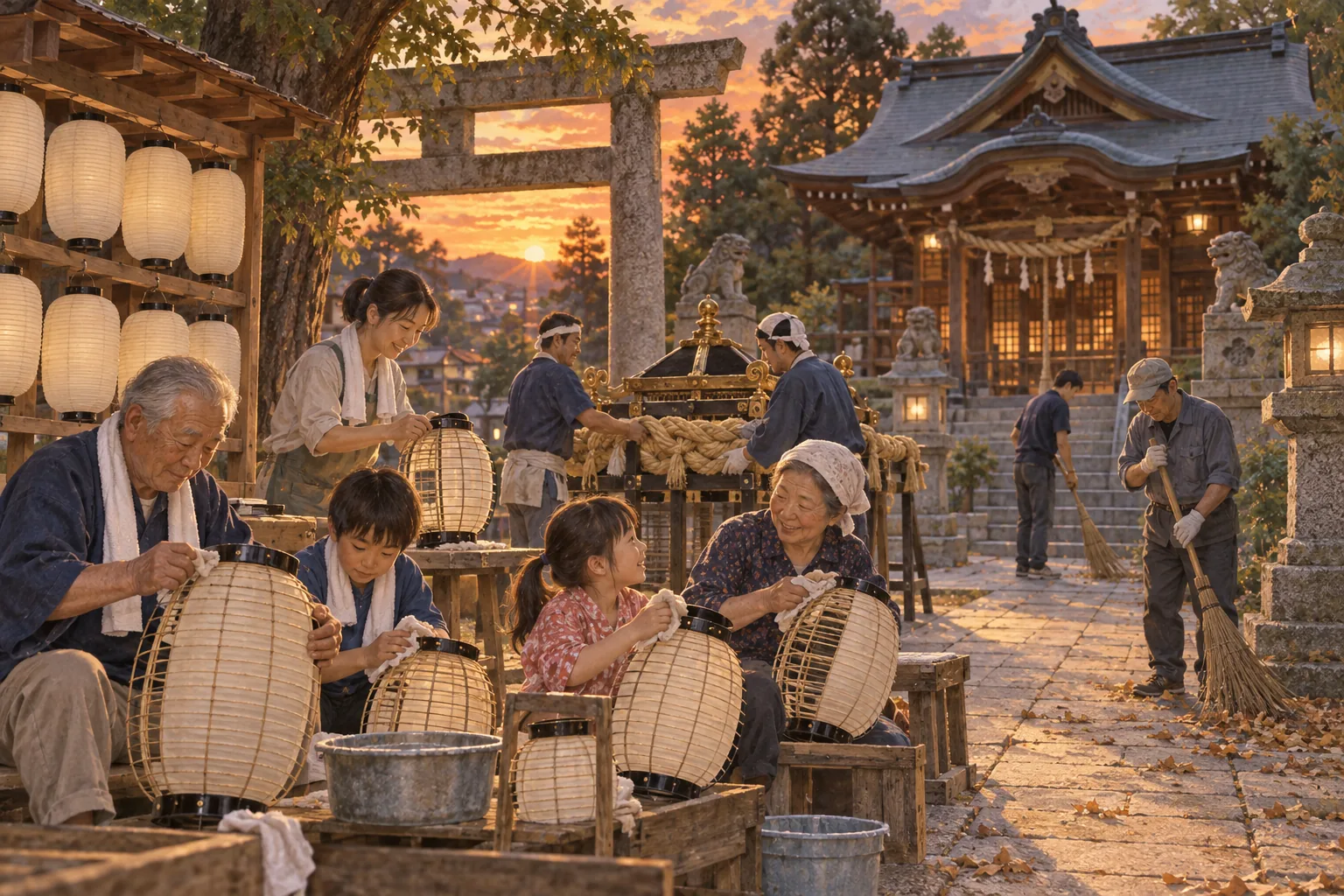
Its festival is the local festival, its committee is made up of residents, and a family moving into the area would once have introduced themselves to it. This is much weaker in cities now, where people may not know which shrine covers their street, but it is still alive in smaller towns, where the shrine's association organizes the annual festival and neighbors take turns carrying the portable shrine through the streets.
氏神と氏子は、土地と神社とそこに住む人々の関係を表す言葉です。氏神はもともと一族固有の祖先神を指しましたが、何世紀かのうちに、ある区域を守る神を意味するようになり、その区域の家々がその氏子、つまり氏神に属する人々になりました。
実際にはこれは、日本人が伝統的に、選んで決めるのではなく地理によって自分の神社を持っていることを意味します。住んでいる区域を受け持つ社です。その社の祭りが地元の祭りであり、その世話をするのは住民で、その地域に越してきた家は、かつてはその社に挨拶に行ったものでした。
都市ではこの結びつきはずっと薄れ、自分の通りをどの神社が受け持つのか知らない人もいます。しかし小さな町では今も生きていて、氏子の組織が毎年の祭りを取り仕切り、近所の人が交代で神輿を担いで通りを進みます。
Questions people actually ask
And how to answer them.
How do I find out which shrine covers my area?
The prefectural shrine association can tell you, and neighbors or the residents' association will know. In many places the boundaries are old and do not match modern administrative districts, so asking locally is more reliable than a map.
都道府県の神社庁が教えてくれますし、近所の人や町内会も知っています。多くの土地で区域の境は古く、現在の行政の区割りと一致しないので、地図より地元で尋ねるほうが確かです。
Does being an ujiko cost anything?
In many neighborhoods households are asked for a small annual contribution toward the shrine and its festival, often collected with other local dues. It is customary rather than compulsory, though in tight-knit areas declining can feel awkward.
多くの地域では、神社と祭りのために家ごとにわずかな年額を求められ、町内会費とあわせて集められることがあります。強制ではなく慣習ですが、結びつきの強い地域では断りにくく感じることもあります。
Phrases you can use
- Every area has its own guardian shrine.どの地域にも氏神の社があります。
- The households there are its parishioners.その区域の家々が氏子です。
- Its festival is the local festival.その社の祭りが地元の祭りです。
- In cities people often don't know theirs.都市では自分の氏神を知らない人も多いです。
Words you need
- guardian deity守り神
- parishioner氏子
- district区域
- residents' association町内会
Watch
From YouTubeBackground (Japanese)
「氏神」はもともと氏族の祖神を指し、藤原氏の春日社、源氏の八幡社のような関係を表しました。土地の守り神を指す言葉としては「産土神」もあり、生まれた土地の神という意味合いがあります。長い間に両者の区別は曖昧になりました。氏子の組織は祭りの運営、社殿の修繕、正月の準備を担い、地域の自治組織と重なることが多くあります。都市への人口集中と町内会の担い手不足により、祭りの継続が難しくなっている地域もあります。