omiyamairi
a baby's first shrine visit
お宮参り(おみやまいり)
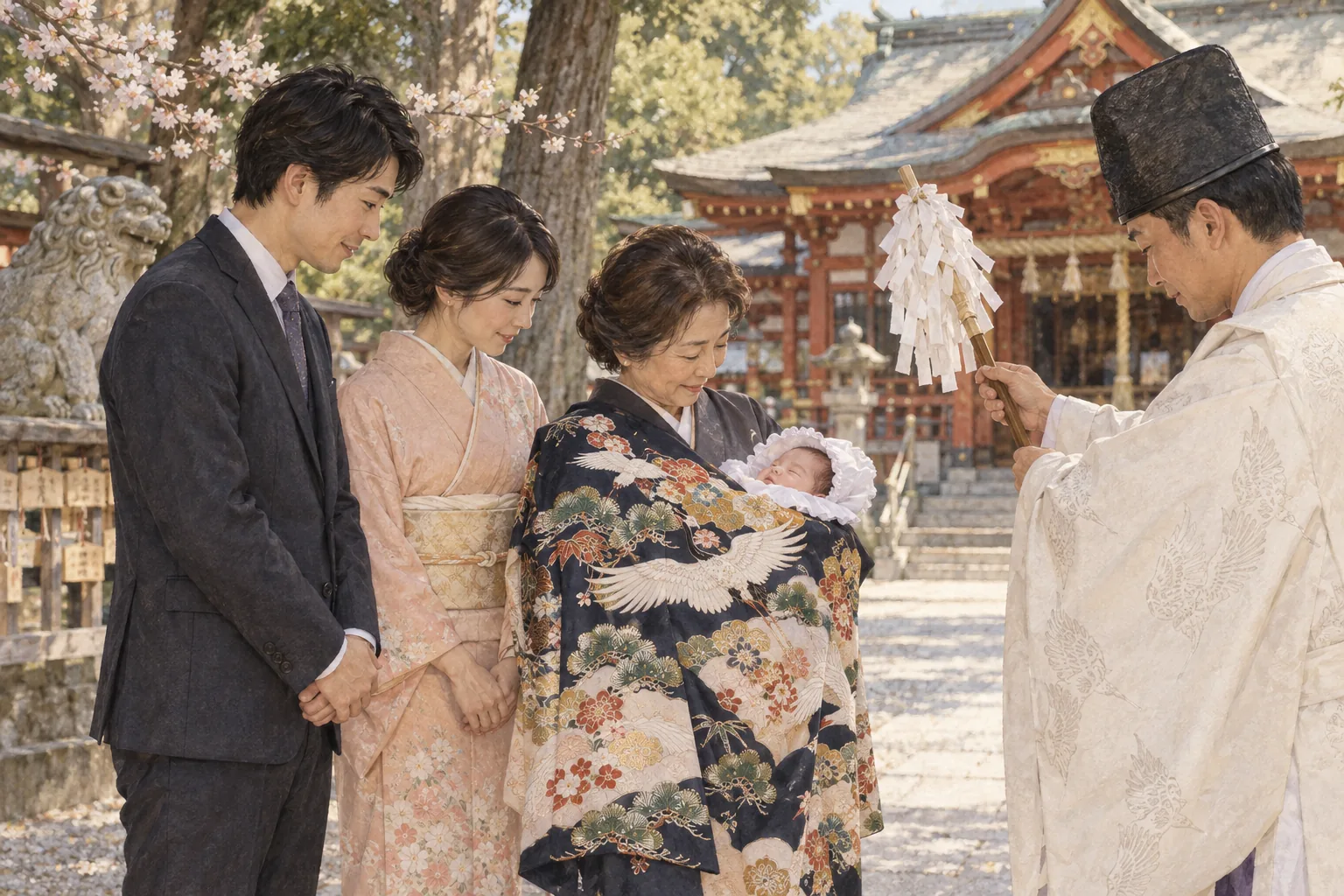
In one line
The shortest answer that works
Omiyamairi is the visit to a shrine about a month after a baby is born.
お宮参りとは、赤ちゃんが生まれて一か月ほどのころに神社へ参る行事です。
In 30 seconds
The standard explanation
About a month after a birth, the family takes the baby to a local shrine to report the arrival and ask for the child's health. A priest says a prayer, the baby wears a formal cloth draped over whoever is carrying it, and the family takes a photograph. The timing is traditionally around the thirty-first day for a boy and the thirty-second for a girl, though the count differs by region, and families now simply pick a day with mild weather.
生まれて一か月ほどたつと、家族は赤ちゃんを連れて近くの神社に参り、誕生を報告して健やかであるよう祈ります。神職が祝詞をあげ、赤ちゃんには抱いている人ごと掛ける祝い着を着せ、家族で写真を撮ります。時期は男の子で三十一日目、女の子で三十二日目が目安とされてきましたが(日数は地域によって違います)、今は天候の穏やかな日を選ぶ家庭がほとんどです。
As a short speech
A full paragraph you can read aloud
Omiyamairi is a baby's first visit to a shrine, made about a month after birth. The family goes to the shrine of the district where they live, because that deity is understood as the guardian of the people who live there, and they report that a new person has joined the neighborhood. A priest usually performs a short ceremony, reading a prayer that includes the baby's name.
The baby is dressed in white and a formal kimono is draped over the shoulders of whoever is holding the child, so the cloth covers both of them. By custom that person was the father's mother, on the reasoning that the mother was still recovering, and many families now ignore that entirely and let the mother hold the baby.
In practice the day has become as much about photographs and a meal together as about the ceremony, and studios near famous shrines are busy with families in formal clothes and a sleeping baby who will never remember any of it.
お宮参りは、生まれて一か月ほどのころに行う、赤ちゃんの初めての神社参りです。家族は住んでいる地域の神社へ行きます。その神様はそこに住む人を守る存在と考えられているので、新しい人が加わったことを報告するわけです。
神職が短い儀式を行い、赤ちゃんの名前を読み込んだ祝詞をあげるのがふつうです。赤ちゃんは白い産着を着せ、抱いている人の肩から祝い着を掛けて、二人ごと包む形にします。習わしでは抱くのは父方の祖母でした。母親はまだ体を休める時期だから、という考え方です。
今はそれにこだわらず、母親が抱く家庭も多くなりました。実際には、儀式と同じくらい、写真を撮って食事をする日になっています。名の知られた神社の近くの写真館は、正装した家族と、何も覚えていないだろう眠った赤ちゃんでにぎわいます。
Questions people actually ask
And how to answer them.
Does it have to be exactly on the thirty-first day?
No. The traditional counts are a guideline, and families move the date for weather, for the mother's recovery, or to a weekend when relatives can come. In snowy regions people often wait until spring.
その必要はありません。日数はあくまで目安で、天候、母親の体調、親族が集まれる週末などに合わせて動かします。雪の多い地域では春まで待つこともよくあります。
Do we have to book a priest?
For a formal prayer, yes, most shrines ask you to apply in advance and to give an offering, often five to ten thousand yen in an envelope. Simply visiting and praying without a ceremony is also perfectly normal.
正式に祝詞をあげてもらうなら、多くの神社で事前の申し込みと初穂料が必要です。五千円から一万円ほどを袋に入れて納めるのが一般的です。儀式をせず、参拝するだけでもまったく問題ありません。
Is this a religious commitment for the child?
Most families do not treat it that way. It is a rite of passage and a family occasion, and the same child may later have a Christian-style wedding and a Buddhist funeral, and few people find that strange.
そう受け取っている家庭は多くありません。人生の節目であり、家族の行事です。同じ子が後にキリスト教式で結婚し、仏式で葬儀を行っても、不思議に思う人はあまりいません。
Phrases you can use
- We are taking the baby to the shrine next Sunday.来週の日曜に、赤ちゃんを神社へ連れていきます。
- It is his first visit to the shrine.初めてのお宮参りです。
- The priest reads a prayer with the baby's name in it.神職が赤ちゃんの名前を入れた祝詞をあげます。
- We booked a photo session afterwards.そのあと写真撮影を予約しています。
- We chose a warm day rather than the exact date.決まった日より、暖かい日を選びました。
Words you need
- a rite of passage人生の節目の行事
- a newborn生まれたばかりの赤ちゃん
- a blessingお祓い・祈り
- a guardian deity氏神
- an offering初穂料・お供え
Watch
From YouTubeBackground (Japanese)
参るのは、住んでいる地域を守る氏神の神社が基本です。ただし安産の祈願をした神社や、有名な神社を選ぶ家庭も増えています。祝い着は父方の実家が用意する地域が多く、後の七五三で仕立て直して使うこともあります。掛け着は貸衣装で済ませる家庭も多いです。初穂料は袋に入れ、表に御初穂料と書いて納めます。生後一か月は母子ともに無理のきかない時期なので、真夏や真冬を避けて日をずらすのは、今では広く受け入れられた判断です。