Groundhog Day
グラウンドホッグデーの英語の授業アイデアとワークシート
印刷してすぐ使えるワークシート(PDF・Word・解答つき)と、授業の手順書。
🖨️Worksheetsワークシート(無料・A4)
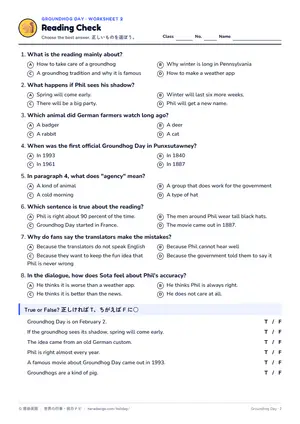
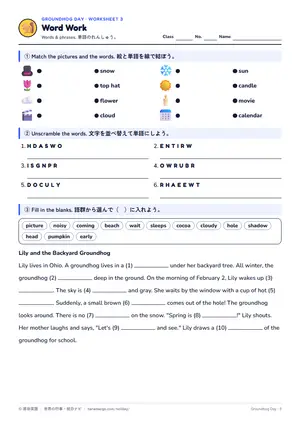
① 「中身を見る・印刷」で全ページを確認 → ② そのページ上の 🖨️ 印刷する でそのまま印刷できます。A4・無料。
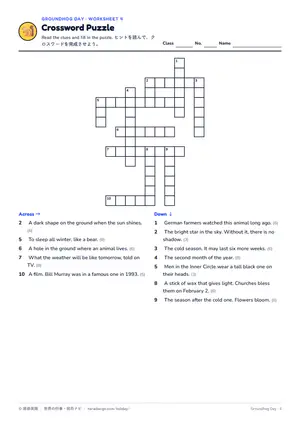
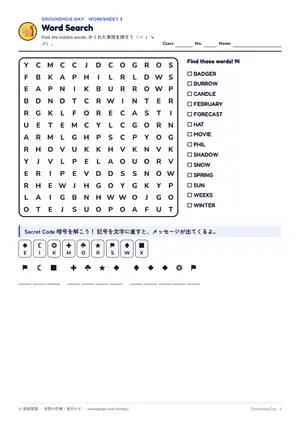
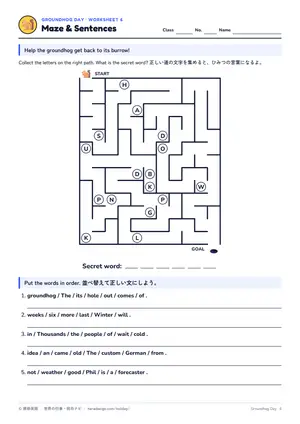
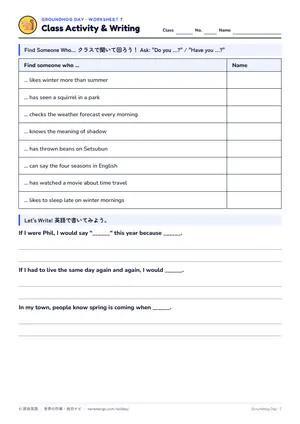
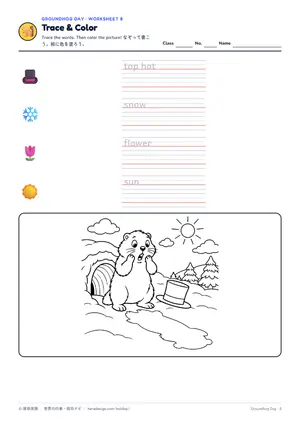
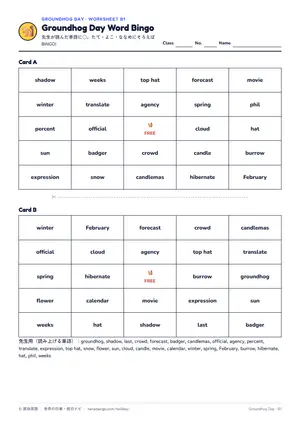
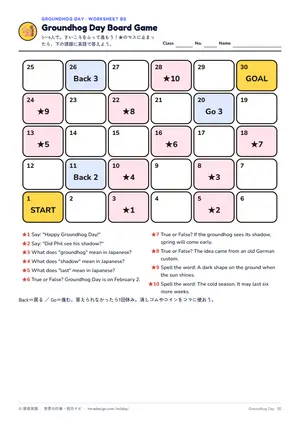
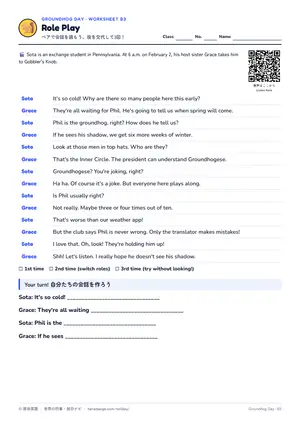
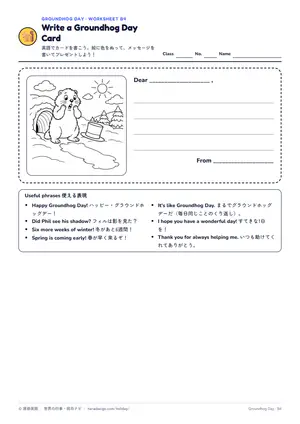
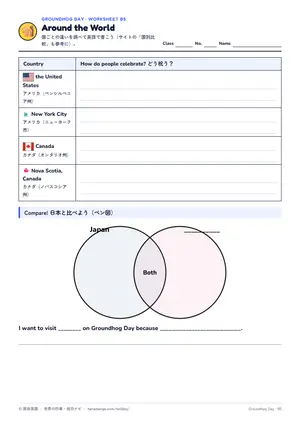
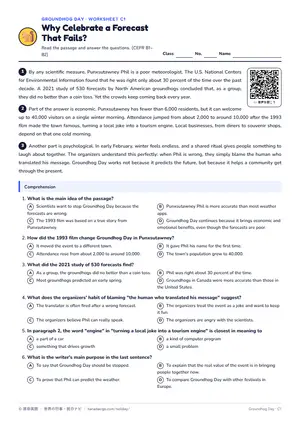
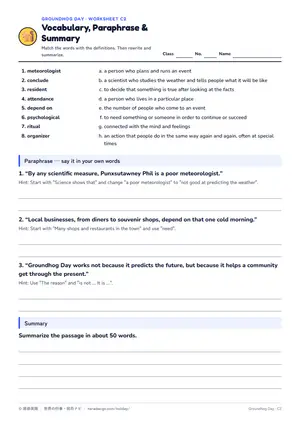
🍎Lesson Ideasグラウンドホッグデーを使った英語の授業アイデア
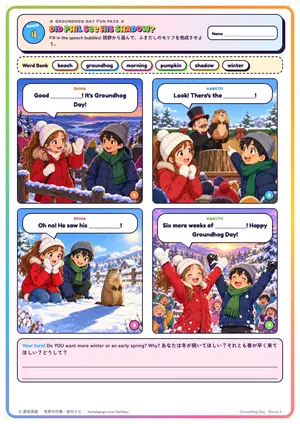
影ができる?できない?シャドーじゃんけん
🎯 If ~, … の形と天気の単語(sunny / cloudy)に親しむ。
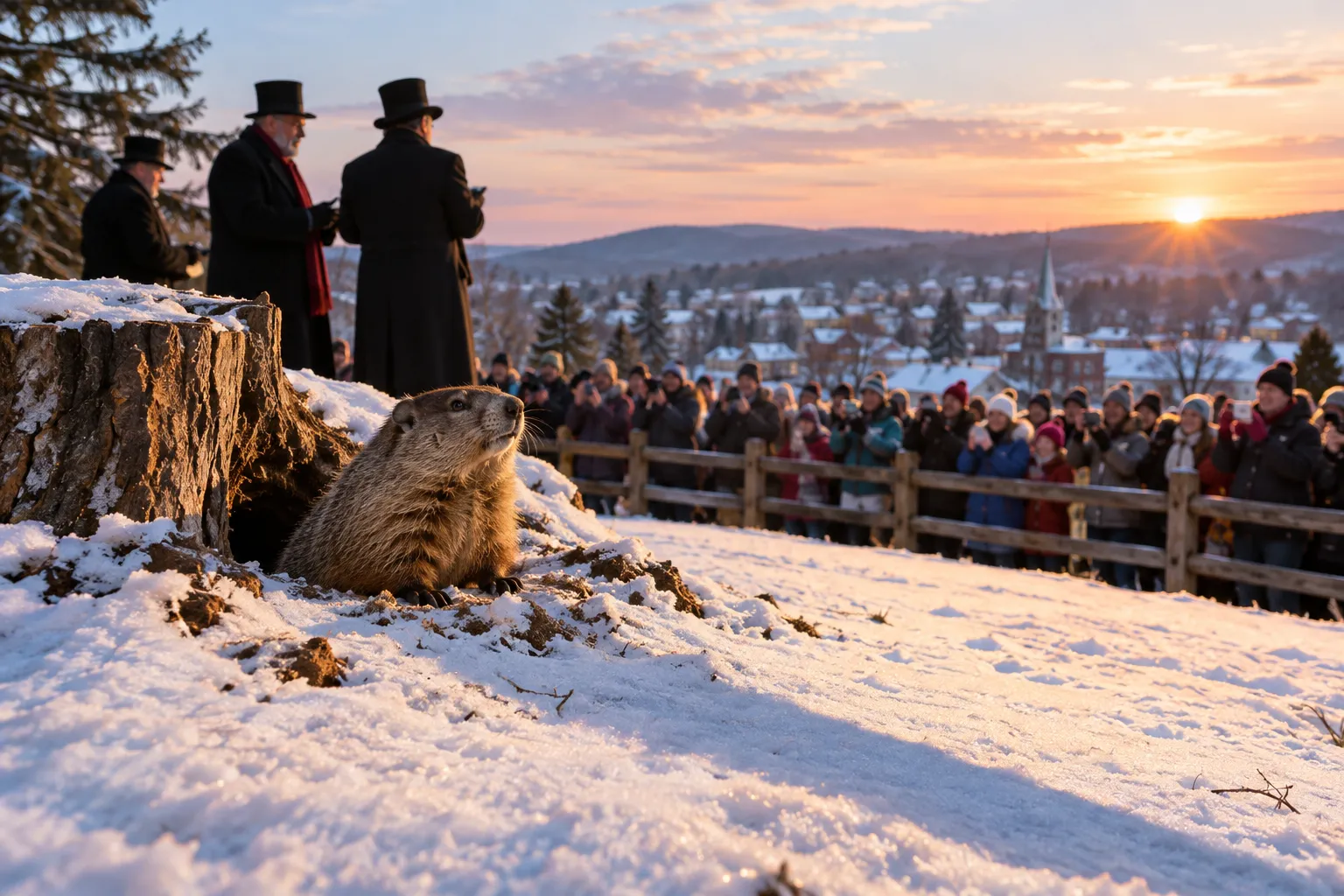
- グラウンドホッグの写真を見せ、If he sees his shadow, winter stays. のルールを紹介する。
- 先生が sunny / cloudy のカードを出し、子どもは「影あり(しゃがむ)」「影なし(ばんざい)」で答える。
- 間違えた人は Six more weeks of winter! と言って座る。
- 最後に、晴れた日に校庭で自分の影をさがす。
詳細版を開く(時間配分・Teacher Talk・板書)
グラウンドホッグの写真を見せ、「2月2日、アメリカではこの動物が春の来る時期を占う」と紹介する。sunny のカードと影の絵を並べ、If he sees his shadow, winter stays. のルールを身ぶりつきで伝える。
🗣️ This is a groundhog. His name is Phil. / On February 2, he comes out of his home. / If it is sunny, he sees his shadow. Then winter stays! / If it is cloudy, no shadow. Spring comes early!
動きを決めて練習する。sunny(影あり)ならしゃがむ、cloudy(影なし)ならばんざい。先生がカードを出しながら sunny / cloudy と言い、全員で動く練習を2〜3回する。
🗣️ Sunny means shadow. Crouch down like this. / Cloudy means no shadow. Hands up, like this! / Let's practice. Sunny! Cloudy!
全員立って本番をする。先生がカードを出す速さを少しずつ上げる。間違えた子は Six more weeks of winter! と言って座る。最後まで残った子を Spring champion! とほめる。2回戦は声だけ(カードなし)で行う。
🗣️ Everyone, stand up. Ready? / Sunny! ... Cloudy! ... Sunny! / Oh no! Say, Six more weeks of winter! and sit down. / Round two. No cards. Listen carefully!
晴れていれば校庭に出て、自分の影をさがさせる。見つけたら I see my shadow! と言わせる。雨の日は教室でライトを使って影を作る。「今日のフィルの予報は?」と聞いて終わる。
🗣️ Let's go outside. Can you find your shadow? / Say, I see my shadow! / Is it sunny or cloudy today? What does Phil say?
Groundhog Day(February 2)

☀ sunny → shadow → winter stays(しゃがむ)
☁ cloudy → no shadow → spring comes early(ばんざい)

If he sees his shadow, winter stays.
Six more weeks of winter!
I see my shadow!
グラウンドホッグ語の通訳者になろう
🎯 未来を表す will を使い、ユーモアのある予報文を書いて発表する。
- インナー・サークルのシルクハットと巻物の写真を見せ、通訳の設定を紹介する。
- ペアの1人がグラウンドホッグ役になり、身ぶりだけで「予報」を伝える。
- もう1人が通訳者として Phil says winter will ~. の予報文を英語で発表する。
- クラスで「いちばんおもしろい予報」を投票する。
詳細版を開く(時間配分・Teacher Talk・板書)
写真を見せ、シルクハットの人たちが「インナー・サークル」というクラブで、その会長だけが「グラウンドホッグ語」を聞き取れる、という設定を紹介する。英語ページの会話を聞かせ、Groundhogese と「通訳がまちがえるだけ」というジョークを確かめる。
🗣️ These men wear top hats. They are the Inner Circle. / Only their president can understand Groundhogese. / Listen to Sota and Grace. Who makes the mistakes, Phil or the translator?
will を使った予報文の型を示し、語群から選んだりアイデアを足したりして、ペアで予報文を2〜3文書かせる。ユーモアのある内容をすすめる(Winter will stay because I want to sleep more. など)。
🗣️ Write a forecast with will. Phil says winter will stay for six more weeks. / Add a funny reason. Because Phil wants to sleep more. / Make two or three sentences with your partner.
ペアの1人がグラウンドホッグ役になり、身ぶりだけで「予報」を伝える。もう1人が通訳者として Phil says 〜. で予報文を英語で発表する。クラスの前で何組か発表させ、役を交代してもう1回行う。
🗣️ One of you is Phil. Use only gestures. No words! / The other is the translator. Tell us what Phil says. / Phil says spring will come early. Great job! / Now change roles.
「いちばんおもしろい予報」に投票させ、結果を発表する。will の後ろは動詞の原形であることを、発表された文を使って確認して終わる。
🗣️ Which forecast was the funniest? Write the name and vote. / And the winner is ... / Look. After will, we use the base form. Winter will stay, not stays.
Groundhogese → translator(通訳者)

Phil says winter will __.
Phil says spring will __.
例:Phil says winter will stay for six more weeks because he wants to sleep more.

will + 動詞の原形(stay / come / be)

※ Phil is never wrong. The translator makes mistakes!
的中率を確かめよう:データで見るフィル
🎯 パーセントや比較の表現を使って、データから結論を英語で述べる。
- フィルの予報(影あり109回・なし20回)と、NOAA の的中率(約30%)の資料を配る。
- グループで「影を見ることが多いのはなぜか」「コイン投げとどちらが当たるか」を考える。
- Phil is right about ~ percent of the time. / He is less accurate than ~. の文で結論をまとめる。
- 自分の地域の2月・3月の気温データで、今年の予報を「採点」してみる。
詳細版を開く(時間配分・Teacher Talk・板書)
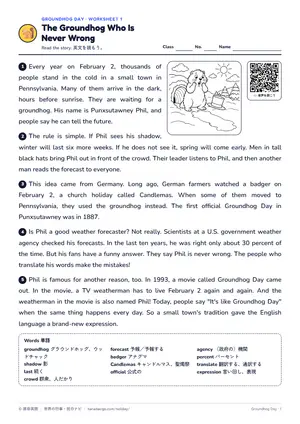
「フィルの予報は当たる?」と聞き、英語ページ本文の第4段落を読ませる。right only about 30 percent of the time を確かめ、「では、フィルはコイン投げより当たる?」と問いを立てる。
🗣️ Is Phil a good weather forecaster? What do you think? / Read paragraph four. How often is he right? / About 30 percent. Is that better or worse than tossing a coin?
資料1・2を配り、グループで2つの問いを考えさせる。①影を見る(冬が続く)ことが多いのはなぜか(109対20の割合を計算させる)。②コイン投げとどちらが当たるか(実際に10円玉を20回投げて「表=冬」で記録してもよい)。
🗣️ Phil saw his shadow 109 times. He didn't see it 20 times. What percent is that? / Why does he see his shadow so often? Think about the time and place. / Now toss a coin 20 times. Heads means winter. / Which is more accurate, Phil or the coin?
結論を英語でまとめさせる。Phil is right about 〜 percent of the time. / He is less accurate than 〜. / He sees his shadow more often than 〜. などの型を示し、グループで3文書かせる。各グループ1文ずつ発表させる。
🗣️ Write your conclusion in three sentences. / Use these patterns. Phil is right about ... percent of the time. / He is less accurate than a coin toss. Do you agree? / Read one sentence from your group.
自分の地域の2月・3月の気温データを配り、今年のフィルの予報を「採点」させる。平年より暖かければ「春が早い」と判断する、など採点のルールをグループで決めさせ、Phil was right / wrong this year because 〜. で報告させる。
🗣️ Here is the temperature data for our town. / Decide your rule first. When can we say spring came early? / Was Phil right or wrong this year? Explain why.
「当たらないのに、なぜ毎年1万人以上(多い年は4万人)も集まるのか」と次回へつながる問いを出し、一言ずつ予想を書かせて回収する。
🗣️ Phil is not very accurate. But thousands of people visit every year, and some years up to 40,000. Why? / Write one idea on your card.
Is Phil a good forecaster?

資料1:shadow(winter)109 / no shadow(spring)20
→ 109 ÷ 129 = about 84 percent
資料2:right about 30 percent of the time(past 10 years)
コイン投げ:about 50 percent

Phil is right about __ percent of the time.
He is less accurate than __.
He sees his shadow more often than __.
Phil was right / wrong this year because __.
節分 vs グラウンドホッグデー 比較プレゼン
🎯 季節の変わり目の行事を比べ、日本の行事を英語で紹介する。
- 2月2日・3日・4日(グラウンドホッグデー・節分・立春)をカレンダーで確認する。
- ベン図に共通点(冬の終わり・占い・はらい)とちがいを書きこむ。
- On Setsubun, we ~. On Groundhog Day, people ~. の形で3文のミニ発表をつくる。
- 海外の人に節分を説明するつもりで、ペアで発表し合う。
詳細版を開く(時間配分・Teacher Talk・板書)
2月のカレンダーを見せ、2日(グラウンドホッグデー)・3日(節分)・4日(立春)を確かめる。節分は立春の前の日で、年によっては2月2日になることも伝える。「どちらも冬の終わりの行事」と共通点に気づかせる。
🗣️ Look at the calendar. February 2 is Groundhog Day. / February 3 is Setsubun in most years. February 4 is usually Risshun, the first day of spring in the old calendar. / Both days are about the end of winter.
英語ページ本文の第2・第3段落を聞かせ、グラウンドホッグデーのルールと由来(ドイツの農民がアナグマを見ていた)を確かめる。ペアでベン図に共通点(冬の終わり・占い・はらい)とちがいを日本語と英語で書きこませる。
🗣️ Listen. What happens if Phil sees his shadow? / Where did this idea come from? Germany! / Fill in the Venn diagram. What is the same? What is different?
On Setsubun, we 〜. On Groundhog Day, people 〜. Both days 〜. の型を示し、3文のミニ発表をつくらせる。海外の人に説明するつもりで、豆まきや鬼を英語でどう言うか考えさせる(throw beans / demons など)。
🗣️ Write three sentences. On Setsubun, we throw beans. / On Groundhog Day, people watch a groundhog. / Both days are about the end of winter. / You are talking to a friend from another country. Make it easy to understand.
ペアで発表し合い、聞き手は質問を1つする(Why do you throw beans? など)。代表のペアに全体の前で発表してもらって終わる。
🗣️ Present to your partner. Then ask one question. / Why do you throw beans? Good question! / Who wants to present to the class?
February 2  Groundhog Day(USA)
February 3  Setsubun(Japan)※年によって2日
February 4  立春(the first day of spring)※年によって3日

Same:the end of winter / tell the future / drive away bad things?
Different:groundhog & shadow ⇔ beans & demons

On Setsubun, we __.
On Groundhog Day, people __.
Both days __.
映画『Groundhog Day』で考える「くり返し」と成長
🎯 映画と advanced の英文をもとに、伝統行事・地域経済・自己変革について議論する。
- 映画の予告編か一場面を見て、主人公がどう変わるかを英語でまとめる。
- advanced「Why Celebrate a Forecast That Fails?」を読み、行事が続く理由を2つ挙げる。
- 「地方の小さな伝統は観光のためにどこまで変わってよいか」を少人数で話し合う。
- 自分の地元の行事を1つ選び、観光資源にするアイデアを英語で提案する。
詳細版を開く(時間配分・Teacher Talk・板書)
It's like Groundhog Day. という表現の意味を予想させ、同じ日がくり返される映画から生まれた言い方だと伝える。映画の主人公の名前もフィル(気象予報士)であることを紹介する。
🗣️ Have you heard the expression, It's like Groundhog Day? / When do people say it? Guess. / It comes from a 1993 movie. The main character, a weatherman, is also named Phil.
予告編または一場面を見せ、主人公がどう変わるかを英語で2〜3文にまとめさせる(At first, he is ... / Later, he ...)。ペアで比べ、「くり返し」が成長のきっかけになったかを話し合わせる。
🗣️ Watch the scene. How does Phil Connors change? / Write two or three sentences. At first, he is ... Later, he ... / Did living the same day help him grow? Talk with your partner.
advanced の英文を個人で読ませ、予報が当たらないのに行事が続く理由を2つ(経済的・心理的)ワークシートにまとめさせる。人口6,000人未満の町に最大4万人が来ること、映画のあと来場者が約2,000人から約1万人に増えたことを確かめる。
🗣️ Read the passage. Find two reasons the event continues. / What is the economic reason? Look at the numbers. / What is the psychological reason? / How did the movie change the town?
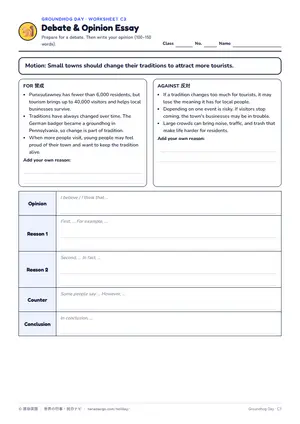
4人グループで「地方の小さな伝統は観光のためにどこまで変わってよいか」を話し合わせる。パンクサトーニーの例のよい点と注意点を挙げさせ、「変えてよいもの・守るべきもの」を表にまとめさせる。
🗣️ How much can a small tradition change for tourism? / What did Punxsutawney gain? Did it lose anything? / Make two lists. Things we can change, and things we must keep.
各自が地元の行事を1つ選び、観光資源にするアイデアを提案シートに英語で書かせる(8分)。グループ内で1人1分ずつ発表し、聞き手は「守るべきもの」が守られているか質問する。
🗣️ Choose one local event from your hometown. / How can it attract visitors without losing its meaning? / Present your idea in one minute. / Listeners, ask one question about what they will keep.
It's like Groundhog Day.=毎日同じことがくり返される

Why celebrate a forecast that fails?
① Economic:fewer than 6,000 residents ⇔ up to 40,000 visitors
 after the 1993 film:about 2,000 → around 10,000
② Psychological:winter feels endless → a shared ritual, something to laugh about

観光のために変えてよいもの ⇔ 守るべきもの