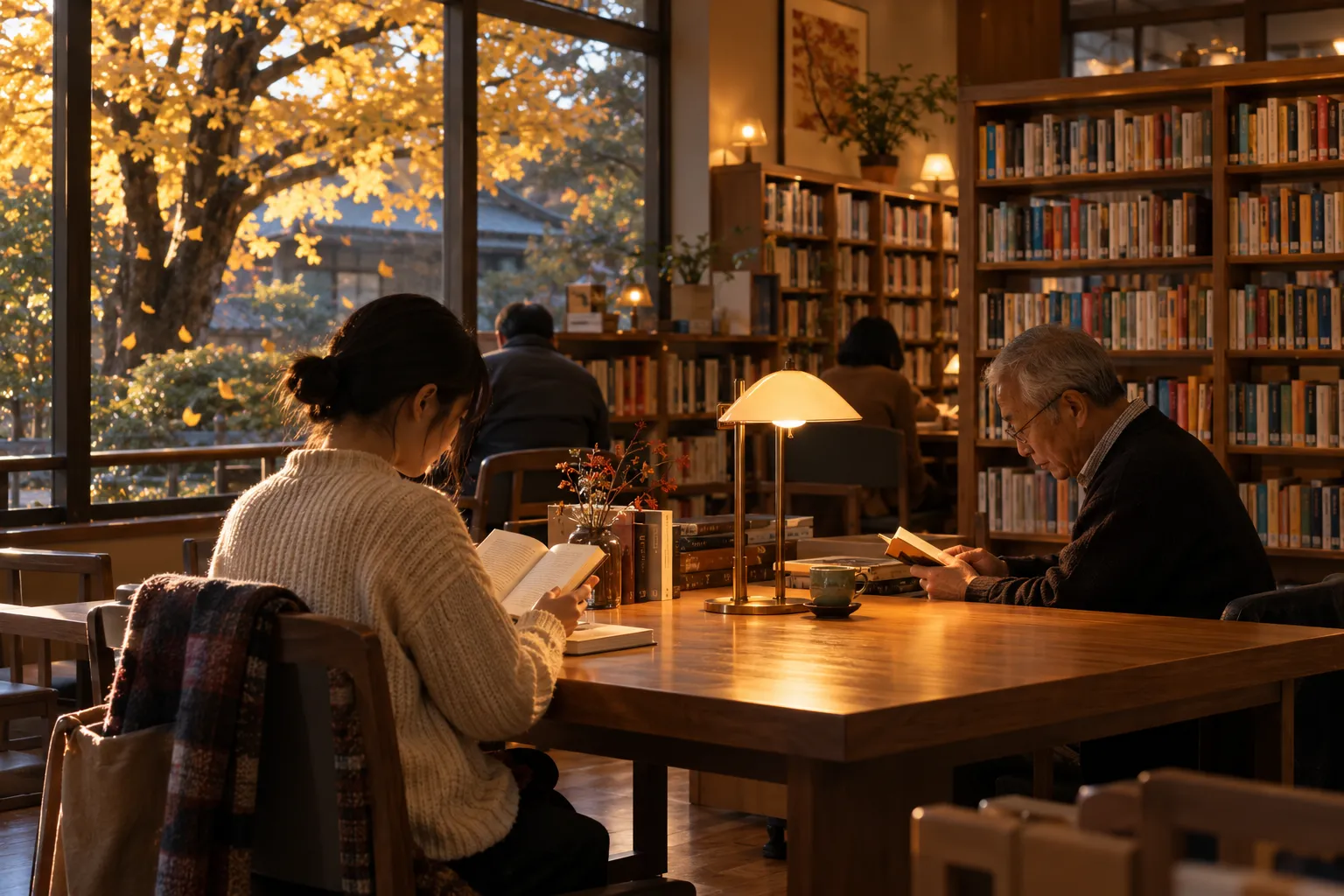
Book Week in Japan (Dokusho Shukan)
読書週間の英語の授業アイデアとワークシート
印刷してすぐ使えるワークシート(PDF・Word・解答つき)と、授業の手順書。
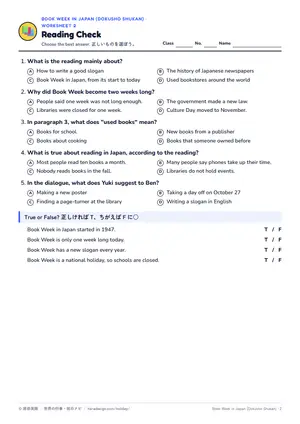
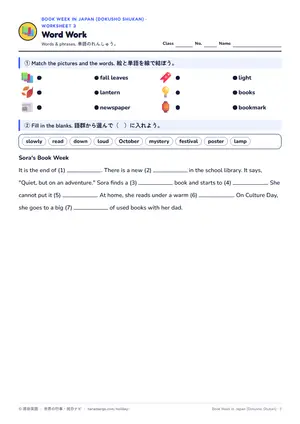
🖨️Worksheetsワークシート(無料・A4)
① 「中身を見る・印刷」で全ページを確認 → ② そのページ上の 🖨️ 印刷する でそのまま印刷できます。A4・無料。
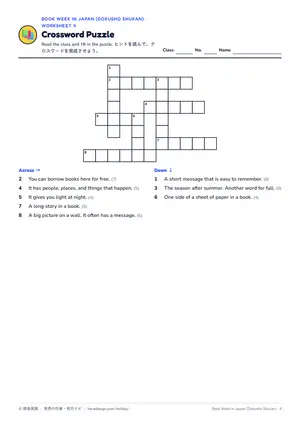
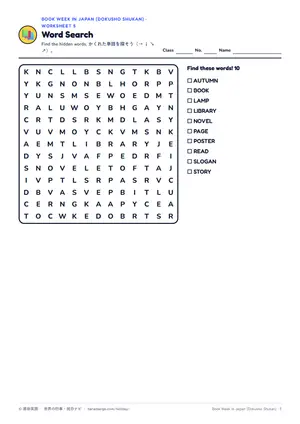
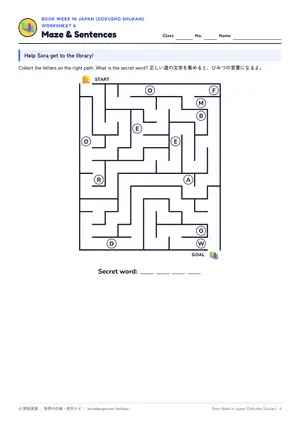
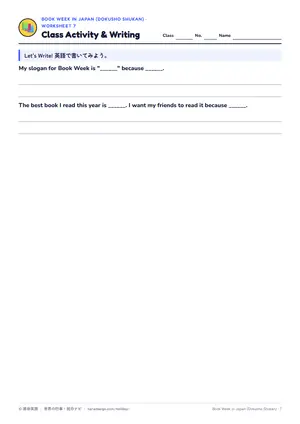
🍎Lesson Ideas読書週間を使った英語の授業アイデア
英語で作ろう!わたしの読書週間の標語
🎯 歴代の標語を英語で味わい、自分の読書週間の標語を英語で作って理由とともに発表する。
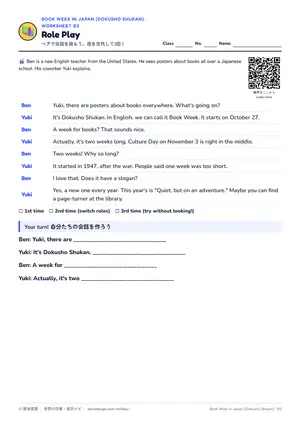
- 「楽しく読んで 明るく生きよう」(1947年)、「気がつけば、もう降りる駅。」(2010年)、「静かだけど、冒険中。」(2026年)を英語にしたカードを見せ、どの年の標語か予想する。
- 短い標語の型(Read and ______. / A book is a ______.)を使い、自分の標語を英語で作る。
- My slogan is ... because ... の形でグループで発表し、いちばん気に入った標語に投票する。
詳細版を開く(時間配分・Teacher Talk・板書)
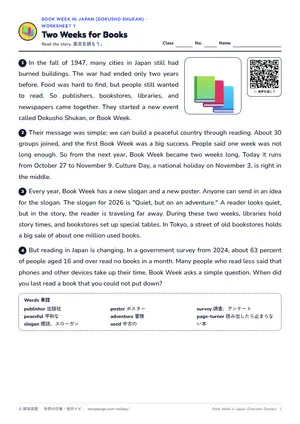
英語ページの音声で本文の第2段落と第3段落を聞かせる。読書週間が10月27日から11月9日の2週間であること、毎年新しい標語とポスターがあることを確認する。
🗣️ Listen to the story about Book Week in Japan. / How long is Book Week? Yes, two weeks. / What is new every year? A slogan and a poster.
標語カード3枚を見せ、1947年・2010年・2026年のどれかを予想させる。答え合わせのあと、1947年は戦後まもない時期だったこと、2010年は電車で本に夢中になる場面であること、2026年は663の応募から選ばれたことを伝える。
🗣️ Here are three slogans. They are from 1947, 2010, and 2026. / Which one is from 1947? Why do you think so? / "Before I knew it, it was my stop." Where is this person? / The 2026 slogan was chosen from 663 ideas.
ワークシートを配り、3つの型から1つを選んで自分の標語を英語で書かせる。先生の例(A book is a door to another world.)を示し、短くてリズムのよい言葉にするよう伝える。理由を because のあとに1文で書かせる。
🗣️ Here is my slogan: A book is a door to another world. / Choose one pattern and make your own slogan. / Keep it short. Five or six words is great. / Then write the reason after "because."
4人グループで1人ずつ My slogan is ... because ... の形で発表させる。発表が終わったら、いちばん気に入った標語に1人1枚シールを貼って投票させる。
🗣️ Say, "My slogan is ... because ..." / Listen and choose your favorite slogan. / Put your sticker on it.
各グループでいちばん票を集めた標語をクラスに紹介させる。読書週間は戦後に「読書の力で平和な国を」という思いで始まったことをふり返り、今週読みたい本を1冊考えさせて終える。
🗣️ Which slogan won in your group? / Book Week started in 1947 to build a peaceful country through reading. / What book will you read this week?
📚 Book Week in Japan(Dokusho Shukan)
October 27 – November 9(two weeks)
started in 1947

Slogans
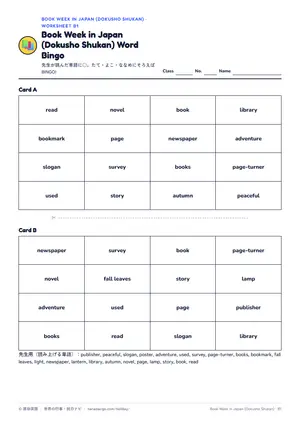
1947 Read happily, live brightly.
2010 Before I knew it, it was my stop.
2026 Quiet, but on an adventure.

Patterns
・Read and ______.
・A book is a ______.
・______, but ______.

My slogan is "______" because ______.
データで話そう:日本人は本を読まなくなった?
🎯 読書量の調査の数字を英語で説明し、本から離れる理由と対策を英語で話し合う。
- 文化庁の調査(1か月に1冊も読まない人 62.6%、前回47.3%)と、学校読書調査(小学生12.1冊・中学生3.9冊・高校生1.4冊)の数字を表で示す。
- About 63 percent of people ... / High school students read only ... の形で、数字を英語の文にする。
- なぜ年齢が上がると読まなくなるのか、理由を2つグループで考え、英語で書く。
- 「自分たちの学校の読書週間でできること」を1つ提案し、クラスで発表する。
詳細版を開く(時間配分・Teacher Talk・板書)
英語ページの音声で本文の第4段落を聞かせ、about 63 percent が何の数字かを確かめる。そのあと「小学生・中学生・高校生のうち、1か月に読む本がいちばん少ないのはどれか」を予想させる。
🗣️ Listen to the last paragraph. / What does "about 63 percent" mean? / Who reads the fewest books: elementary, junior high, or high school students? Guess.
データの表を配り、予想の答え合わせをする。表現カードを使い、ペアで数字を英語の文にさせる。62.6% は16歳以上が対象で、前回の47.3% から増えたこと、学校読書調査は5月の1か月の冊数であることを確認する。
🗣️ Look at the table. Let's check your guess. / Make sentences with the numbers. / For example: High school students read only 1.4 books in May. / The number increased from 47.3 percent to 62.6 percent.
「なぜ年齢が上がると読まなくなるのか」をグループで考えさせ、理由を2つ英語で書かせる。文化庁の調査で、読書量が減った理由の上位にスマートフォンなどの情報機器に時間を取られることがあったことをヒントにする。
🗣️ Why do older students read less? Think of two reasons. / In the survey, many people said phones take up their time. / What else? Clubs? Homework? Something else?
読書週間に自分たちの学校でできることを1つ考え、We suggest ... because ... の形でA4の紙にまとめさせる。数字を1つ以上入れて理由を説明するよう指示する。
🗣️ Now, let's think about Book Week at our school. / Write one idea: We suggest ... because ... / Use at least one number from the table.
各グループに提案を発表させる。読書週間が1947年に「読書の力で平和な国を」と始まったことにふれ、80年後の今、本との付き合い方がどう変わったかを一言ずつ感想として言わせる。
🗣️ Please share your idea. / Book Week started in 1947. Now it is the 80th Book Week. / How has reading changed? Tell me in one sentence.
Do people in Japan read less?

People aged 16+ who read no books in a month
 47.3%(FY2018 survey)→ 62.6%(FY2023 survey, reported in 2024)
Books read in May 2025
 elementary 12.1 / junior high 3.9 / high school 1.4
 high school students who read 0 books:55.7%

・about ... percent
・only ...
・increased from ... to ...
・The older students get, the fewer books they read.

Why?
・phones take up time
・

We suggest ... because ...