
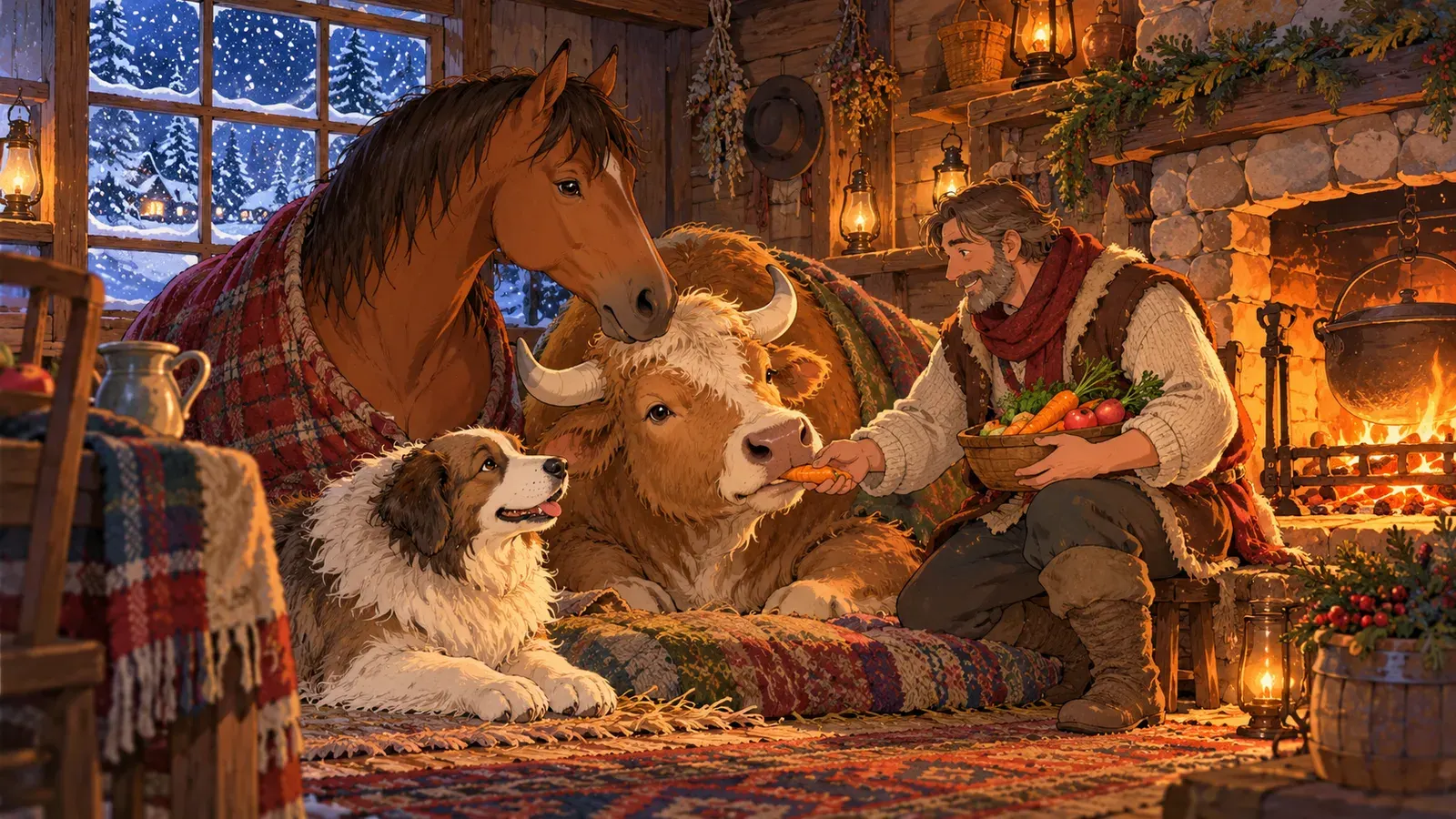
A HORSE, Ox, and Dog, driven to great straits by the cold, sought shelter and protection from Man. He received them kindly, lighted a fire, and warmed them. He let the Horse make free with his oats, gave the Ox an abundance of hay, and fed the Dog with meat from his own table. Grateful for these favours, the animals determined to repay him to the best of their ability. For this purpose, they divided the term of his life between them, and each endowed one portion of it with the qualities which chiefly characterized himself. The Horse chose his earliest years and gave them his own attributes: hence every man is in his youth impetuous, headstrong, and obstinate in maintaining his own opinion. The Ox took under his patronage the next term of life, and therefore man in his middle age is fond of work, devoted to labor, and resolute to amass wealth and to husband his resources. The end of life was reserved for the Dog, wherefore the old man is often snappish, irritable, hard to please, and selfish, tolerant only of his own household, but averse to strangers and to all who do not administer to his comfort or to his necessities.
ウマとウシとイヌが、寒さにひどく苦しめられ、人間のところへ身を寄せて守ってもらおうとした。人間は彼らを温かく迎え入れ、火をたいて体を温めてやった。ウマには自分のエンバクを好きなだけ食べさせ、ウシにはたっぷりと干し草を与え、イヌには自分の食卓から肉を分けてやった。こうした親切に感謝した動物たちは、できるかぎりの恩返しをしようと決めた。そこで彼らは人間の一生を三つに分け、それぞれが受け持った時期に、自分の一番の特徴となる性質を授けることにした。ウマは人生の最初の時期を選び、そこに自分の性質を与えた。だから人はみな、若いころは血気にはやり、強情で、自分の意見をかたくなに曲げないのである。ウシはその次の時期を引き受けた。それで人は中年になると、働くことを好み、労働に打ちこみ、財産をため、たくわえを大切にやりくりしようとするのである。人生の終わりの時期はイヌに任された。そのため、年寄りはしばしば怒りっぽく、いらいらしやすく、気難しく、わがままで、自分の家族には寛大だが、よそ者や、自分の快適な暮らしや必要を満たしてくれない者には冷たいのである。