

 脳と心理
脳と心理錯視とは? 脳がだまされる有名な錯視8選。同じ色が違って見える理由を研究で解説
 2026.10.02
 English Corner(A2〜B2・4択クイズ)

 読む前に予想してみよう!
同じ錯視なら、世界中どこの人でも同じくらいだまされる
ミュラー・リヤー錯視やエビングハウス錯視は、文化や環境によって効き方の強さが違うと報告されている。
 研究カード(どんな研究?)
- 対象
- 子ども〜大人、15の社会の人々など
- 規模
- 各研究で数十〜千数百人
- 研究の種類
- 見え方を測る実験・文化の比較研究・脳画像研究
- 確かさ
- ★★★★☆
錯視の多くは目の故障ではなく、脳が「影」「距離」「まわり」から推理した結果。同じ灰色が違って見える錯視から、文化で強さが変わる錯視まで8つを紹介。
ひとことで言うと錯視の多くは、脳ががんばって「推理」した結果の見まちがい!
もくじ
錯視(さくし)とは、実際とは違う形・色・大きさ・動きに見えてしまう現象のこと。いわゆる「目の錯覚」です。
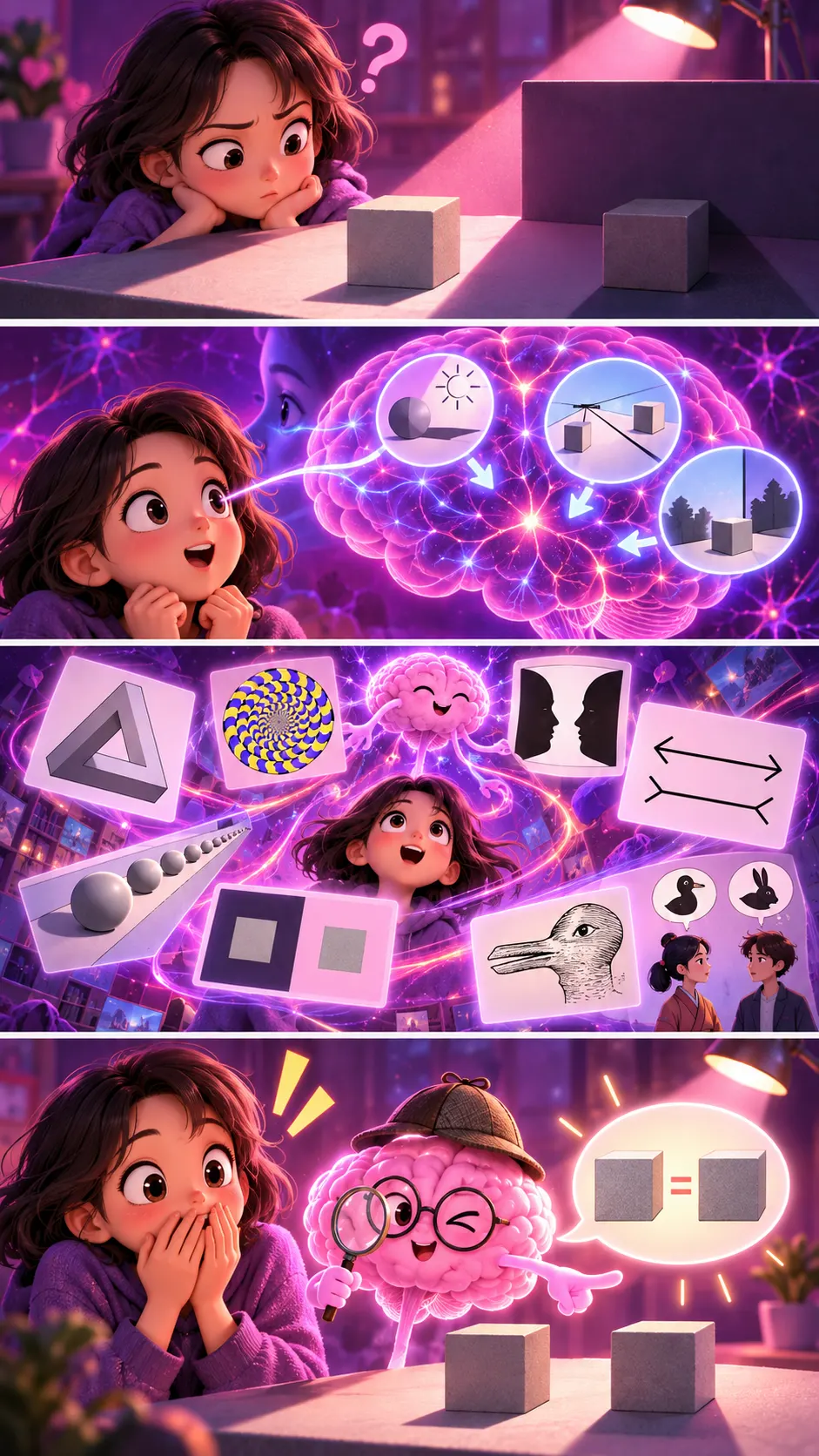
結論から言うと、錯視の多くは目の故障ではありません。脳は「ここには影があるはず」「これは遠くにあるはず」と推理して、見たものを補正しています。錯視は、その補正が裏目に出た結果です。ふだんは役に立つ推理が、特別な図形の前では逆にだまされる原因になるのです。
今回は、有名な錯視を8つ選び、「なぜそう見えるのか」を研究とあわせて紹介します。
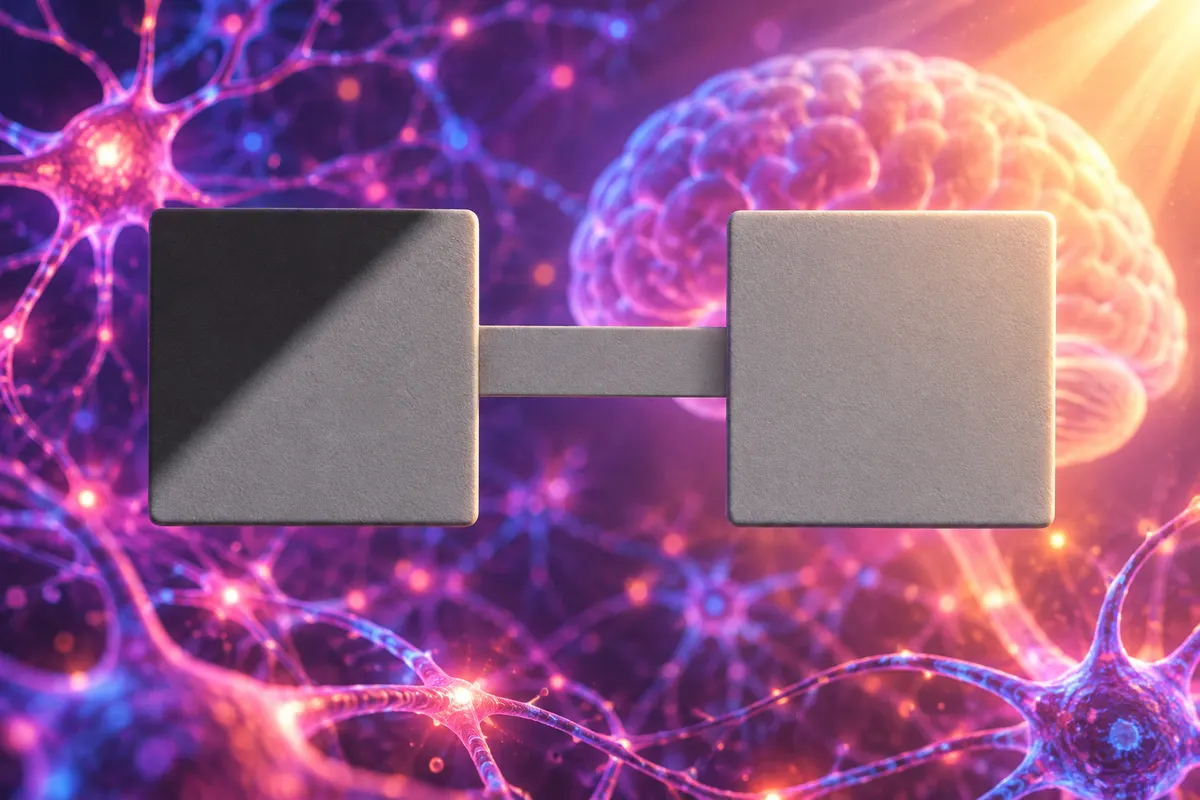
011. チェッカーシャドウ錯視:同じ灰色が違って見える
米マサチューセッツ工科大学(MIT)のエーデルソンが1995年に発表した錯視です。チェス盤の上に、円柱が影を落としている絵です。影の外にあって濃く見えるマスAと、影の中にあって明るく見えるマスB。この2つは、実はまったく同じ灰色なのです。
脳は「影の中のものは実際より暗く映る」と知っています。そこで、影の中のマスを明るめに補正して見せます。だから、同じ灰色でも違う色に見えるのです。
022. ザ・ドレス:同じ写真が「青黒」と「白金」に
2015年にネットで世界を二分した、ドレスの写真です。写真が「どんな光で照らされていると思うか」は、人によって違います。この照明の推理の違いで起きると考えられています(→ドレスの写真の科学)。
033. ミュラー・リヤー錯視:育った環境で効き方が変わる
同じ長さの線分でも、両端の矢羽根が外へ開いている(>―<)と長く、内へ閉じている(<―>)と短く見える錯視です。
ただし、この説明には反論もあります。調べた人の年齢や実験の方法が社会ごとに違った、などです。原因はまだ決着していません。
044. エビングハウス錯視:脳の「広さ」まで関係する
同じ大きさの円でも、小さな円に囲まれると大きく、大きな円に囲まれると小さく見える錯視です。
英ロンドン大学ゴールドスミス校のデ・フォッカートらは2007年、ナミビアで牧畜をして暮らすヒンバの人々を調べました。すると、この錯視がイギリスの人より弱いことが分かりました。ヒンバの人々は、まわりより細かい部分に注意を向けやすく、それが関係していると考えられています。
英ユニバーシティ・カレッジ・ロンドン(UCL)の研究では、脳の個人差との関係も見つかっています。目からの情報を大脳で最初に受け取る場所が「一次視覚野(V1)」です。その面積が広い人ほど、この種の錯視が弱かったのです(関係があるというだけで、原因かどうかは分かっていません)。
055. 蛇の回転:止まっている絵が回って見える
立命館大学の北岡明佳教授が2003年に発表した、止まっているのにぐるぐる回って見える錯視です。
米ハーバード大学医学部のコンウェイらは2005年、北岡氏も加わってこの錯視を調べました。カギは色ではなく明るさの並び順です。黒→暗い灰色→白→明るい灰色と並ぶと、その向きに動いて見えます。サルの脳の記録から、動きの向きを感じる神経細胞も、止まった絵のこの並びに反応することが示されました。
066〜8. まだある、脳がだまされる錯視
6. カニッツァの三角形:一部が欠けた円を3つ置くだけで、描かれていない三角形が見えます。ネコも、同じしくみで見える「ないはずの四角」の中に座ったという研究があります(→ネコと箱の実験)。
7. ヘルマン格子:黒い四角を白い線で区切ると、線の交差点に灰色の点がちらつきます。教科書では、網膜の細胞どうしが反応を弱め合う「側抑制」で説明されてきました。ところが、白い線を少し波打たせるだけで錯視が消えることが分かりました。そのため、側抑制だけでは説明が足りないという指摘があります。
8. 月の錯視:地平線の月が大きく見えるのも錯視です(→月の錯視)。
07まとめ
錯視は、脳が影・距離・まわりとの比較を使って世界を推理していることを教えてくれます。そして、その推理のクセは、育った環境や脳の個人差によっても変わるようです。
「見えたまま」が真実とは限らない。そう思うと、注意の落とし穴を描いたストループ効果や見えないゴリラの話も、もっと面白くなるはずです。
この研究を英語で読もう原田英語の English CornerMost optical illusions are not mistakes made by the eyes. 音声
音声 4択クイズ9問A2・B1・B2タップして開く
原田英語の English Corner
この研究を英語で読もう
An optical illusion makes us see something in the wrong way. Often, it is not a problem with our eyes. Our brain guesses about shadows and distance, and sometimes it guesses wrong. In one famous picture, two squares are the same gray.
But one is in a shadow, so the brain makes it look lighter. Some illusions also work less strongly on people from different cultures.
66 words ・ CEFR A2
和訳を見る
錯視は、私たちに物を間違った形で見せます。多くの場合、それは目の問題ではありません。脳は影や距離について推理しますが、ときどきその推理がはずれてしまうのです。ある有名な絵では、2つの四角は同じ灰色です。
しかし片方は影の中にあるので、脳はそれを明るく見せるのです。文化が違う人々には弱くしか働かない錯視もあります。
4択リーディングクイズ
Q1. What causes optical illusions, according to the passage?
It is not a problem with our eyes. Our brain ... sometimes it guesses wrong. とあるので D。
Q2. Why does one gray square look lighter?
one is in a shadow, so the brain makes it look lighter とあるので C。
Q3. In this passage, "guesses" means the brain ...
guess は「推測する」。確かではないまま判断することなので B。
Most optical illusions are not mistakes made by the eyes. They happen because the brain interprets what we see using context, such as shadows and distance. In Edward Adelson's checker shadow illusion, two squares are exactly the same gray, but the one inside a shadow looks lighter, because the brain corrects for the shadow.
Culture may also matter. In 1963, researchers tested people from 15 societies and found large differences in how easily they were fooled by geometric illusions. In 2007, another study found that the Himba people of Namibia were less affected by the Ebbinghaus illusion than British people. This suggests that our experiences shape the way we see the world.
112 words ・ CEFR B1
和訳を見る
ほとんどの錯視は、目が犯す間違いではありません。脳が、影や距離といった文脈を使って見たものを解釈するために起こるのです。エドワード・エーデルソンさんのチェッカーシャドウ錯視では、2つのマスはまったく同じ灰色ですが、影の中にあるほうが明るく見えます。
脳が影の分を補正するからです。文化も関係しているかもしれません。1963年、研究者たちは15の社会の人々を調べ、幾何学的な錯視へのだまされやすさに大きな差があることを発見しました。2007年には別の研究で、ナミビアのヒンバの人々は、イギリスの人々よりもエビングハウス錯視の影響を受けにくいことがわかりました。これは、私たちの経験が世界の見え方を形づくっていることを示唆しています。
4択リーディングクイズ
Q1. What is the checker shadow illusion?
two squares are exactly the same gray, but the one inside a shadow looks lighter とあるので B。
Q2. What did the 1963 study find?
found large differences in how easily they were fooled by geometric illusions とあるので D。
Q3. What does the writer suggest at the end?
最終文 our experiences shape the way we see the world とあるので C。
Many optical illusions are not malfunctions of the eye but side effects of the brain's attempt to interpret images using context. In Edward Adelson's checker shadow illusion, two squares share exactly the same shade of gray, yet the one in a cast shadow appears lighter because the visual system discounts the expected darkening. Illusions also reveal individual and cultural differences. In 1963, Marshall Segall and colleagues reported in Science that people from 15 societies differed widely in their susceptibility to geometric illusions, with urban Western participants especially prone to the Müller-Lyer illusion; they proposed that growing up among right angles and straight lines trains perception.
Similarly, a 2007 study found the Ebbinghaus illusion weaker among the Himba of Namibia than among British participants, and a later brain-imaging study linked a larger primary visual cortex to weaker size illusions. Even static images can appear to move, as in Akiyoshi Kitaoka's Rotating Snakes, which depends on the order of brightness steps. These findings, however, require caution. The carpentered-world explanation has been challenged on grounds such as age and method, and the visual-cortex finding is a correlation that does not establish cause.
189 words ・ CEFR B2
和訳を見る
多くの錯視は目の故障ではなく、文脈を使って画像を解釈しようとする脳の働きの副作用です。エドワード・エーデルソンさんのチェッカーシャドウ錯視では、2つのマスはまったく同じ灰色の濃さですが、落ちた影の中にあるほうが明るく見えます。視覚システムが、予想される暗さの分を差し引くからです。錯視はまた、個人や文化による違いも明らかにします。1963年、マーシャル・シーガルさんらは『Science』で、15の社会の人々が幾何学的な錯視へのかかりやすさで大きく異なり、欧米の都市の参加者は特にミュラー・リヤー錯視にかかりやすいと報告しました。
彼らは、直角や直線に囲まれて育つことが知覚を訓練すると提案しました。同様に、2007年の研究では、ナミビアのヒンバの人々ではイギリスの参加者よりもエビングハウス錯視が弱いことがわかり、後の脳画像研究では、一次視覚野が広いほど大きさの錯視が弱いことが結びつけられました。北岡明佳さんの「蛇の回転」のように、止まった画像でさえ動いて見えることがあり、それは明るさの段階の並び順に左右されます。しかし、これらの発見には注意が必要です。「大工仕事の世界」説は年齢や方法などを根拠に異論が出されており、視覚野についての発見は因果を示さない相関です。
4択リーディングクイズ
Q1. According to the passage, what are many optical illusions?
第1文に not malfunctions of the eye but side effects of the brain's attempt to interpret images using context とあるので A。
Q2. What does Kitaoka's Rotating Snakes illusion depend on?
depends on the order of brightness steps とあるので C。
Q3. Why should the visual-cortex finding be treated with caution?
the visual-cortex finding is a correlation that does not establish cause とあるので D。
重要単語
- optical illusionB2名詞(句)錯視、目の錯覚This optical illusion makes the lines look different.
 illusion は「幻想・思い違い」。be under the illusion that ~「~と思い込んでいる」も頻出。
 - perceptionB2名詞知覚Our perception depends on context. 動詞 perceive「知覚する・気づく」。「(物事の)とらえ方・認識」の意味でも入試頻出。
- shadowA2名詞影The brain corrects for the shadow. 形のある影が shadow、日陰は shade。cast a shadow「影を落とす」。
- contextB2名詞文脈、周りの状況Color looks different in a different context. in this context「この文脈では」。語彙問題で「文脈から推測する」の context。
- susceptibleC1形容詞(影響を)受けやすいSome people are more susceptible to the illusion. be susceptible to ~「~の影響を受けやすい、~にかかりやすい」。名詞は susceptibility。
- interpretB2動詞解釈するThe brain interprets what the eyes see. 「通訳する」の意味も。名詞 interpretation、interpreter「通訳者」。
 入試に出る順の単語帳を印刷する →
 全5903語の「科学英単語カード」で復習する →
 この話題を TED で聞く
同じテーマの TED・TED-Ed を、 TED HACK で。英語の見どころ・使える表現・学習ミッションつきの日本語ガイドです。(運営:原田英語)
 公式・一次情報をチェック
- Checker Shadow Illusion(MIT Perceptual Science Group, Edward H. Adelson)persci.mit.edu
- 北岡明佳の錯視のページ(立命館大学 北岡明佳)psy.ritsumei.ac.jp
 4コマでわかる
このネタ、誰かに教えたくなった?
錯視の多くは「目のミス」じゃなく脳のしわざ。影の中の灰色を明るく補正したり、止まった絵を動いていると感じたり。しかも、同じ錯視でも育った環境で効き方が違うという研究まであるらしい。
押すと「マジかリスト」に保存されます
 出典・参考文献(5件)タップで表示
- Segall, Campbell & Herskovits (1963) Cultural Differences in the Perception of Geometric Illusions, Sciencedoi.org
- de Fockert et al. (2007) More accurate size contrast judgments in the Ebbinghaus Illusion by a remote culture, Journal of Experimental Psychology: Human Perception and Performancedoi.org
- Schwarzkopf, Song & Rees (2011) The surface area of human V1 predicts the subjective experience of object size, Nature Neurosciencedoi.org
- Conway et al. (2005) Neural Basis for a Powerful Static Motion Illusion, Journal of Neurosciencedoi.org
- Geier et al. (2008) Straightness as the Main Factor of the Hermann Grid Illusion, Perceptiondoi.org

※本記事は上記の研究・公開資料をもとに、原田英語が独自の言葉で解説したものです。引用は著作権法第32条の範囲で行い、出典を明記しています。画像はすべてオリジナルのイメージです。研究結果には限界や個人差があります。誤りのご指摘は原田英語のお問い合わせフォームから。
 これも「マジか!?」
 脳・心理
脳・心理
【関学の入試に出た】地平線の月が大きく見えるのは脳の錯覚。写真に撮ると大きさはほぼ同じだった
 脳・心理
脳・心理
幽体離脱は脳で再現できた。電気刺激とVRゴーグルで「自分を後ろから見る」体外離脱体験の脳科学
 脳・心理
脳・心理
デジャヴは「予知」じゃなかった。脳の"記憶チェック機能"が見せる不思議な錯覚
 脳・心理
脳・心理
騒がしい居酒屋でも「自分の名前」は聞こえることがある。脳の聞き分けフィルターの正体

 脳・心理
脳・心理
記憶の「分けると残る」は腎臓の細胞にも? 薬を一気より4回に分けると遺伝子が長く働いた
 脳・心理
脳・心理