
 脳と心理ホント
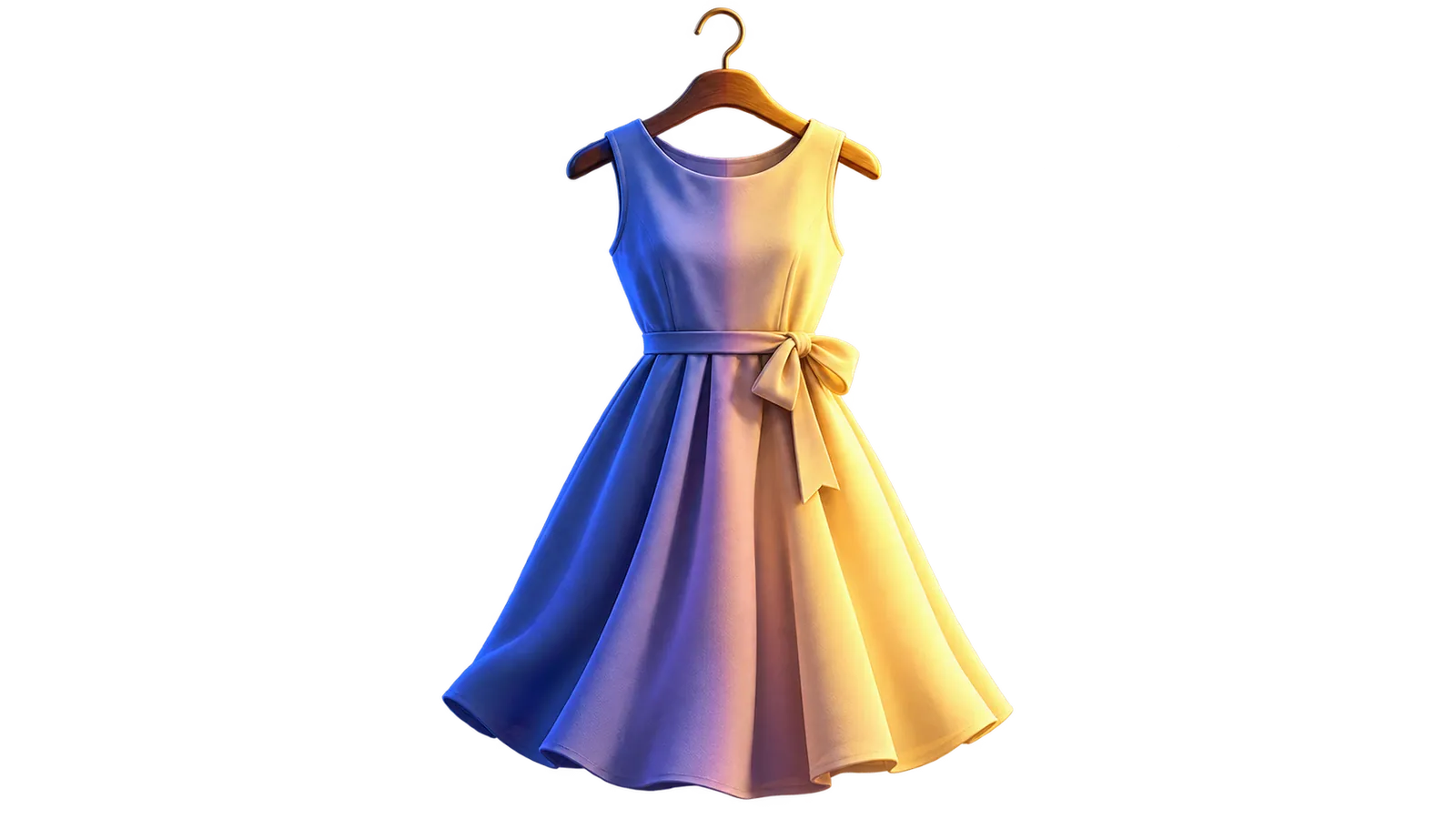
「青と黒」か「白と金」か。世界を二分したドレスの写真、脳は"照明"を推理していた
 2026.10.02
 English Corner(A2〜B2・4択クイズ)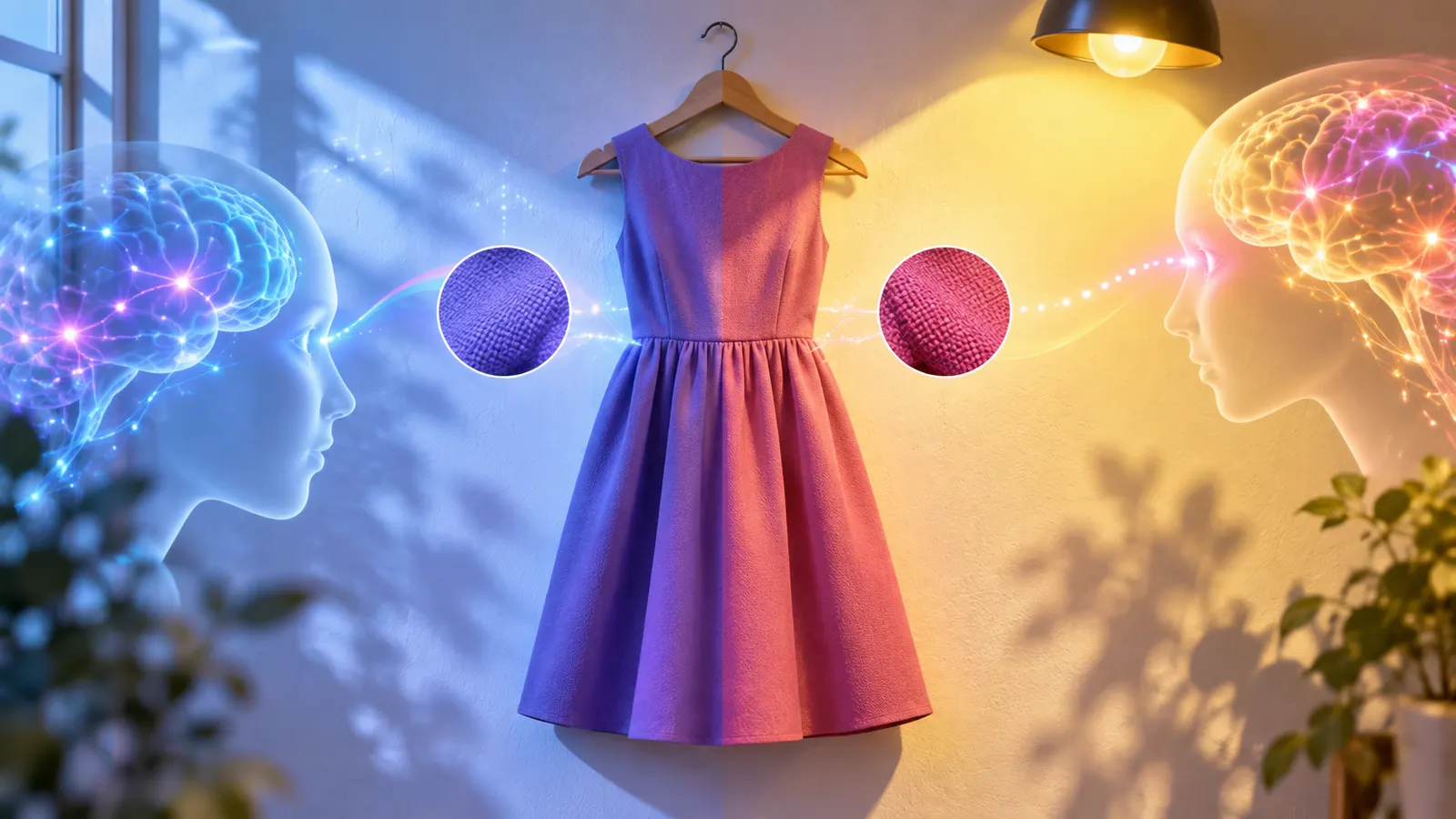
 読む前に予想してみよう!
「ドレスの色」論争で白と金に見えた人は、色覚に異常がある
色覚は正常でも見え方が分かれた。脳が照明の色をどう推理するかの違いと考えられている。
 研究カード(どんな研究?)
- 対象
- 一般の成人
- 規模
- 1,401人〜約1万3,000人
- 研究の種類
- オンライン調査・実験
- 確かさ
- ★★★☆☆
同じ写真なのに「青黒」「白金」と意見が割れたドレス。約1.3万人の調査では、見え方を最も左右したのは「どんな光で照らされていると思ったか」だった。
ひとことで言うと色は目で見るだけじゃなく、脳が「光の当たり方」を推理して決めている!
2015年2月、1枚のドレスの写真がインターネットを駆けめぐりました。
「このドレス、何色に見える?」
ある人には青と黒。別の人には白と金。家族や友だちのあいだでも意見が真っ二つに割れ、「なんでそう見えるの!?」と大騒ぎになりました。ちなみに実物は青と黒のドレスです。
同じ写真を見ているのに、なぜこんなに違って見えるのでしょうか? 実はこの騒動、色の研究者たちにとっては願ってもないチャンスでした。
01脳は「光の色」を差し引いて見ている
私たちは、物の色を「そのまま」見ているわけではありません。
夕方のオレンジ色の光の下でも、バナナは黄色に見えます。脳が「いまはオレンジっぽい光が当たっているから、その分を差し引こう」と、自動で補正しているからです。この働きを色の恒常性と呼びます。
ところが、ドレスの写真には、どんな光が当たっているのかを知る手がかりがほとんどありませんでした。しかも写真の色は、青空の光と電球の光のあいだに並んでいました。どちらの光の下でも、ありそうな色だったのです。
021,401人の調査:見え方は3通り
研究チームの考えはこうです。
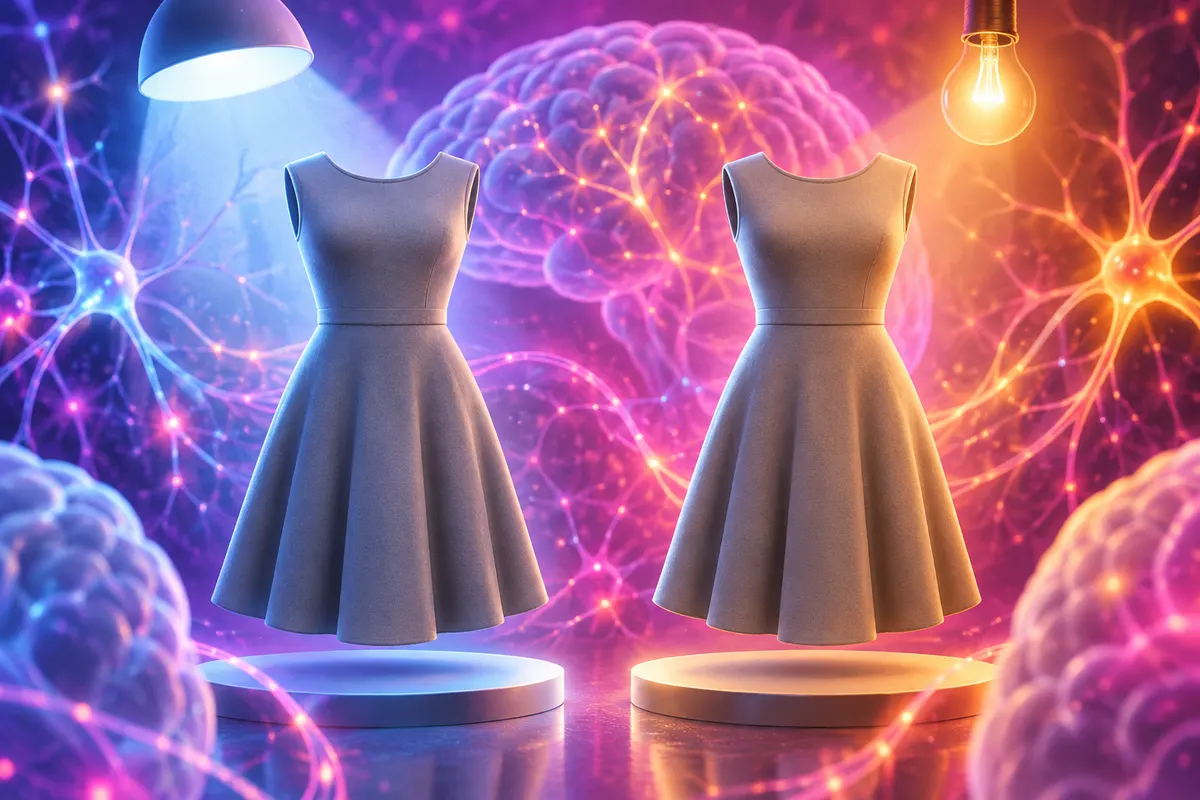
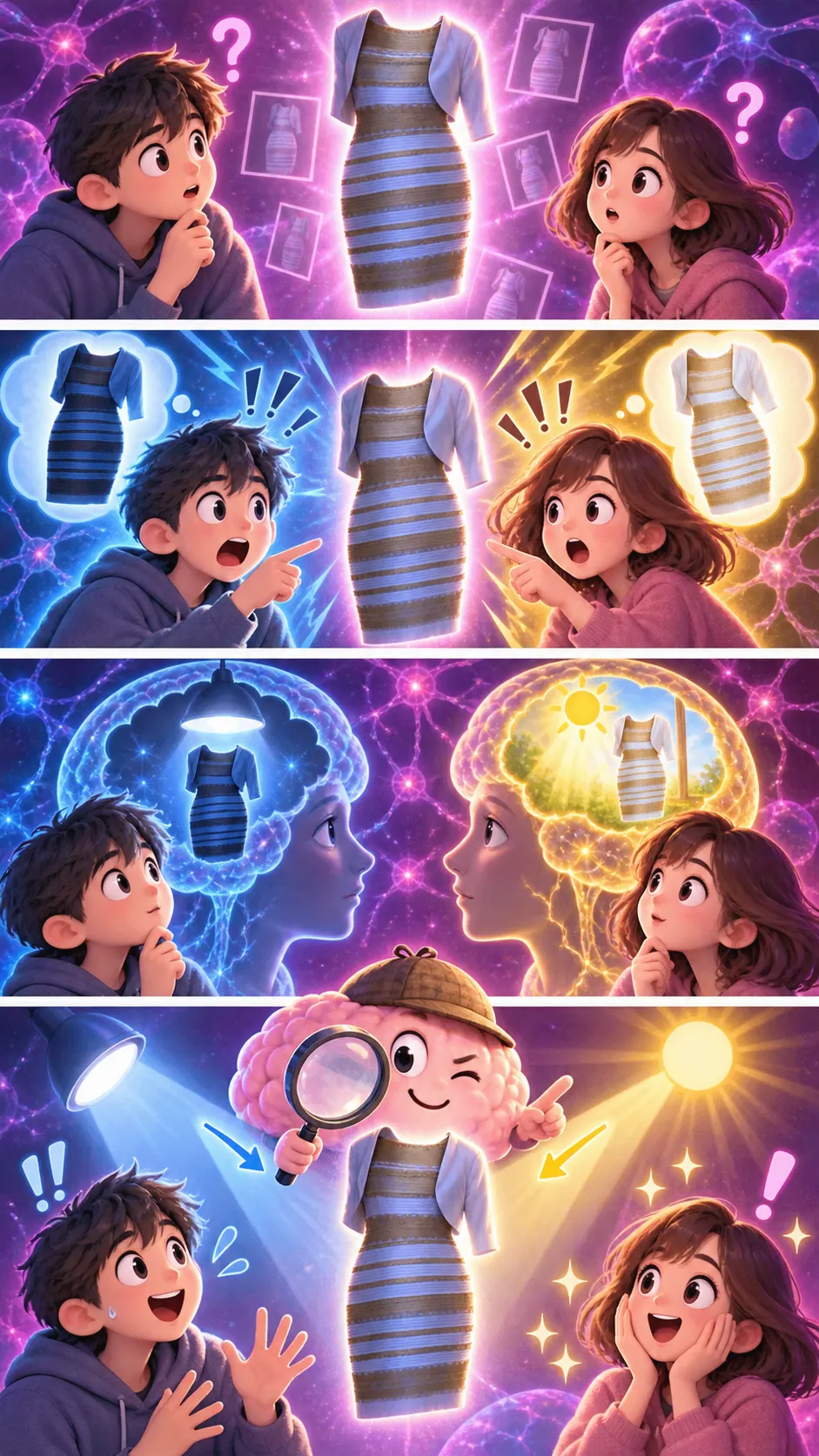
- 脳が「青っぽい光(日陰や青空の光)が当たっている」と判断する → 青っぽさを差し引く → 白と金に見える
- 脳が「黄色っぽい光(電球の光)が当たっている」と判断する → 黄色っぽさを差し引く → 青と黒に見える
実際、どんな光が当たっているかの手がかりを写真に付け加えると、見え方をひっくり返すこともできました。
031.3万人の調査:朝型の人は「白と金」?
2017年には、ニューヨーク大学の神経科学者ワリッシュ(Wallisch)さんが、さらに大きな調査の結果を発表しました。約1万3,000人に、オンラインで答えてもらったものです。
ドレスが影の中にあると思った人ほど、白と金に見えやすい。人工の照明の下にあると思った人ほど、青と黒に見えやすい。この「光の思い込み」は、年齢や性別よりも強く見え方に影響していました。
生活リズムとの関係も見つかっています。朝型の人ほど「白と金」と答えやすかったのです。朝型の人は、昼間の自然光(青っぽい光)を浴びる時間が長い。夜型の人は、電球の光の下で過ごす時間が長い。その経験が、脳の"思い込み"を作っているのでは、と考えられています。
04まとめ
ドレス論争の正体は、「この写真にはどんな光が当たっているか」を、脳が勝手に推理していたことでした。答えが分かれたのは、その推理の前提が人によって違ったからです。
あなたが「当たり前」に見ている世界も、実は脳がつくった"いちばんありそうな答え"。隣の人には、少し違う世界が見えているのかもしれません。
この研究を英語で読もう原田英語の English CornerIn February 2015, a photo of a dress spread around the internet because people could not agree on its colors. 音声
音声 4択クイズ9問A2・B1・B2タップして開く
原田英語の English Corner
この研究を英語で読もう
In 2015, a photo of a dress became famous on the internet. Some people saw it as blue and black. Others saw it as white and gold. The real dress was blue and black.
Why did people disagree? Our brain guesses what kind of light is on an object. If you thought the dress was in shadow, it looked white and gold. If you thought it was under a lamp, it looked blue and black.
75 words ・ CEFR A2
和訳を見る
2015年、あるドレスの写真がインターネットで有名になりました。ある人には青と黒に見えました。別の人には白と金に見えました。本物のドレスは青と黒でした。
なぜ意見が分かれたのでしょうか。私たちの脳は、物にどんな光が当たっているかを推測しています。ドレスが影の中にあると思った人には、白と金に見えました。電灯の下にあると思った人には、青と黒に見えたのです。
4択リーディングクイズ
Q1. What is the passage mainly about?
同じ写真なのに色の見え方が分かれた理由が中心なので A。
Q2. What color was the real dress?
The real dress was blue and black. とあるので D。
Q3. In this passage, "disagree" means ...
dis-(否定)+agree で「意見が合わない」。直前に青黒派と白金派に分かれたとあるので B。
In February 2015, a photo of a dress spread around the internet because people could not agree on its colors. Some saw blue and black, while others saw white and gold. The answer lies in how the brain handles light. A banana looks yellow even under orange evening light because the brain automatically removes the color of the light. This is called color constancy.
The dress photo gave few clues about the lighting. If your brain decided the dress was lit by bluish light, such as in shade, it removed the blue and you saw white and gold. If it decided the light was yellowish, like a light bulb, you saw blue and black.
114 words ・ CEFR B1
和訳を見る
2015年2月、あるドレスの写真がインターネット中に広まりました。人々がその色について意見を一致させられなかったからです。青と黒に見える人もいれば、白と金に見える人もいました。答えは、脳が光をどう扱うかにあります。夕方のオレンジ色の光の下でもバナナが黄色に見えるのは、脳が光の色を自動的に取り除いているからです。これは色の恒常性と呼ばれます。
ドレスの写真には照明についての手がかりがほとんどありませんでした。もしあなたの脳が、日陰のような青っぽい光に照らされていると判断すれば、青みを取り除き、白と金に見えました。電球のような黄色っぽい光だと判断すれば、青と黒に見えたのです。
4択リーディングクイズ
Q1. Why does a banana look yellow under orange evening light?
the brain automatically removes the color of the light とあるので C。これが色の恒常性。
Q2. Why was the dress photo so confusing?
The dress photo gave few clues about the lighting. とあるので A。
Q3. If someone thought the dress was under a light bulb, what colors did they probably see?
黄色っぽい電球の光だと判断すると黄色を差し引くので青と黒に見えた、とあるので D。
When a photograph of a dress went viral in 2015, it divided viewers into those who saw blue and black and those who saw white and gold; the garment was blue and black. Color researchers recognized a rare opportunity. Normally the brain achieves color constancy by estimating the illumination and discounting it, which is why a banana still looks yellow at sunset.
The dress image, however, offered few lighting cues, and its colors fell along the blue-to-yellow axis typical of natural daylight, making the scene genuinely ambiguous. A 2015 survey of 1,401 people found that most reported one of the two main combinations, while some saw blue and brown; older people and women were slightly more likely to see white and gold. Adding lighting cues could even reverse perceptions.
In 2017, a survey of about 13,000 people showed that assumptions about lighting mattered more than age or sex: those who believed the dress was in shadow tended to see white and gold. Early risers were more likely to report white and gold, perhaps because they spend more time in daylight. However, these surveys relied on self-reports viewed on uncontrolled screens, and the link with sleep habits is correlational.
198 words ・ CEFR B2
和訳を見る
2015年にあるドレスの写真が拡散したとき、見る人は青と黒に見える人と白と金に見える人に分かれました。実物の服は青と黒でした。色の研究者たちは、これをまれな機会だと考えました。ふつう脳は照明を推定してそれを差し引くことで色の恒常性を実現しています。
だからこそ、夕暮れ時でもバナナは黄色に見えるのです。しかしドレスの画像には照明の手がかりがほとんどなく、その色は自然の昼光に典型的な青から黄色の軸に沿って並んでいたため、場面は本当にあいまいなものになっていました。1,401人を対象にした2015年の調査では、ほとんどの人が2つの主な組み合わせのどちらかを答えましたが、青と茶色に見えた人もいました。また、年齢の高い人や女性は白と金に見える傾向がやや強いことがわかりました。照明の手がかりを加えると、見え方を逆転させることさえできました。
2017年には約13,000人を対象とした調査で、照明についての思い込みが年齢や性別よりも大きく影響することが示されました。ドレスが影の中にあると思った人は白と金に見えやすかったのです。朝型の人ほど白と金と答えやすく、それはおそらく彼らが昼光の中で過ごす時間が長いためだと考えられます。ただし、これらの調査は統制されていない画面で見た自己報告に頼っており、睡眠習慣との関連は相関にすぎません。
4択リーディングクイズ
Q1. Why was the dress image "genuinely ambiguous"?
offered few lighting cues, and its colors fell along the blue-to-yellow axis typical of natural daylight とあるので B。
Q2. According to the 2017 survey, what affected perception the most?
assumptions about lighting mattered more than age or sex とあるので C。
Q3. What limitation of the research does the author point out?
最終文 these surveys relied on self-reports viewed on uncontrolled screens とあるので A。実物の色は青と黒と判明している。
重要単語
- perceiveB2動詞知覚する、〜と感じ取るPeople perceived the same colors differently.
 名詞 perception。perceive A as B「AをBとみなす」は入試頻出の型。
 - illuminationC1名詞照明、光の当たり方The illumination changes how colors look. 動詞 illuminate(照らす・明らかにする)。日本語の「イルミネーション」は飾り電灯の意味に限られがち。
- ambiguousC1形容詞あいまいな、2通り以上に取れるThe photo was ambiguous. ambi-(両方)が語源。vague(ぼんやりした)との違いは「複数の解釈が可能」な点。
- assumptionB2名詞前提、思い込みOur brains make assumptions about light. 動詞 assume。on the assumption that ~「~という前提で」。
- color constancyC1名詞(句)色の恒常性Color constancy helps us see a banana as yellow at night. constancy は constant(一定の)の名詞形。照明が変わっても色を一定に感じる脳の働き。
- go viralB2熟語(ネットで)爆発的に広まるThe photo went viral in a few hours. virus(ウイルス)のように拡散するイメージ。時事英語の定番。
 入試に出る順の単語帳を印刷する →
 全5903語の「科学英単語カード」で復習する →
 この話題を TED で聞く
同じテーマの TED・TED-Ed を、 TED HACK で。英語の見どころ・使える表現・学習ミッションつきの日本語ガイドです。(運営:原田英語)
 4コマでわかる
このネタ、誰かに教えたくなった?
2015年に世界を二分した「ドレスの色」論争。約1.3万人を調べたら、「影の中にある」と思った人は白と金、「電球の下」と思った人は青と黒に見えやすかったらしい。しかも朝型の人ほど白と金と答えやすかった。
押すと「マジかリスト」に保存されます
 出典・参考文献(4件)タップで表示
- Lafer-Sousa, Hermann & Conway (2015) Striking individual differences in color perception uncovered by 'the dress' photograph, Current Biologydoi.org
- Brainard & Hurlbert (2015) Colour vision: understanding #TheDress, Current Biologydoi.org
- Winkler et al. (2015) Asymmetries in blue–yellow color perception and in the color of 'the dress', Current Biologydoi.org
- Wallisch (2017) Illumination assumptions account for individual differences in the perceptual interpretation of a profoundly ambiguous stimulus in the color domain: "The dress", Journal of Visiondoi.org

※本記事は上記の研究・公開資料をもとに、原田英語が独自の言葉で解説したものです。引用は著作権法第32条の範囲で行い、出典を明記しています。画像はすべてオリジナルのイメージです。研究結果には限界や個人差があります。誤りのご指摘は原田英語のお問い合わせフォームから。
 これも「マジか!?」
 脳・心理
脳・心理
デジャヴは「予知」じゃなかった。脳の"記憶チェック機能"が見せる不思議な錯覚
 脳・心理
脳・心理
記憶の「分けると残る」は腎臓の細胞にも? 薬を一気より4回に分けると遺伝子が長く働いた
 脳・心理
脳・心理
絶対音感は大人になってからでも身につく? 中国や日本の音大生に多い理由と、大人の訓練実験
 脳・心理
脳・心理
赤ちゃんの頃の記憶がないのは、「記憶を作れない」からではないかもしれない
 脳・心理
脳・心理
【関学の入試に出た】地平線の月が大きく見えるのは脳の錯覚。写真に撮ると大きさはほぼ同じだった
 脳・心理
脳・心理