

 脳と心理ホント
赤ちゃんの頃の記憶がないのは、「記憶を作れない」からではないかもしれない
 2026.10.02
 English Corner(A2〜B2・4択クイズ)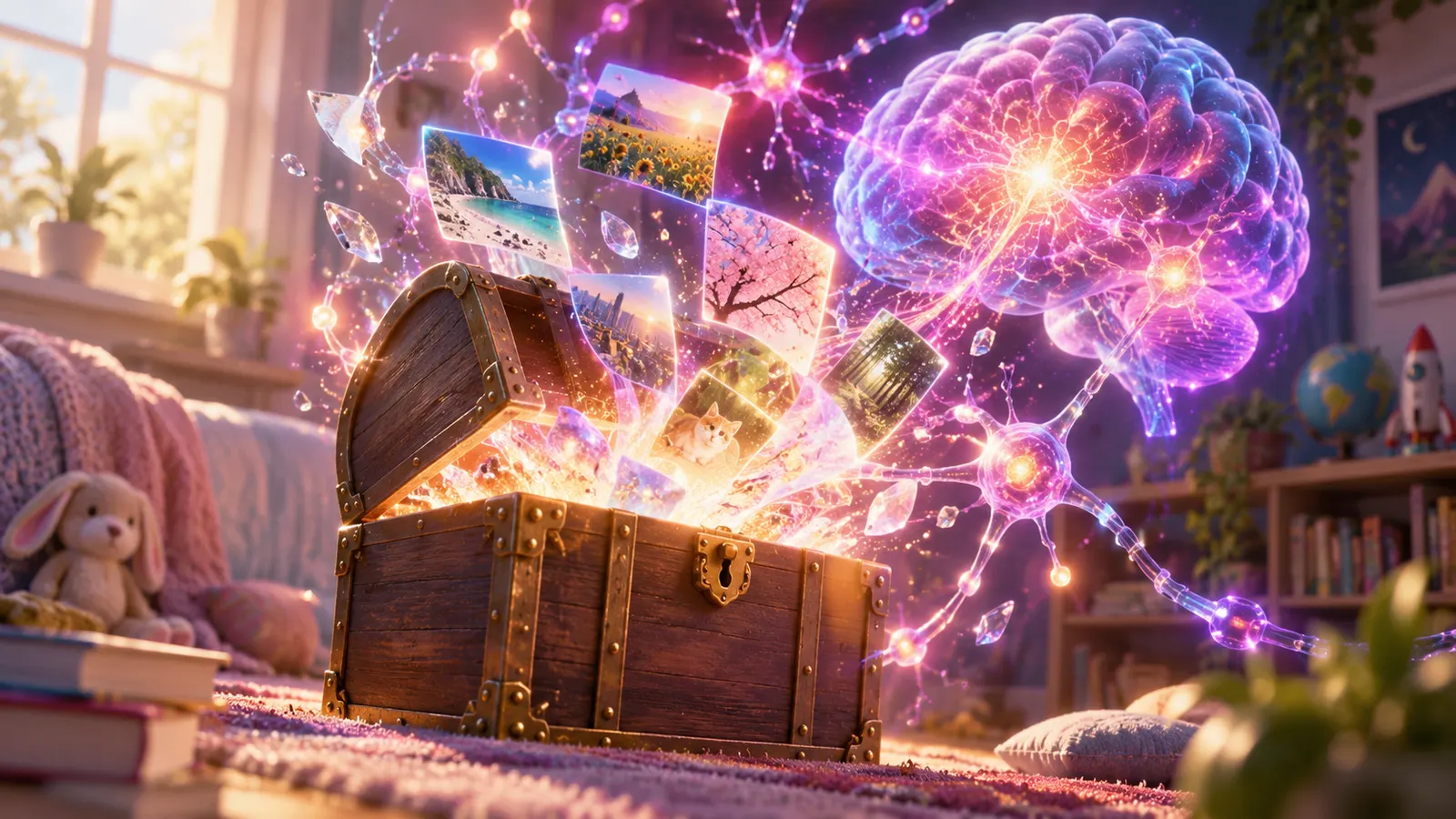

 読む前に予想してみよう!
生後1年ごろの赤ちゃんの脳でも、見たものを記憶するときに海馬が働いていた
海馬がよく働いたときに見た写真ほど、後で「見覚えがある」反応を示しやすかった。
 研究カード(どんな研究?)
- 対象
- 生後4か月〜2歳の赤ちゃん
- 規模
- 26人
- 研究の種類
- 起きている赤ちゃんの脳をMRIで調べる実験研究
- 確かさ
- ★★☆☆☆
起きている赤ちゃん26人の脳をMRIで撮影。1歳ごろから、海馬は見た写真を「記憶に書き込む」働きをしていた。思い出せないのは別の理由かも。
ひとことで言うと赤ちゃんも記憶は作れている。大人になって取り出せないだけかも!
あなたのいちばん古い記憶は、何歳のころですか?
多くの人は、3〜4歳より前のことはほとんど覚えていません。これは「幼児期健忘」と呼ばれ、ずっと謎とされてきました。
よく言われてきたのは、「赤ちゃんの脳は、まだ記憶を作れるほど育っていないから」という説明。ところが2025年、アメリカの研究チームがこの説明に疑問を投げかける結果を発表しました。
01起きている赤ちゃんをMRIに入れる、という難題
赤ちゃんはじっとしていられないし、言葉で「覚えてる?」と聞くこともできません。そこで研究チームは、赤ちゃん用のMRI撮影の工夫を重ね、さらに「見つめる時間」を手がかりにしました。
赤ちゃんには、こんな傾向があります。一度見たものを覚えていると、初めて見るものより、見覚えのある写真の方を長く見つめるのです。この性質を使って、記憶ができたかどうかを判断しました。
021歳ごろから、海馬は記憶を「書き込んで」いた
実験では、まず赤ちゃんに顔や景色、物などの写真を1枚ずつ見せ、そのときの脳の働きを記録しました。しばらくしてから、見せた写真と新しい写真を並べて、どちらを長く見るかを調べます。
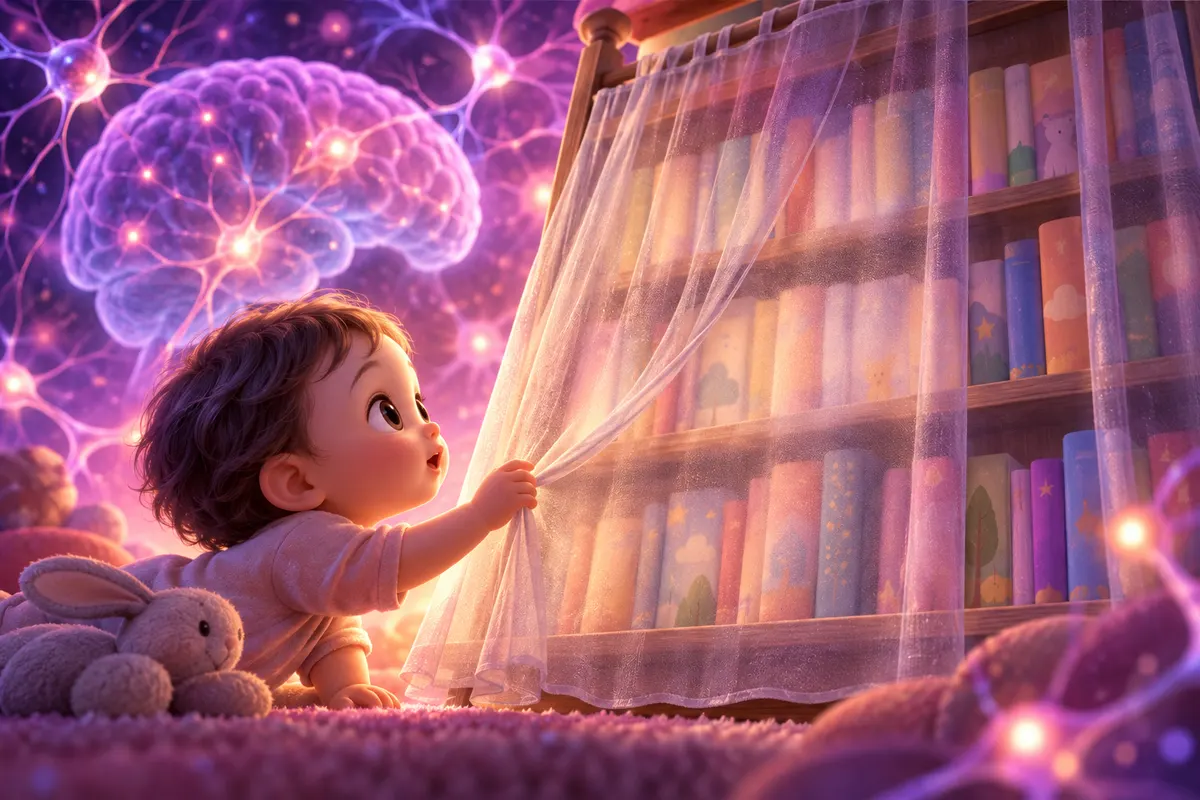
結果はこうです。初めて写真を見たときに海馬がよく働いていると、あとでその写真に「見覚えがある」反応を示しやすいことが分かりました。この関係は、特に1歳を過ぎたころからはっきり見られました。
海馬は、大人でも「出来事の記憶」を作るときの中心になる場所。つまり赤ちゃんの脳でも、その仕組みはもう動き始めていたわけです。
03問題は「書き込み」ではなく「取り出し」?
では、なぜ大人になると赤ちゃん時代の記憶を思い出せないのでしょう?
研究チームは、記憶が作られなかったのではなく、あとから取り出せなくなっている可能性を指摘しています。記憶そのものは、脳のどこかに残っているのかもしれません。ところが成長とともに脳の仕組みや「思い出し方」が変わり、たどり着けなくなっている、という考え方です。
マウスの研究では、こんな報告もあります。子どもの時期に覚え、忘れてしまったはずの記憶が、大人になってから呼び起こされたのです。そのときの記憶に関わった神経細胞を、光で刺激する方法でした。研究チームは今後、人の赤ちゃんの記憶がいつまで残るのかを調べたいとしています。
04まとめ
赤ちゃん時代の思い出は、作られなかったのではなく、あとから取り出せなくなっているのかもしれません。
小さな子どもと過ごした時間は、その子があとで覚えていなくても、脳の中に何かを残しているのかもしれません。そう考えると、ちょっと温かい気持ちになりませんか?
この研究を英語で読もう原田英語の English CornerMost adults remember almost nothing from before the age of three or four. 音声
音声 4択クイズ9問A2・B1・B2タップして開く
原田英語の English Corner
この研究を英語で読もう
Most people remember almost nothing from before age three or four. Many scientists thought babies could not make memories. But in 2025, a team at Yale University studied 26 babies with an MRI machine while they were awake.
The babies looked at pictures. From about one year old, a part of the brain called the hippocampus helped them remember the pictures. So babies may make memories, but later we cannot find them.
72 words ・ CEFR A2
和訳を見る
ほとんどの人は、3〜4歳より前のことをほぼ何も覚えていません。多くの科学者は、赤ちゃんは記憶を作れないと考えていました。しかし2025年、イェール大学のチームが、26人の赤ちゃんを起きたままの状態でMRIの機械を使って調べました。
赤ちゃんたちは写真を見ました。1歳ごろから、海馬と呼ばれる脳の部分が、写真を覚えるのを助けていました。つまり、赤ちゃんは記憶を作っているのに、あとになって私たちがそれを見つけられないのかもしれません。
4択リーディングクイズ
Q1. What is the passage mainly about?
最終文 babies may make memories, but later we cannot find them が主旨なので C。
Q2. How many babies did the team study?
studied 26 babies とあるので D。
Q3. In this passage, "awake" means ...
awake は「目が覚めている」。赤ちゃんは眠らずに起きた状態で調べられたので A。
Most adults remember almost nothing from before the age of three or four. This is called infantile amnesia, and many people believed it happened because a baby's brain is not ready to form memories. A study by researchers at Yale University in 2025 challenges this idea. The team scanned the brains of 26 awake babies, aged about 4 months to 2 years, while showing them pictures of faces, places, and objects.
Later, they checked which pictures the babies looked at longer, because babies tend to stare longer at things they recognize. When the hippocampus was more active the first time a baby saw a picture, the baby was more likely to recognize it later, especially after about one year of age.
121 words ・ CEFR B1
和訳を見る
ほとんどの大人は、3〜4歳より前のことをほぼ何も覚えていません。これは幼児期健忘と呼ばれ、赤ちゃんの脳はまだ記憶を作る準備ができていないから起こるのだと、多くの人が信じてきました。2025年のイェール大学の研究者たちによる研究は、この考えに疑問を投げかけています。チームは、生後約4か月から2歳までの起きている赤ちゃん26人に、顔や場所、物の写真を見せながら脳を撮影しました。その後、赤ちゃんがどの写真を長く見るかを調べました。
赤ちゃんは見覚えのあるものをより長く見つめる傾向があるからです。赤ちゃんが写真を初めて見たときに海馬がより活発だった場合ほど、あとでその写真を見覚えのあるものとして認識しやすく、それは特に1歳ごろを過ぎてからはっきりしていました。
4択リーディングクイズ
Q1. What idea does the Yale study challenge?
a baby's brain is not ready to form memories という考えに対して、Yale の研究が challenges this idea とあるので A。
Q2. How did the researchers judge whether a baby remembered a picture?
checked which pictures the babies looked at longer, because babies tend to stare longer at things they recognize とあるので B。
Q3. What can we infer from the passage?
海馬の働きと後の認識の関係が especially after about one year of age で見られたことから、1歳ごろから記憶の仕組みが働き始めると推測できるので D。
Almost nobody remembers their first few years of life. This gap, known as infantile amnesia, has often been blamed on the infant hippocampus, which was thought to be too immature to encode memories. A Yale University team tested that idea directly in a 2025 study in Science. They used functional MRI to scan 26 awake infants, aged roughly 4 to 25 months, as they looked at pictures of faces, scenes and objects.
Babies cannot say what they remember, so memory was measured by preferential looking. After a delay, infants tend to gaze longer at an image they have seen before than at a new one. This is a rough tool. A long look at a familiar picture is not the same as an adult recalling an event, and with short delays, the method says nothing about whether such memories last for years.
Even so, the scans showed a clear pattern. The more active the hippocampus was during the first viewing, the more likely a baby was to recognize the image later. So infantile amnesia may come from a failure to retrieve early memories rather than a failure to form them. The link was clear from about 12 months of age.
200 words ・ CEFR B2
和訳を見る
人生のいちばん初めの数年を覚えている人は、ほとんどいません。幼児期健忘として知られるこの空白は、乳児の海馬は未熟すぎて記憶を書きこめないからだ、とよく説明されてきました。イェール大学のチームは、2025年の『Science』の研究で、この前提を直接確かめました。研究者たちは、生後およそ4〜25か月の起きている乳児26人が顔・風景・物の画像を見ている間、機能的MRIで脳を撮影しました。
赤ちゃんは何を覚えているかを言えないため、記憶は「選好注視」で測定されました。少し時間をおくと、乳児は新しい画像よりも以前に見た画像を長く見つめる傾向があるのです。これは大まかな測り方です。見覚えのある画像を長く見ることは、大人が出来事を思い出すことと同じではありません。また待ち時間が短いため、この方法ではそうした記憶が何年も続くかどうかについては何も分かりません。
それでも、脳の画像にははっきりした傾向が現れました。最初に見たときの海馬の活動が強いほど、赤ちゃんはあとでその画像を認識しやすかったのです。つまり幼児期健忘は、記憶を作れないことではなく、初期の記憶を取り出せないことから生じているのかもしれません。この関係は、生後12か月ごろからはっきり現れました。
4択リーディングクイズ
Q1. What assumption did the Yale study test?
the infant hippocampus, which was thought to be too immature to encode memories を that idea として直接確かめたとあるので C。
Q2. Why did the researchers use preferential looking?
Babies cannot say what they remember, so memory was measured by preferential looking とあるので A。
Q3. Which conclusion would the author most likely agree with?
a failure to retrieve early memories rather than a failure to form them と述べる一方、This is a rough tool. として方法の限界も挙げているので B。
重要単語
- infantile amnesiaC1名詞(句)幼児期健忘Infantile amnesia means that we forget our first years.
 amnesia は a-(否定)+mnesia(記憶)。amnesty(恩赦=罪を忘れる)と同語源。
 - encodeC1動詞(記憶として)書きこむ、符号化するThe brain encodes new information during the day. en-(中に)+code(符号)。記憶の3段階 encode → store → retrieve をセットで覚える。
- retrieveB2動詞(記憶を)取り出す、思い出すI couldn't retrieve her name at that moment. 名詞は retrieval。犬のレトリーバー(retriever)は獲物を「取ってくる」犬。
- infantB2名詞乳児、赤ちゃんThe infant stared at the colorful picture. 形容詞は infantile(幼児の・幼稚な)。infancy は「幼児期」。
- episodic memoryC1名詞(句)エピソード記憶(出来事の記憶)Episodic memory lets us recall our last birthday. episode(出来事)の形容詞形。対になるのは semantic memory(意味記憶=知識の記憶)。
- recognizeB1動詞見覚えがある、認識するBabies stare longer at faces they recognize. re-(再び)+cognize(知る)。recall(自分で思い出す)と recognize(見て分かる)の違いは心理学の長文で頻出。
 入試に出る順の単語帳を印刷する →
 全5903語の「科学英単語カード」で復習する →
 動画でもっと知る
動画は各チャンネルの公式埋め込みで表示しています(YouTube)。
この話題を TED で聞く
同じテーマの TED・TED-Ed を、 TED HACK で。英語の見どころ・使える表現・学習ミッションつきの日本語ガイドです。(運営:原田英語)

 公式・一次情報をチェック
 4コマでわかる
このネタ、誰かに教えたくなった?
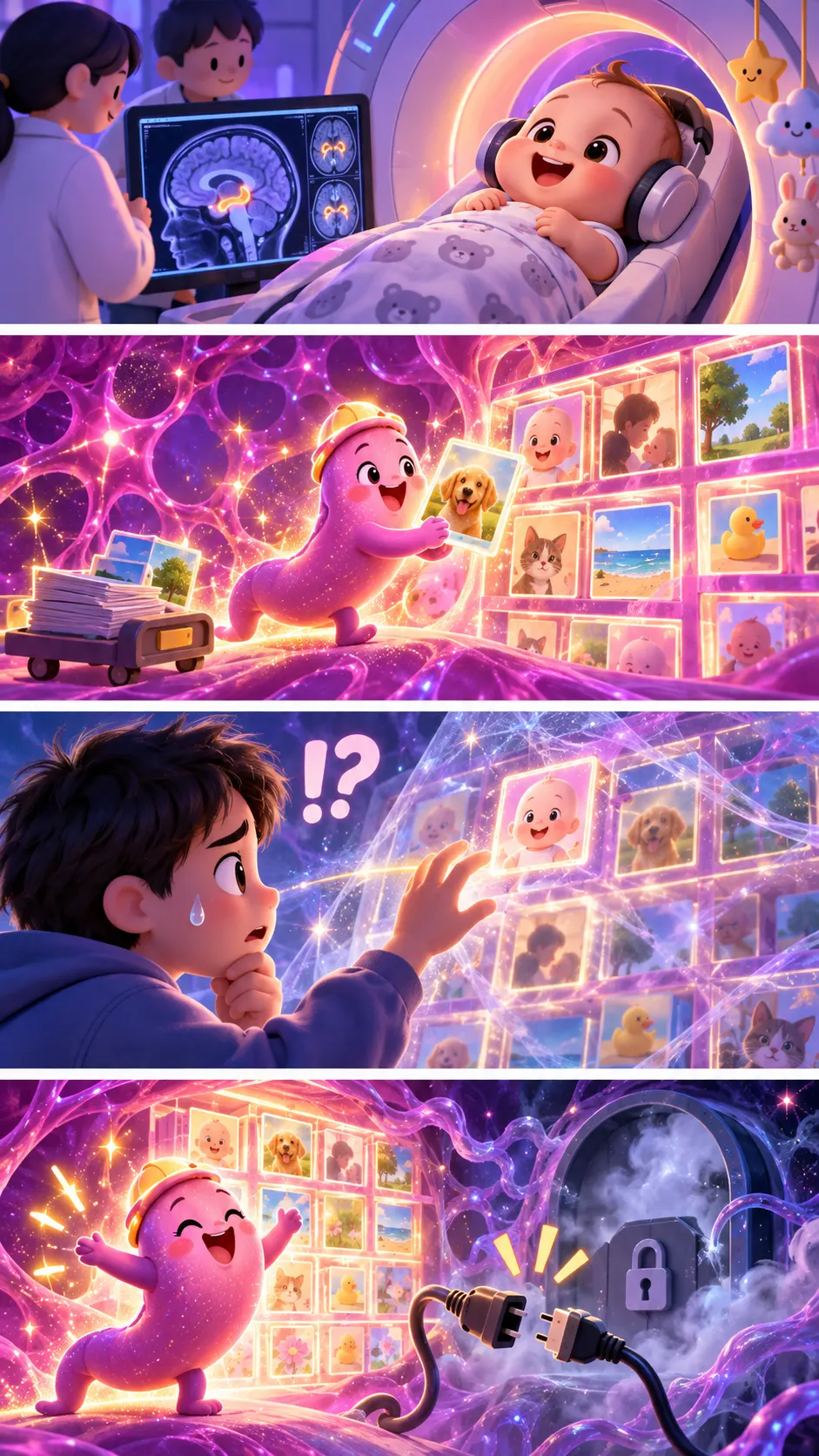
赤ちゃんのころの記憶がないのは、そもそも記憶を作れないからだと思われてきた。でも起きている赤ちゃん26人の脳をMRIで調べたら、1歳ごろから海馬がちゃんと記憶を書き込んでいたらしい。問題は「取り出し」の方?
押すと「マジかリスト」に保存されます
 出典・参考文献(4件)タップで表示
- Yates et al. (2025) Hippocampal encoding of memories in human infants, Sciencedoi.org
- Ramsaran & Frankland (2025) Babies form fleeting memories, Science(解説記事)doi.org
- Guskjolen et al. (2018) Recovery of "Lost" Infant Memories in Mice, Current Biologydoi.org
- Josselyn & Frankland (2012) Infantile amnesia: A neurogenic hypothesis, Learning & Memorydoi.org

※本記事は上記の研究・公開資料をもとに、原田英語が独自の言葉で解説したものです。引用は著作権法第32条の範囲で行い、出典を明記しています。画像はすべてオリジナルのイメージです。研究結果には限界や個人差があります。誤りのご指摘は原田英語のお問い合わせフォームから。
 これも「マジか!?」


 脳・心理
脳・心理
「大人の脳では神経細胞は増えない」は本当? 記憶の中枢・海馬で、神経細胞のもとになる細胞が分裂していた

 脳・心理
脳・心理
新しい出来事を覚えられない男性が、それでも"上達"したもの。記憶の教科書を変えた患者H.M.

 脳・心理
脳・心理
年をとると記憶は「消える」より「混ざる」? 記憶の中枢・海馬で見えた変化
 脳・心理
脳・心理
ロンドンのタクシー運転手は、海馬の後ろ側が大きかった。訓練生を約3年追跡して分かった"脳が育つ"証拠
 脳・心理
脳・心理
記憶の「分けると残る」は腎臓の細胞にも? 薬を一気より4回に分けると遺伝子が長く働いた
 脳・心理
脳・心理