Toji (Winter Solstice in Japan)

冬至(ゆず湯とかぼちゃ)を英語で:読む・聞く・話す・遊ぶ

やさしい英語(CEFR A2)の読み物に音声つき。会話・単語カード・クイズ5問・ゲームで、冬至(ゆず湯とかぼちゃ)の英語をまるごと。

🔊Read in English冬至(ゆず湯とかぼちゃ)を英語で読もう(CEFR A2・音声つき)

冬至(ゆず湯とかぼちゃ)を、やさしい英語で紹介する読み物です。▶で英文をタイトルから通して聞けます(アメリカ英語)。「和訳」ボタンで日本語訳の表示・非表示を切りかえられます。下線の語は下の単語カードにあります。

A Hot Bath on the Shortest Day

CEFR A2
0:00
233 words

Around December 22, Japan has the shortest day of the year. This day is called Toji, the winter solstice. In Tokyo in 2026, the sun rises at 6:47 in the morning and sets at 4:32 in the afternoon. That is less than ten hours of daylight. In June, Tokyo gets almost five more hours of sun.

12月22日ごろ、日本は一年でいちばん昼の短い日をむかえます。この日を「冬至」と言います。2026年の東京では、日の出が朝6時47分、日の入りが午後4時32分です。昼の明るさは10時間もありません。6月の東京では、太陽が出ている時間がほぼ5時間も長いのです。

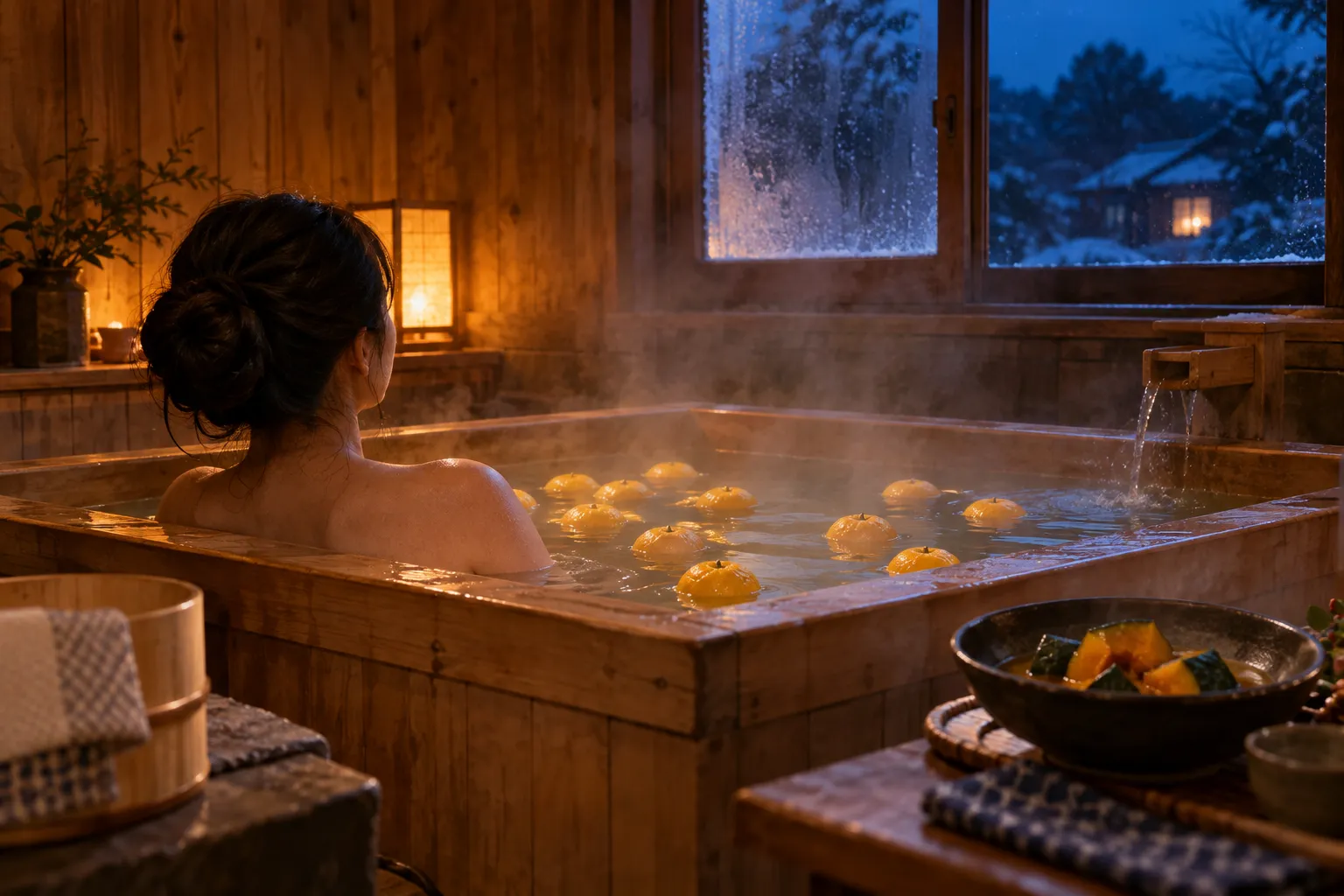
On this night, many families take a yuzu bath. Yuzu is a small yellow citrus fruit with a strong, fresh smell. People put whole yuzu into the hot water and relax. Some say a yuzu bath keeps you from catching a cold. This custom is said to have started at public bathhouses in old Tokyo, about 200 years ago.

この夜、多くの家庭がゆず湯に入ります。ゆずは、強くさわやかな香りのする小さな黄色いかんきつ類です。丸ごとのゆずをお湯に入れて、ゆったりくつろぎます。ゆず湯に入るとかぜをひかない、と言う人もいます。この習慣は、約200年前の昔の東京の銭湯で始まったと言われます。

People also eat kabocha, a sweet Japanese pumpkin. An old saying tells us that kabocha on this day helps you live a long life. Today, some families also eat foods with the sound n in their names, like udon. But this custom is quite new. Old records from the 1800s talk about foods that start with to, like tofu.

人々はかぼちゃ、つまり甘い日本のかぼちゃも食べます。この日にかぼちゃを食べると長生きできる、という古い言い伝えがあります。今では、うどんのように名前に「ん」の音がある食べ物を食べる家庭もあります。でも、この習慣はけっこう新しいものです。1800年代の古い記録に出てくるのは、豆腐のように「と」で始まる食べ物です。

Toji is not only about the cold. From this day, the days slowly get longer again. So people also see it as a day when good luck starts to come back. In China, many people eat dumplings on this day. In Iran, families stay up late with watermelon and poems on the longest night of the year.

冬至は寒さだけの日ではありません。この日から、昼は少しずつまた長くなっていきます。だから人々は、この日を幸運が戻りはじめる日とも考えます。中国では、この日に多くの人がぎょうざを食べます。イランでは、一年でいちばん長い夜に、家族がスイカと詩を楽しみながら夜ふかしをします。

💬Dialogue英語の会話で冬至(ゆず湯とかぼちゃ)

🎬 12月22日、アメリカから来たエミリーがケンタの家にホームステイしています。ケンタがお風呂の準備をしています。

0:00
Emily

Kenta, why are there lemons in the bath?

ケンタ、どうしてお風呂にレモンが入ってるの?

Kenta

They're not lemons. They're yuzu. Today is Toji, the winter solstice.

レモンじゃないよ。ゆずなんだ。今日は冬至だからね。

Emily

Oh, the shortest day of the year! So you take a yuzu bath?

ああ、一年でいちばん昼が短い日ね!それでゆず湯に入るの?

Kenta

Yes. It warms you up, and people say you won't catch a cold.

うん。体が温まるし、かぜをひかないって言われてるんだ。

Emily

It smells amazing. What's for dinner?

すごくいい香り。夕ごはんは何?

Kenta

Kabocha! My grandma says it helps you live long.

かぼちゃ!おばあちゃんは長生きできるって言ってるよ。

Emily

In my town, we don't do anything special today.

わたしの町では、今日は特に何もしないなあ。

Kenta

Then this is your first Toji. Enjoy the bath first!

じゃあ、これが初めての冬至だね。先にお風呂をどうぞ!

🃏Word Cards冬至(ゆず湯とかぼちゃ)の英単語カード(8語)

カードをタップすると裏返って、意味と例文が出ます。

solstice名詞
至(夏至・冬至)The winter solstice is in December.冬至は12月です。💡 ラテン語の「太陽(sol)が止まる」から。summer solstice=夏至。
daylight名詞
日光、昼の明るさWe have less daylight in winter.冬は昼の明るい時間が短くなります。💡 day+light。
sunset名詞
日の入りThe sunset is very early in December.12月は日の入りがとても早いです。💡 反対は sunrise(日の出)。
citrus名詞
かんきつ類Yuzu is a kind of citrus.ゆずはかんきつ類の一種です。💡 lemon, orange, yuzu などをまとめた言い方。
custom名詞
習慣、風習Taking a yuzu bath is a Japanese custom.ゆず湯に入るのは日本の風習です。💡 customer(お客)も「いつも来る人」から。
public bathhouse名詞
銭湯、公衆浴場Many public bathhouses have yuzu baths today.今日は多くの銭湯がゆず湯をわかします。💡 sento とそのまま言っても通じることがある。
catch a cold熟語
かぜをひくWear a coat, or you will catch a cold.コートを着ないとかぜをひくよ。💡 cold は名詞で「かぜ」。
stay up late熟語
夜ふかしするWe stayed up late and told stories.夜ふかしをしてお話をしました。💡 stay up=寝ないで起きている。

✅Quiz冬至(ゆず湯とかぼちゃ)の英語クイズ(5問)

上の英文を読んでから答えてみよう。答えを選ぶとすぐに解説が出ます。全問正解でスタンプが金色に!

Q1. What is the main idea of the passage?

本文の主旨は何ですか。

第1段落で冬至の意味、第2・3段落で日本の習慣、第4段落で中国とイランを紹介しています。夏祭りでも祝日でもなく、ゆず湯は昔の東京の銭湯で始まったとされます。

Q2. In Tokyo in 2026, when does the sun set on the winter solstice?

2026年の東京では、冬至の日の入りは何時ですか。

第1段落に sets at 4:32 in the afternoon とあります。6時47分は日の出の時刻です。

Q3. Where is the yuzu bath custom said to have started?

ゆず湯の習慣はどこで始まったと言われていますか。

第2段落に is said to have started at public bathhouses in old Tokyo とあります。ほかの場所は本文に出てきません。

Q4. What does the passage say about eating foods with the sound n?

「ん」の音がつく食べ物を食べることについて、本文は何と言っていますか。

第3段落に But this custom is quite new. とあり、古い記録には「と」で始まる食べ物が出てくると書かれています。

Q5. In the dialogue, what did Emily think the yuzu were at first?

会話の中で、エミリーは最初ゆずを何だと思いましたか。

エミリーは why are there lemons in the bath? と聞き、ケンタが They're not lemons. They're yuzu. と答えています。

🎮Games冬至(ゆず湯とかぼちゃ)の英語ゲーム

タブを切りかえて遊べます。授業ではプロジェクターに映して、クラス対抗戦にしても盛り上がります。

👋Useful Phrases冬至(ゆず湯とかぼちゃ)に使える英語フレーズ

Today is the shortest day of the year.今日は一年でいちばん昼が短い日です。冬至を一言で説明するならこれ。
We take a yuzu bath tonight. It smells so good!今夜はゆず湯に入るんだ。すごくいい香りだよ!yuzu は英語圏でもそのまま通じることが多い。
From tomorrow, the days will get longer again.明日から、また昼が長くなっていきます。「一陽来復」の気持ちを伝える一言。

🗣️ 話し合ってみよう(Discussion)

  1. What do you do to stay warm and healthy in winter?

    冬に温かく元気に過ごすために、あなたは何をしていますか。
  2. Many countries have special customs on the winter solstice. Why do you think the shortest day is important to people?

    多くの国に冬至の習慣があります。昼がいちばん短い日が人々にとって大切なのはなぜだと思いますか。
  3. The n-food custom is newer than many people think. How do new customs start to feel like old traditions?

    「ん」の食べ物の習慣は、多くの人が思うより新しいものです。新しい習慣は、どうやって昔からの伝統のように感じられるようになるのでしょうか。

🗾Explain Japan in English冬至(ゆず湯とかぼちゃ)を海外の人に英語で説明するなら

姉妹サイト「日本文化ナビ」に、英語でかんたんに説明する例文(ひと言・30秒・スピーチ)と、外国の人によく聞かれる質問がまとまっています。日本語のページと、英語だけのページ(そのまま海外の人に見せられます)があります。

冬至とゆず湯を英語で説明する(toji to yuzuyu)冬至とゆず湯(toji to yuzuyu)を英語で説明するには。一言/30秒/スピーチの3段階の英文と和訳、外国人によく聞かれる質問と答え、そのまま使えるフレーズ、音声つき。JP 日本語で読むGB English page
湯治を英語で説明する(toji)湯治(toji)を英語で説明するには。一言/30秒/スピーチの3段階の英文と和訳、外国人によく聞かれる質問と答え、そのまま使えるフレーズ、音声つき。JP 日本語で読むGB English page
🍋
Toji (Winter Solst
スタンプ帳に冬至(ゆず湯とかぼちゃ)のスタンプを押しました!
クイズで全問正解すると金のスタンプに。世界一周めざして集めよう。 スタンプ帳を見る →

授業アイデアとワークシートを見る →