Showa Day
昭和の日の英語の授業アイデアとワークシート
印刷してすぐ使えるワークシート(PDF・Word・解答つき)と、授業の手順書。
🖨️Worksheetsワークシート(無料・A4)
① 「中身を見る・印刷」で全ページを確認 → ② そのページ上の 🖨️ 印刷する でそのまま印刷できます。A4・無料。
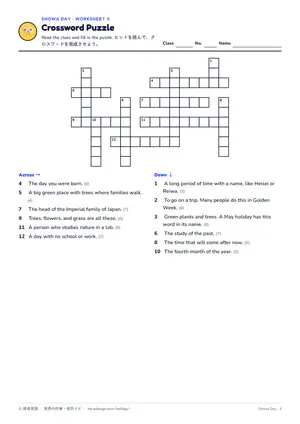
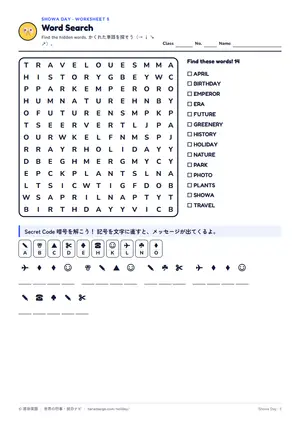
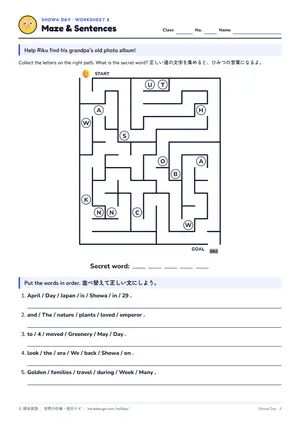
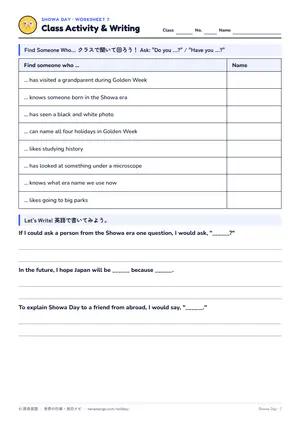
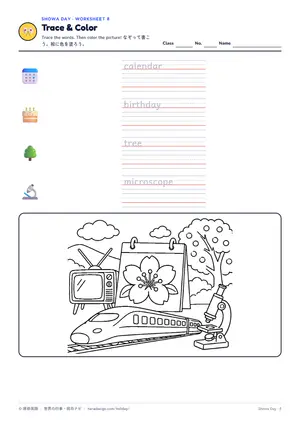
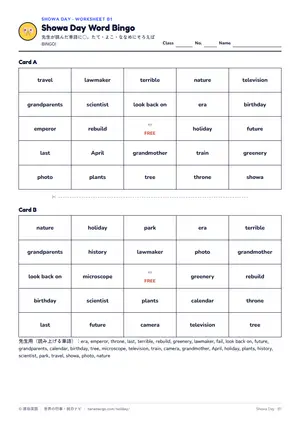
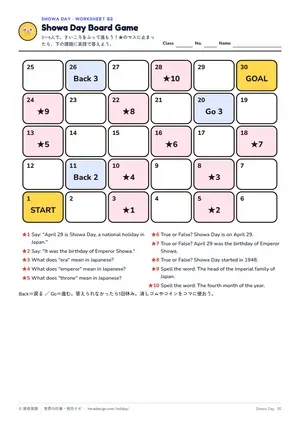
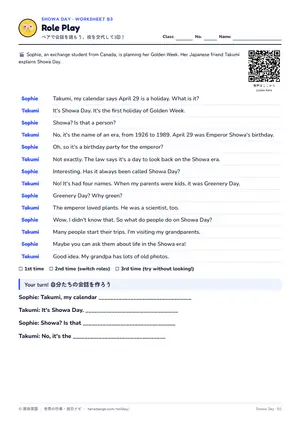
🍎Lesson Ideas昭和の日を使った英語の授業アイデア
祖父母インタビュー:Life in the Showa Era
🎯 過去形の疑問文を使って、昭和の暮らしについて英語でインタビュー原稿を作り、発表できる。
- What did you eat? / What did you play? / Did you have a TV? などの質問を英語で5つ作る。
- 連休中に家族や地域の人に日本語でインタビューし、答えをメモする。
- 答えを英語の過去形で3〜5文にまとめる。
- クラスで発表し、「昭和の暮らし」と「今の暮らし」の違いを黒板に整理する。
詳細版を開く(時間配分・Teacher Talk・板書)
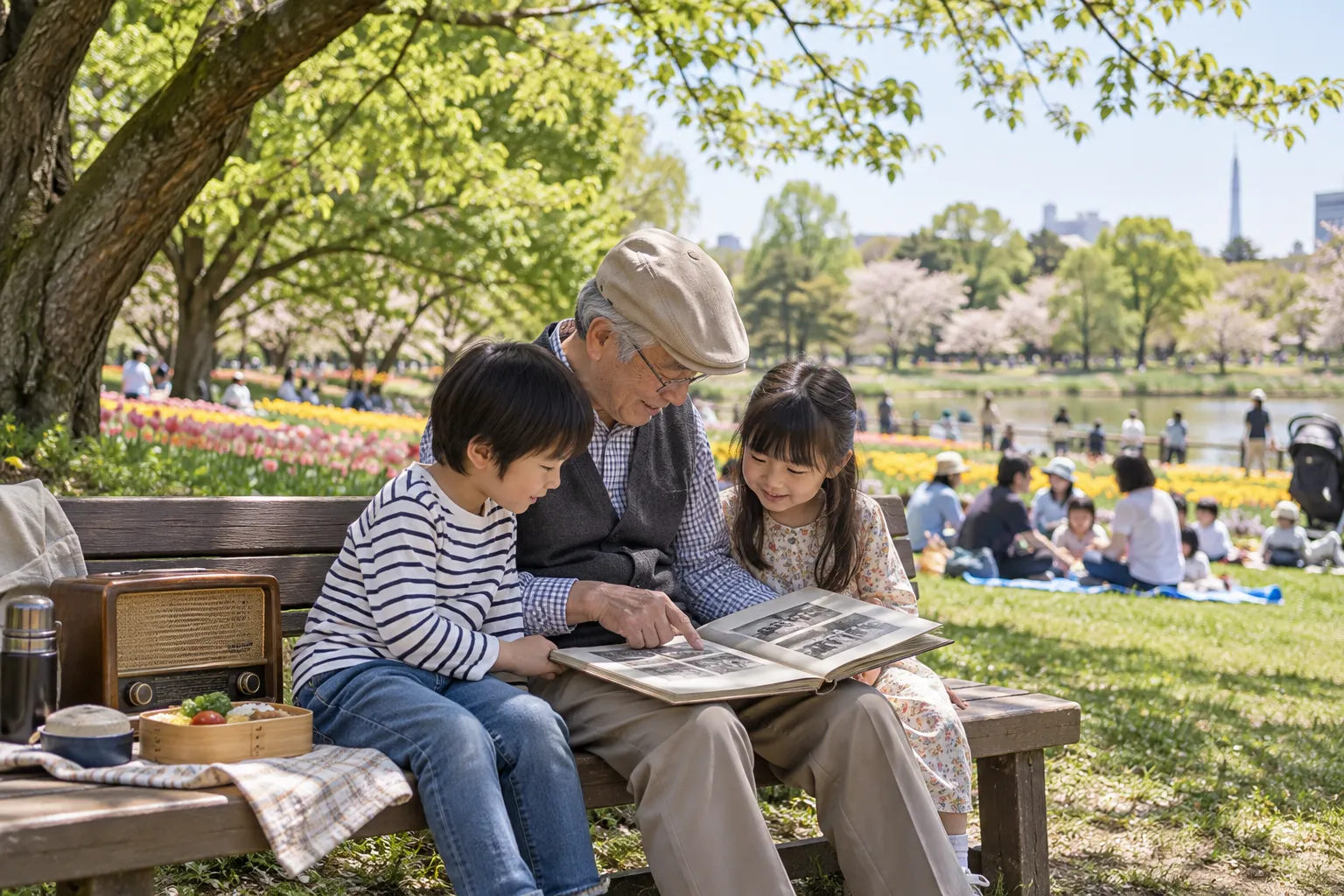
英語ページ本文の第5段落を聞かせ、Others ask their grandparents about life long ago, when TVs were black and white. の文を確認する。白黒テレビの写真を見せ、「昭和の子どもは何をして遊んだ?」と問いかける。
🗣️ Listen. TVs were black and white. / What did children play in the Showa era? / Let's ask people who lived in that time.
What did you eat? / What did you play? / Did you have a TV? を例に示し、過去形の疑問文の形(did+動詞の原形)を確認する。インタビューシートに質問を5つ英語で書かせ、ペアで質問し合って練習する。
🗣️ What did you eat? Did you have a TV? / After "did," use the base form. Eat, not ate. / Write five questions. / Practice with your partner.
連休中に家族や地域の人に日本語でインタビューし、答えをメモしてくるよう伝える。メモした答えを英語の過去形にする練習を、先生の作例で1つ見せる(例:祖母「給食は脱脂粉乳だった」→ My grandmother drank milk at school lunch.)。
🗣️ Ask your family in Japanese during Golden Week. / Write their answers in Japanese. / Then change them into English. Use the past tense.
連休明けの授業で、答えを英語の過去形3〜5文にまとめさせ、数人に発表させる。発表を聞きながら、「昭和の暮らし」と「今の暮らし」の違いを黒板の2列に整理する。※インタビュー前の授業と連休明けの授業に分けて行ってもよい。
🗣️ Tell us about your interview. / My grandfather played ... when he was a child. / What is different from today?
Life in the Showa Era
What did you eat? / What did you play? / Did you have a TV?
→ did + 動詞の原形

My grandmother played ___ when she was a child.
She had a black and white TV.

Showa(昭和)| Today(今)
___ | ___
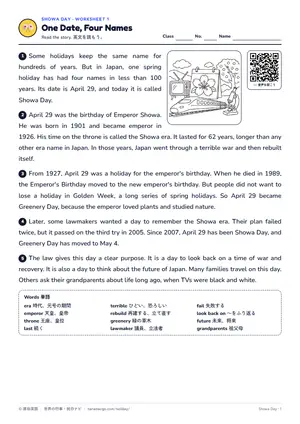
4つの名前を年表にしよう
🎯 年号と出来事を英語で言えるようにし、4月29日の名前の変化を理解する。
- 1927 / 1948 / 1989 / 2007 のカードと、4つの名前のカードを配る。
- ペアで正しく組み合わせ、年表に並べる。
- In 1989, April 29 became Greenery Day. の形で1人1文を言う。
- なぜ名前が変わったのかを、日本語と英語で1文ずつまとめる。
詳細版を開く(時間配分・Teacher Talk・板書)
年号の読み方(1927 = nineteen twenty-seven、2007 = two thousand seven)を練習する。英語ページ本文の第1段落の one spring holiday has had four names を示し、「4月29日には4つの名前があった」と伝える。
🗣️ How do we say this year? Nineteen twenty-seven. / And this one? Two thousand seven. / April 29 has had four names. Let's find them.
ペアに年号カードと名前カードを配り、本文の第3・第4段落を聞かせたあと、正しく組み合わせて年表の台紙に並べさせる。答え合わせで、1948年は祝日法ができた年であることを補う。
🗣️ Listen to paragraphs 3 and 4. / Match the years and the names. / Put them in order on your timeline.
In 1989, April 29 became Greenery Day. の形を示し、1人1文ずつ、年表の1つを選んで言わせる。列ごとにリレー形式で言わせると全員が言える。
🗣️ In 1989, April 29 became Greenery Day. / Choose one year and say a sentence. / Next person, please.
「なぜ名前が変わったのか」を考えさせ、日本語と英語で1文ずつまとめさせる。1989年の変化は本文の people did not want to lose a holiday in Golden Week と the emperor loved plants を手がかりにする。
🗣️ Why did the name change in 1989? / People did not want to lose a holiday. / Write one sentence in Japanese and one in English.
April 29:One Date, Four Names
1927 Tenchosetsu(天長節)
1948 the Emperor's Birthday(天皇誕生日)
1989 Greenery Day(みどりの日)← the emperor loved plants
2007 Showa Day(昭和の日)/ Greenery Day → May 4

In 1989, April 29 became Greenery Day.
世界の「誕生日の祝日」比べ
🎯 オランダ・タイ・アメリカ・インドの例と比べ、日本の昭和の日の特徴を英語で説明できる。
- compare の表を読み、各国の祝日の名前・日付・理由を英語で表にまとめる。
- グループで1か国を担当し、さらにくわしく調べる。
- Japan is similar to ~ because ~. / Japan is different from ~ because ~. で比較文を書く。
- グループごとに2分で発表し、最後に全体で共通点を話し合う。
詳細版を開く(時間配分・Teacher Talk・板書)
「4月29日はだれの誕生日?」と聞き、昭和天皇の誕生日であることを確認する。そのうえで、祝日法では昭和の日は「人を祝う日」ではなく「昭和の時代をふり返る日」とされていることを伝え、ほかの国と比べてみようと投げかける。
🗣️ Whose birthday is April 29? / But by law, Showa Day is a day to look back on an era, not to celebrate a person. / Is this the same in other countries?
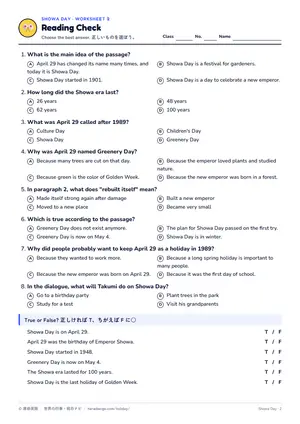
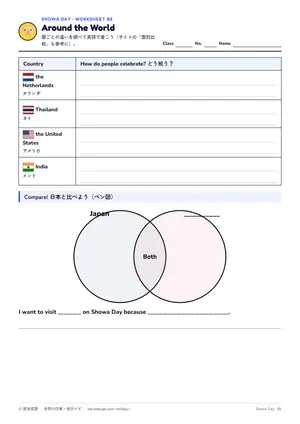
国比べ表を読ませ、オランダ・タイ・アメリカ・インドの祝日について、名前・日付・だれの誕生日か・今の目的をワークシートに英語でまとめさせる。
🗣️ Read the table in your group. / Write the name, the date, and whose birthday it is. / What is the purpose of the day now?
グループで1か国を担当し、端末でさらにくわしく調べさせる(例:アメリカの連邦祝日の正式名は「ワシントンの誕生日」だが、2月の第3月曜日なので本当の誕生日の2月22日には当たらない)。出典をメモさせる。
🗣️ Each group takes one country. / Find two more facts about the holiday. / Write down where you found them.
Japan is similar to ~ because ~. / Japan is different from ~ because ~. の形で比較文を1文ずつ書かせる。
🗣️ Compare your country with Japan. / Japan is similar to ... because .... / Japan is different from ... because ....
各グループ2分で発表させる。最後に全体で「前の元首の誕生日が祝日として残るのはなぜか」を話し合い、日本の文化の日(明治天皇の誕生日)も同じ例であることを紹介する。
🗣️ Each group has two minutes. / Why do some countries keep a past leader's birthday as a holiday? / Culture Day on November 3 was Emperor Meiji's birthday.
Birthday holidays around the world
Netherlands:King's Day(April 27)← Queen's Day(April 30)
Thailand:December 5(the late King Bhumibol / Father's Day)
USA:Washington's Birthday(3rd Monday of February ≠ Feb. 22)
India:October 2(Gandhi)
Japan:Showa Day(April 29)→ to look back on an era

Japan is similar to ___ because ___.
Japan is different from ___ because ___.
昭和の名発明を英語で紹介
🎯 昭和に生まれたものの絵を見て、英単語と簡単な文で紹介する。
- 新幹線・インスタントラーメン・カラーテレビなどの絵カードを見せる。
- This is a bullet train. のように英語で名前を言う練習をする。
- 好きなものを1つ選び、I like ~. と発表する。
- 昭和の日はこうしたものが生まれた時代をふり返る日だと伝える。
詳細版を開く(時間配分・Teacher Talk・板書)
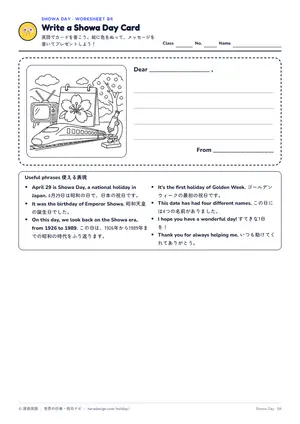
白黒テレビの写真を見せ、「おじいちゃん・おばあちゃんが子どものころ、テレビは白黒だった」と話す。昭和という時代があったことを伝える。
🗣️ Look. This is an old TV. / It's black and white. / Long ago, in the Showa era, TVs were like this.
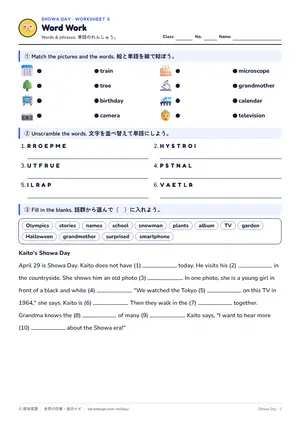
絵カードを1枚ずつ見せ、This is a bullet train. のように英語で名前を言い、くり返させる。慣れたら、カードを一瞬だけ見せて名前を当てるゲームにする。
🗣️ This is a bullet train. / Say it with me. Instant ramen. / What's this? Quick!
好きなものを1つ選ばせ、I like ~. と言う練習をする。前に出てカードを持ち、I like bullet trains. のように1人ずつ発表させる(人数が多い場合はグループ内で)。
🗣️ Which one do you like? / I like bullet trains. How about you? / Come to the front and tell us.
「新幹線は1964年に走り始めた。こういうものが生まれた昭和という時代をふり返るのが、4月29日の昭和の日」と伝える。家の人に昭和のころの話を聞いてみようと声をかける。
🗣️ The bullet train started in 1964. / April 29 is Showa Day. / Ask your family about the Showa era.
Showa Day(April 29)
🚄 bullet train(1964)
🍜 instant ramen
📺 color TV / black and white TV

This is a ___.
I like ___.
祝日と国の記憶:ディベート
🎯 祝日が国の記憶をどう形づくるかを、法律の文言と立法過程をもとに英語で議論する。
- advanced の英文と祝日法の趣旨を読み、キーワード(look back on, recovery, future)を確認する。
- 立法の経緯(2000年・2003年の廃案、2005年の成立)を英語で要約する。
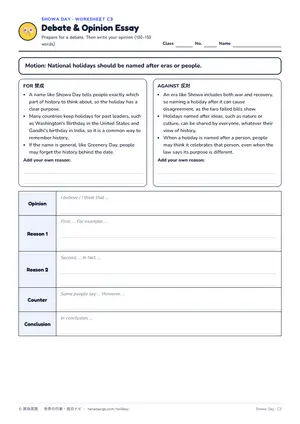
- Should national holidays be named after eras or people? について賛否に分かれて準備する。
- ディベートのあと、他国の例も引きながら自分の意見を200語程度の英文で書く。
詳細版を開く(時間配分・Teacher Talk・板書)
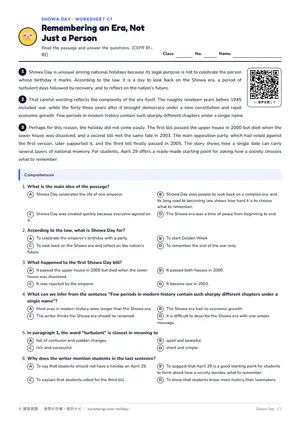
祝日法の趣旨「激動の日々を経て、復興を遂げた昭和の時代を顧み、国の将来に思いをいたす」を示し、発展英文の第1段落と対応させる。キーワード look back on / recovery / future を確認する。
🗣️ Read the purpose of Showa Day in the law. / Find the matching words in paragraph 1. / Look back on, recovery, and future. What do they tell us?
第2・第3段落を読み、立法の経緯(2000年に参議院を通過したが衆議院の解散で廃案、2003年にも同じく廃案、2005年に3度目で成立)を英語3〜4文で要約させる。なぜ時間がかかったのかを、第2段落の時代の複雑さと結びつけさせる。
🗣️ What happened in 2000, 2003, and 2005? / Summarize the story in three or four sentences. / Why did the holiday not come easily?
論題 Should national holidays be named after eras or people? を示し、賛成・反対に分ける。国比べ表の他国の例(オランダの国王の日、アメリカのワシントンの誕生日など)を根拠に使うよう指示して準備させる。
🗣️ Should national holidays be named after eras or people? / Use examples from other countries. / Think about what the other side will say.
立論(各3分)→作戦タイム(2分)→反論(各3分)→最終弁論(各2分)の順でディベートを行う。残りの時間で審判役の学生が判定理由を英語で述べる。
🗣️ The for side, please start. You have three minutes. / Now take two minutes to prepare your rebuttal. / Judges, which side was more convincing? Why?
本文の最後の文 how a society chooses what to remember を読み返させる。他国の例も引きながら、自分の意見を200語程度の英文で書かせる(書き終わらない分は課題)。
🗣️ How does a society choose what to remember? / Write your opinion in about 200 words. / Use at least one example from another country.
Showa Day:not to celebrate a person, but to look back on an era
look back on / turbulent days → recovery / the nation's future

Showa era:about 19 years before 1945(war)+ 43 years after(democracy, growth)

2000 bill → died(lower house dissolved)
2003 bill → died
2005 third bill passed → 2007 Showa Day

Motion:Should national holidays be named after eras or people?