Passover
過越祭(ペサハ)の英語の授業アイデアとワークシート
印刷してすぐ使えるワークシート(PDF・Word・解答つき)と、授業の手順書。
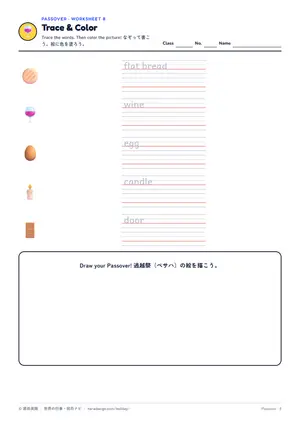
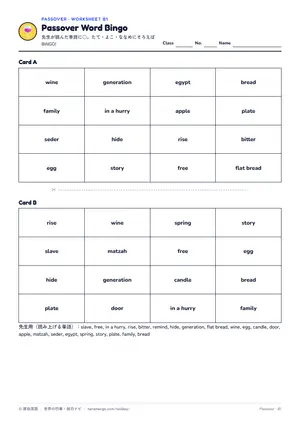
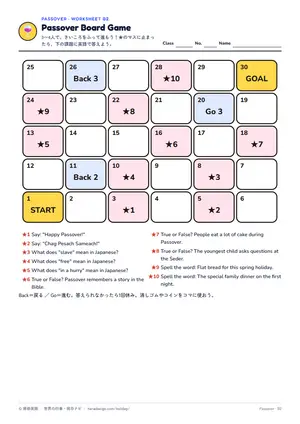
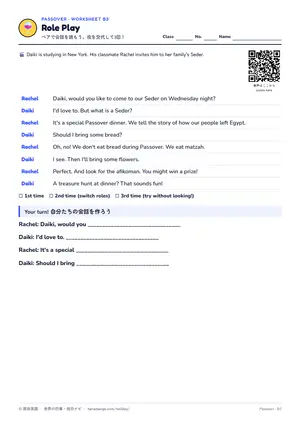
🖨️Worksheetsワークシート(無料・A4)
① 「中身を見る・印刷」で全ページを確認 → ② そのページ上の 🖨️ 印刷する でそのまま印刷できます。A4・無料。
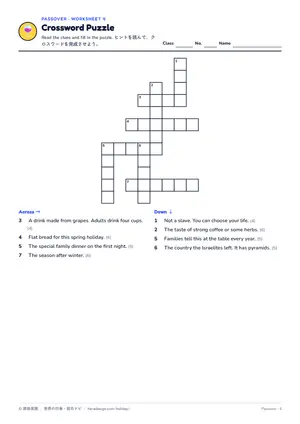
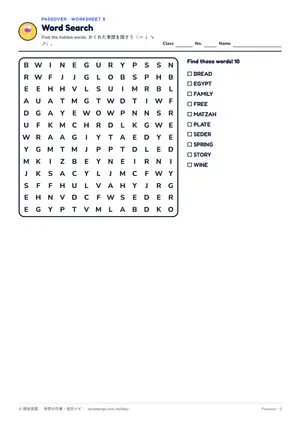
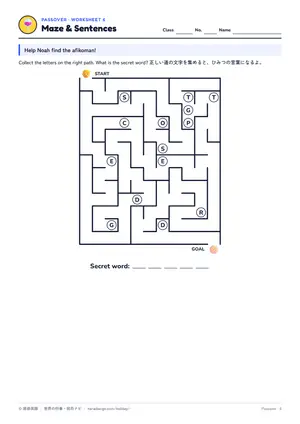
🍎Lesson Ideas過越祭(ペサハ)を使った英語の授業アイデア
「なぜ?」から始める物語:4つの質問づくり
🎯 セーデルの「4つの質問」の形をまねて、Why ~? の疑問文を作り、答える。
- Why is this night different from all other nights? の文を読み、セーデルで子どもが質問する理由を確認する。
- 日本の行事(お正月・節分など)について、Why do we ~ on this day? の質問を4つ作る。
- ペアで質問し合い、Because ~. で答える。
- ほかの文化の行事を学ぶときは、敬意をもって質問することの大切さを話し合う。
詳細版を開く(時間配分・Teacher Talk・板書)
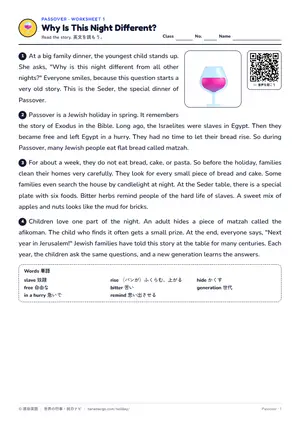
英語ページの音声で本文の第1段落を聞かせ、基本セット p.1 で同じ部分を読ませる。家族の夕食で、いちばん年下の子が Why is this night different from all other nights? とたずねることを確認する。過越祭はユダヤ教の祭りで、大人がこの質問に答える形で出エジプトの物語を語ることを日本語で補う。
🗣️ Listen to the first part of the story. / Who stands up at the dinner? / Yes, the youngest child. What does she ask? / Let's read it together. Why is this night different from all other nights?
子どもが質問し、大人が答えることで物語が次の世代に伝わることを、本文の最後の文で確認する。行事の絵カードを見せ、Why do we throw beans on Setsubun? のような Why do we ~ on this day? の形を板書し、do we のあとに動詞が来ることを示す。クラス全体で1つ質問を作ってみる。
🗣️ Children ask, and adults answer. That's how the story goes on. / Let's ask about Japanese holidays. / Why do we throw beans on Setsubun? / Now you make one. Why do we eat ______ on New Year's Day?
質問カードに、日本の行事についての質問を4つ書かせる(5分)。そのあとペアで質問し合い、Because ~. で答えさせる。答えがわからないときは I'm not sure. Let's find out. と言ってよいことにし、わからなかった質問には印をつけさせる。
🗣️ Write four questions about Japanese holidays. / Now ask your partner. Answer with "Because ..." / If you don't know, say "I'm not sure. Let's find out." / Change roles.
ほかの文化の行事についてたずねるときの言い方を話し合う。会話文で、ダイキが But what is a Seder? と率直に聞き、Should I bring some bread? と相手の習慣を確かめていることを紹介する。からかう聞き方ではなく、知りたい気持ちを伝える聞き方(Can you tell me about ~? / I'm interested in ~.)を板書し、全員で読む。
🗣️ Passover is an important holiday for Jewish people. / When you ask about other cultures, ask with respect. / You can say, "Can you tell me about the Seder?" / Good questions help us learn.
🍷 Passover(過越祭・ペサハ)
Why is this night different from all other nights?
→ いちばん年下の子が質問 → 大人が物語で答える

Why do we ______ on ______?
例:Why do we throw beans on Setsubun?
  Because ______.
  I'm not sure. Let's find out.

ていねいにたずねる
Can you tell me about ______?
I'm interested in ______.
セーデル皿の意味を英語で説明しよう
🎯 食べ物の象徴的な意味を英語で説明し、日本の行事食とくらべる。
- セーデル皿の6つの品と意味(苦い野菜=奴隷の苦しさ など)を英語で読む。
- This food reminds people of ~. の形で、1人1品ずつ説明する。
- おせち料理など、意味のある日本の行事食を同じ形で説明する。
- Seder plate と日本の行事食の共通点を3つ書いて発表する。
詳細版を開く(時間配分・Teacher Talk・板書)
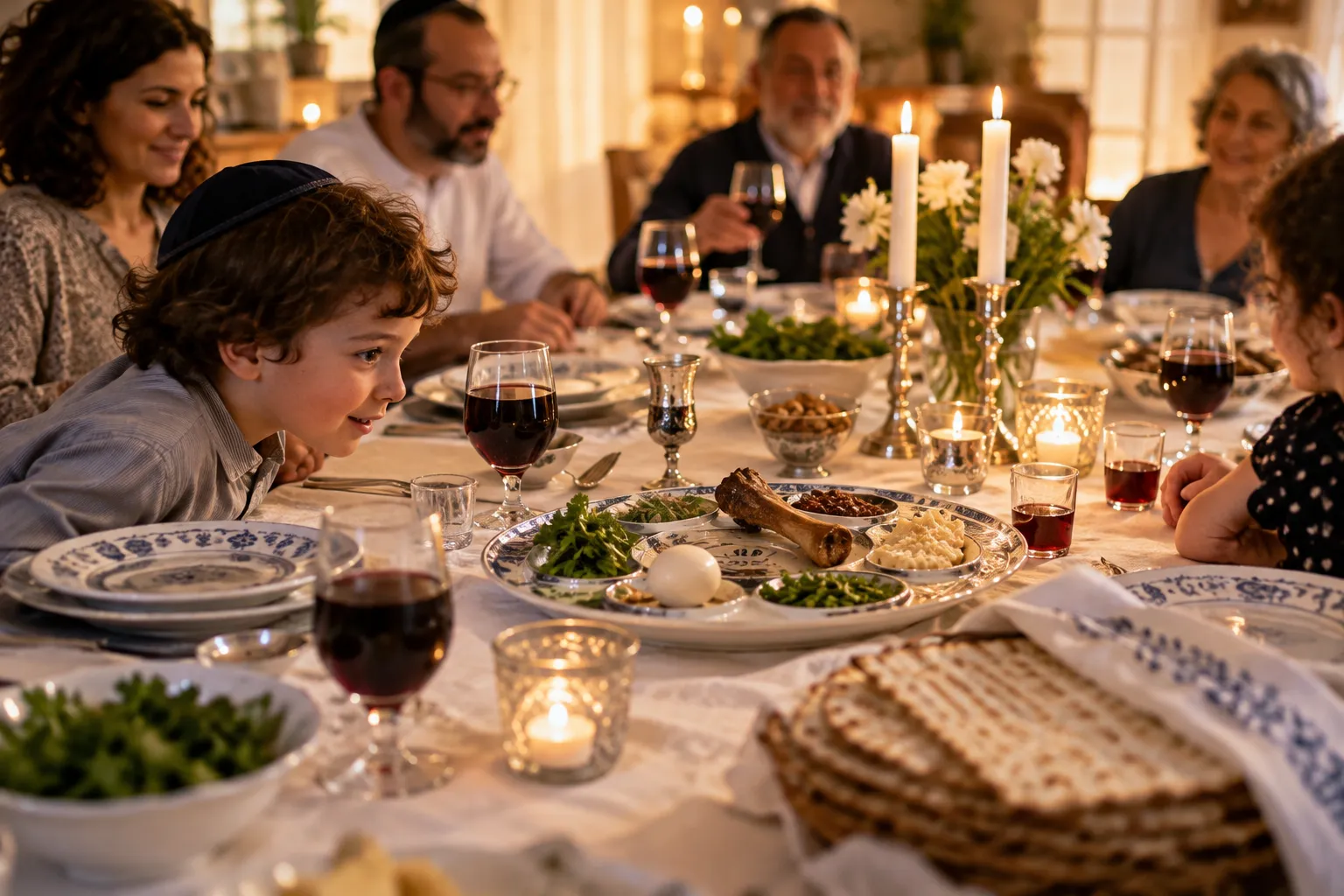
セーデル皿の写真を見せ、What can you see on this plate? と問う。過越祭が、聖書の『出エジプト記』にある奴隷の身分からの解放を記念するユダヤ教の祭りであり、最初の夜に家族が「セーデル」という食事を囲むことを確認する。イースターと時期が近く名前の語源も同じだが、別の祭りであることもひとこと添える。
🗣️ What can you see on this plate? / This is a Seder plate. There are six foods on it. / Passover remembers the story of Exodus in the Bible. / Each food has a meaning. Let's find out.
本文の第3段落を読み、Bitter herbs remind people of the hard life of slaves. と A sweet mix of apples and nuts looks like the mud for bricks. の2文に線を引かせる。対応表で、焼いた骨と焼いた卵は昔の神殿でささげられたいけにえを、マッツァーは急いでエジプトを出た人々を、4杯のぶどう酒は解放を表す聖書の4つの言葉を思い出させることを確認する。塩水などにつけて食べる野菜(カルパス)は、意味を言わずに食べ方だけを紹介する。
🗣️ Read paragraph three. Find two foods and their meanings. / Bitter herbs remind people of the hard life of slaves. / The sweet mix looks like the mud for bricks. / What does matzah remind people of?
4〜6人のグループで1人1品を担当させ、This food reminds people of ~. と、もう1文(It is ~. / People eat it because ~.)で説明させる。グループ内で順に発表させ、聞き手は Which food is it? と最後に1つ質問する。机間指導で、remind A of B の of の抜けを直す。
🗣️ Choose one food. Explain it in two sentences. / This food reminds people of ... / Don't forget "of." Remind people of something. / Listeners, ask one question.
おせち料理など日本の行事食の写真を見せ、一覧から1品選ばせて同じ形で説明させる(This food reminds people of ~. / We eat it on New Year's Day because ~.)。意味は一覧で確かめさせ、思い込みで書かないように声をかける。ペアで読み合わせる。
🗣️ Now let's try Japanese holiday food. / Choose one food from osechi. / Check its meaning on the list first. / We eat it on New Year's Day because ...
セーデルの食卓と日本の行事食の共通点を、グループで英語で3つ書かせる(例:In both meals, each food has a meaning. / Families eat together on a special day.)。2〜3グループに発表させ、食べ物を通して物語や願いを伝えるという点をまとめる。
🗣️ Write three things that are the same. / In both meals, each food has a meaning. / Families eat together and remember a story. / Which group will share first?
🍽️ Seder plate(six foods)
bitter herbs → the hard life of slaves
sweet mix of apples and nuts → the mud for bricks
roasted bone / roasted egg → offerings at the Temple long ago

On the table, too
matzah → leaving Egypt in a hurry
four cups of wine → four words of freedom in the Bible

This food reminds people of ______.
(remind A of B)

Japanese holiday food:______ reminds people of ______.

The same points:
1. In both meals, each food has a meaning.
2. ______
3. ______