Passover

過越祭(ペサハ)を英語で:読む・聞く・話す・遊ぶ

やさしい英語(CEFR A2)の読み物に音声つき。会話・単語カード・クイズ5問・ゲームで、過越祭(ペサハ)の英語をまるごと。

🔊Read in English過越祭(ペサハ)を英語で読もう(CEFR A2・音声つき)

過越祭(ペサハ)を、やさしい英語で紹介する読み物です。▶で英文をタイトルから通して聞けます(アメリカ英語)。「和訳」ボタンで日本語訳の表示・非表示を切りかえられます。下線の語は下の単語カードにあります。

Why Is This Night Different?

CEFR A2
0:00
234 words

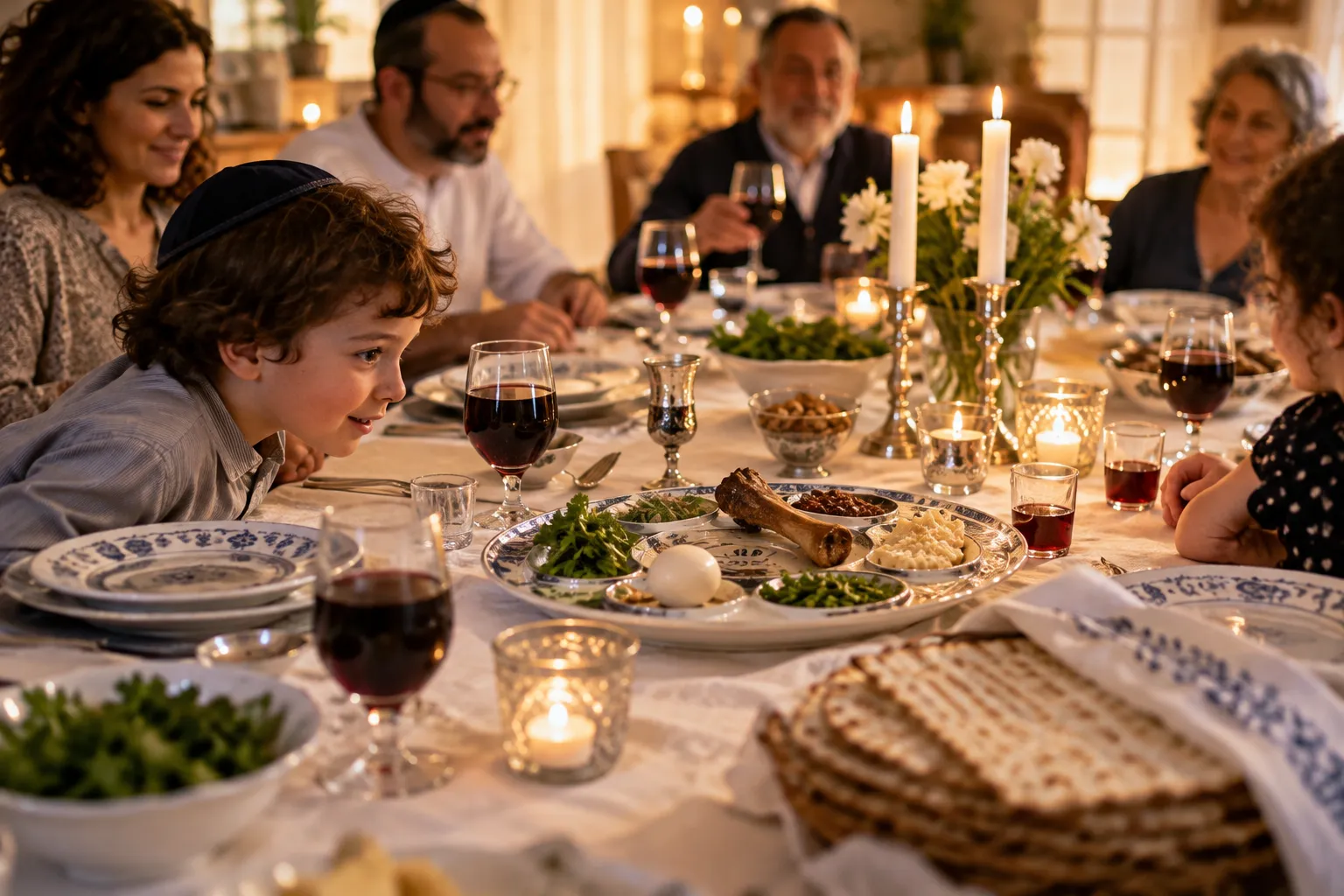
At a big family dinner, the youngest child stands up. She asks, "Why is this night different from all other nights?" Everyone smiles, because this question starts a very old story. This is the Seder, the special dinner of Passover.

家族の大きな夕食の席で、いちばん年下の子が立ち上がります。そして「なぜ今夜は、ほかの夜とちがうの?」とたずねます。みんながほほえみます。この質問が、とても古い物語の始まりだからです。これがセーデル、過越祭の特別な夕食です。

Passover is a Jewish holiday in spring. It remembers the story of Exodus in the Bible. Long ago, the Israelites were slaves in Egypt. Then they became free and left Egypt in a hurry. They had no time to let their bread rise. So during Passover, many Jewish people eat flat bread called matzah.

過越祭は春のユダヤ教の祭りです。聖書の『出エジプト記』の物語を記念します。昔、イスラエルの民はエジプトで奴隷でした。やがて自由になり、急いでエジプトを出ました。パンをふくらませる時間もありませんでした。そのため過越祭の間、多くのユダヤ教徒はマッツァーという平たいパンを食べます。

For about a week, they do not eat bread, cake, or pasta. So before the holiday, families clean their homes very carefully. They look for every small piece of bread and cake. Some families even search the house by candlelight at night. At the Seder table, there is a special plate with six foods. Bitter herbs remind people of the hard life of slaves. A sweet mix of apples and nuts looks like the mud for bricks.

約1週間、パンもケーキもパスタも食べません。そのため祭りの前、家族はとてもていねいに家を掃除します。パンやケーキの小さなかけらを、1つ残らず探します。夜にろうそくの明かりで家じゅうを探す家族もいます。セーデルの食卓には、6つの食べ物をのせた特別な皿があります。苦い野菜は、奴隷のつらい暮らしを思い出させます。リンゴとナッツの甘いペーストは、れんが作りの泥に似ています。

Children love one part of the night. An adult hides a piece of matzah called the afikoman. The child who finds it often gets a small prize. At the end, everyone says, "Next year in Jerusalem!" Jewish families have told this story at the table for many centuries. Each year, the children ask the same questions, and a new generation learns the answers.

子どもたちには、大好きな場面があります。大人がアフィコマンというマッツァーのかけらをかくします。見つけた子は、たいてい小さなごほうびをもらえます。最後に、みんなで「来年はエルサレムで!」と言います。ユダヤの家族は、何百年にもわたって食卓でこの物語を語り継いできました。毎年子どもたちが同じ質問をし、新しい世代が答えを学んでいくのです。

💬Dialogue英語の会話で過越祭(ペサハ)

🎬 ニューヨークに留学中のダイキ。同級生のレイチェルが、家族のセーデルに招いてくれました。

0:00
Rachel

Daiki, would you like to come to our Seder on Wednesday night?

ダイキ、水曜日の夜、うちのセーデルに来ない?

Daiki

I'd love to. But what is a Seder?

ぜひ行きたい。でもセーデルって何?

Rachel

It's a special Passover dinner. We tell the story of how our people left Egypt.

過越祭の特別な夕食だよ。私たちの祖先がエジプトを出た物語を語るの。

Daiki

Should I bring some bread?

パンを持っていったほうがいい?

Rachel

Oh, no! We don't eat bread during Passover. We eat matzah.

あっ、だめ!過越祭の間はパンを食べないの。マッツァーを食べるんだ。

Daiki

I see. Then I'll bring some flowers.

そうなんだ。じゃあ花を持っていくね。

Rachel

Perfect. And look for the afikoman. You might win a prize!

ばっちり。それとアフィコマンを探してね。ごほうびがもらえるかも!

Daiki

A treasure hunt at dinner? That sounds fun!

夕食で宝探し?楽しそう!

🃏Word Cards過越祭(ペサハ)の英単語カード(8語)

カードをタップすると裏返って、意味と例文が出ます。

slave名詞
奴隷The story is about slaves who became free.これは自由になった奴隷たちの物語です。💡 slavery は「奴隷制度」。
free形容詞
自由なBirds are free in the sky.鳥は空で自由です。💡 「無料の」の意味もある。名詞は freedom(自由)。
in a hurry熟語
急いでHe left home in a hurry.彼は急いで家を出ました。💡 hurry は「急ぐ」。Hurry up! は「急いで!」。
rise動詞
(パンが)ふくらむ、上がるThe bread did not rise.パンがふくらみませんでした。💡 太陽が昇るときにも使う。The sun rises in the east.
bitter形容詞
苦いThis coffee is bitter.このコーヒーは苦いです。💡 反対は sweet(甘い)。「つらい」という意味でも使う。
remind動詞
思い出させるThis song reminds me of summer.この歌を聞くと夏を思い出します。💡 remind A of B で「AにBを思い出させる」。
hide動詞
かくすMy dad hid the present under the bed.父はプレゼントをベッドの下にかくしました。💡 過去形は hid。hide-and-seek は「かくれんぼ」。
generation名詞
世代Stories pass from one generation to the next.物語はひとつの世代から次の世代へ伝わります。💡 本文では the children ... learns the answers と、子どもが受け継ぐ様子で説明している。

✅Quiz過越祭(ペサハ)の英語クイズ(5問)

上の英文を読んでから答えてみよう。答えを選ぶとすぐに解説が出ます。全問正解でスタンプが金色に!

Q1. What is the main idea of the reading?

この文章の主旨は何ですか。

第2段落で出エジプトの物語、第4段落で家族が何百年も語り継いできたことが書かれています。Aは第2〜3段落の内容(パンを食べない)と反対です。

Q2. Why do people eat flat bread during Passover?

過越祭の間、平たいパンを食べるのはなぜですか。

第2段落に They had no time to let their bread rise. So ... eat flat bread called matzah とあります。

Q3. What do bitter herbs remind people of?

苦い野菜は何を思い出させますか。

第3段落に Bitter herbs remind people of the hard life of slaves とあります。れんがの泥に似ているのは、リンゴとナッツの甘いペーストです。

Q4. In paragraph 4, what does "hides" mean?

第4段落の hides はどんな意味ですか。

次の文に The child who finds it(それを見つけた子)とあるので、見つける前に「かくす」ことがわかります。

Q5. In the dialogue, why does Daiki decide to bring flowers?

会話文で、ダイキが花を持っていくことにしたのはなぜですか。

パンを持っていこうとしたダイキに、レイチェルが We don't eat bread during Passover と言ったので、代わりに花にしました。

🎮Games過越祭(ペサハ)の英語ゲーム

タブを切りかえて遊べます。授業ではプロジェクターに映して、クラス対抗戦にしても盛り上がります。

👋Useful Phrases過越祭(ペサハ)に使える英語フレーズ

Happy Passover!過越祭おめでとう!英語でいちばん一般的なあいさつ。
Chag Pesach Sameach!楽しいペサハを!ヘブライ語のあいさつ(ハグ・ペサハ・サメアハ)。Chag sameach だけでも通じます。
Next year in Jerusalem!来年はエルサレムで!セーデルの最後に唱える言葉。

🗣️ 話し合ってみよう(Discussion)

  1. Do you have a family story that you tell every year? What is it?

    毎年家族で語る話はありますか。どんな話ですか。
  2. At the Seder, children ask questions and adults answer. Why is this a good way to learn?

    セーデルでは子どもが質問し、大人が答えます。これがよい学び方なのはなぜでしょう。
  3. Why do you think a story about freedom has been told for so long? What does freedom mean to you?

    自由の物語がこれほど長く語り継がれてきたのはなぜだと思いますか。あなたにとって自由とは何ですか。
🍷
Passover
スタンプ帳に過越祭(ペサハ)のスタンプを押しました!
クイズで全問正解すると金のスタンプに。世界一周めざして集めよう。 スタンプ帳を見る →

授業アイデアとワークシートを見る →