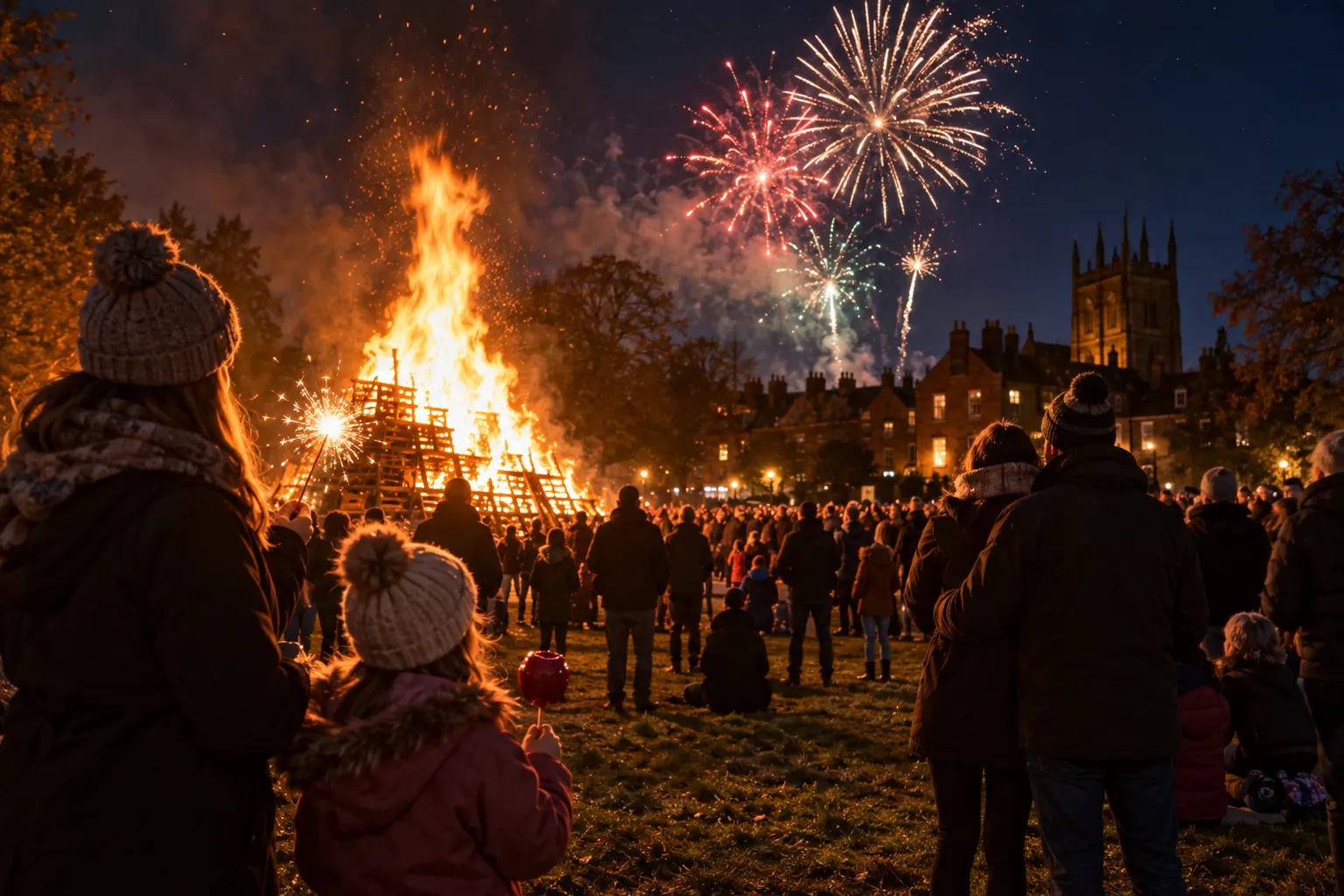
Guy Fawkes Night
ガイ・フォークス・ナイト(ボンファイア・ナイト)の英語の授業アイデアとワークシート
印刷してすぐ使えるワークシート(PDF・Word・解答つき)と、授業の手順書。
🖨️Worksheetsワークシート(無料・A4)
① 「中身を見る・印刷」で全ページを確認 → ② そのページ上の 🖨️ 印刷する でそのまま印刷できます。A4・無料。
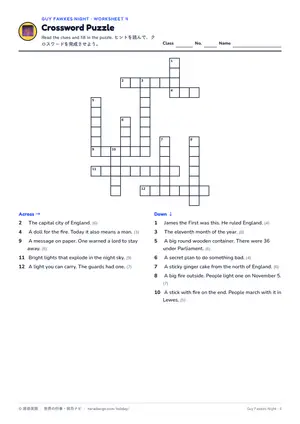
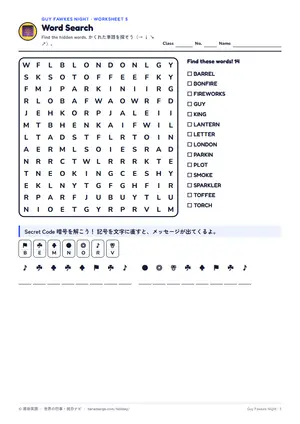
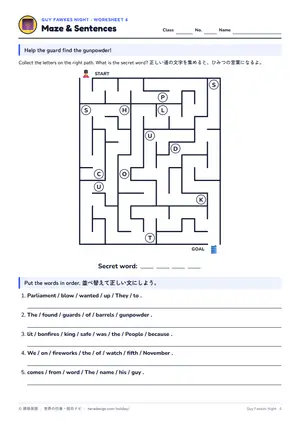
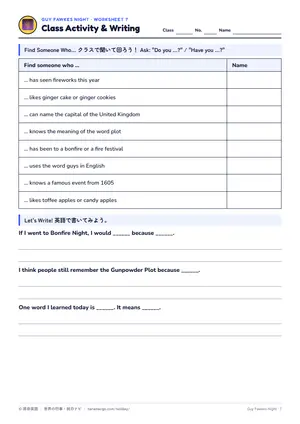
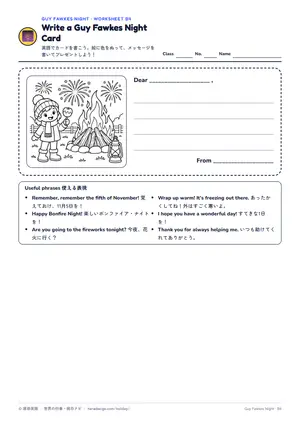
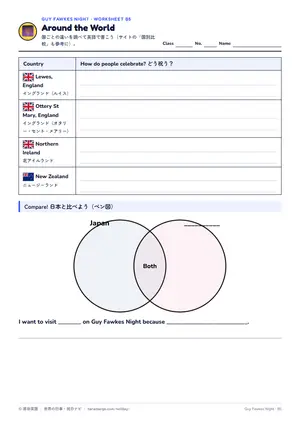
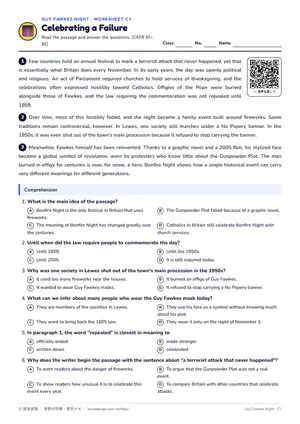
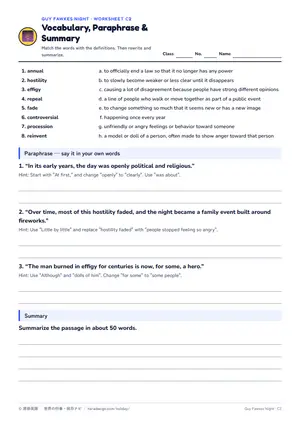
🍎Lesson Ideasガイ・フォークス・ナイト(ボンファイア・ナイト)を使った英語の授業アイデア
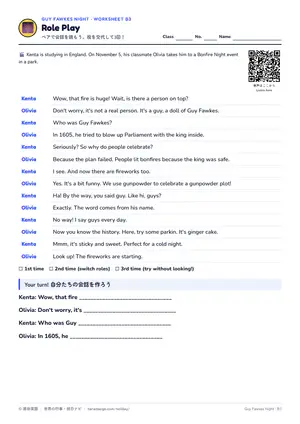
地下室の取り調べ:1605年ロールプレイ
🎯 過去形の疑問文と答え(What did you do? / Why were you there?)を使って、事件の場面を英語で演じられる。
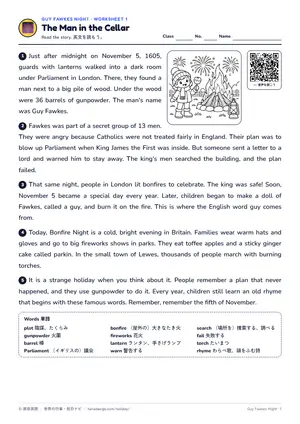
- 本文の第1・2段落を読み、1605年11月5日の場面を確認する。
- 見張り役とフォークス役に分かれ、What is your name? / Why are you here? / What is under the wood? などの質問を準備する。
- フォークス役は最初 John Johnson と名のり、3つ目の質問で本当のことを話すルールで演じる。
- いくつかのペアが発表し、最後に本当の歴史(偽名、36樽、手紙)を確認する。
詳細版を開く(時間配分・Teacher Talk・板書)
部屋を少し暗くするか、黒板にランタンの絵をはって雰囲気を作る。英語ページ本文の第1・2段落を音声で聞かせ、いつ・どこで・だれが・何を見つけたかを英語で確認する。36 barrels of gunpowder と13人の仲間の数字を板書する。
🗣️ It is just after midnight on November 5, 1605. / Guards with lanterns walk into a dark room under Parliament. What do they find? / Yes, a man next to a big pile of wood. How many barrels were under the wood? / Right, 36 barrels of gunpowder.
ペアで見張り役とフォークス役を決めさせ、質問カードを配る。見張り役は質問を3つ選んで順番を決め、フォークス役は答えを準備する。ルールとして「フォークス役は最初 John Johnson と名のり、3つ目の質問で本当のことを話す」と伝える。
🗣️ Make pairs. One of you is the guard. The other is Guy Fawkes. / Guards, choose three questions from the cards. / Fawkes, first say your name is John Johnson. That is a lie! / At the third question, tell the truth.
立って向き合わせ、1回演じたら役を交代させる。見張り役には声を強く、フォークス役には最初はとぼけた態度で答えるよう演技の指示を出す。机間指導で疑問詞と be 動詞・did の使い分けを確かめ、発表してくれそうなペアを2組見つけておく。
🗣️ Stand up and face your partner. Guards, use a strong voice. / Fawkes, at first you act like you know nothing. Just say, I don't know. / Now change roles and do it again. / Remember, ask with did for the past. What did you want to do?
2組に前で演じてもらう。そのあと本当の歴史を確かめる:フォークスは実際に John Johnson と名のったこと、樽は36あったこと、ある貴族に届いた1通の手紙で計画が見つかったこと。最後に「リーダーはフォークスではなくロバート・ケイツビーだった」と伝えて終わる。
🗣️ Let's watch two pairs. Give them a big hand. / Here is the true story. Fawkes really said, My name is John Johnson. / A letter warned a lord to stay away. That is how the plan failed. / One more thing. Fawkes was not the leader. The leader was Robert Catesby.
November 5, 1605  London, under Parliament
🏮 guards  →  a man + wood  →  36 barrels of gunpowder

Guard: What is your name?
Fawkes: My name is John Johnson.(うその名前)
Guard: Why are you here?
Fawkes: I don't know.
Guard: What did you want to do?
Fawkes: I wanted to blow up Parliament.

本当の歴史:偽名 John Johnson/36樽/1通の手紙/リーダーは Robert Catesby
人の名前から生まれた英単語探し
🎯 guy のように人名から生まれた語(eponym)を調べ、語源を英語で説明できる。
- guy の語源(人名→人形→変な服の人→男→みんな)を板書で示す。
- sandwich, cardigan, boycott などの語を班に割り当て、辞書や信頼できるサイトで由来を調べる。
- This word comes from ... He/She was ... の型で3文の説明を作る。
- 班ごとに発表し、どの語の由来がいちばん意外だったか投票する。
詳細版を開く(時間配分・Teacher Talk・板書)
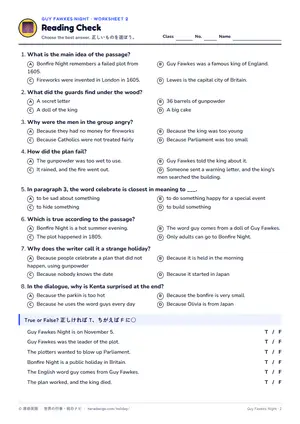
英語ページの会話の後半(you said guy. Like hi, guys? から No way! I say guys every day. まで)を音声で聞かせる。guy の意味の変化カードをばらばらに見せ、正しい順番を予想させてから、人名→人形→変な服の人→男→みんな の順に並べて板書する。
🗣️ Listen to Kenta and Olivia. What word surprises Kenta? / Guy was first a man's name. Then it became a doll for the fire. / Put these cards in order. How did the meaning change? / Today, hi guys can mean hi everyone, men and women.
このように人の名前から生まれた語を eponym ということを紹介する。班ごとに調べる語のカードを1枚ずつ配り、①どんな人の名前か ②その人と語はどうつながるか ③今の意味 の3点を辞書で調べさせる。ウェブで調べる場合は辞書会社や百科事典のページを使うよう指示する。
🗣️ A word that comes from a person's name is called an eponym. / Each group gets one word. Find out three things. / Who was the person? How is the person connected to the word? What does it mean now? / Use a dictionary or an encyclopedia. Not just any website.
This word comes from ... / He was ... / Today, it means ... の3文の型を板書し、班で発表原稿を作らせる。だれがどの文を言うかを決めさせる。
🗣️ Now write three sentences with this pattern. / This word comes from a man called ... He was ... / Today, it means ... Each member says one sentence.
班ごとに1分で発表させる。聞く側はメモ用紙に語と人物を書き、いちばん意外だった語に印をつける。全班の発表後、挙手で「いちばん意外だった由来」を投票する。
🗣️ Group one, you have one minute. Please start. / Listeners, write the word and the person. / Which story was the most surprising? Raise your hand. / The winner is ... Congratulations!
guy は悪い人物の名前から、だれにでも使う言葉になった点を確認する。「意味がよくなった語」と「悪くなった語」があることにふれ、今日の語のうちどちらに当たるかを1つ答えさせて終わる。
🗣️ Guy Fawkes was a bad man in history. But now guy is a friendly word. / Did the meaning get better or worse? Think about your word. / Great job, guys!
guy の意味の変化
Guy(男の名前)→ a guy(たき火で燃やす人形)→ 人形みたいに変な服の人 → a man(男、やつ)→ you guys(みんな)

eponym = 人の名前から生まれた語
sandwich / cardigan / boycott / saxophone / teddy bear / diesel

This word comes from a man called __.
He was __.
Today, it means __.
安全な花火の夜をつくろう:ルールづくり
🎯 Don't ... / Please ... の命令文で、花火やたき火の安全ルールを英語で言える。
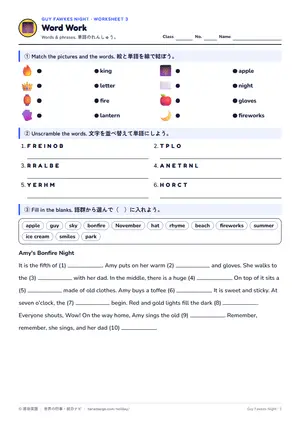
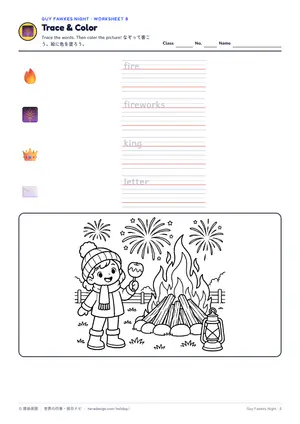
- ボンファイア・ナイトの写真を見せ、fire, fireworks, gloves, bucket などの語を確認する。
- Don't run near the fire. / Please stand behind the line. のような例を一緒に読む。
- 班で安全ルールを3つ考え、絵入りのポスターにする。
- ポスターを発表し、日本の花火大会や夏の手持ち花火でも使えるか話し合う。
詳細版を開く(時間配分・Teacher Talk・板書)
ボンファイア・ナイトの写真を見せ、「イギリスでは11月5日の夜、大きなたき火と花火を楽しむ」と伝える。絵カードを見せながら fire / fireworks / gloves / bucket を発音させる。
🗣️ Look at this picture. This is Bonfire Night in Britain. / What can you see? Yes, a big fire! / Fire. Fireworks. Gloves. Bucket. Repeat after me.
Don't run near the fire. / Please stand behind the line. を、ジェスチャーをつけて読む。Don't のときは手で×、Please のときは手のひらを上に向ける動作を決め、先生が言った文に合う動作をさせるゲームを2〜3回行う。
🗣️ Don't run near the fire. Make an X with your arms. / Please stand behind the line. Show your hand like this. / Listen and move. Don't touch the fireworks! / Please wear gloves!
班で安全ルールを3つ考え、画用紙に絵と英語の文を書かせる。黒板に Don't run / Don't touch / Please wear / Please keep water などのことばカードを並べ、選んで組み合わせてよいと伝える。
🗣️ Make three safety rules with your group. / Draw a picture for each rule. / You can use the word cards on the board.
2〜3班にポスターを見せて読んでもらう。最後に「日本の花火大会や、夏の手持ち花火でも使えるルールはどれ?」と聞き、手をあげて答えさせる。
🗣️ Show us your poster and read your rules. / Which rule can we use in Japan, too? / Great! Let's have a safe summer with fireworks.
Bonfire Night 🔥🎆  November 5(イギリス)

❌ Don't run near the fire.
❌ Don't touch the fireworks.
🙂 Please stand behind the line.
🙂 Please wear gloves.
🙂 Please keep a bucket of water.

日本の花火でも使えるかな?
記念日は誰のもの?:記憶と政治を考える
🎯 歴史上の出来事を祝う行事の意味が、時代とともにどう変わるかを英語で分析し議論できる。
- advanced の英文を読み、反カトリックの起源、ルイスの旗、アノニマスのお面という3つの時代の意味を整理する。
- 日本の記念日や祭りから、意味が変わった例を各自1つ探す。
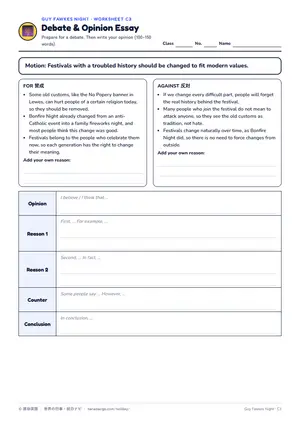
- Should festivals with a troubled history be changed or kept as they are? について班で賛否の論点を出す。
- 班の結論を2分で発表し、最後に200語の意見文を書く。
詳細版を開く(時間配分・Teacher Talk・板書)
ガイ・フォークスのお面の写真を見せ、「この顔はだれか」と聞く。抗議のデモで使われる顔だと答えが出たら、「この男は何世紀ものあいだ、人形として燃やされてきた」と伝え、なぜそのようなことが起きるかを問いかけて本文へつなぐ。
🗣️ Have you seen this mask before? Where? / This is the face of Guy Fawkes. For centuries, people burned dolls of him. / Now some people see him as a hero. How did that happen? / Let's read and find out.
本文を個人で黙読させ、整理表の3行(初期・その後・現代)を埋めさせる。初期は議会の法律による感謝の礼拝と反カトリック、1859年の廃止、次に家族の花火の夜とルイスの No Popery の旗、現代はグラフィックノベルと2005年の映画で抵抗の象徴になったお面。ペアで答え合わせをさせる。
🗣️ Read the passage silently. Then fill in the table. / There are three periods: the early years, later years, and today. / What did the law require? When was it repealed? / Check with your partner. Use the exact words from the text.
日本の記念日や祭りから、意味が変わった例を各自1つ探させる。見つからない学生には、紀元節から建国記念の日、新嘗祭(にいなめさい)と勤労感謝の日、天皇誕生日からみどりの日・昭和の日への変化などを候補として示す。見つけた例を班で共有させる。
🗣️ Now find one example from Japan. / Choose a holiday or a festival whose meaning has changed. / What did it mean before? What does it mean now? / Share your example with your group.
問い Should festivals with a troubled history be changed or kept as they are? を示し、班で賛成・反対の両方の論点を2つずつ出させる。本文のルイスの例や自分たちの日本の例を必ず1つ根拠に入れるよう指示し、班としての結論を決めさせる。
🗣️ Here is the question. Should festivals with a troubled history be changed or kept as they are? / Give two points for each side. / Use one example from the passage, like Lewes, and one from Japan. / Then decide your group's answer.
各班が結論と理由を2分以内で発表する。先生は根拠が本文のどこにあるかを確かめながら進める。最後に、次回までに200語の意見文を書く課題を出す。
🗣️ Each group has two minutes. Tell us your answer and your reasons. / Where in the passage is that? Show us the line. / For homework, write a 200-word opinion essay on this question.
Celebrating a Failure

時代 / 意味 / 具体例
① early years / political + religious / act of Parliament → services of thanksgiving, effigies of the Pope(law repealed in 1859)
② later / a family event / fireworks; Lewes: No Popery banner(shut out in the 1950s)
③ today / a symbol of resistance / graphic novel + 2005 film → the mask

日本の例:紀元節 → 建国記念の日 など

Q. Should festivals with a troubled history be changed or kept as they are?
change ⇔ keep