Day of the Dead

死者の日(ディア・デ・ムエルトス)を英語で:読む・聞く・話す・遊ぶ

やさしい英語(CEFR A2)の読み物に音声つき。会話・単語カード・クイズ8問・ゲームで、死者の日(ディア・デ・ムエルトス)の英語をまるごと。

🔊Read in English死者の日(ディア・デ・ムエルトス)を英語で読もう(CEFR A2・音声つき)

死者の日(ディア・デ・ムエルトス)を、やさしい英語で紹介する読み物です。▶で英文をタイトルから通して聞けます(アメリカ英語)。「和訳」ボタンで日本語訳の表示・非表示を切りかえられます。下線の語は下の単語カードにあります。

A Path of Orange Petals

CEFR A2
0:00
259 words

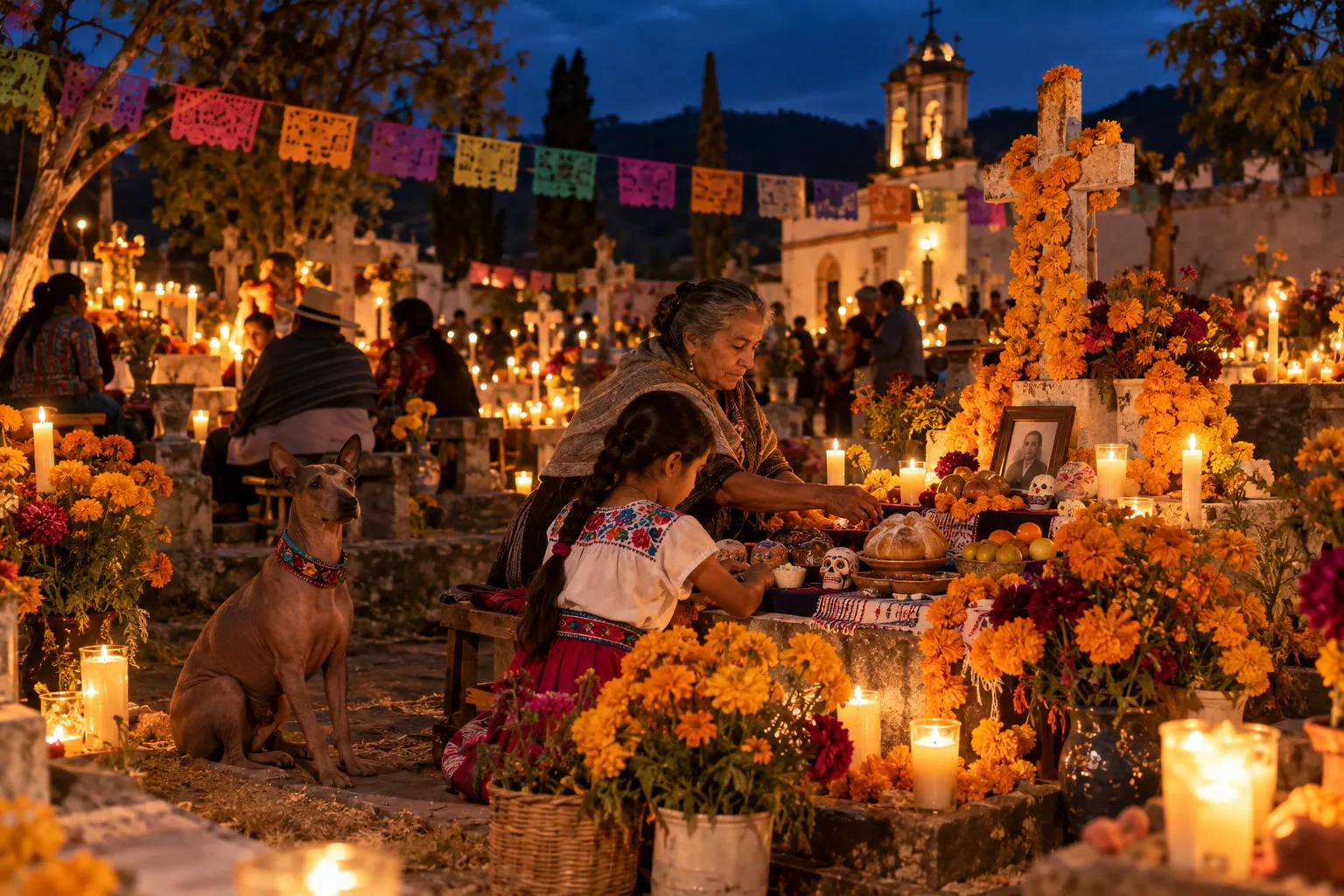
On the night of November 1, a little girl in Mexico throws orange petals on the ground. She is making a path from the cemetery to her house. Her grandfather died last year, and tonight she wants him to find his way home.

11月1日の夜、メキシコの小さな女の子が、地面にオレンジ色の花びらをまいています。墓地から自分の家までの道を作っているのです。おじいちゃんは去年亡くなりました。今夜、おじいちゃんが家への道を見つけられるようにしたいのです。

This is the Day of the Dead, or Día de Muertos in Spanish. It is celebrated on November 1 and 2. Many families believe that the spirits of their loved ones come back to visit for a short time. In many places, children who died are remembered on the first day, and adults on the second day.

これが死者の日、スペイン語で Día de Muertos です。11月1日と2日に祝われます。多くの家族は、愛する人の魂が少しの間、会いに帰ってくると信じています。多くの地域で、1日目には亡くなった子どもたちを、2日目には大人たちをしのびます。

At home, families build an altar called an ofrenda. They put photos, candles, water, and the favorite food of the dead person on it. There is sweet bread with bone shapes on top, and there are colorful skulls made of sugar. Bright marigold flowers are everywhere, because people say their strong smell helps the spirits find the way.

家では、家族がオフレンダと呼ばれる祭壇を作ります。そこに写真、ろうそく、水、そして亡くなった人の好物を置きます。上に骨の形がついた甘いパンや、砂糖でできたカラフルなガイコツもあります。あざやかなマリーゴールドの花がいたるところにあります。その強い香りが魂の道案内になると言われているからです。

Some people think the Day of the Dead is a Mexican Halloween, but it is very different. It is not a night to be scared. It is a family reunion. In some towns, families stay at the cemetery all night. They play music, tell funny stories, and share food next to the graves.

死者の日をメキシコのハロウィンだと思う人もいますが、まったく違います。こわがる夜ではありません。家族の再会なのです。町によっては、家族が一晩じゅう墓地で過ごします。お墓のそばで音楽を演奏し、おもしろい話をし、食べ物を分け合います。

In 2008, UNESCO added this festival to its list of important world traditions. In 2017, the movie Coco showed it to millions of people around the world. But for the little girl, it is simple. As long as she remembers her grandfather, he is not really gone.

2008年、ユネスコはこの祭りを世界の大切な伝統のリストに加えました。2017年には、映画『リメンバー・ミー(Coco)』が、世界中の何百万人もの人にこの祭りを見せました。でも、あの小さな女の子にとっては、話はかんたんです。彼女がおじいちゃんのことを覚えているかぎり、おじいちゃんは本当にいなくなったわけではないのです。

💬Dialogue英語の会話で死者の日(ディア・デ・ムエルトス)

🎬 ハルトは11月1日、メキシコシティに住む友だちのルシアの家をたずねました。ルシアはおばあさんのための祭壇を作っています。

0:00
Haruto

Wow, Lucía! This table is full of flowers and candles. What is it?

わあ、ルシア!このテーブル、花とろうそくでいっぱいだね。これ何?

Lucía

It's an ofrenda. It's for my grandma. She died two years ago.

オフレンダよ。おばあちゃんのためのもの。2年前に亡くなったの。

Haruto

I'm sorry. Is today a sad day for you?

そうだったんだ。今日はきみにとって悲しい日なの?

Lucía

Not really. We believe she comes home tonight. So it's a happy day.

そうでもないの。今夜おばあちゃんが帰ってくるって信じてるから。だからうれしい日なのよ。

Haruto

Why is there a glass of water here?

どうしてここにコップの水があるの?

Lucía

My mom says the trip from the land of the dead is long. So she will be thirsty.

お母さんが言うには、死者の国からの旅は長いの。だからのどがかわくだろうって。

Haruto

And this bread with the bone shapes on it?

それから、この骨の形がついたパンは?

Lucía

That's pan de muerto. And these are her favorite tamales.

パン・デ・ムエルトよ。それと、これはおばあちゃんの大好きだったタマレス。

Haruto

In Japan, we have something similar. It's called Obon.

日本にも似たものがあるよ。お盆っていうんだ。

Lucía

Really? Do you make an altar too?

ほんと?日本でも祭壇を作るの?

Haruto

Yes. And we make little horses out of cucumbers for the spirits.

うん。それに、魂のためにキュウリで小さな馬を作るんだ。

Lucía

Cucumber horses? That's so cute! We use orange flowers to show the way.

キュウリの馬?かわいい!私たちはオレンジの花で道を示すのよ。

Haruto

Can I help you put the petals outside?

花びらを外にまくの、手伝ってもいい?

Lucía

Of course. Grandma would love to meet you.

もちろん。おばあちゃんもきっとあなたに会えて喜ぶわ。

🃏Word Cards死者の日(ディア・デ・ムエルトス)の英単語カード(12語)

カードをタップすると裏返って、意味と例文が出ます。

spirit名詞
魂、霊They believe the spirits come home once a year.彼らは魂が年に一度帰ってくると信じています。💡 ghost は「こわい幽霊」の感じが強い。死者の日では spirit を使うのが自然。
loved one名詞
愛する人、大切な家族She put a photo of her loved one on the altar.彼女は大切な家族の写真を祭壇に置きました。💡 家族や恋人など。亡くなった人について話すときによく使うていねいな言い方。
altar名詞
祭壇We decorated the altar with marigolds.私たちはマリーゴールドで祭壇を飾りました。💡 スペイン語では ofrenda(ささげもの)とも。
cemetery名詞
墓地The cemetery is full of candles tonight.今夜、墓地はろうそくでいっぱいです。💡 grave は「1つのお墓」、cemetery は「墓地全体」。
grave名詞
墓They cleaned the grave and put flowers on it.彼らはお墓をきれいにして花を供えました。💡 形容詞 grave は「重大な」。同じつづりで意味が違う。
petal名詞
花びらShe made a path of orange petals.彼女はオレンジの花びらで道を作りました。💡 a path of petals(花びらの道)は死者の日を象徴する表現。
marigold名詞
マリーゴールドMarigolds have a strong smell.マリーゴールドは強い香りがします。💡 メキシコでは cempasúchil(センパスチル)。ナワトル語で「20の花」。
skull名詞
頭蓋骨、ガイコツ(の頭)He wrote his name on a sugar skull.彼は砂糖のガイコツに名前を書きました。💡 スペイン語では calavera。skeleton は「全身の骨格」。
reunion名詞
再会、再会の集まりThe Day of the Dead is like a family reunion.死者の日は家族の再会のようなものです。💡 re(ふたたび)+ union(一つになること)。class reunion は「同窓会」。
remember動詞
覚えている、しのぶWe remember my grandfather every November.私たちは毎年11月に祖父をしのびます。💡 映画の英語タイトルにも使われた、この行事のキーワード。
favorite形容詞
大好きな、いちばん好きなThese were her favorite cookies.これは彼女の大好きなクッキーでした。💡 イギリスつづりは favourite。祭壇には故人の favorite food を置く。
tradition名詞
伝統、しきたりThis tradition is very old.このしきたりはとても古いものです。💡 形容詞は traditional。traditional food(伝統料理)。

✅Quiz死者の日(ディア・デ・ムエルトス)の英語クイズ(8問)

上の英文を読んでから答えてみよう。答えを選ぶとすぐに解説が出ます。全問正解でスタンプが金色に!

Q1. What is the main idea of the passage?

本文の主旨は何ですか。

本文全体が、亡くなった家族を迎えて思い出す行事として死者の日を説明しています。第4段落でハロウィンとは違い、こわがる夜ではないと書かれています。映画は広めただけで、作ったわけではありません。

Q2. Why does the girl throw orange petals on the ground?

女の子はなぜ地面にオレンジの花びらをまいているのですか。

第1段落に She is making a path from the cemetery to her house. とあり、おじいちゃんが家への道を見つけられるようにしたいと書かれています。

Q3. In many places, who is remembered on November 2?

多くの地域で、11月2日にしのばれるのは誰ですか。

第2段落に children who died are remembered on the first day, and adults on the second day とあります。2日目(11月2日)は大人です。

Q4. According to the passage, why are marigolds used?

本文によると、なぜマリーゴールドが使われるのですか。

第3段落に because people say their strong smell helps the spirits find the way とあります。値段や食べることの話は出てきません。

Q5. In paragraph 4, the word reunion means ___.

第4段落の reunion の意味はどれですか。

reunion は re(ふたたび)+ union(一つになる)で「再会」。亡くなった家族と年に一度また会う、という死者の日の考え方にぴったりの言葉です。

Q6. Which is true according to the passage?

本文の内容と合っているものはどれですか。

第4段落に In some towns, families stay at the cemetery all night. とあります。死者の日は2日間、ユネスコは2008年(2017年は映画)、祭壇には写真や食べ物も置くので、ほかは誤りです。

Q7. What does the last sentence suggest about the girl?

最後の文から、女の子についてどんなことが読み取れますか。

As long as she remembers her grandfather, he is not really gone. は「覚えている限り、本当にいなくなったわけではない」。覚えていることで、おじいちゃんが心の中で生き続けているという気持ちが読み取れます。

Q8. In the dialogue, why is there a glass of water on the ofrenda?

会話で、なぜオフレンダにコップの水があるのですか。

ルシアは the trip from the land of the dead is long. So she will be thirsty. と言っています。水は花やお客さんのためではなく、帰ってくる魂のためのものです。

🎮Games死者の日(ディア・デ・ムエルトス)の英語ゲーム

タブを切りかえて遊べます。授業ではプロジェクターに映して、クラス対抗戦にしても盛り上がります。

死者の日の Kahoot! クイズ(30問)Kahoot! にそのまま取り込める4択クイズ。簡単・普通・むずかしい、英語だけ/日本語だけ。おすすめ BGM つき開く →

📖Read Moreもっと読む:When a Movie Creates a Tradition

少し難しめ(B1〜B2)の英文で、死者の日(ディア・デ・ムエルトス)を違う角度から。

When a Movie Creates a Tradition

B1–B2
0:00
200 words

In 2015, the James Bond film Spectre opened with a spectacular Day of the Dead parade through Mexico City. Audiences around the world were impressed, but there was one problem: no such parade existed. The following year, the city organized a real one, and around 250,000 people came to watch. Scholars sometimes call this the pizza effect, when a culture adopts a version of itself that was shaped abroad.

2015年、ジェームズ・ボンドの映画『スペクター』は、メキシコシティを進む壮大な死者の日のパレードの場面で始まりました。世界中の観客が感動しましたが、1つ問題がありました。そんなパレードは存在しなかったのです。翌年、市は本物のパレードを企画し、約25万人が見に来ました。学者はこれを「ピザ効果」と呼ぶことがあります。外国で形づくられた自分たちの文化の姿を、その文化が取り入れることです。

This is not the first time the festival has been reshaped. Historians disagree about how much of it comes from Aztec rituals and how much from Spanish Catholic customs. The Mexican historian Elsa Malvido argued that the modern celebration was largely promoted by the government in the twentieth century to build national identity. Even La Catrina began as a satirical print, not as an ancient goddess.

この祭りが作り変えられたのは、これが初めてではありません。歴史家の間では、どこまでがアステカの儀式から来て、どこまでがスペインのカトリックの習慣から来たのかで意見が分かれています。メキシコの歴史家エルサ・マルビドは、今の祭りは20世紀に国のアイデンティティを築くため、政府が大きく後押ししたものだと主張しました。ラ・カトリーナでさえ、古代の女神ではなく風刺の版画として始まりました。

Does this make the tradition less authentic? Many Mexicans would say no. When UNESCO recognized the festival in 2008, it described it as a living practice of the indigenous communities of Mexico. Families still clean graves, cook for their dead, and tell stories about them, whatever the origin of each decoration. Traditions are not museum pieces; they stay alive precisely because people keep changing them.

それで、この伝統は本物らしさを失うのでしょうか。多くのメキシコ人は「いいえ」と答えるでしょう。2008年にユネスコがこの祭りを認めたときも、メキシコの先住民の共同体で今も営まれている習わしとして紹介しました。飾り1つ1つの起源がどうであれ、家族は今も墓を掃除し、死者のために料理し、その人の話をしています。伝統は博物館の展示品ではありません。人々が変え続けるからこそ、生きているのです。

👋Useful Phrases死者の日(ディア・デ・ムエルトス)に使える英語フレーズ

We remember them with love.愛をこめて、あの人たちを思い出します。死者の日の気持ちを英語で一言にすると、こうなる。remember が大事なキーワード。
The Day of the Dead is not scary. It's a family reunion.死者の日はこわい日じゃないよ。家族の再会の日なんだ。ハロウィンとの違いを説明するときに便利な一言。
Can I help you make the ofrenda?祭壇を作るのを手伝ってもいい?メキシコの家庭に招かれたときの声かけ。ofrenda はスペイン語のままでOK。
Your altar is beautiful. Who is in this photo?すてきな祭壇ですね。この写真の方はどなたですか?祭壇の写真について聞くのは失礼ではなく、故人の話をするきっかけになる。
¡Feliz Día de Muertos!楽しい死者の日を!スペイン語のあいさつ。英語なら Happy Day of the Dead! と言う人もいる。

🗣️ 話し合ってみよう(Discussion)

  1. If you made an ofrenda for someone, what food would you put on it? Why?

    もしだれかのためにオフレンダを作るなら、どんな食べ物を置きますか。なぜですか。
  2. How are Obon and the Day of the Dead similar? How are they different?

    お盆と死者の日はどこが似ていますか。どこが違いますか。
  3. Many people think the Day of the Dead is a Mexican Halloween. How would you explain the difference in English?

    死者の日をメキシコのハロウィンだと思う人が多くいます。違いを英語でどう説明しますか。
  4. Is it good or bad when movies like Coco make a local festival famous around the world?

    『リメンバー・ミー』のような映画が地方の祭りを世界的に有名にするのは、よいことでしょうか、悪いことでしょうか。
  5. The Mexico City parade started because of a James Bond film. Can a tradition be authentic if it began recently?

    メキシコシティのパレードはボンド映画がきっかけで始まりました。最近始まった伝統も「本物」と言えるでしょうか。
💀
Day of the Dead
スタンプ帳に死者の日(ディア・デ・ムエルトス)のスタンプを押しました!
クイズで全問正解すると金のスタンプに。世界一周めざして集めよう。 スタンプ帳を見る →

授業アイデアとワークシートを見る →