
Burns Night
バーンズ・ナイトの英語の授業アイデアとワークシート
印刷してすぐ使えるワークシート(PDF・Word・解答つき)と、授業の手順書。
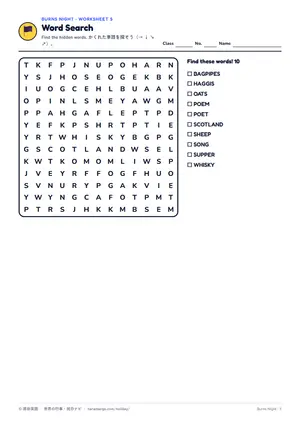
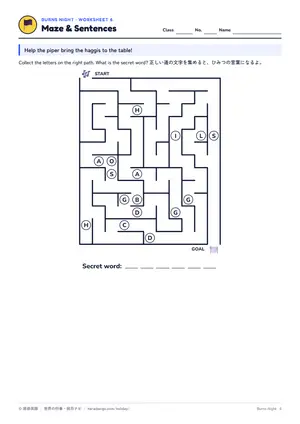
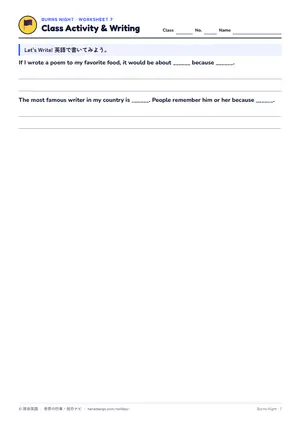
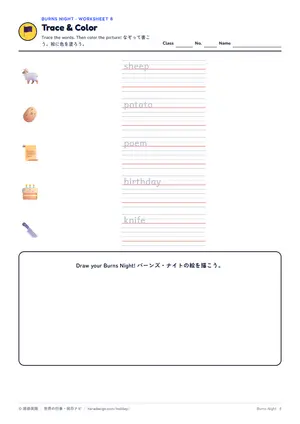
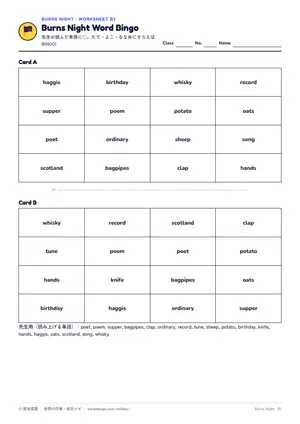
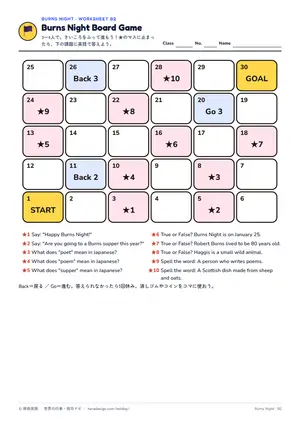
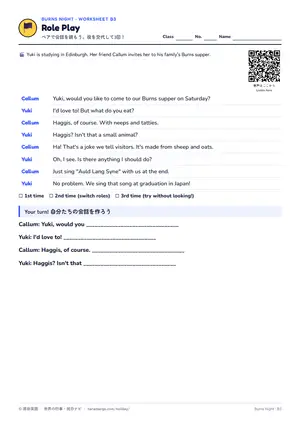
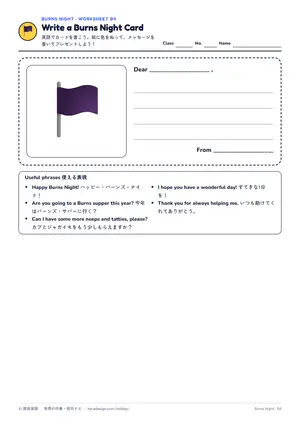
🖨️Worksheetsワークシート(無料・A4)
① 「中身を見る・印刷」で全ページを確認 → ② そのページ上の 🖨️ 印刷する でそのまま印刷できます。A4・無料。
🍎Lesson Ideasバーンズ・ナイトを使った英語の授業アイデア
好きな食べ物に詩をささげよう
🎯 形容詞を使って、身近な食べ物をたたえる短い英語の詩を書き、朗読する。
- ハギスが入場して詩を読み上げられる場面(写真や動画)を見せ、「料理に詩をささげる」習慣を紹介する。
- 好きな食べ物を1つ選び、Oh, ~! You are ~ and ~. の形で4行の詩を書く。
- グループで、料理をかかげるまねをしながら大げさに朗読し、いちばん熱のこもった詩に拍手を送る。
詳細版を開く(時間配分・Teacher Talk・板書)
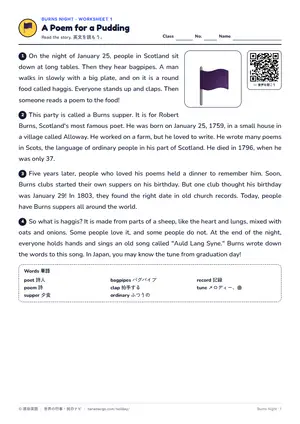
ハギスの入場場面の写真か動画を見せ、何をしている場面か予想させる。英語ページの音声で本文の第1段落を聞かせ、バグパイプの音とともにハギスが運ばれ、みんなが立ち上がって拍手し、料理にむかって詩を読むことを確認する。
🗣️ Look at this picture. What is the man carrying? / It is a Scottish food called haggis. / Everyone stands up and claps. / Then someone reads a poem to the food!
形容詞カードを黒板にはり、味・見た目・食感に分けて意味を確認する。先生の見本の詩(Oh, ramen! / You are hot and yummy. / Your noodles are long and soft. / I love you, ramen!)を、どんぶりをかかげるまねをしながら大げさに読む。
🗣️ Is it sweet or salty? Is it soft or crunchy? / Listen to my poem. / Oh, ramen! You are hot and yummy. / Now say it with me. Be dramatic!
好きな食べ物を1つ選ばせ、ワークシートに4行の詩を書かせる。1行目は Oh, ~!、2行目は You are ~ and ~.、3・4行目は形容詞を使って自由に書かせる。早く書けた生徒には、食べ物の絵を横にかかせる。
🗣️ Choose one food you love. / Line one: Oh, and the name of the food. / Line two: You are ... and ... . / Use two or more adjectives.
4人グループで、料理をかかげるまねをしながら1人ずつ大げさに朗読させる。聞く人は朗読の前に立ち上がって拍手で迎える。全員が読んだら、いちばん熱のこもった詩を1つ選ばせる。
🗣️ Stand up and clap for the poet. / Hold up your food and read your poem. / Which poem was the most exciting?
各グループで選ばれた詩に、クラス全体で拍手を送る。バーンズは農場で働きながら詩を書いた人で、ハギスへの詩もその1つであることを伝えて終える。
🗣️ Let's give a big hand to our poets. / Robert Burns worked on a farm, but he loved to write. / Happy Burns Night!
🍽️ Burns Night(January 25)
bagpipes → haggis → everyone claps → a poem to the food!

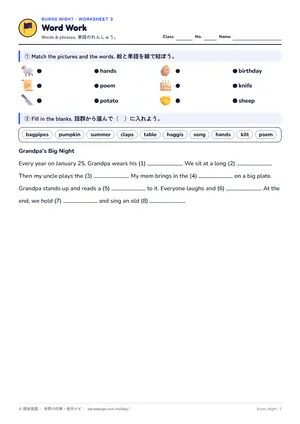
味:sweet / salty / hot / cold / yummy
見た目:round / big / colorful
食感:soft / crunchy

Oh, ___!
You are ___ and ___.
___
___
例:Oh, ramen! / You are hot and yummy. / Your noodles are long and soft. / I love you, ramen!
「オールド・ラング・サイン」と「蛍の光」をくらべよう
🎯 同じ曲が国によってちがう意味を持つことを英語で説明する。
- 「蛍の光」を聞かせ、どこで聞いたことがあるかを出し合う。
- スコットランドで大みそかとバーンズ・サパーの最後に歌われ、腕を交差させて手をつなぐことを英文で読む。
- In Scotland, people sing it when ~. In Japan, we hear it when ~. の文でちがいをまとめる。
- 「なぜ同じ曲が別れや新年の歌になるのか」をペアで話し合う。
詳細版を開く(時間配分・Teacher Talk・板書)
「蛍の光」を流し、どこで聞いたことがあるかを出し合わせる(卒業式・紅白歌合戦の最後・お店の閉店の音楽など)。この曲の原曲はスコットランドの歌で、詩人バーンズが1788年に歌詞を書き留めて歌の本の編集者に送ったことを紹介する。
🗣️ Listen. Do you know this tune? / Where do you hear it in Japan? / This tune comes from Scotland. / Robert Burns wrote down the words in 1788.
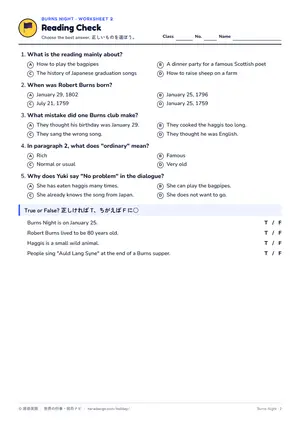
英文プリントと本文の第4段落を読ませ、スコットランドで歌う場面(大みそかの真夜中・バーンズ・サパーの最後)と歌い方(輪になって手をつなぎ、最後の節で腕を胸の前で交差させて手をにぎり直す)に線を引かせる。ペアで実際に腕を交差させて手をつなぐ動きをやってみる。
🗣️ Read the handout. When do people in Scotland sing it? / Underline the times and the actions. / Cross your arms and hold hands. Like this. / What does Auld Lang Syne mean?
In Scotland, people sing it when ~. In Japan, we hear it when ~. の型で、違いをまとめる文を2組書かせる。1組は歌う場面、もう1組は歌い方や雰囲気について書かせる。何人かに読ませ、板書する。
🗣️ Write two pairs of sentences. / In Scotland, people sing it when the new year begins. / In Japan, we hear it when a store is closing. / Who can read one pair?
Why do you think the same tune has different meanings? をペアで話し合わせる。Auld Lang Syne の意味(遠い昔・なつかしい日々)を手がかりに、新年と別れに共通するものを考えさせる。理由を英語で1〜2文書かせる。
🗣️ Why does the same tune have different meanings? / Think about the meaning: old times. / What do the new year and graduation have in common? / Write one or two sentences.
何組かに意見を発表させる。日本では1881年の『小学唱歌集』にのってから日本の歌になったことを伝え、同じ曲が国ごとに別の場面で歌われていることを確認して終える。
🗣️ Please share your idea. / One tune, two countries, different meanings. / Next time you hear it, think of Scotland.
"Auld Lang Syne"(Scots:long ago / old times)
1788 Burns wrote down the words.
1881 Japan:「蛍の光」(『小学唱歌集』)

Scotland:midnight on New Year's Eve / the end of a Burns supper
 hold hands in a circle → last verse:cross your arms
Japan:graduation / the end of Kohaku / a store is closing

In Scotland, people sing it when ___.
In Japan, we hear it when ___.

Why different meanings?