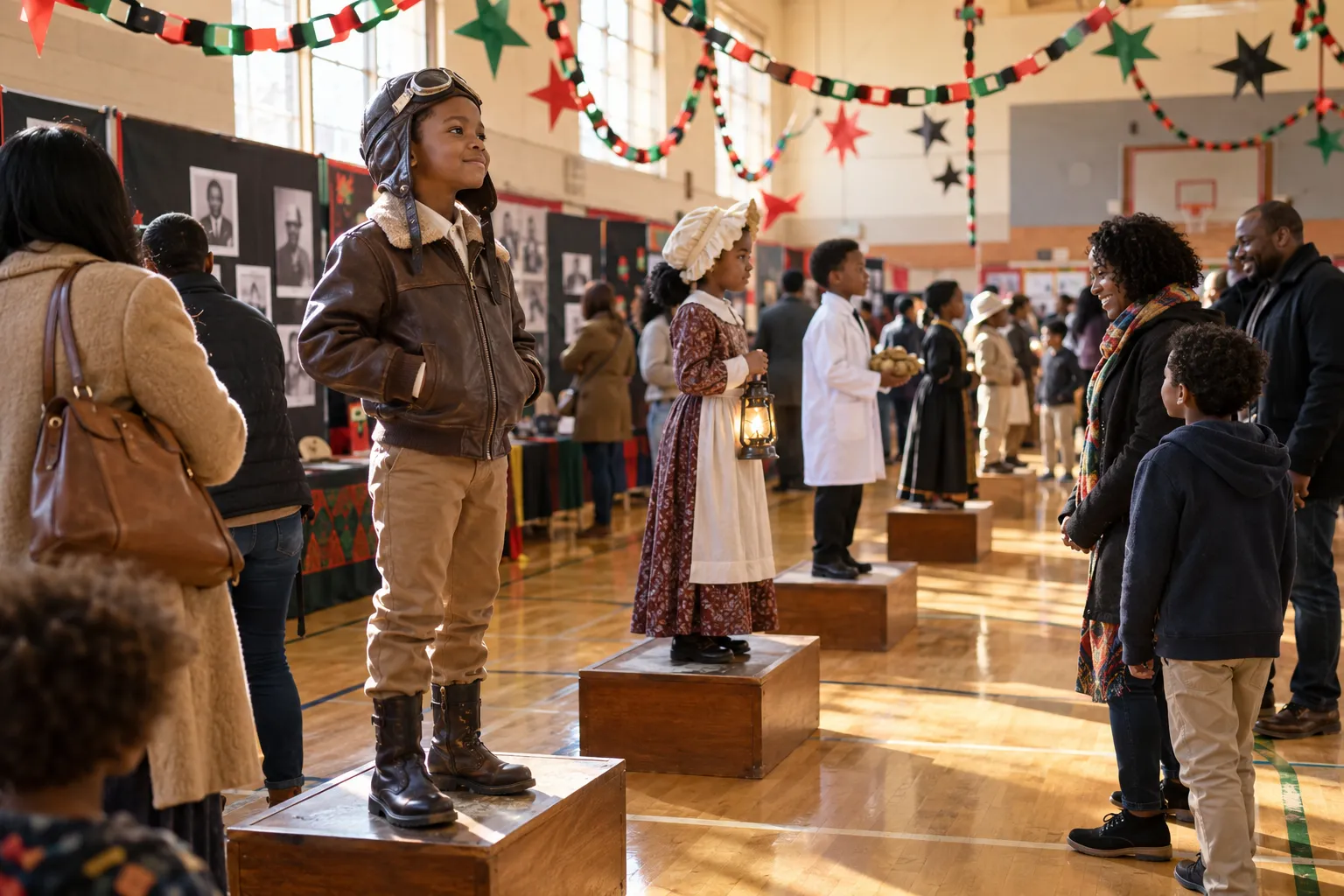
Black History Month
黒人歴史月間(ブラック・ヒストリー・マンス)の英語の授業アイデアとワークシート
印刷してすぐ使えるワークシート(PDF・Word・解答つき)と、授業の手順書。
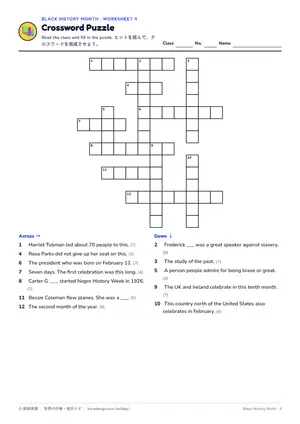
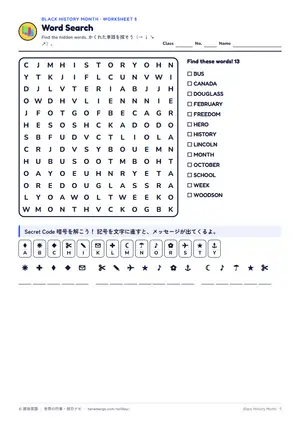
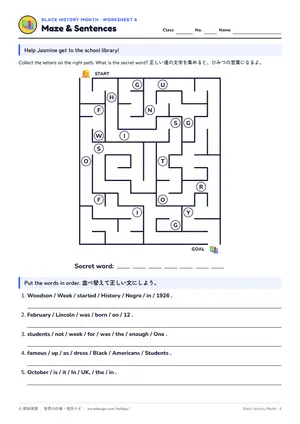
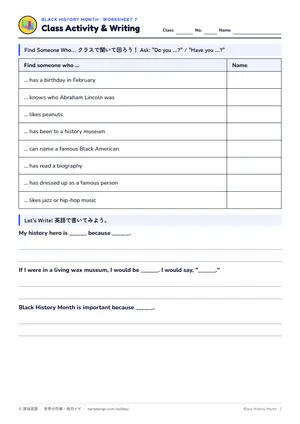
🖨️Worksheetsワークシート(無料・A4)
① 「中身を見る・印刷」で全ページを確認 → ② そのページ上の 🖨️ 印刷する でそのまま印刷できます。A4・無料。
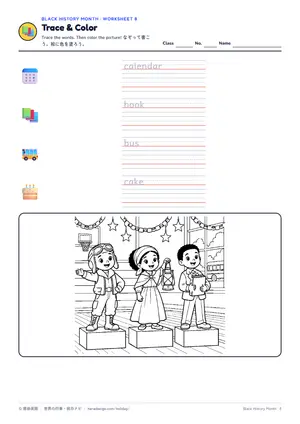
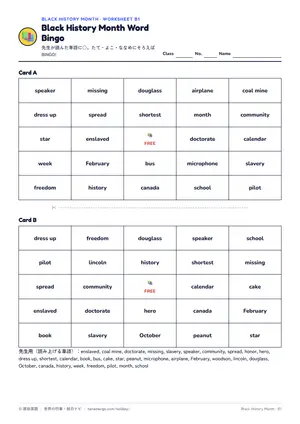
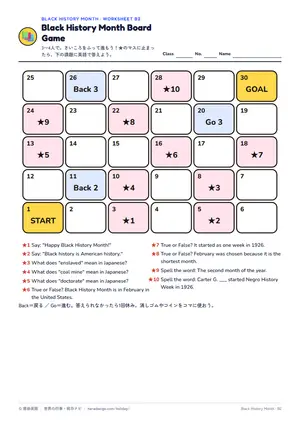
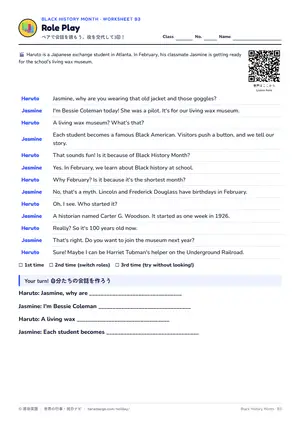
🍎Lesson Ideas黒人歴史月間(ブラック・ヒストリー・マンス)を使った英語の授業アイデア
2月の誕生日カレンダーで「なぜ2月?」を解く
🎯 日付と誕生日を英語で言い、黒人歴史月間が2月になった理由と「一番短い月」説がまちがいである理由を英語1文で説明する。
- 2月のカレンダーを配り、12日と14日に誰の誕生日があるかを予想させる。
- Lincoln was born on February 12. のように誕生日を英語で言う練習をする。
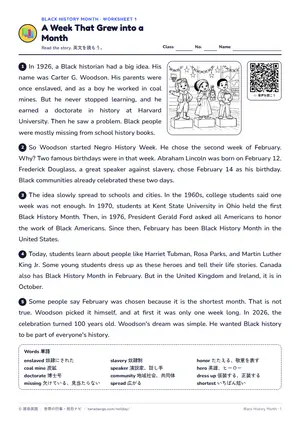
- 英語ページ本文の第2段落と第5段落を聞き、2月を選んだ人と理由を探す。
- February was chosen because ... の形で理由を1文書き、ペアで発表する。
詳細版を開く(時間配分・Teacher Talk・板書)
黒板に February と大きく書き、「2月はアメリカで何の月?」と問う。Black History Month と書き、「黒人の歴史を学ぶ月」と一言で説明する。続けて「2月が選ばれたのは一番短い月だから?」と聞き、Yes / No で手を挙げさせる。答えはまだ言わない。
🗣️ In the United States, February is Black History Month. / Why February? Is it because February is the shortest month? / Raise your hand. Yes or no? Let's find out.
カレンダーを配り、12日と14日にだれの誕生日があるかをペアで予想させる。リンカーンとダグラスのカードを見せて正解を確かめ、Lincoln was born on February 12. を全員で言う。ダグラスは自分の誕生日を知らず、母に Little Valentine と呼ばれた記憶から14日を選んだことを伝え、Douglass chose February 14. も言わせる。
🗣️ Look at February 12 and February 14. Whose birthdays are they? / Lincoln was born on February 12. Say it together. / Douglass did not know his birthday. So he chose February 14. / His mother called him her Little Valentine.
英語ページ本文の第2段落と第5段落の音声を聞かせ、①2月を選んだ人、②理由、③最初の長さ、の3つをメモさせる。Woodson / two birthdays / one week が出てくればよい。最後に導入の問いにもどり、「一番短い月だから」は誤解だと確認する。
🗣️ Listen and find three things. Who chose February? Why? How long was it at first? / Woodson chose it. Two famous birthdays were in that week. / At first, it was only one week. So the shortest month idea is a myth.
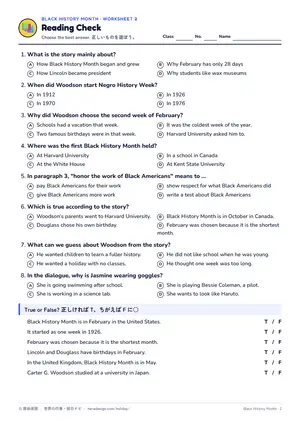
February was chosen because ... の型で理由を1文書かせ、ペアで読み合う。数人に発表させ、birthdays や Lincoln and Douglass が入った文をほめる。時間があれば基本セット p.2 の TF(February was chosen because it is the shortest month. など)を解かせる。
🗣️ Write one sentence. February was chosen because ... / Read it to your partner. / Great. Lincoln and Douglass have birthdays in February.
Black History Month = February(アメリカ・カナダ)

Feb 12  Lincoln was born.
Feb 14  Douglass chose his birthday.(Little Valentine)

1926  Woodson → Negro History Week(2月第2週・1週間)

× the shortest month(誤解)
○ February was chosen because two famous birthdays are in February.
英語でなりきり!生きたろう人形館
🎯 歴史上の人物になりきり、I am ... / I was born in ... / I ... の形で3〜5文の自己紹介を英語で言う。
- アメリカの小学校の「生きたろう人形館」を紹介し、会話文を音読する。
- 人物カード(タブマン、パークス、ダグラス、カーヴァー、ベシー・コールマンなど)から1人選ぶ。
- カードの情報を使って一人称の英文スピーチを書く。
- 教室を「博物館」にし、見学者が肩をたたいたら人形が話し出す形で発表し合う。
詳細版を開く(時間配分・Teacher Talk・板書)
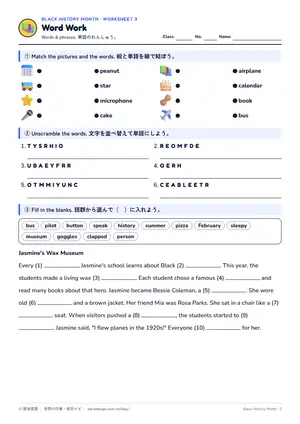
アメリカの小学校では、2月に子どもが黒人の歴史上の人物になりきる「生きたろう人形館」を開くことがあると紹介する。英語ページの会話文の音声を流し、Jasmine がだれになっているか、見学者が何をすると人形が話し出すかを聞き取らせる。
🗣️ In February, some American schools have a living wax museum. / Listen. Who is Jasmine today? / Right. Bessie Coleman, a pilot. When visitors push a button, she starts to speak.
人物カードを見せて1人ずつ簡単に紹介し、生徒に1人選ばせる(同じ人物が重なってもよい)。カードの英文を全員で音読し、意味を確認する。タブマンの about 70 people、パークスの 1955 など、数字を正しく読ませる。
🗣️ Here are six people. Choose one person. / Harriet Tubman led about 70 people to freedom. / Rosa Parks did not give up her seat on a bus in 1955. / Read your card with me.
スピーチの型を使って、一人称で3〜5文の自己紹介を書かせる。He was ... を I was ... に変えることがポイント。最後の1文は I want you to ... で、見学者へのメッセージにする。書けた生徒からペアで練習させ、先生は机間を回って発音を直す。
🗣️ Change he or she to I. He was a pilot becomes I was a pilot. / Write three to five sentences. / Your last sentence is a message. I want you to never give up. / Practice with your partner.
クラスを半分に分け、前半は「人形」として席に立ち、後半は見学者として回る。見学者が肩をそっとたたいたら(ボタンの代わり)、人形がスピーチを始める。見学者はメモ用紙に人物名と行ったことを英語で1つ書く。6分ずつで交代する。
🗣️ Group A, you are the wax figures. Group B, you are the visitors. / Tap a shoulder gently. That is the button. / Write the name and one thing they did. / Time to switch!
メモをもとに、一番印象に残った人物を英語で発表させる(I liked Harriet Tubman. She led about 70 people to freedom.)。最後に、ウッドソンが「黒人の歴史をすべての人の歴史の一部にしたかった」ことを伝えて締める。
🗣️ Who did you like the best? Why? / I liked Harriet Tubman. She led about 70 people to freedom. / Woodson wanted Black history to be part of everyone's history.
Living Wax Museum

I am Bessie Coleman.
I was born in 1892.(※カードの情報を使う)
I was a pilot.
I flew planes in the 1920s.
I want you to follow your dream.

he / she → I
was / did → 過去形のまま

見学メモ:Name ___ / What did they do? ___
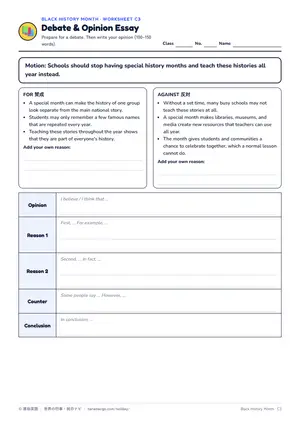
1か月で足りる?ミニ・ディベート
🎯 advanced の英文を読み、特別な月への賛成・反対の論点を整理して、英語で自分の意見を述べる。
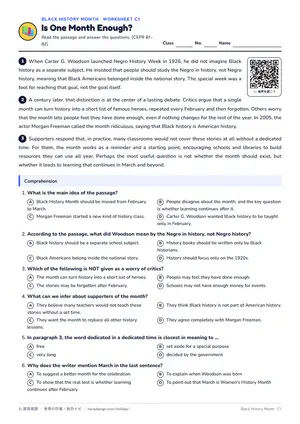
- advanced の英文 Is One Month Enough? を読み、批判と支持の理由に線を引き分ける。
- ウッドソンの言葉「歴史の中のニグロ」が、どちらの立場にも使えることを確認する。
- 賛成・反対のグループに分かれ、理由を英語で3つずつ用意する。
- ミニ・ディベートのあと、日本の授業で取り上げたい人々について一言ずつ述べる。
詳細版を開く(時間配分・Teacher Talk・板書)
黒板に One month for Black history. Is it enough? と書く。1926年に1週間として始まり、2026年に100年を迎えたことを伝える。「特別な月はよいことか」を直感で Yes / No / Not sure に分かれて挙手させる。
🗣️ Black History Month started as one week in 1926. / Now it is one month. Is one month enough? / Yes, no, or not sure? Raise your hand.
語彙リストを確認してから英文を読ませる。批判の理由に赤、支持の理由に青で線を引かせる。ペアで比べ、批判は「ヒーローの短いリストになる」「やった気になる」、支持は「決まった時間がないと扱われない」「1年中使う資料のきっかけになる」と整理する。
🗣️ Read the passage. Red for critics, blue for supporters. / What do critics say? It can become a short list of heroes. / What do supporters say? Without a dedicated time, many classes would skip these stories.
第1段落の the Negro in history, not Negro history の意味を確認する。ウッドソンの目標が「国の歴史の中に入れること」だったと押さえたうえで、この言葉が批判側(月に閉じこめるな)にも支持側(そのための道具だ)にも使えることに気づかせる。
🗣️ Woodson said the Negro in history, not Negro history. What does it mean? / Black Americans belong inside the national story. / Can critics use this idea? Can supporters use it too?
賛成(The month is necessary.)と反対(One month is not the right way.)の2グループに分け、理由を英語で3つずつ用意させる。各グループ2分の立論、1分の反論でミニ・ディベートを行う。先生は発言の型を指さして助ける。
🗣️ Group A says the month is necessary. Group B says one month is not the right way. / Prepare three reasons. / You have two minutes. Then one minute to answer the other side.
ディベートを離れて、本文最後の問い(3月以降も続く学びにつながっているか)を紹介する。日本の授業で、もっと取り上げたほうがよい人々はだれかを英語で1文ずつ書かせ、数人に発表させる。
🗣️ The writer asks a good question. Does the learning continue in March? / Think about Japan. Whose history should we learn more about? / Write one sentence and share it.
Is One Month Enough?

Woodson(1926):the Negro in history, not Negro history
→ 国の歴史の「中に」入れることが目標。週は道具。

批判(Critics)
・a short list of heroes
・people feel they have done enough
・Morgan Freeman(2005):Black history is American history.

支持(Supporters)
・without a dedicated time → not covered
・a reminder and a starting point

Q. Does the learning continue in March?
弥助と1919年:日本から見る黒人の歴史
🎯 日本と黒人の歴史の接点を資料で確かめ、事実と議論の分かれる点を区別して英語で発表する。
- 記事の「日本と黒人の歴史」の節を読み、弥助と人種差別撤廃提案の要点を年表にする。
- 弥助の「侍」論争と、1919年の提案の動機(理想と国益)について、資料で言えることと言えないことを分ける。
- グループで英語のスライド3枚にまとめる。
- 各グループ3分で発表し、質疑応答をする。
詳細版を開く(時間配分・Teacher Talk・板書)
「日本と黒人の歴史に、どんな接点があると思うか」と問い、自由に答えさせる。そのうえで1581年と1919年の2つの年だけを黒板に書き、今日はこの2つの出来事を資料で確かめると伝える。
🗣️ Japan and Black history. Can you think of any connections? / Today we will look at two years, 1581 and 1919. / We will check the facts with sources.
記事の節と英語の資料を読み、年表ワークシートを埋めさせる。1581年の京都での信長との面会、弥助という名と刀・屋敷・扶持、1582年の本能寺の変。1919年1月7日のウォルドーフ・アストリアでの黒岩涙香とマダム・C・J・ウォーカーらの会合、4月11日の投票(出席17人中11人が賛成)とウィルソンの判断。
🗣️ Fill in the timeline. What happened in Kyoto in 1581? / What happened on April 11, 1919? / Eleven of seventeen delegates voted yes. So why did it fail?
「資料で言えること」と「議論が分かれること」を2列の表に分けさせる。弥助を「侍」と呼べるか、明智光秀が弥助を殺さなかった理由、日本の提案の動機(人種平等の理想か、移民問題など国益か)は議論が分かれる点として押さえる。断定せず、研究者の見方を並べて書くよう指導する。
🗣️ Make two columns. What do the sources show? What do historians debate? / Was Yasuke a samurai? Historians do not fully agree. / Why did Japan make the proposal? Was it an ideal, national interest, or both?
グループで英語のスライド3枚(Facts / Debates / Our view)を作り、各グループ3分で発表させる。発表後、ほかのグループから1つずつ質問を受ける。質問は Where did you find that? のように根拠を問うものを奨励する。
🗣️ Make three slides. Facts, debates, and your view. / Each group has three minutes. / Ask a question about the sources. Where did you find that?
黒人歴史月間はアメリカの行事だが、日本の歴史とも交わる部分があることを確認する。ウッドソンの「歴史の中のニグロ」という言葉を紹介し、日本の歴史の中に、ほかにも見落とされている人々がいないかを考える課題を出す。
🗣️ Black History Month is an American event, but it connects with Japanese history. / Woodson wanted Black people inside the national story. / Who else might be missing from Japanese history? Think about it for next week.
Japan and Black History

1581 Kyoto:Yasuke meets Oda Nobunaga(名・刀・屋敷・扶持)
1582 Honno-ji:fought with Nobutada
  ? samurai or not → 議論あり

1919.1.7 New York:Kuroiwa Ruiko × Madam C.J. Walker
1919.4.11 Paris:Racial Equality Proposal 11 / 17 → Wilson:unanimous needed
  ? ideal or national interest → 議論あり

Facts(資料で言える) | Debates(議論が分かれる)