
Asian American and Pacific Islander Heritage Month
アジア太平洋系文化継承月間の英語の授業アイデアとワークシート
印刷してすぐ使えるワークシート(PDF・Word・解答つき)と、授業の手順書。
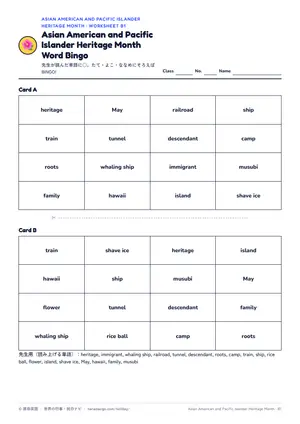
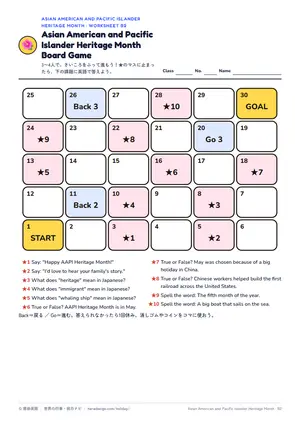
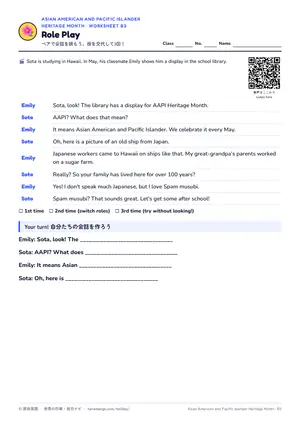
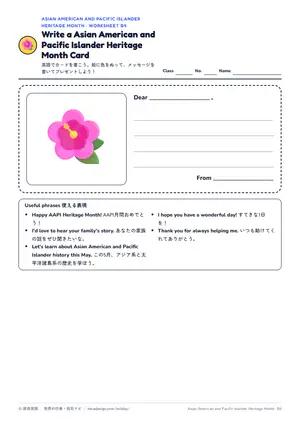
🖨️Worksheetsワークシート(無料・A4)
① 「中身を見る・印刷」で全ページを確認 → ② そのページ上の 🖨️ 印刷する でそのまま印刷できます。A4・無料。
🍎Lesson Ideasアジア太平洋系文化継承月間を使った英語の授業アイデア
5月のなぞを解け:2つの日付で理由を説明しよう
🎯 1843年と1869年の2つの出来事を英語で読み取り、なぜ5月がAAPI月間なのかを英語で説明する。
- 黒板に May 7, 1843 と May 10, 1869 を書き、何があった日かを予想させる。
- 本文の第1・第2段落を音声で聞き、それぞれの日に何があったかをメモする。
- ペアで May is AAPI Heritage Month because ... の文を2つ作る。
- 数人に発表させ、万次郎が日本の高知県の出身であることを地図で確かめる。
詳細版を開く(時間配分・Teacher Talk・板書)
日付カード2枚を黒板に貼り、何があった日かを予想させる。どちらも5月であることに気づかせ、アメリカでは毎年5月がアジア系と太平洋諸島系の人々の歴史を知る月であることを伝える。
🗣️ Look at these two dates. / What happened on these days? Guess. / Both are in May. / In the United States, May is AAPI Heritage Month.
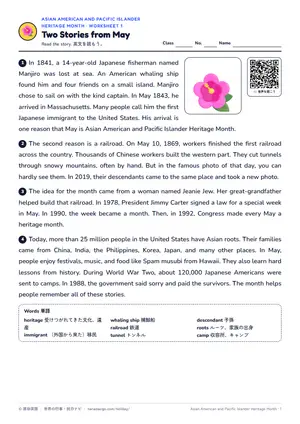
英語ページの音声で第1・第2段落を2回聞かせ、メモ用ワークシートに日付ごとに「だれが・何をした」を書かせる。答え合わせでは、14歳の漁師万次郎が捕鯨船に助けられて1843年5月にマサチューセッツに着いたこと、何千人もの中国系労働者が鉄道の西側を造ったことを確認する。
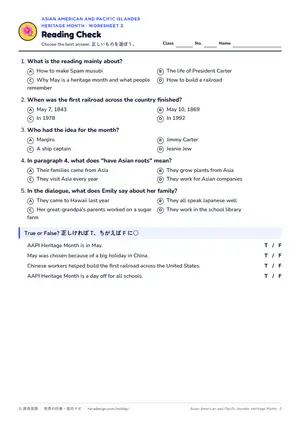
🗣️ Listen to paragraphs 1 and 2. / Who came to Massachusetts in 1843? / Who built the western part of the railroad? / Let's check your notes.
May is AAPI Heritage Month because ~. の型を板書し、ペアで理由を2つ英文にさせる。because のあとに主語と動詞のある文を置くことを確認し、本文の文を短くして使ってよいと伝える。
🗣️ Make two sentences with your partner. / May is AAPI Heritage Month because Manjiro came to America in May 1843. / After because, write who did what. / You can use words from the story.
数組に発表させ、地図で高知県(土佐)とマサチューセッツ州、鉄道が完成したユタ州を指し示す。万次郎が日本の高知県の出身であることを確認し、日本の歴史とアメリカの月間がつながっていることを伝えて終える。
🗣️ Please read your sentences. / Manjiro was from Kochi, here in Japan. / He arrived here, in Massachusetts. / The railroad was finished here, in Utah.
🌺 AAPI Heritage Month(every May)
AAPI = Asian American and Pacific Islander

May 7, 1843 Manjiro(土佐の漁師)arrived in Massachusetts.
May 10, 1869 The first railroad across the country was finished.(Chinese workers)

May is AAPI Heritage Month because ___.
 because のあと = 主語 + 動詞
日系アメリカ人の120年:年表と「おわび」を読む
🎯 1868年から1988年までの日系人の歴史を英文カードで年代順にならべ、国が謝罪した意味を自分の言葉で説明する。
- 1868年の元年者、1885年の移民の本格化、1942年の大統領令、1988年の市民の自由法を英文カードにして配る。
- グループでカードを年代順にならべ、First, ... Then, ... Finally, ... で説明する。
- 1988年の法律が収容の原因として認めた3つ(人種への偏見・戦時のヒステリー・政治指導の失敗)を英語で読む。
- 「国が過去のあやまちを謝ること」について、自分の意見を英語で2文書いて発表する。
詳細版を開く(時間配分・Teacher Talk・板書)
第4段落の During World War Two, about 120,000 Japanese Americans were sent to camps. を板書し、音声で第4段落を聞かせる。約12万人のうち3分の2近くがアメリカ国籍の市民だったことを伝え、なぜそんなことが起きたのかという問いを示す。
🗣️ Listen to paragraph 4. / About 120,000 Japanese Americans were sent to camps. / Almost two-thirds of them were American citizens. / Why did this happen?
年号を消した英文カード4枚をグループに配り、要点プリントを手がかりに年代順にならべさせる。答え合わせで年号を示し、1868年の人々が「元年者」と呼ばれる理由(出発時は慶応4年、その年に明治と改元)と、6月20日が国際日系デーであることも紹介する。
🗣️ Put the four cards in order. / Use the handout to help you. / Which card is the oldest? / Let's check the years together.
ならべたカードを使い、First, ... Then, ... Next, ... Finally, ... でグループ内で順に説明させる。1人1枚ずつ担当させ、1グループに全体の前で通して言わせる。
🗣️ Explain the cards in order. / Use First, Then, Next, and Finally. / First, in 1868, about 150 Japanese people sailed to Hawaii. / Can one group tell the whole story?
1988年の法律が、収容の原因を race prejudice, war hysteria, and a failure of political leadership と認めたことを示し、3つの語句の意味をワークシートで確認させる。収容所でバットを取り上げられたノーマン・ミネタが、のちに議員としてこの法律を進めたことを要点プリントで読ませる。
🗣️ The law named three causes. / Race prejudice, war hysteria, and a failure of political leadership. / What does each one mean? Check with your group. / Norman Mineta was in a camp as a boy. Later, he helped pass this law.
「国が過去のあやまちを謝ること」について、I think ~ because ~. の形で意見を2文書かせ、数人に発表させる。謝罪や補償には賛成・反対いろいろな考えがありうることを認め、理由をつけて述べることを大切にする。
🗣️ Should a country say sorry for its past mistakes? / Write two sentences. Use I think ... because .... / Please share your opinion. / Thank you. Every opinion needs a reason.
Japanese Americans: 1868 → 1988

1868 about 150 people sailed to Hawaii.(元年者)
1885 many more workers went to Hawaii.
1942 Executive Order 9066 → about 120,000 people sent to 10 camps
1988 Civil Liberties Act:sorry + $20,000 each(82,219 people)

First, ... Then, ... Next, ... Finally, ...

Three causes:
・race prejudice(人種への偏見)
・war hysteria(戦時のヒステリー)
・a failure of political leadership(政治指導の失敗)

I think ___ because ___.