 ワークシート
 ぬりえ
 迷路
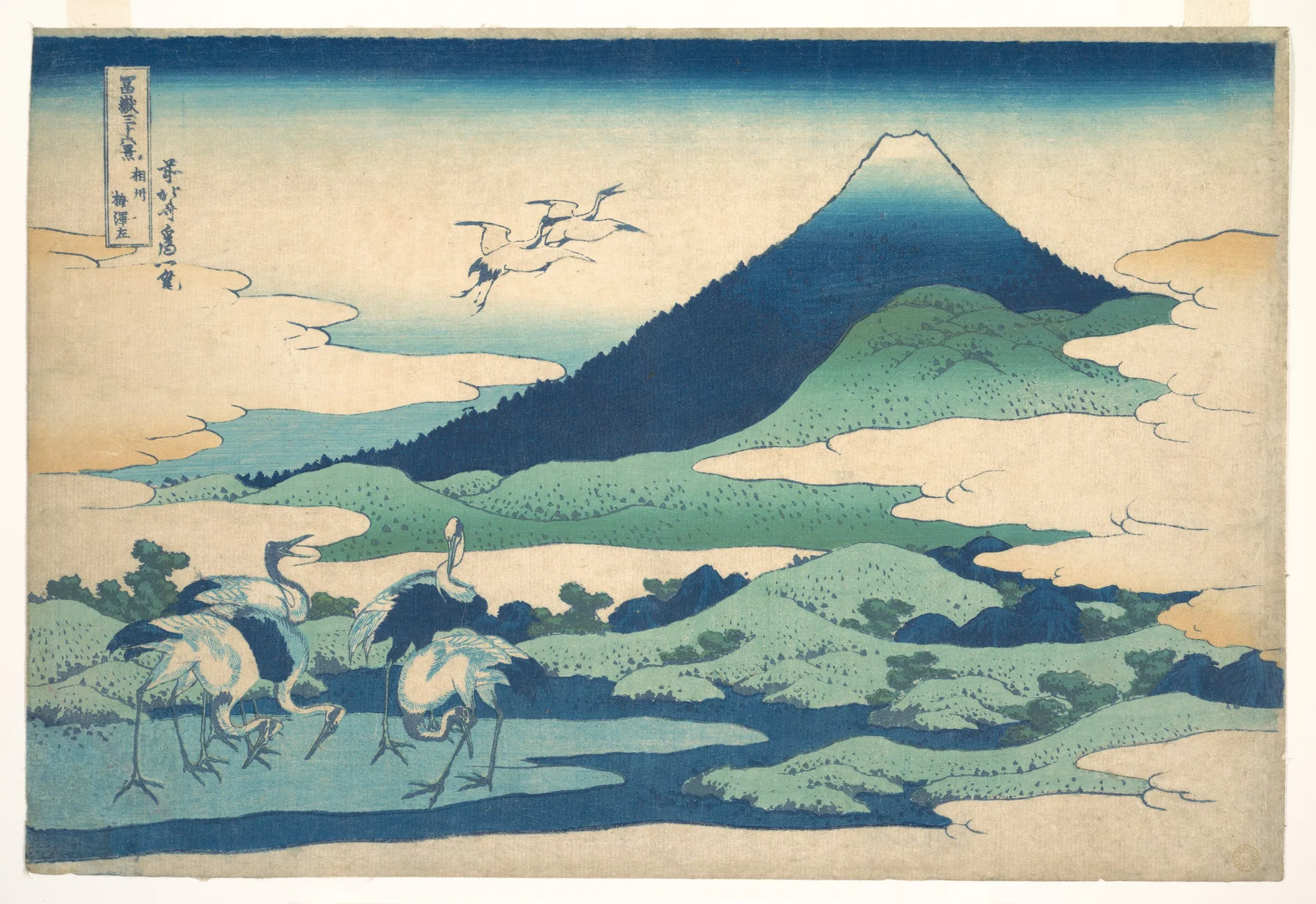
ツルと富士山でめでたさ二倍!でも題名の「左」はなぞ?Cranes and Fuji—double good luck! But why does the title say 'left'?
 美術館アンテナ:葛飾北斎の作品に会える展覧会
この作品のお話
Story青くそびえる富士山を背に、水辺にツルが集まり、2羽が空を飛んでいる絵です。場所は相模国(今の神奈川県)の梅沢。東海道の大磯と小田原のあいだにあった休み所で、今の二宮町のあたりです。北斎の「冨嶽三十六景」の1枚で、1830〜32年ごろの作。この画像はニューヨークのメトロポリタン美術館の摺りです。
With a tall blue Mount Fuji behind them, cranes gather by the water, and two fly in the sky. The place is Umezawa in Sagami Province, now Kanagawa Prefecture. It was a rest stop on the Tōkaidō between Ōiso and Odawara, near today's Ninomiya Town. This print is from Hokusai's 'Thirty-six Views of Mount Fuji,' made around 1830–32. This impression is in the Metropolitan Museum of Art in New York.
ツルは千年生きるといわれる長寿のしるし、富士山は日本一の山。めでたいものを組み合わせた、お正月にもぴったりの絵です。富士山は深い藍色で、下にいくほど緑へと変わり、ふもとには白い雲がたなびきます。ツルの羽の白と首の黒など、少ない色をたくみに使い分けています。
Cranes are a symbol of long life—people said they live for a thousand years—and Fuji is Japan's highest mountain. This lucky pairing makes it a perfect picture for New Year. Fuji is deep indigo, turning green toward the bottom, with white clouds trailing at its foot. Hokusai uses just a few colors well, like the white of the wings and the black of the necks.
冨嶽三十六景は評判を集め、北斎は富士山をさまざまな場所や季節から描き続けました。このシリーズはのちにヨーロッパにも渡り、19世紀の画家たちに日本の風景の新しい見方を伝えました。ツルと富士の組み合わせは、今もお祝いの品やデザインに使われる、日本らしいモチーフです。
'Thirty-six Views of Mount Fuji' became popular, and Hokusai kept painting Fuji from many places and in many seasons. The series later reached Europe and showed 19th-century artists a new way of seeing landscape. The pairing of cranes and Fuji is still a very Japanese motif, used today for celebration gifts and designs.
これは富士山です。白いツルが水のそばに立っています。2羽のツルが空を飛んでいます。日本では、ツルは長生きのしるしです。題名には小さなまちがいがあるかもしれません!
This is Mount Fuji. White cranes stand near the water. Two cranes fly in the sky. In Japan, cranes mean long life. The title may have a small mistake!
英語のレベルは上の「やさしい/ふつう」で切りかえられます。
えっ!?な裏ネタ
Secrets題名の最後の字は「左」に見えますが、本当は「庄」か「在(ざい)」(いなか・村)をほり誤ったものと考えられています。メトロポリタン美術館も、英語の題名を「梅沢の荘園(Umezawa Manor)」と訳しています。
The last character of the title looks like 'left.' But it is thought to be a carving mistake for a character meaning 'manor' or 'village.' The Metropolitan Museum also translates the title as 'Umezawa Manor.'
梅沢は、東海道の正式な宿場ではなく、宿場と宿場のあいだで旅人がひと休みする「立場(たてば)」でした。茶屋がならび、旅人が休んだり、富士山をながめたりして、にぎわったといわれます。
Umezawa was not an official post town. It was a 'tateba,' a rest stop between two post towns. Tea houses lined the road, and travelers are said to have rested there and enjoyed the view of Fuji.
夏目漱石の肖像がえがかれた千円札(1984年発行開始)のうらには、2羽のタンチョウが描かれていました。ツルは江戸時代から今まで、日本人にとって特別な鳥であり続けているのです。
The back of the 1,000-yen bill with Natsume Sōseki's portrait, first issued in 1984, showed two red-crowned cranes. From the Edo period until today, cranes have remained special birds for Japanese people.
日本航空(JAL)のマーク「鶴丸」は、ツルがつばさを広げて丸くなった形です。長い距離を飛ぶツルは、空の旅にぴったりのシンボル。北斎の時代から続くめでたい鳥のイメージが、今も空を飛んでいます。
The logo of Japan Airlines, called the 'Tsurumaru,' is a crane with its wings spread in a circle. Cranes fly long distances, so they are a perfect symbol for air travel. The lucky image of the crane, loved since Hokusai's time, still flies today.
ここを見て!
Look Closer1藍色の富士山The indigo Fuji
深い藍色の富士山。すそのほうは緑に変わっていきます。
Mount Fuji in deep indigo. Toward the bottom, it turns green.
2空を飛ぶツルCranes in flight
2羽のツルが、首と足をのばして空を飛んでいます。
Two cranes fly with their necks and legs stretched out.
3水辺のツルCranes by the water
首を下げてエサをさがすツルや、くちばしを開けて鳴くツルがいます。
Some cranes lower their heads to find food, and one opens its beak to call.
4題名の札The title cartouche
「冨嶽三十六景 相州梅沢左」。いちばん下の字が、なぞの「左」です。
It reads 'Thirty-six Views of Mount Fuji, Sōshū Umezawa.' The bottom character is the puzzling 'left.'
英語で名画を語ろう
Talk about Art in EnglishTwo cranes are in flight above the clouds.
2羽のツルが雲の上を飛んでいます。
💡 in flight で「飛行中の」。鳥や飛行機が飛んでいる様子に使います。
英語で説明すると… Describe it
これはおだやかな風景です。奥には、大きな青い富士山があります。手前では、白いツルたちが水辺に立っています。さらに2羽のツルが空を飛んでいます。
This is a calm landscape. In the background, there is a big blue Mount Fuji. In the foreground, some white cranes are standing by the water. Two more cranes are flying in the sky.
考えてみよう Think & Talk
- ツルと富士山は、なぜ縁起のよい組み合わせなのだと思いますか?Why do you think cranes and Mount Fuji make a lucky pair?
- 有名な作品にまちがいを見つけたら、直したいと思いますか?それはなぜ?If you found a mistake in a famous work, would you fix it? Why or why not?
この作品の英単語
WordsCranes stand by the water in front of Fuji.
ツルたちが富士山の手前の水辺に立っています。
Cranes and Fuji are a lucky pair.
ツルと富士山は縁起のよい組み合わせです。
The title may have a small mistake.
題名には小さなまちがいがあるかもしれません。
Travelers rested at Umezawa on their journey.
旅人たちは旅のとちゅう、梅沢で休みました。
ミニクイズ
QuizQ. 題名の「左」は、どんな字のほり誤りと考えられている?What is the 'left' character in the title thought to be a mistake for?
「梅沢庄」「梅沢在」のほり誤りと考えられています。
It is thought to be a mistake for 'Umezawa manor' or 'Umezawa village.'
ウソ?ホント? 梅沢は、東海道の正式な宿場だった。Umezawa was an official post town on the Tōkaidō.
宿場と宿場のあいだの休み所「立場」でした。
It was a rest stop called a 'tateba' between post towns.
ウソ?ホント? この絵には、空を飛ぶツルも描かれている。This print also shows cranes flying in the sky.
上のほうに、2羽のツルが飛んでいます。
Two cranes fly in the upper part of the picture.
 画像の出典とライセンス / Image credit
- CC0「冨嶽三十六景 相州梅沢左」-“Umezawa Manor in Sagami Province,” from the series Thirty-six Views of Mount Fuji (Fugaku sanjūrokkei, Sōshū Umezawa zai) MET DP140983.jpg(Wikimedia Commons)
ライセンス:CC0(パブリックドメイン提供)/作者・撮影者の表記:Katsushika Hokusai
この作品は、作者の死後長い年月がたち著作権の保護期間が終わった「パブリックドメイン」の作品です。画像は平面の作品を忠実に写したもので、新しい著作権は生じません(Wikimedia Commons の PD-Art の考え方)。 所蔵:メトロポリタン美術館(The Metropolitan Museum of Art)。画像は表示のために縮小・WebP 形式に変換しています。
葛飾北斎のほかの作品