 ワークシート
 ぬりえ
 迷路
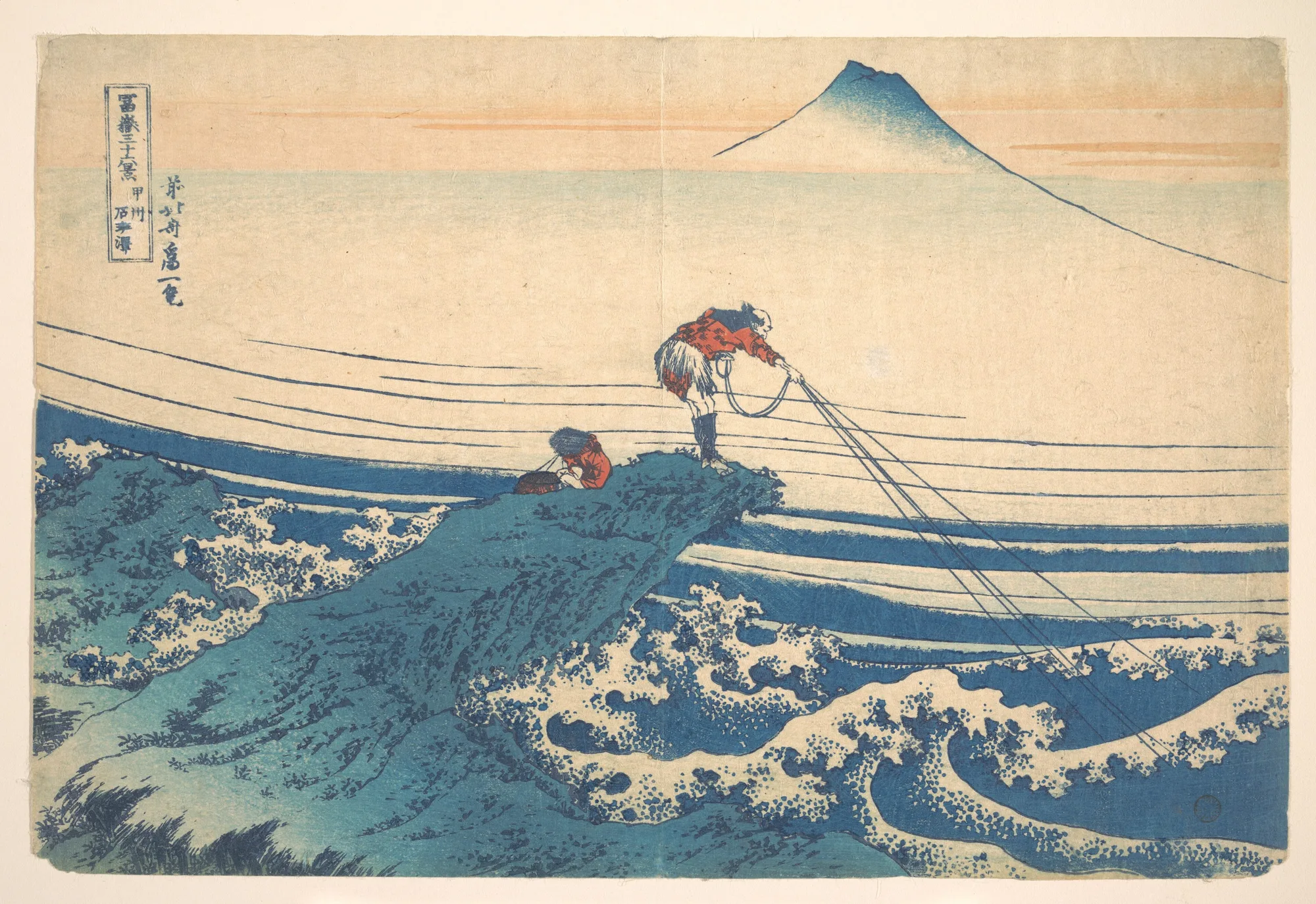
岩の先で網を引く漁師と富士山。よく見ると、同じ三角形がかくれている!A fisherman on a rock and Mount Fuji. Look closely: they make the same triangle!
 美術館アンテナ:この作品に会える展覧会
この作品のお話
Story荒れた川の流れに突き出た岩の先で、漁師が網の綱を引いています。うしろでは、子どもが魚を入れるかごのそばにしゃがみこんでいます。遠くには、雲の上に静かにそびえる富士山。葛飾北斎の「冨嶽三十六景」の一枚で、甲斐の国(今の山梨県)の鰍沢(かじかざわ)を描いています。富士川の急流で知られる場所です。
On a rock sticking out over a rough river, a fisherman pulls the lines of his net. Behind him, a child crouches over a fish basket. Far away, Mount Fuji rises quietly above the clouds. This is from Hokusai's Thirty-six Views of Mount Fuji. It shows Kajikazawa in Kai Province, now Yamanashi Prefecture, a place known for the fast waters of the Fuji River.
画面をよく見ると、身を乗り出す漁師と、そこから広がる網の綱が、大きな三角形を作っています。その形は、奥の富士山の三角形とそっくり。手前の人と遠くの山を、同じ形で響き合わせるのは、いかにも北斎らしい工夫です。荒々しい波と、静かな富士の対比も見どころです。
Look carefully. The leaning fisherman and the lines spreading from his hands make a large triangle. It matches the triangle of Mount Fuji in the distance. Hokusai loved to connect a person nearby and a faraway mountain with the same shape. The wild waves and the calm mountain also make a strong contrast.
「冨嶽三十六景」は人気が出て、のちに10枚が追加され、全部で46枚になりました。この絵は最初に出た36枚のうちの一枚です。版画は同じ版木から何枚も摺られるので、世界各地の美術館に同じ図柄があります。この画像は、ニューヨークのメトロポリタン美術館が1922年に収蔵した摺りです。
Thirty-six Views of Mount Fuji was so popular that ten more prints were added, making 46 in all. This print is one of the first 36. Because prints are made many times from the same woodblocks, museums around the world have this design. The image here is a print that the Metropolitan Museum of Art in New York acquired in 1922.
漁師が岩の上に立っています。漁の網を引いています。うしろには子どもがしゃがんでいます。岩の下には大きな波があります。男の人と網の綱を見てください。うしろの富士山と同じ三角形になっています!
A fisherman stands on a rock. He pulls his fishing net. A child crouches behind him. Big waves are under the rock. Look at the man and the lines. They make a triangle, like Mount Fuji behind them!
英語のレベルは上の「やさしい/ふつう」で切りかえられます。
えっ!?な裏ネタ
Secretsこの絵の初めのころの摺りは、ほとんどが藍色の濃い・うすいだけで摺られた「藍摺(あいずり)」でした。のちの摺りでは、漁師の服などに色が加えられました。この画像の摺りでも、漁師と子どもの服に赤が入っています。摺られた時期で印象ががらりと変わるのです。
The earliest prints of this design were made almost only in shades of blue. This style is called aizuri. Later prints added colors to things like the fisherman's clothes. In this print, too, the clothes of the fisherman and the child are red. The same design can look very different depending on when it was printed.
地名はふつう「鰍沢」と書きますが、北斎は「石班沢」と書きました。カジカという魚を漢字で「石斑魚」と書くことがあり、そこから当て字をしたと考えられています。北斎のちょっとした遊び心です。
The place name is usually written 鰍沢. Hokusai wrote 石班沢 instead. The fish called kajika can be written 石斑魚, so he probably borrowed those characters. It is a small bit of Hokusai's playfulness.
このシリーズの青には、ヨーロッパから輸入された「ベロ藍」(プルシアンブルー)という新しい絵の具が使われました。ベロはベルリンのこと。あざやかで色あせにくい青が、北斎の水や空を生き生きと見せたのです。
The blue in this series came from a new imported pigment called Prussian blue, or 'bero-ai' in Japanese. 'Bero' comes from Berlin. This bright blue did not fade easily, and it made Hokusai's water and skies look alive.
漁師のうしろで、子どもが魚を入れるかご(びく)のそばにしゃがんでいます。危ない岩の上でも、親子で仕事をする暮らしの一場面。北斎は富士山だけでなく、そこで働く人々の姿も描きたかったのでしょう。
Behind the fisherman, a child crouches by a fish basket. Even on a dangerous rock, parent and child work together. Hokusai wanted to show not only Mount Fuji, but also the people who lived and worked near it.
ここを見て!
Look Closer1網を引く漁師The fisherman
岩の先から身を乗り出して網の綱を引く漁師。体と綱が、大きな三角形を作っています。
The fisherman leans out from the rock and pulls the net lines. His body and the lines make a big triangle.
2かごのそばの子どもThe child with a basket
魚を入れるかごのそばにしゃがむ子ども。漁師の家族なのかもしれません。
A child crouches by the fish basket. Maybe this is the fisherman's son.
3富士山Mount Fuji
雲の上に静かにそびえる富士。漁師の三角形と、形がそっくりです。
Fuji rises calmly above the clouds. Its shape matches the fisherman's triangle.
4さかまく波Rough waves
白いしぶきを上げる富士川の急流。北斎の得意な、つめのような波頭も見えます。
The fast water of the Fuji River throws up white spray. You can see Hokusai's claw-like wave tips.
英語で名画を語ろう
Talk about Art in EnglishThe fisherman's pose echoes the shape of Mount Fuji.
漁師の姿は、富士山の形と響き合っています。
💡 echo は「こだま」。形や色をくり返して呼応させる構図の説明に使えます。
英語で説明すると… Describe it
これは川と山の絵です。真ん中で、漁師が岩の上に立っています。彼は網を引いています。その下には、青と白の大きな波があります。奥には富士山があります。
This is a picture of a river and a mountain. In the middle, a fisherman is standing on a rock. He is pulling a net. There are big blue and white waves below him. In the background, there is Mount Fuji.
考えてみよう Think & Talk
- 北斎はなぜ、小さな人と大きな山を同じ形にしたのだと思いますか?Why do you think Hokusai put a tiny person and a big mountain in the same shape?
- 青一色の版と色の多い版、どちらが好きですか?なぜでしょう?Which version do you like better, blue only or many colors? Why?
この作品の英単語
WordsA fisherman stands on the edge of a rock.
漁師が岩のはしに立っています。
He pulls the lines of his net.
彼は網の綱を引いています。
The man and the mountain make the same triangle.
男と山が同じ三角形を作っています。
The river is rough and fast.
川は荒れていて流れが速いです。
ミニクイズ
QuizQ. 漁師の体と網の綱が作っている形は?What shape do the fisherman and his lines make?
奥の富士山と同じ三角形になっています。
It is a triangle, just like Mount Fuji behind him.
ウソ?ホント? 「冨嶽三十六景」は、ちょうど36枚で終わった。Thirty-six Views of Mount Fuji ended with exactly 36 prints.
人気が出て10枚追加され、46枚になりました。
Ten more were added, making 46.
ウソ?ホント? この絵の初期の摺りは、ほとんど藍色だけで摺られていた。Early prints of this design were made almost only in blue.
「藍摺」とよばれる摺り方で、のちに色が加えられました。
This blue style is called aizuri. Colors were added later.
 画像の出典とライセンス / Image credit
- CC0冨嶽三十六景 甲州石班沢-Kajikazawa in Kai Province (Kōshū Kajikazawa), from the series Thirty-six Views of Mount Fuji (Fugaku sanjūrokkei) MET DP141013.jpg(Wikimedia Commons)
ライセンス:CC0(パブリックドメイン提供)/作者・撮影者の表記:Katsushika Hokusai
この作品は、作者の死後長い年月がたち著作権の保護期間が終わった「パブリックドメイン」の作品です。画像は平面の作品を忠実に写したもので、新しい著作権は生じません(Wikimedia Commons の PD-Art の考え方)。 所蔵:メトロポリタン美術館(The Metropolitan Museum of Art)。画像は表示のために縮小・WebP 形式に変換しています。
葛飾北斎のほかの作品