 ワークシート
 ぬりえ
 迷路
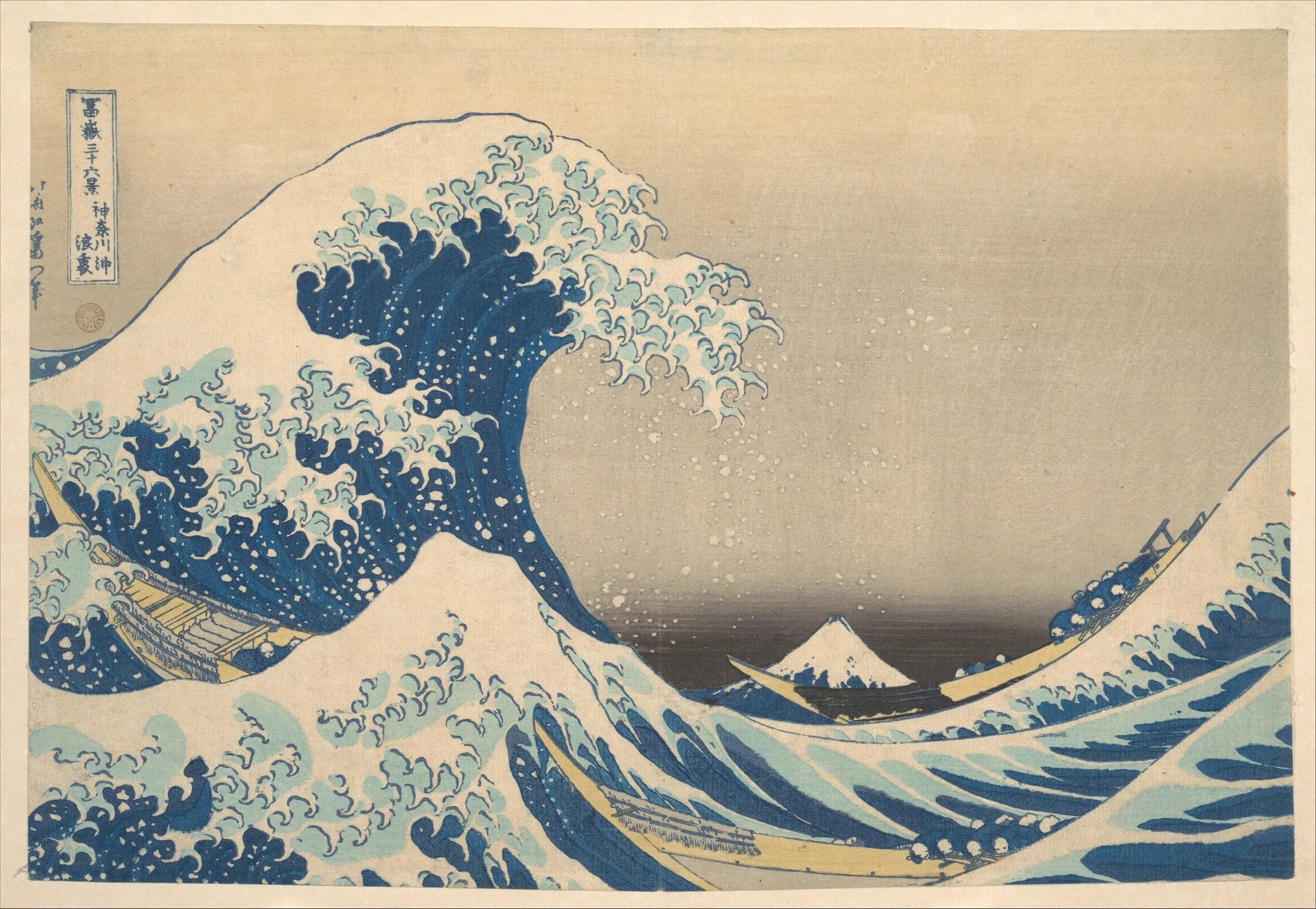
世界でいちばん有名な波!あの青は、はるばるヨーロッパから来た絵の具。The most famous wave in the world! And its blue came all the way from Europe.
 美術館アンテナ:この作品に会える展覧会
この作品のお話
Story葛飾北斎が70歳を過ぎたころに出した「冨嶽三十六景」シリーズの1枚です。巨大な波が、鮮魚を運ぶのに使われた「押送船(おしおくりぶね)」3そうに、おそいかかろうとしています。そのはるか奥に、小さな富士山。画像の摺りはニューヨークのメトロポリタン美術館の所蔵です。木版画なので同じ図柄の摺りが何枚もあり、大英博物館や東京国立博物館など、世界中の美術館が持っています。
Katsushika Hokusai made this print in his early seventies. It is from his series Thirty-six Views of Mount Fuji. A giant wave is about to crash down on three fast boats of a type used to carry fresh fish. Far behind, Mount Fuji looks tiny. This impression is in The Metropolitan Museum of Art. Because it is a woodblock print, many impressions exist. Museums all over the world, like the British Museum and the Tokyo National Museum, have them.
浮世絵は、絵師・彫師・摺師、そして出版する版元のチームで作られます。このシリーズの版元は西村屋与八(永寿堂)。鮮やかな青には、ヨーロッパで生まれた合成の絵の具「プルシアンブルー」が使われました。日本では「ベロ藍」と呼ばれ、色あせにくく深い青が出せるため、このころ大流行しました。
Ukiyo-e prints were made by a team: the designer, the carver, the printer and the publisher. The publisher of this series was Nishimuraya Yohachi. The bright blue is Prussian blue, a man-made pigment invented in Europe. In Japan it was called 'bero-ai', or Berlin blue. It made a deep blue that did not fade easily, and it became very popular at that time.
19世紀後半、浮世絵はヨーロッパにわたり、印象派の画家たちに大きな影響を与えました。この波もその代表で、作曲家ドビュッシーの交響詩『海』の楽譜の表紙にも使われました。今では2024年発行の千円札の裏面にもなり、世界でもっともよく知られた日本の絵の一つです。
In the late 1800s, ukiyo-e prints went to Europe and inspired the Impressionists. The Great Wave became an especially famous example of this influence. It was used on the cover of the score for Debussy's music 'La Mer' (The Sea). Since 2024, it has also been on the back of Japan's new 1,000-yen note. It is one of the best-known Japanese pictures in the world.
これはとても大きな波です。その下に舟が3そうあります。富士山を見つけられますか?とても小さいですね!この青い色はヨーロッパから来ました。今では、日本の千円札でもこの波を見ることができます。
This is a very big wave. Three boats are under it. Can you find Mount Fuji? It is very small! The blue color came from Europe. Today, you can see this wave on the Japanese 1,000-yen bill.
英語のレベルは上の「やさしい/ふつう」で切りかえられます。
えっ!?な裏ネタ
Secrets深い青はプルシアンブルー。18世紀のはじめにベルリンで生まれた合成絵の具で、日本では「ベルリンの藍」がなまって「ベロ藍」と呼ばれました。北斎の青い波は、じつは国際的な色なのです。
The deep blue is Prussian blue, a synthetic pigment first made in Berlin in the early 1700s. In Japan, 'Berlin indigo' became 'bero-ai'. So Hokusai's blue wave uses an international color.
北斎は「春朗」「宗理」「為一」「画狂老人卍」など、画号を30回ほど変えたと言われます。引っ越しも93回したと伝えられ、片づけが苦手で部屋が散らかると引っ越した、という話まであります。
Hokusai is said to have changed his art name about 30 times. It is also said that he moved house 93 times. One story says he moved whenever his room got too messy!
左上の署名は「北斎改為一筆」。「北斎あらため為一が描いた」という意味です。北斎が画号を「為一」に改めたことを、署名の中で示しています。北斎は生涯に何度も画号を変えたため、署名は作品の時期を知る手がかりにもなります。
The signature in the upper left means 'drawn by Iitsu, formerly Hokusai'. It records that he had changed his art name from Hokusai to Iitsu. Because he changed his name many times, signatures help date his works.
1905年、フランスの作曲家ドビュッシーの『海』の楽譜が出たとき、表紙にはこの大波をもとにした絵が使われました。浮世絵の影響が、ヨーロッパの音楽の出版にまで広がっていたことを示しています。
In 1905, when Debussy's 'La Mer' was published, the cover used a picture based on this great wave. This shows that the influence of ukiyo-e reached European music publishing too.
ここを見て!
Look Closer1つめのような波頭Claw-like crest
くだける波の先は、まるでけものの指やつめのよう。今にも舟をつかみそうです。
The breaking top of the wave looks like fingers or claws. It seems ready to grab the boats.
2小さな富士山Tiny Mount Fuji
シリーズの主役なのに、波のあいだに小さく見えるだけ。手前の波と同じ三角形です。
Fuji is the star of the series, yet it looks tiny between the waves. It has the same triangle shape as the small wave in front.
3押送船Fast boats with fish
魚を江戸へ急いで運ぶ「押送船(おしおくりぶね)」。こぎ手たちは身をふせて波にたえています。
These are fast boats taking fresh fish to Edo. The rowers bend low to survive the waves.
4題名と署名Title and signature
四角い枠に題名、その左に北斎の署名があります。
The title is in the box, and Hokusai's signature is next to it.
英語で名画を語ろう
Talk about Art in EnglishThe giant wave is about to crash down on the boats.
巨大な波が、今にも舟の上にくだけ落ちそうです。
💡 be about to +動詞 で「まさに〜しようとしている」。止まった絵の中の「次の瞬間」を語れます。
英語で説明すると… Describe it
これは波の荒い海の絵です。左には、巨大な青い波があります。波の下には、細長い舟が3そうあります。奥には、雪をかぶった小さな富士山があります。
This is a picture of a rough sea. On the left, there is a huge blue wave. Under the wave, there are three long boats. In the background, there is a small Mount Fuji with snow.
考えてみよう Think & Talk
- 北斎はなぜ富士山をこんなに小さく描いたと思いますか?Why do you think Hokusai made Mount Fuji so small?
- この瞬間のあと、舟はどうなると思いますか?What do you think happens to the boats after this moment?
この作品の英単語
WordsA huge wave rises over the boats.
巨大な波が舟の上にそびえている。
The wave is about to crash down.
波が今にもくだけ落ちそうだ。
Prussian blue is a pigment from Europe.
プルシアンブルーはヨーロッパの顔料だ。
Many museums have an impression of this print.
多くの美術館がこの版画の摺りを持っている。
ミニクイズ
QuizQ. 神奈川沖浪裏の鮮やかな青い絵の具は、どこで生まれた?Where was the bright blue pigment in The Great Wave first made?
プルシアンブルーはベルリンで生まれ、日本では「ベロ藍」と呼ばれました。
Prussian blue was first made in Berlin. In Japan it was called 'bero-ai'.
ウソ?ホント? 同じ図柄の摺りが、世界中の美術館にある。Impressions of this design are in museums around the world.
木版画なので同じ図柄がたくさん刷られました。画像はメトロポリタン美術館の1枚です。
As a woodblock print, many copies were made. The image here is from The Met.
ウソ?ホント? 北斎はこの絵を20歳のころに描いた。Hokusai made this picture when he was about 20.
70歳を過ぎてからの作品です。北斎は90歳近くまで描き続けました。
He made it in his seventies. He kept painting until almost 90.
 画像の出典とライセンス / Image credit
- CC0冨嶽三十六景 神奈川沖浪裏-Under the Wave off Kanagawa (Kanagawa oki nami ura), also known as The Great Wave, from the series Thirty-six Views of Mount Fuji (Fugaku sanjūrokkei) MET DP141063.jpg(Wikimedia Commons)
ライセンス:CC0(パブリックドメイン提供)/作者・撮影者の表記:Katsushika Hokusai/提供元:This file was donated to Wikimedia Commons as part of a project by the Metropolitan Museum of Art. See the Image and Data Resources Open Access Policy
この作品は、作者の死後長い年月がたち著作権の保護期間が終わった「パブリックドメイン」の作品です。画像は平面の作品を忠実に写したもので、新しい著作権は生じません(Wikimedia Commons の PD-Art の考え方)。 所蔵:メトロポリタン美術館(The Metropolitan Museum of Art)。画像は表示のために縮小・WebP 形式に変換しています。
葛飾北斎のほかの作品