 ワークシート
 ぬりえ
 迷路
北斎の「漫画」は、絵のお手本帳!投げ技も縄のぼりも描かれています。Hokusai Manga was a drawing model book! It shows throws, rope climbing and much more.
 美術館アンテナ:葛飾北斎の作品に会える展覧会
この作品のお話
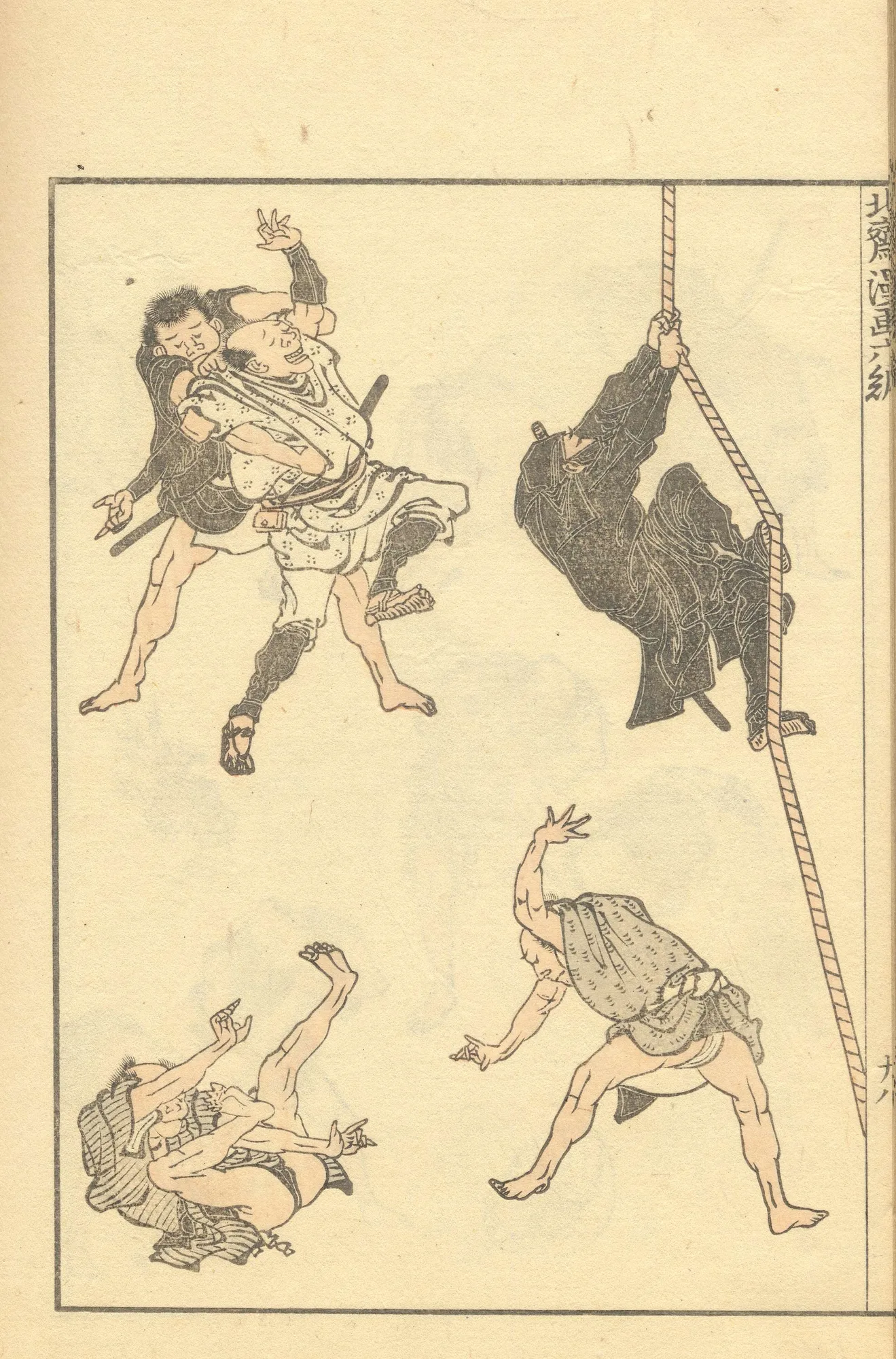
Story「北斎漫画」は、葛飾北斎が人や動物、道具、風景などあらゆるものを描いた絵手本(絵のお手本帳)です。この画像は1817年に出た六編のページ。右上の柱に「北斎漫画六編」とあります。組み合ってたがいを投げようとする男たち、ころげまわる二人、縄をつたってのぼる黒い服の人物などが、生き生きと描かれています。
Hokusai Manga is a set of picture books. In them, Hokusai drew everything: people, animals, tools and landscapes. They were made as model books for learning to draw. This image is a page from Volume 6, published in 1817. The side margin says 'Hokusai Manga, Volume 6'. Men grapple and try to throw each other, two men roll on the ground, and a figure in black climbs a rope.
ここでの「漫画」は、今のストーリーマンガではなく「気の向くままに描いた絵」という意味です。初編は1814年、名古屋の版元・永楽屋東四郎から出ました。墨と灰色、うすい赤のわずかな色で摺られ、手ごろな値段で多くの人が手に入れ、絵を学ぶお手本にしました。六編には弓や槍、柔術など、武術の様子が多く描かれています。
Here, 'manga' does not mean a comic story. It means 'pictures drawn freely, as the mood takes you'. The first volume came out in 1814 from Eirakuya Tōshirō, a publisher in Nagoya. The pages were printed in black, gray and pale red. They were cheap enough for many people to buy and use as drawing models. Volume 6 has many scenes of martial arts, like archery, spears and jujutsu.
北斎漫画は大人気となり、北斎の死後の1878年まで、全15編が出版されました。収められた図は数千におよびます。19世紀後半にはヨーロッパにも伝わり、画家たちが人や動物のポーズの手本としてじっくり研究しました。この本は、ヨーロッパで北斎の名を広めた作品の一つでもあります。
Hokusai Manga was a big hit. Fifteen volumes came out, the last in 1878, after Hokusai's death. Together they hold thousands of pictures. In the late 1800s, the books reached Europe. Artists there studied the poses of people and animals in them. The books also helped make Hokusai's work known in Europe.
これは北斎の古い本の1ページです。男の人たちが組み合っています。黒い服の人が縄をのぼっています。忍者みたいですね!北斎はこの本を「漫画」と呼びました。でもお話はありません。絵の練習のための本なのです。
This is a page from an old book by Hokusai. Some men are grappling. A man in black is climbing a rope. He looks like a ninja! Hokusai called these books 'manga'. But they have no stories. They are books for learning to draw.
英語のレベルは上の「やさしい/ふつう」で切りかえられます。
えっ!?な裏ネタ
Secrets北斎の時代の「漫画」は、気ままにさらさら描いた絵のこと。ストーリーやふきだしはありません。それでも、動きを一瞬でとらえる描き方は、今のマンガにも通じるものがあります。
In Hokusai's time, 'manga' meant quick, free drawings. There were no stories or speech balloons. Still, the way he caught movement in an instant feels close to modern manga.
1812年ごろ、北斎は名古屋の弟子・牧墨僊(まきぼくせん)の家に泊まり、たくさんの下絵を描きました。それがもとになって、北斎漫画の初編が名古屋の版元から出版されたのです。
Around 1812, Hokusai stayed at the home of his student Maki Bokusen in Nagoya. He made many drawings there. They became the first volume of Hokusai Manga, published in Nagoya.
フランスの版画家ブラックモンが、日本から届いた陶器の包み紙に北斎漫画が使われているのを見つけ、夢中になった、という有名な話があります。ただし、本当かどうかははっきりしない言い伝えです。
A famous story says the French printmaker Bracquemond found pages of Hokusai Manga used as packing for Japanese pottery and fell in love with them. But nobody knows if this story is true.
北斎は1849年に亡くなりましたが、北斎漫画の出版は続き、最後の十五編が出たのは明治時代の1878年。60年以上もかけて完結した、超ロングセラーでした。ページをめくれば、人、動物、妖怪、道具など、江戸の世界がまるごと詰まっています。
Hokusai died in 1849, but the books kept coming. The fifteenth and last volume came out in 1878, in the Meiji period. It took more than 60 years to finish. It was a true long seller. Turn the pages and you find people, animals, monsters and tools: the whole world of Edo.
ここを見て!
Look Closer1投げ技の二人Two men grappling
組み合って、相手を投げようとする二人。足のふんばりまで描かれています。
Two men grab each other and try to throw. Even the way they brace their legs is shown.
2縄をのぼる黒装束Figure in black on a rope
黒い服で縄をつたってのぼる人物。忍者のようにも見えます。
A person in black climbs a rope. It looks like a ninja.
3ころげまわる二人Two men rolling
地面でもつれあう二人。手足がからまり、体の動きがよくわかります。
Two men tumble on the ground. Their arms and legs are tangled.
4身がまえる男Man ready to fight
腰を落とし、手をのばして身がまえる男。筋肉の形がはっきり描かれています。
A man bends low and reaches out, ready to move. His muscles are clearly drawn.
英語で名画を語ろう
Talk about Art in EnglishHokusai drew people in motion, like wrestlers and climbers.
北斎は、組み合う人やのぼる人など、動いている人々を描きました。
💡 in motion は「動いている状態で」。スケッチや写真の説明に便利です。
英語で説明すると… Describe it
これは絵手本の1ページです。左上では、二人の男が組み合っています。右では、黒い服の男が縄をのぼっています。左下では二人の男がもつれ合い、右下ではもう一人の男が身がまえています。
This is a page from a picture book. At the top left, two men are grappling. On the right, a man in black is climbing a rope. At the bottom left, two men are tangled together, and at the bottom right, another man is standing in a fighting pose.
考えてみよう Think & Talk
- 自分のスケッチ帳「漫画」を作るなら、何を描きますか?If you made your own 'manga' book of sketches, what would you draw?
- ヨーロッパの人たちはなぜ、これらのスケッチをそんなに気に入ったと思いますか?Why do you think people in Europe liked these sketches so much?
この作品の英単語
WordsThis book is full of quick sketches.
この本は素早いスケッチでいっぱいだ。
Volume 6 shows many martial arts.
六編にはたくさんの武術が描かれている。
A man in black climbs a rope.
黒い服の男が縄をのぼっている。
European artists studied the poses in these books.
ヨーロッパの画家たちはこの本のポーズを研究した。
ミニクイズ
QuizQ. 「北斎漫画」の「漫画」とはどういう意味?What does 'manga' mean in Hokusai Manga?
気の向くままに描いた絵、という意味です。絵のお手本帳でした。
It means pictures drawn freely. The books were drawing models.
ウソ?ホント? 北斎漫画は全部で15編ある。Hokusai Manga has fifteen volumes in all.
1814年から1878年にかけて15編が出版されました。
Fifteen volumes came out between 1814 and 1878.
ウソ?ホント? 北斎漫画には、ふきだしのせりふがたくさんある。Hokusai Manga has lots of speech balloons.
ふきだしもストーリーもありません。絵のお手本帳です。
There are no speech balloons or stories. They are drawing model books.
 画像の出典とライセンス / Image credit
- PDHokusai sketches - hokusai manga vol6.jpg(Wikimedia Commons)
ライセンス:Public domain(パブリックドメイン)/作者・撮影者の表記:Katsushika Hokusai
この作品は、作者の死後長い年月がたち著作権の保護期間が終わった「パブリックドメイン」の作品です。画像は平面の作品を忠実に写したもので、新しい著作権は生じません(Wikimedia Commons の PD-Art の考え方)。 所蔵:所蔵先不明(版本の1ページ)(Collection unknown (a page from a printed book))。画像は表示のために縮小・WebP 形式に変換しています。
葛飾北斎のほかの作品