 ワークシート
 ぬりえ
 迷路
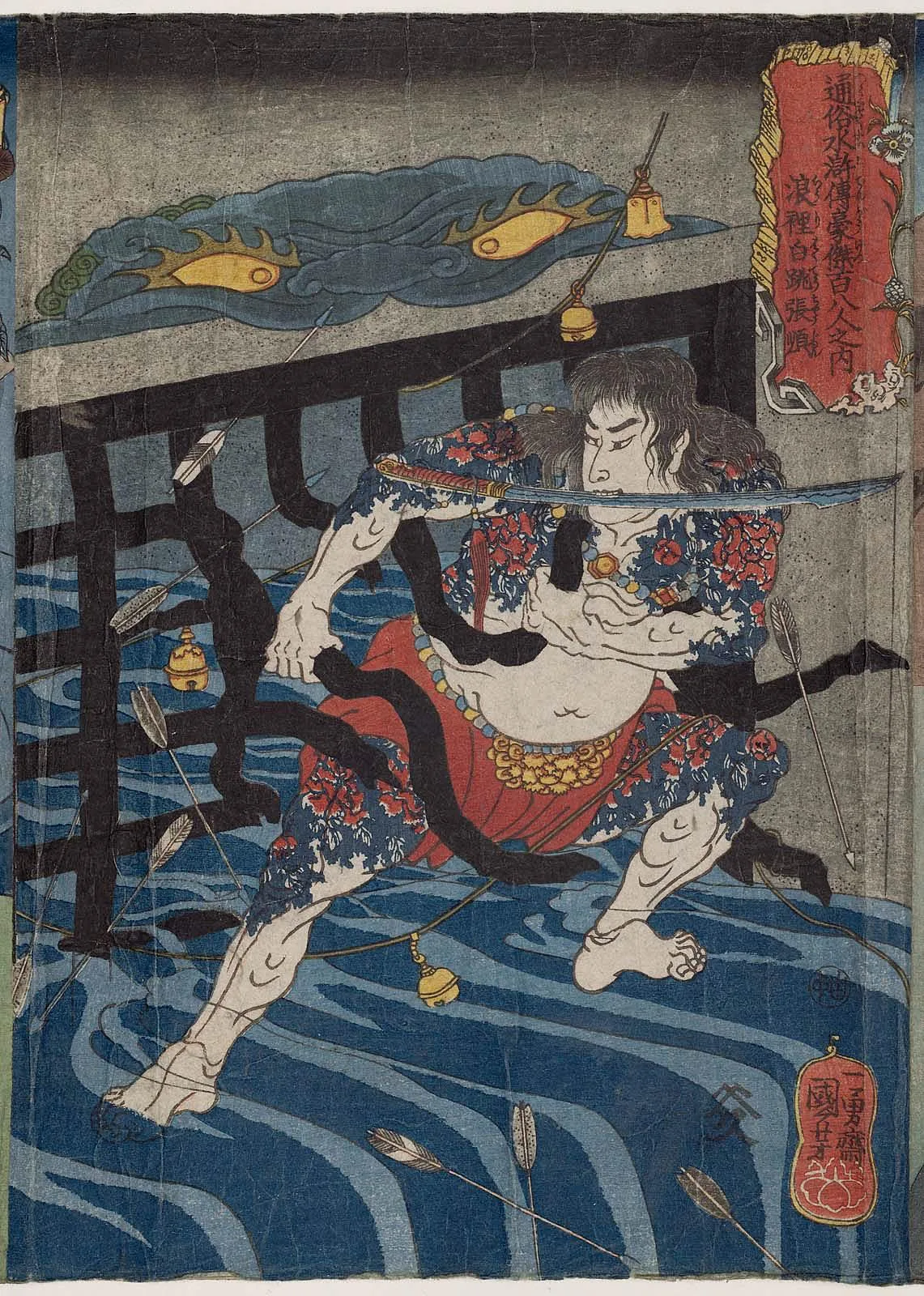
刀をくわえ、矢の雨の中で水門をこじ開ける!国芳出世作の豪傑。A sword in his teeth, forcing open a water gate under a rain of arrows! A hero from the series that made Kuniyoshi a star.
 美術館アンテナ:歌川国芳の作品に会える展覧会
この作品のお話
Story荒れる水の中、長い髪の男が口に刀をくわえ、両手で黒い格子の水門をこじ開けようとしています。まわりには矢が飛びかい、水門には鈴がぶら下がっています。中国の長編小説『水滸伝』の英雄・張順(ちょうじゅん)です。歌川国芳が1827年ごろから出したシリーズ「通俗水滸伝豪傑百八人之一個」の一枚です。
In rushing water, a long-haired man holds a sword in his teeth and tries to force open a black water gate with both hands. Arrows fly around him, and bells hang from the gate. He is Zhang Shun, a hero of the long Chinese novel Water Margin. This is from Utagawa Kuniyoshi's series 'One of the 108 Heroes of the Popular Water Margin,' which began around 1827.
『水滸伝』は、梁山泊(りょうざんぱく)に集まった108人の豪傑たちの物語で、江戸でも大人気でした。張順は白い肌と、魚のように水中を泳ぐ腕前から「浪裡白跳(ろうりはくちょう)」、波間の白い魚とあだ名されました。この絵は、物語の終わり近く、彼が水門から敵の町にしのびこもうとする場面を描いています。体の花もようは入れ墨で、国芳は英雄たちを色あざやかな入れ墨の姿で描きました。
Water Margin tells of 108 heroes who gather at Liangshan Marsh, and it was very popular in Edo. Because of his white skin and his skill in swimming like a fish, Zhang Shun was nicknamed 'White Streak in the Waves.' This print shows a scene near the end of the story, when he tries to sneak into an enemy city through a water gate. The flower patterns on his body are tattoos. Kuniyoshi drew the heroes with colorful tattoos.
このシリーズは大ヒットし、それまであまり売れなかった国芳は、一気に「武者絵の国芳」と呼ばれる人気絵師になりました。人気作は何度も摺られ、画像の一枚はボストン美術館が持つもので、美術館はこの摺りを1845〜47年ごろのものとしています。同じ図柄は大英博物館や東京国立博物館などにもあります。
The series was a huge hit. Kuniyoshi, who had not sold well before, quickly became a star known as 'Kuniyoshi of warrior prints.' Popular designs were printed many times. The one in this image belongs to the Museum of Fine Arts, Boston, and the museum dates this impression to about 1845–47. The same design is also in the British Museum, the Tokyo National Museum and other collections.
この男の人は、中国の物語の英雄です。魚のように泳げます。口に刀をくわえています。水の中で大きな門を押しています。まわりにたくさんの矢が飛んでいます!
This man is a hero from a Chinese story. He can swim like a fish. He has a sword in his mouth. He pushes a big gate in the water. Many arrows fly around him!
英語のレベルは上の「やさしい/ふつう」で切りかえられます。
えっ!?な裏ネタ
Secrets水門の格子には、いくつも鈴がぶら下がっています。だれかが水門にさわると鈴が鳴り、見張りに知らせる仕かけだと考えられます。張順が音を立てた瞬間、矢がいっせいに飛んできた、という緊張の場面なのです。
Several bells hang from the bars of the water gate. They seem to be a trap that rings to warn the guards when someone touches the gate. This is the tense moment when the bells ring and arrows start flying at Zhang Shun.
国芳が描いた、全身にあざやかな入れ墨をした水滸伝の英雄たちは大評判になりました。同じころ江戸では、火消しや職人のあいだで大きな入れ墨が流行しており、国芳の絵がその流行を後押ししたとも言われています。
Kuniyoshi's Water Margin heroes, covered with bright tattoos, became a sensation. Large tattoos were fashionable among Edo firefighters and craftsmen at the same time, and the prints are said to have helped that fashion grow.
国芳より前に、曲亭馬琴が初編を訳し、葛飾北斎が挿絵を描いた『新編水滸画伝』が出版され、江戸で水滸伝の人気が高まっていました。国芳は、その人気の物語を一枚ずつの迫力ある英雄の絵にして、大当たりをとったのです。
Before Kuniyoshi, a book called Shinpen Suiko Gaden came out. Kyokutei Bakin translated its first part, and Katsushika Hokusai illustrated it. It made Water Margin popular in Edo. Kuniyoshi turned the popular story into powerful single-sheet hero prints and scored a big hit.
国芳は10代で歌川豊国に入門しましたが、長いあいだ人気が出ず、苦しい時代が続いたと言われます。30歳ごろに出したこのシリーズでようやく大ブレイク。のちにネコの絵や寄せ絵など、ユーモアあふれる作品でも人気者になりました。
Kuniyoshi became a student of Utagawa Toyokuni as a teenager, but for many years he was not popular and had a hard time. This series, made when he was about 30, finally made him famous. Later he also became loved for funny works, such as his cat prints.
ここを見て!
Look Closer1口にくわえた刀Sword in his teeth
両手を使うため、刀を口にくわえています。キッと前を見すえる目にも注目。
He holds the sword in his teeth to keep both hands free. Look at his fierce eyes, too.
2花もようの入れ墨Flower tattoos
体じゅうに入った、赤と青の花もようの入れ墨。国芳の英雄たちのトレードマークです。
Red and blue flower tattoos cover his body. They are a trademark of Kuniyoshi's heroes.
3水門の鈴Bells on the gate
水門にぶら下がる金色の鈴。さわると鳴って、見張りに知らせます。
Golden bells hang from the gate. If touched, they ring and warn the guards.
4飛んでくる矢Flying arrows
画面のあちこちに矢がささり、飛びかっています。危険がせまる場面です。
Arrows fly and stick everywhere. Danger is close.
英語で名画を語ろう
Talk about Art in EnglishHe is holding a sword between his teeth.
彼は刀を口にくわえています。
💡 物を歯のあいだにはさむ=くわえる。犬が骨をくわえるのも a bone between its teeth。
英語で説明すると… Describe it
これは水の中の英雄の絵です。長い髪で、色あざやかな入れ墨があります。刀を口にくわえ、両手で黒い門を押しています。まわりには矢が飛び、門には金色の鈴がぶら下がっています。
This is a picture of a hero in the water. He has long hair and colorful tattoos. He is holding a sword between his teeth and pushing a black gate with both hands. Arrows are flying around him, and golden bells hang from the gate.
考えてみよう Think & Talk
- 江戸の人々は、なぜ中国の物語の英雄を好きになったのだと思いますか?Why do you think people in Edo loved heroes from a Chinese story?
- この絵のどんなところが、わくわくする感じを生んでいると思いますか?What makes this picture feel exciting?
この作品の英単語
WordsZhang Shun is one of the 108 heroes.
張順は108人の豪傑の一人です。
Arrows are flying all around him.
彼のまわりを矢が飛びかっています。
He has flower tattoos on his body.
彼の体には花もようの入れ墨があります。
His eyes look fierce.
彼の目はするどく、はげしく見えます。
ミニクイズ
QuizQ. 張順のあだ名「浪裡白跳」は、どんな意味?What does Zhang Shun's nickname mean?
白い肌と、魚のように泳ぐ腕前からついたあだ名です。
He got the name for his white skin and his fish-like swimming.
ウソ?ホント? 『水滸伝』は、もともと中国の小説だ。Water Margin is originally a Chinese novel.
中国で生まれた長編小説で、江戸時代の日本でも大人気になりました。
It is a long Chinese novel that became very popular in Edo-period Japan.
ウソ?ホント? 国芳は、このシリーズを出す前から日本一の人気絵師だった。Kuniyoshi was already the most popular artist before this series.
長く売れない時代が続き、このシリーズでようやく人気が出ました。
He struggled for years, and this series finally made him famous.
 画像の出典とライセンス / Image credit
- PDUtagawa Kuniyoshi 108 héroes Zhang Shun bregando sobre olas.jpg(Wikimedia Commons)
ライセンス:Public domain(パブリックドメイン)/作者・撮影者の表記:Utagawa Kuniyoshi
この作品は、作者の死後長い年月がたち著作権の保護期間が終わった「パブリックドメイン」の作品です。画像は平面の作品を忠実に写したもので、新しい著作権は生じません(Wikimedia Commons の PD-Art の考え方)。 所蔵:ボストン美術館(画像の摺り。美術館の記録では1845〜47年ごろの摺り)(Museum of Fine Arts, Boston (this impression, dated c. 1845–47 by the museum))。画像は表示のために縮小・WebP 形式に変換しています。
歌川国芳のほかの作品