 ワークシート
 ぬりえ
 迷路
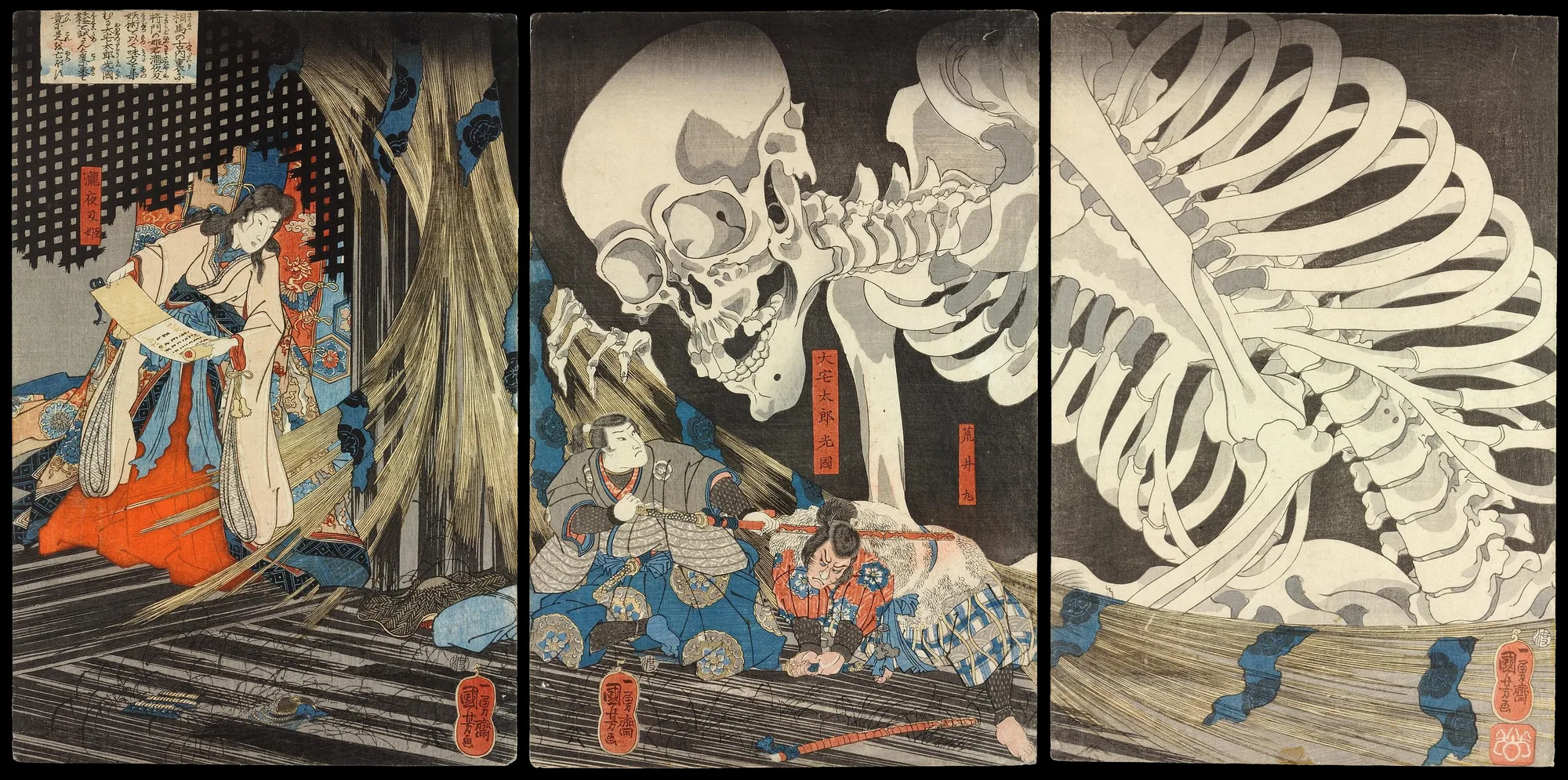
すだれを破って巨大ガイコツ登場!三枚つづきの画面いっぱいの大迫力。A giant skeleton breaks through the blinds! It fills three sheets of paper.
 美術館アンテナ:歌川国芳の作品に会える展覧会
この作品のお話
Story荒れはてた古い御殿のすだれを破って、巨大なガイコツがぬっと姿を現しています。左で巻物を手に呪文をとなえているのは、滝夜叉姫(たきやしゃひめ)。立ち向かうのは武士の大宅太郎光国(おおやのたろうみつくに)です。歌川国芳が1844年ごろに描いた、三枚の紙をつないだ大判の浮世絵です。
A huge skeleton pushes through the torn blinds of an old, ruined palace. On the left, Princess Takiyasha holds a scroll and chants a spell. The warrior Ōya no Tarō Mitsukuni stands up to fight. Utagawa Kuniyoshi made this large print on three joined sheets around 1844.
滝夜叉姫は、平安時代に関東で反乱を起こした平将門(たいらのまさかど)の娘とされる伝説上の人物です。父の死後、妖術で仲間を集め、相馬の古い御殿にひそんだと語られます。もとになったのは、江戸の作家・山東京伝の読本『善知安方忠義伝』。物語では骸骨がたくさん出てきますが、国芳はそれを一体の巨大なガイコツにして、ぐっと迫力を増しました。
Takiyasha is a legendary daughter of Taira no Masakado, a warrior who rebelled in eastern Japan in the 10th century. After her father's death, she used magic to gather followers and hid in the old palace at Sōma. The scene comes from a novel by the Edo writer Santō Kyōden. The story has many skeletons, but Kuniyoshi turned them into one gigantic skeleton to make it more powerful.
三枚の紙を一つの大画面として使い、ガイコツを二枚にまたがらせた大胆さは、国芳の得意技でした。浮世絵は同じ版木から何枚も摺られたので、この図柄も世界中の美術館にあります。画像は大英博物館が持つ一枚です。今では広く複製され、日本の妖怪の絵を代表する有名なイメージの一つになっています。
Kuniyoshi loved to use three sheets as one big picture, and here the skeleton spreads across two of them. Many prints were made from the same blocks, so this design is in museums around the world. The image here is the British Museum's print. Today the triptych is widely reproduced and has become one of the best-known images of Japanese supernatural art.
これはこわい絵です。とても大きな骸骨が古い屋敷に入ってきます。左のお姫さまが魔法の呪文を読んでいます。骸骨の下には二人の勇かんな男がいます。画家はこの大きな絵に三枚の紙を使いました。
This is a scary picture. A very big skeleton comes into an old house. A princess on the left reads a magic spell. Two brave men are under the skeleton. The artist used three sheets of paper for this big picture.
英語のレベルは上の「やさしい/ふつう」で切りかえられます。
えっ!?な裏ネタ
Secretsこのガイコツは、ろっ骨や背骨、手の骨の形がかなり正確に描かれています。国芳は西洋の解剖図を見て参考にしたのではないかと言われています。江戸の妖怪画なのに、理科室の骨格標本のようなリアルさがあるのです。
The ribs, spine and hand bones are drawn quite accurately. People say Kuniyoshi may have studied Western anatomy books. It is a monster picture from Edo, but it looks as real as a skeleton model in a science room.
この絵は巨大ガイコツの妖怪「がしゃどくろ」の絵としてよく紹介されます。でも、がしゃどくろという名前は昭和になって妖怪の本で広まったものとされ、国芳の時代にはありませんでした。絵のほうが妖怪より100年以上先輩なのです。
This print is often shown as a picture of the giant skeleton monster 'gashadokuro'. But that name is said to have spread through monster books in the 20th century. It did not exist in Kuniyoshi's time. The picture is over 100 years older than the monster's name!
もとになった山東京伝の物語では、光国の前に現れるのは、たくさんの骸骨たちでした。国芳はそれを思いきって一体の巨人に変えました。原作どおりではなく、絵として一番こわく見える形を選んだ、国芳の演出力がわかります。
In Santō Kyōden's original story, many skeletons appear before Mitsukuni. Kuniyoshi boldly changed them into one giant. He did not follow the book exactly. He chose the scariest way to show it as a picture.
のちに「画鬼」と呼ばれた河鍋暁斎は、7歳ごろに国芳の画塾に入って絵を学びました。その後は狩野派でも修業しましたが、妖怪やガイコツを生き生きと、ユーモアたっぷりに描く国芳の画風は、暁斎にも受けつがれていきます。
Kawanabe Kyōsai, later nicknamed the 'demon of painting', joined Kuniyoshi's studio at about age seven. He later trained in the Kanō school, but Kuniyoshi's lively, funny monsters and skeletons lived on in Kyōsai's art.
ここを見て!
Look Closer1巨大などくろThe giant skull
大きな目の穴で、武士たちをじっとのぞきこむどくろ。歯の一本一本まで描かれています。
The skull peers down at the warriors with huge, empty eyes. Every tooth is drawn.
2滝夜叉姫Princess Takiyasha
巻物を広げて呪文をとなえる姫。豪華な着物が、荒れた御殿の中で目立っています。
The princess opens a scroll and chants a spell. Her rich robes stand out in the ruined palace.
3すだれをつかむ骨の手The bony hand
細い指の骨が、すだれをつかんで破っています。今にも画面から出てきそうです。
Thin finger bones grab and tear the bamboo blind. It looks as if it will come out of the picture.
4大宅太郎光国Ōya no Tarō Mitsukuni
ガイコツをにらみ、刀に手をかける武士。こわがらずに立ち向かう、物語のヒーローです。
The warrior glares at the skeleton with his hand on his sword. He is the brave hero of the story.
英語で名画を語ろう
Talk about Art in EnglishThe giant skeleton towers over the two warriors.
巨大な骸骨が、二人の武士の上にそびえ立っています。
💡 大きなものが小さなものの上に高くそびえる様子。高層ビルにも使えます。
英語で説明すると… Describe it
この絵は三枚の紙でできています。左には、長い着物を着た女性がいます。彼女は巻物を持っています。右では、巨大な骸骨が暗やみから出てきています。骸骨の下に、二人の武士がいます。
This picture is made of three sheets. On the left, there is a woman in a long robe. She is holding a scroll. On the right, a huge skeleton is coming out of the dark. Two warriors are under the skeleton.
考えてみよう Think & Talk
- 小さな骸骨がたくさんいるより、巨大な骸骨一体のほうがこわいのはなぜだと思いますか?Why do you think one giant skeleton is scarier than many small ones?
- 物語はこのあとどうなると思いますか?What do you think happens next in the story?
この作品の英単語
WordsA giant skeleton appears in the old palace.
古い御殿に巨大な骸骨が現れます。
The princess reads a spell from a scroll.
姫は巻物から呪文を読み上げます。
The ruined palace is dark and quiet.
荒れはてた御殿は暗くて静かです。
She summons a skeleton with magic.
彼女は妖術で骸骨を呼び出します。
ミニクイズ
QuizQ. 国芳はガイコツを、原作の物語とどう変えた?How did Kuniyoshi change the skeletons from the original story?
物語ではたくさんの骸骨が出てきますが、国芳は一体の巨人にまとめました。
The story has many skeletons, but Kuniyoshi made them into one giant.
ウソ?ホント? この絵は、三枚の紙をつないだ大きな浮世絵だ。This picture is a big print made of three sheets.
大判の紙を三枚つないだ「三枚続」です。
It is a triptych, made of three large sheets.
ウソ?ホント? 「がしゃどくろ」という名前は、国芳がこの絵のためにつけた。Kuniyoshi invented the name 'gashadokuro' for this picture.
その名前は昭和になって広まったものとされ、国芳の時代にはありませんでした。
The name is said to have spread in the 20th century, long after Kuniyoshi.
 画像の出典とライセンス / Image credit
- PDTakiyasha the Witch and the Skeleton Spectre, by Utagawa Kuniyoshi.jpg(Wikimedia Commons)
ライセンス:Public domain(パブリックドメイン)
この作品は、作者の死後長い年月がたち著作権の保護期間が終わった「パブリックドメイン」の作品です。画像は平面の作品を忠実に写したもので、新しい著作権は生じません(Wikimedia Commons の PD-Art の考え方)。 所蔵:大英博物館(画像の摺り)(The British Museum (this impression))。画像は表示のために縮小・WebP 形式に変換しています。
歌川国芳のほかの作品