 ワークシート
 ぬりえ
 迷路
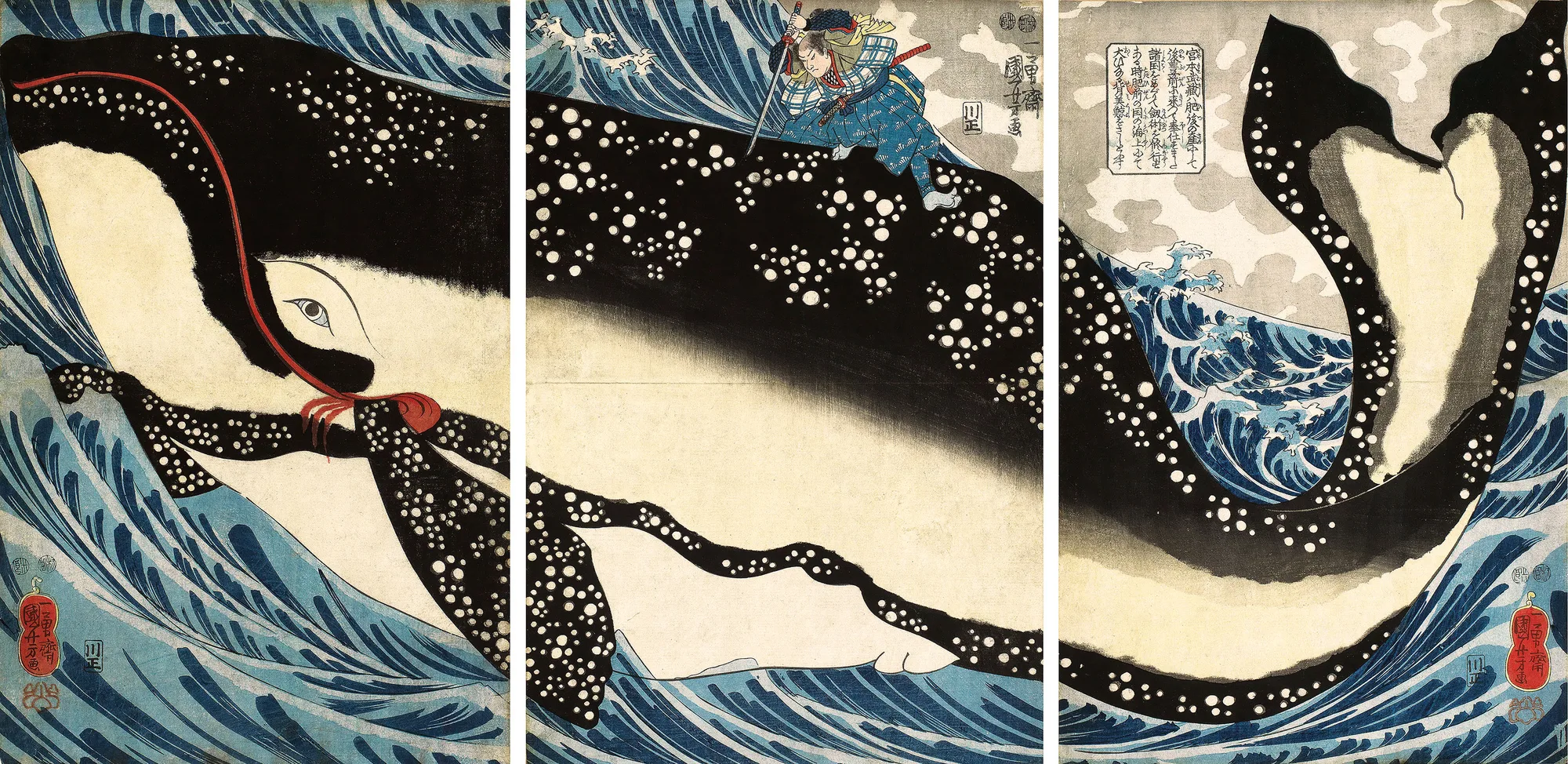
三枚の紙からはみ出す巨大クジラ!その背中で刀をふるうのは宮本武蔵。A whale too big for three sheets of paper! On its back, Musashi swings his sword.
 美術館アンテナ:歌川国芳の作品に会える展覧会
この作品のお話
Story荒れる海から、白い点もようの巨大なクジラが姿を現しています。その背中にしがみつき、刀を突き立てているのは、剣豪・宮本武蔵。クジラの体は三枚の紙をまたいで続き、しっぽは右の一枚からはみ出しそうです。武者絵の名人・歌川国芳が1847〜50年ごろに出した三枚続の浮世絵です。
A giant whale with white spots rises from the stormy sea. Clinging to its back and stabbing with his sword is the great swordsman Miyamoto Musashi. The whale's body stretches across three sheets of paper, and its tail almost leaves the right sheet. Utagawa Kuniyoshi, a master of warrior prints, published this triptych around 1847 to 1850.
宮本武蔵は江戸時代のはじめに実在した剣術家で、生涯一度も負けなかったと伝えられます。けれども、武蔵がクジラを退治したという確かな記録はなく、これは後の時代に作られた伝説です。国芳は三枚の紙を一つの大きな画面として使い、人間の小ささとクジラの大きさを思いきり強調しました。
Miyamoto Musashi was a real swordsman of the early Edo period. People say he never lost a duel. But there is no reliable record that he fought a whale. That story is a legend created after his lifetime. Kuniyoshi used three sheets as one big picture. He made the man tiny and the whale enormous to show the difference.
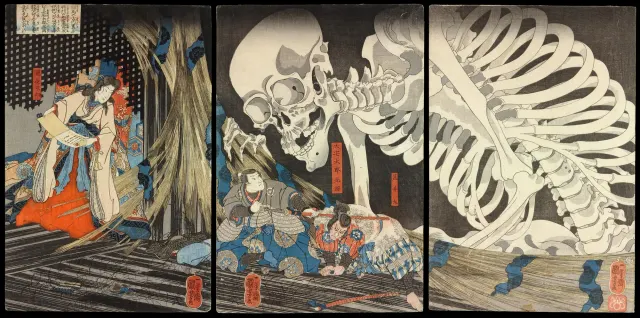
国芳は、三枚続を使って巨大な生きものを描くのが得意で、「相馬の古内裏」のガイコツもその一つです。浮世絵は同じ版木から何枚も摺られたので、この図柄も各地の美術館にあります。画像の一枚はオークションに出品された摺りで、今の所蔵先はわかっていません。
Kuniyoshi was very good at drawing giant creatures across three sheets. The skeleton in 'The Old Palace at Sōma' is another example. Many copies were printed from the same blocks, so museums in many places own this design. The copy in this image was sold at auction, and we do not know who owns it now.
とても大きなクジラが海を泳いでいます。その背中に小さな男がいます。有名な剣豪、宮本武蔵です。クジラはとても大きいです。紙が三枚も必要です!でも、この戦いはお話の中だけのことです。
A very big whale swims in the sea. A small man is on its back. He is Miyamoto Musashi, a famous swordsman. The whale is so big. It needs three sheets of paper! But this fight is only a story.
英語のレベルは上の「やさしい/ふつう」で切りかえられます。
えっ!?な裏ネタ
Secrets宮本武蔵は剣だけでなく、水墨画の名手でもありました。枯れ枝にとまるモズを描いた「枯木鳴鵙図」は、国の重要文化財に指定されています。剣の達人の筆は、絵でも一本の線に迷いがないと言われます。
Musashi was not only a swordsman but also a master of ink painting. His picture of a shrike on a dead branch is an Important Cultural Property of Japan. People say his brush lines, like his sword, never hesitate.
武蔵が戦ったと記録に残るのは人間の剣士たちで、巌流島の佐々木小次郎との決闘が特に有名です。クジラ退治は、武蔵の強さを大げさに語る伝説から生まれた話。国芳はそれを最高に派手な絵にしました。
Musashi's real fights were against human swordsmen. His duel with Sasaki Kojirō on Ganryū Island is the most famous. The whale story came from legends that exaggerated his strength. Kuniyoshi turned it into the most exciting picture possible.
クジラの頭は左の一枚、背中は真ん中、しっぽは右の一枚。どの紙にもクジラの全体はおさまりません。わざと画面からはみ出させることで、「とてつもなく大きい」ことを感じさせる国芳の作戦です。
The whale's head is on the left sheet, its back in the middle, and its tail on the right. No single sheet holds the whole whale. By letting it spill out of the frame, Kuniyoshi makes us feel how huge it is.
クジラの黒い背には、大小の白い点がびっしり。白と黒の強い対比が、巨大な体の曲線を目立たせ、画面に迫力をあたえています。点の大きさもばらばらで、波しぶきや星空のようにも見えます。この大胆なもようで、巨大なクジラが一目で印象に残ります。
Large and small white spots cover the whale's black back. The strong contrast of black and white makes the curves of its enormous body stand out and adds drama to the print. The dots come in many sizes, almost like sea spray or a starry sky. This bold pattern makes the giant whale unforgettable at a glance.
ここを見て!
Look Closer1宮本武蔵Miyamoto Musashi
クジラの背中にしがみつき、刀を突き立てる武蔵。クジラにくらべて、なんと小さいことでしょう。
Musashi clings to the whale's back and drives in his sword. He looks so small next to the whale.
2クジラの目The whale's eye
大きな顔の中の、意外に小さくやさしそうな目。見る人の気持ちによって表情がちがって見えます。
A surprisingly small, gentle-looking eye in the huge head. Its expression seems to change with your mood.
3クジラのしっぽThe whale's tail
右の一枚で、高くはね上がる巨大な尾びれ。波しぶきが上がっています。
On the right sheet, the giant tail fin swings high, throwing up spray.
4さかまく波Crashing waves
細かな線で描かれた青い波と白いしぶき。クジラと武蔵の戦いの激しさを伝えます。
Blue waves and white spray drawn with fine lines. They show how fierce the fight is.
英語で名画を語ろう
Talk about Art in EnglishKuniyoshi made the whale larger than life.
国芳はクジラを実物以上に大きく描きました。
💡 「実物より大きい」から「ド派手な・伝説的な」の意味にも。人の性格にも使えます。
英語で説明すると… Describe it
この絵は三枚の紙でできています。白い点のある巨大な黒いクジラが、大きな波の中を泳いでいます。その背中には、刀を持った小さな男がいます。右では、クジラのしっぽが空高く上がっています。
This picture is made of three sheets. A huge black whale with white spots is swimming in big waves. A small man with a sword is on its back. On the right, the whale's tail is high in the air.
考えてみよう Think & Talk
- 人々はなぜ、武蔵がクジラと戦う話を作ったのだと思いますか?Why do you think people made up stories about Musashi fighting a whale?
- クジラがかわいそうですか?それとも武蔵を応援しますか?なぜでしょう?Do you feel sorry for the whale or cheer for Musashi? Why?
この作品の英単語
WordsA giant whale rises from the sea.
巨大なクジラが海から現れます。
Musashi was a famous swordsman.
武蔵は有名な剣豪でした。
The whale story is only a legend.
クジラの話は伝説にすぎません。
He clings to the whale's back.
彼はクジラの背中にしがみついています。
ミニクイズ
QuizQ. 宮本武蔵が、剣のほかにも名人だったことは?Besides sword fighting, what was Musashi also great at?
武蔵の水墨画「枯木鳴鵙図」は重要文化財です。
His ink painting of a shrike is an Important Cultural Property.
ウソ?ホント? 宮本武蔵は、実在した剣術家である。Miyamoto Musashi was a real swordsman.
江戸時代のはじめに実在しました。クジラ退治は伝説です。
He really lived in the early Edo period. The whale story is a legend.
ウソ?ホント? 武蔵が本当にクジラを退治した記録が残っている。There are records that Musashi really killed a whale.
クジラ退治は芝居や講談で生まれた伝説です。
The whale fight is a legend from plays and storytelling.
 画像の出典とライセンス / Image credit
- PDMiyamoto-Musashi-Attacking-Giant-Whale-Utagawa-Kuniyoshi.png(Wikimedia Commons)
ライセンス:Public domain(パブリックドメイン)/作者・撮影者の表記:Utagawa Kuniyoshi
この作品は、作者の死後長い年月がたち著作権の保護期間が終わった「パブリックドメイン」の作品です。画像は平面の作品を忠実に写したもので、新しい著作権は生じません(Wikimedia Commons の PD-Art の考え方)。 所蔵:所蔵先不明(オークションに出品された摺り。同じ図柄の摺りは各地の美術館に)(Collection unknown (an impression sold at auction; other impressions are in museums))。画像は表示のために縮小・WebP 形式に変換しています。
歌川国芳のほかの作品