 ワークシート
 ぬりえ
 迷路
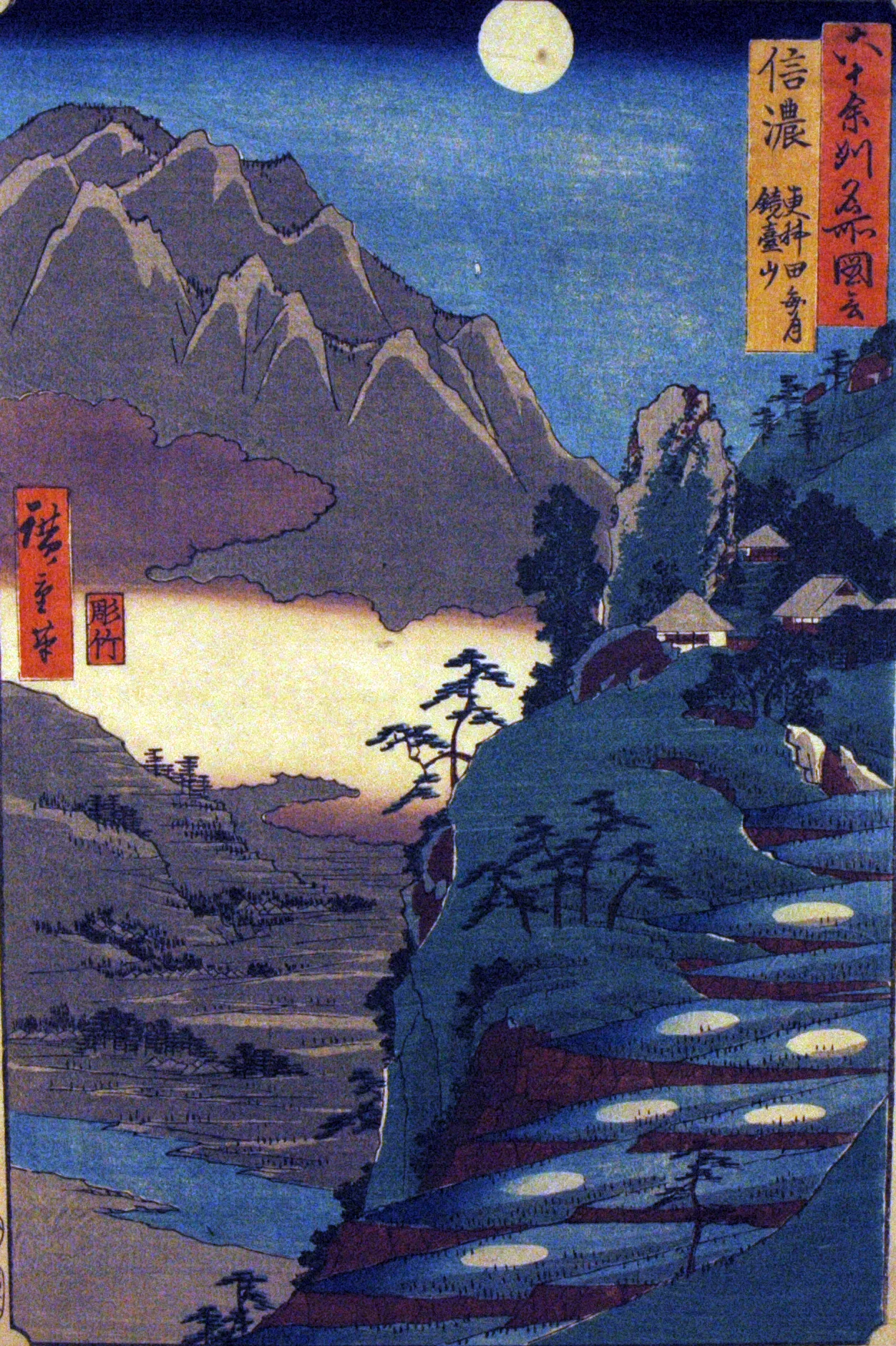
月が田んぼに七つも!?一枚一枚の田に映る「田毎の月」。Seven moons in the rice fields!? A moon in every paddy.
 美術館アンテナ:歌川広重の作品に会える展覧会
この作品のお話
Story夜空にまんまるの月。その下の山の斜面には、階段のように小さな田んぼが重なり、その一枚一枚に白い月が映っています。歌川広重の「六十余州名所図会」の一枚で、信濃国(今の長野県)の更科(さらしな)にある姨捨(おばすて)の棚田を描いています。月が田ごとに映る景色は「田毎の月(たごとのつき)」と呼ばれ、昔から有名でした。
A full moon shines in the night sky. On the mountain slope below, small rice paddies step down like stairs, and a white moon is reflected in each one. This is from Utagawa Hiroshige's Famous Views of the Sixty-odd Provinces. It shows the terraced rice fields of Obasute at Sarashina in Shinano Province, now Nagano. The view of the moon in each paddy, called 'tagoto no tsuki,' has been famous for centuries.
「六十余州名所図会」は、日本の国々(今の都道府県のようなもの)から一つずつ名所を選んで描いた、縦長のシリーズです。題名の鏡台山(きょうだいさん)は、姨捨から見て月がのぼってくる山。広重は、山の高い目線から谷を見下ろすように描き、月明かりにうかぶ雲や川、ぽつぽつと光る田んぼを、深い青と紫で静かにまとめました。
Famous Views of the Sixty-odd Provinces is a series of tall prints. Hiroshige chose one famous place from each province of Japan, a bit like today's prefectures. Mount Kyōdai in the title is the mountain where the moon rises, seen from Obasute. Hiroshige looked down into the valley from high up, and painted the moonlit clouds, the river and the shining paddies in quiet blues and purples.
姨捨の棚田は今も米作りが続き、1999年には国の名勝に、2010年には「重要文化的景観」にも選ばれました。秋の夜、水を張った田に月が映る景色を見に、今も多くの人が訪れます。浮世絵は同じ版木から何枚も摺られたので、この図柄も世界中にあります。画像の摺りはアメリカのサンディエゴ美術館の所蔵です。
Rice is still grown in the Obasute terraces today. They became a national Place of Scenic Beauty in 1999 and an Important Cultural Landscape in 2010. Many people still visit to see the moon in the flooded paddies. Many prints were made from the same blocks, so this design is in museums around the world. This impression is in the San Diego Museum of Art.
これは山の夜です。空には月が一つあります。田んぼを見てください。水の中に月がたくさん見えます!小さな田んぼの一枚一枚に、月が映っているのです。
This is a night in the mountains. There is one moon in the sky. Look at the rice fields. You can see many moons in the water! Each small field shows the moon.
英語のレベルは上の「やさしい/ふつう」で切りかえられます。
えっ!?な裏ネタ
Secrets水面に映る月は、見る人の位置によって場所が決まるので、一つの場所からたくさんの田に同時に映って見えることは、ふつうありません。歩くにつれて田から田へ月が移っていく様子を、広重は一枚の絵にまとめたと考えられます。
Where a reflected moon appears depends on where you stand, so you usually cannot see it in many paddies at the same time. Hiroshige probably put into one picture what you see as you walk, with the moon moving from paddy to paddy.
俳人の松尾芭蕉は1688年、更科の月を見るためにわざわざ旅をし、その旅を『更科紀行』という作品に残しました。更科は、それほど「月の名所」としてあこがれの土地だったのです。
In 1688, the haiku poet Matsuo Bashō made a special trip just to see the moon at Sarashina. He wrote about it in a travel diary called Sarashina Kikō. Sarashina was that famous as a place to see the moon.
1999年、姨捨の棚田は「姨捨(田毎の月)」として国の名勝に指定されました。農地が名勝になったのは日本で初めてだと紹介されています。今も人々が米を作り続けることで、この景色が守られています。
In 1999, the Obasute rice terraces were named a national Place of Scenic Beauty as 'Obasute (Tagoto no Tsuki).' It is said to be the first time farmland in Japan received this title. The view survives because people still grow rice there.
署名「広重筆」のとなりの小さな札には「彫竹」とあります。版木を彫った職人「竹」の名前で、晩年の広重の作品を多く手がけた彫師だとされます。彫師の名前が入らない浮世絵も多いなか、ここではしっかり名を残しているのです。
Next to the signature 'Hiroshige hitsu' is a small label that says 'Hori Take,' meaning 'carved by Take.' He is said to have carved many of Hiroshige's late works. Many carvers were not named on prints, but here the carver left his name.
ここを見て!
Look Closer1空の満月Full moon in the sky
画面のいちばん上に光る満月。この一つの月が、下の田んぼに映っています。
The full moon at the very top. This one moon is reflected in the paddies below.
2田毎の月A moon in each paddy
階段のような棚田の一枚一枚に映る、白い月。
White moons are reflected in each of the stair-like rice paddies.
3月明かりの雲Moonlit cloud
月の光に照らされて、明るく光る雲。谷の夜の深さを感じさせます。
A cloud glows brightly in the moonlight, showing how deep the valley is.
4山の上の家Houses on the hill
斜面に建つわらぶきの家。棚田で米を作る人々のくらしが見えます。
Thatched houses on the slope. Here lived the people who grew rice in the terraces.
英語で名画を語ろう
Talk about Art in EnglishAs you walk, the moon appears in the paddies one after another.
歩いていくと、月が田んぼに次々に現れます。
💡 同じものが順番に続いて現れるときの表現。one by one(一つずつ)と似ています。
英語で説明すると… Describe it
これは山の中の夜のながめです。上には満月があります。右には丘の上に小さな田んぼがたくさんあり、どの田にも白い月が映っています。左には大きな山と明るい雲があります。
This is a night view in the mountains. At the top, there is a full moon. On the right, there are many small rice fields on a hill, and each one has a white moon in it. On the left, there is a big mountain and a bright cloud.
考えてみよう Think & Talk
- 人々はなぜ、田んぼに映る月を見るのが好きだったのだと思いますか?Why do you think people loved to see the moon in the rice fields?
- 画家が、本当とは少しちがう景色を描くのはよいことだと思いますか?Is it OK for an artist to draw something that is not exactly real?
この作品の英単語
WordsEach paddy reflects the moon.
どの田んぼも月を映しています。
Rice is grown on the terraces.
棚田で米が作られています。
Small paddies cover the slope.
小さな田んぼが斜面をおおっています。
It is a peaceful night in the mountains.
山の中のおだやかな夜です。
ミニクイズ
QuizQ. 田ごとに月が映る景色を何と呼ぶ?What is the view of the moon in each rice paddy called?
「田毎の月」と呼ばれ、更科の姨捨は昔からその名所でした。
It is called 'tagoto no tsuki,' and Obasute at Sarashina has long been famous for it.
ウソ?ホント? 姨捨の棚田では、今も米が作られている。Rice is still grown in the Obasute terraces.
今も米作りが続き、国の名勝にもなっています。
Yes. Farming continues, and the terraces are a national scenic spot.
ウソ?ホント? この絵は、海の上の月を描いたものだ。This print shows the moon over the sea.
描かれているのは、山の斜面の棚田に映る月です。
It shows the moon reflected in terraced rice fields on a mountain.
 画像の出典とライセンス / Image credit
- PDShinano Province, The Moon Reflected in the Sarashina Paddy-fields, Mount Kyodai (5765891918).jpg(Wikimedia Commons)
ライセンス:Public domain(パブリックドメイン)/作者・撮影者の表記:thesandiegomuseumofartcollection
この作品は、作者の死後長い年月がたち著作権の保護期間が終わった「パブリックドメイン」の作品です。画像は平面の作品を忠実に写したもので、新しい著作権は生じません(Wikimedia Commons の PD-Art の考え方)。 所蔵:サンディエゴ美術館(画像の摺り)(The San Diego Museum of Art (this impression))。画像は表示のために縮小・WebP 形式に変換しています。
歌川広重のほかの作品