 ワークシート
 ぬりえ
 迷路
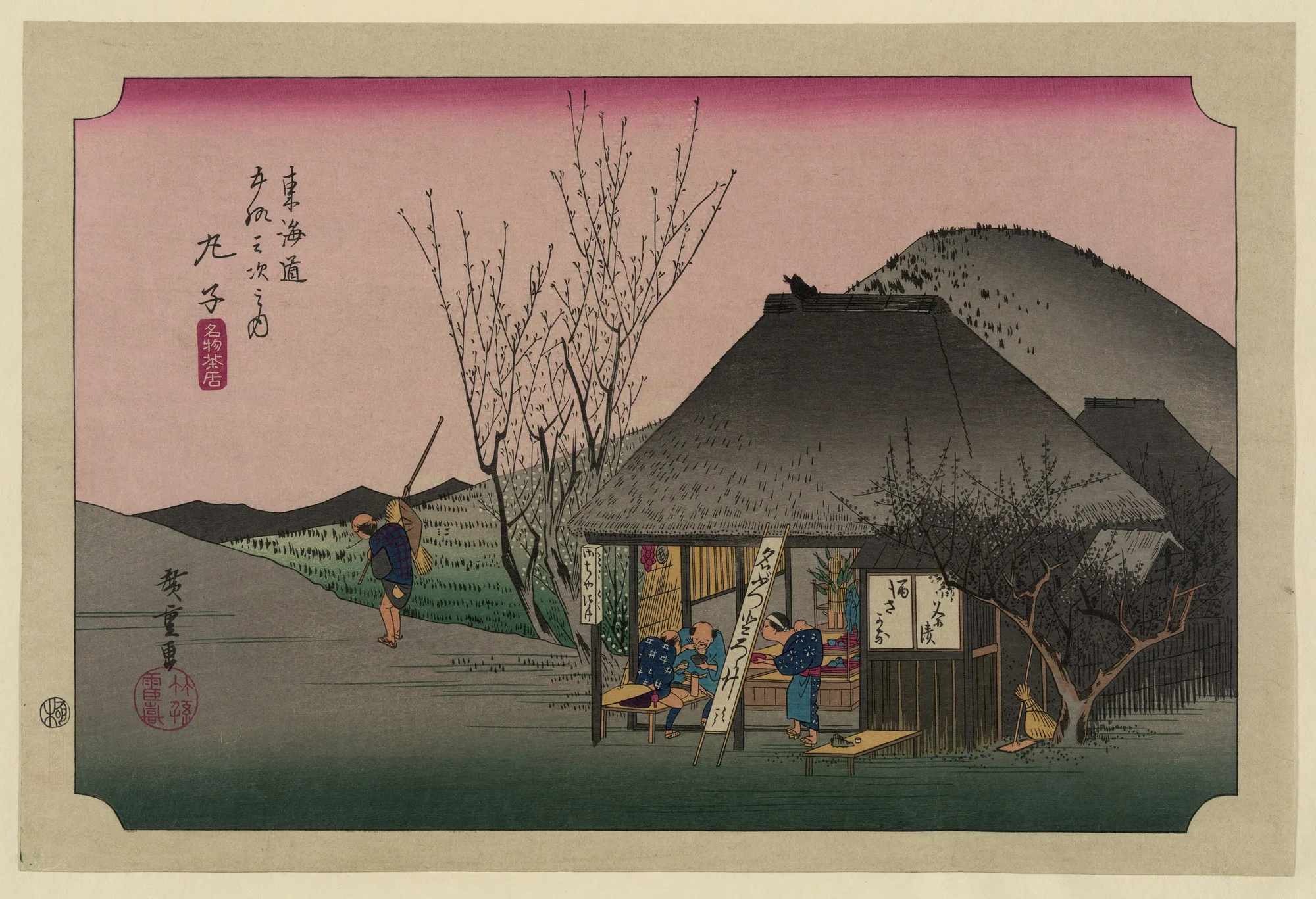
旅のとちゅうで、名物とろろ汁をずずっ!梅が咲く、のどかな茶店。A bowl of yam soup on a long journey! A peaceful teahouse with plum blossoms.
 美術館アンテナ:歌川広重の作品に会える展覧会
この作品のお話
Storyわらぶき屋根の茶店で、旅人が名物の「とろろ汁」を食べています。店先の看板には「名ぶつとろろ汁」の文字。赤ちゃんをおぶった女の人が料理を運び、外では荷物をかついだ旅人が歩いていきます。歌川広重の「東海道五十三次」(保永堂版)の一枚で、江戸から20番目の宿場・鞠子(今の静岡市)を描いています。
At a teahouse with a thatched roof, travelers eat the local specialty, tororo-jiru, a soup of grated yam. The sign in front says 'Famous Tororo Soup'. A woman carrying a baby on her back serves the food, and outside, a traveler walks by with his load. This is from Hiroshige's Fifty-three Stations of the Tōkaidō, the Hōeidō edition. It shows Mariko, the 20th stop from Edo, now part of Shizuoka City.
東海道は、江戸と京都を結ぶいちばん大事な道でした。広重のこのシリーズは1833年ごろから出版されて大ヒットし、広重を一躍人気の絵師にしました。鞠子のとろろ汁は昔から有名で、松尾芭蕉も「梅若菜 丸子の宿の とろろ汁」という句をよんでいます。絵の梅の木は、この句を思い出させます。
The Tōkaidō was the most important road between Edo and Kyoto. This series came out from around 1833 and became a huge hit, making Hiroshige a popular artist. Mariko's yam soup was famous for a long time. The poet Matsuo Bashō even wrote a haiku about plum blossoms, young greens and the yam soup of Mariko. The plum trees in the print remind us of that poem.
鞠子には今も、1596年創業と伝わるとろろ汁の店が営業を続けていて、絵と同じ名物を味わうことができます。この図柄は世界中の美術館に所蔵されています。ここで見ているのは、昭和期にアダチ版画研究所が作った復刻版で、アメリカ議会図書館が持っている一枚です。
In Mariko today, a yam soup restaurant said to have opened in 1596 is still open, so you can taste the same specialty as in the print. Impressions of this design are held by museums all over the world. The one you see is a Shōwa-era reprint made by the Adachi Institute of Woodcut Prints, and it belongs to the Library of Congress in the United States.
これは長い道ぞいの小さなお店です。旅人がここで止まって食事をします。このお店はとろろ汁で有名です。赤ちゃんをおぶった女の人が料理を運びます。とろろ汁のお店は、今も静岡で営業しています!
This is a small shop on a long road. Travelers stop here and eat. The shop is famous for yam soup. A woman with a baby brings the food. This shop is still open today in Shizuoka!
英語のレベルは上の「やさしい/ふつう」で切りかえられます。
えっ!?な裏ネタ
Secrets江戸の大ベストセラー『東海道中膝栗毛』で、弥次さん・喜多さんは鞠子でとろろ汁を食べようとしますが、店の夫婦げんかに巻きこまれて食べそこねます。この絵の二人の客は、その弥次喜多だと見る人もいます。
In the Edo bestseller 'Shank's Mare', Yaji and Kita try to eat yam soup in Mariko. But the shop owners start a fight, and the two never get to eat. Some people think the two customers in this print are Yaji and Kita.
芭蕉は、旅立つ弟子に「梅若菜 丸子の宿の とろろ汁」という句をおくりました。梅の花、春の若菜、そしてとろろ汁。広重の絵にも梅の木が咲いていて、当時の人はこの句を思いうかべながら見たことでしょう。
Bashō gave this haiku to a pupil who was leaving on a trip: 'Plum blossoms, young greens, and the yam soup of Mariko inn.' Hiroshige's print also has plum trees in bloom. People in Edo probably thought of the poem when they saw it.
鞠子には、1596年に創業したと伝わる「丁子屋」というとろろ汁の店が今もあります。広重の絵にちなんだ店がまえで、浮世絵の世界と同じ名物を、今も味わうことができます。
In Mariko, a yam soup shop called Chōjiya is said to have opened in 1596, and it is still open. Its building recalls Hiroshige's print, so you can taste the same specialty as in the picture.
広重は1832年、幕府の一行にくわわって東海道を京都まで旅し、そのスケッチをもとにこのシリーズを描いたと長く言われてきました。ただ、それを疑問視する研究者もいて、はっきりとはわかっていません。
For a long time, people said Hiroshige traveled the Tōkaidō to Kyoto with an official group in 1832, and drew this series from his sketches. But some researchers doubt this story, and we do not know for sure.
ここを見て!
Look Closer1「名ぶつとろろ汁」の看板The 'Famous Tororo Soup' sign
店先の看板に「名ぶつとろろ汁」の文字。旅人へのアピールです。
The sign out front says 'Famous Tororo Soup'. It invites travelers to stop and eat.
2とろろ汁を食べる客Customers eating soup
店先に腰かけて、とろろ汁をかきこむ二人の旅人。弥次喜多だと見る人もいます。
Two travelers sit and eat the soup. Some people think they are Yaji and Kita.
3赤ちゃんをおぶった女の人Woman with a baby
赤ちゃんをせなかにおぶって、料理を運ぶお店の女の人。働く人の暮らしが見えます。
A woman carries a baby on her back while she serves food. We can see the busy life of working people.
4旅人A traveler
荷物をかついで、店の前を通りすぎていく旅人。先を急いでいるのでしょうか。
A traveler with a load on his shoulder walks past the shop. Maybe he is in a hurry.
英語で名画を語ろう
Talk about Art in EnglishMariko is famous for its grated yam soup.
鞠子はとろろ汁で有名です。
💡 町や店の名物を紹介する定番表現。自分の町の紹介にもそのまま使えます。
英語で説明すると… Describe it
これはいなかの茶店です。真ん中に、大きなわらぶき屋根の店があります。二人の旅人が店で食べています。赤ちゃんをおぶった女の人が料理を出しています。左では、男の人が荷物をかついで歩いています。
This is a teahouse in the country. In the middle, there is a shop with a big straw roof. Two travelers are eating at the shop. A woman with a baby on her back is serving food. On the left, a man is walking with a load.
考えてみよう Think & Talk
- 長い旅を歩くとき、どんな食べ物を食べたいですか?なぜでしょう?What food would you want to eat on a long walk? Why?
- 江戸時代の旅と今の旅は、どこがちがうでしょう?How is traveling in the Edo period different from traveling today?
この作品の英単語
WordsTired travelers stop at the teahouse.
つかれた旅人たちが茶店に立ち寄ります。
Yam soup is the specialty of Mariko.
とろろ汁は鞠子の名物です。
A woman serves soup to the customers.
女の人がお客にとろろ汁を出しています。
The village looks peaceful in spring.
春の村はのどかに見えます。
ミニクイズ
QuizQ. この茶店の名物は?What is the famous food at this teahouse?
看板に「名ぶつとろろ汁」とあります。芭蕉の句にもよまれた名物です。
The sign says 'Famous Tororo Soup'. Bashō even wrote a haiku about it.
ウソ?ホント? 鞠子は、江戸の日本橋から20番目の宿場である。Mariko was the 20th station from Nihonbashi in Edo.
東海道五十三次の20番目の宿場です。
It was the 20th of the 53 stations.
ウソ?ホント? 絵の茶店で出されているのは、ラーメンである。The teahouse in the print is serving ramen.
出しているのは、山いもをすりおろしたとろろ汁です。
It serves tororo-jiru, a soup made from grated yam.
 画像の出典とライセンス / Image credit
- PDMariko LCCN2008660620.jpg(Wikimedia Commons)
ライセンス:Public domain(パブリックドメイン)/作者・撮影者の表記:Andō, Hiroshige, 1797-1858, artist/提供元:Library of Congress Catalog: Image download: Original url:
この作品は、作者の死後長い年月がたち著作権の保護期間が終わった「パブリックドメイン」の作品です。画像は平面の作品を忠実に写したもので、新しい著作権は生じません(Wikimedia Commons の PD-Art の考え方)。 所蔵:アメリカ議会図書館(画像は昭和期のアダチ版復刻)(Library of Congress (the image shows a Shōwa-era Adachi reprint))。画像は表示のために縮小・WebP 形式に変換しています。
歌川広重のほかの作品