 ワークシート
 ぬりえ
 迷路
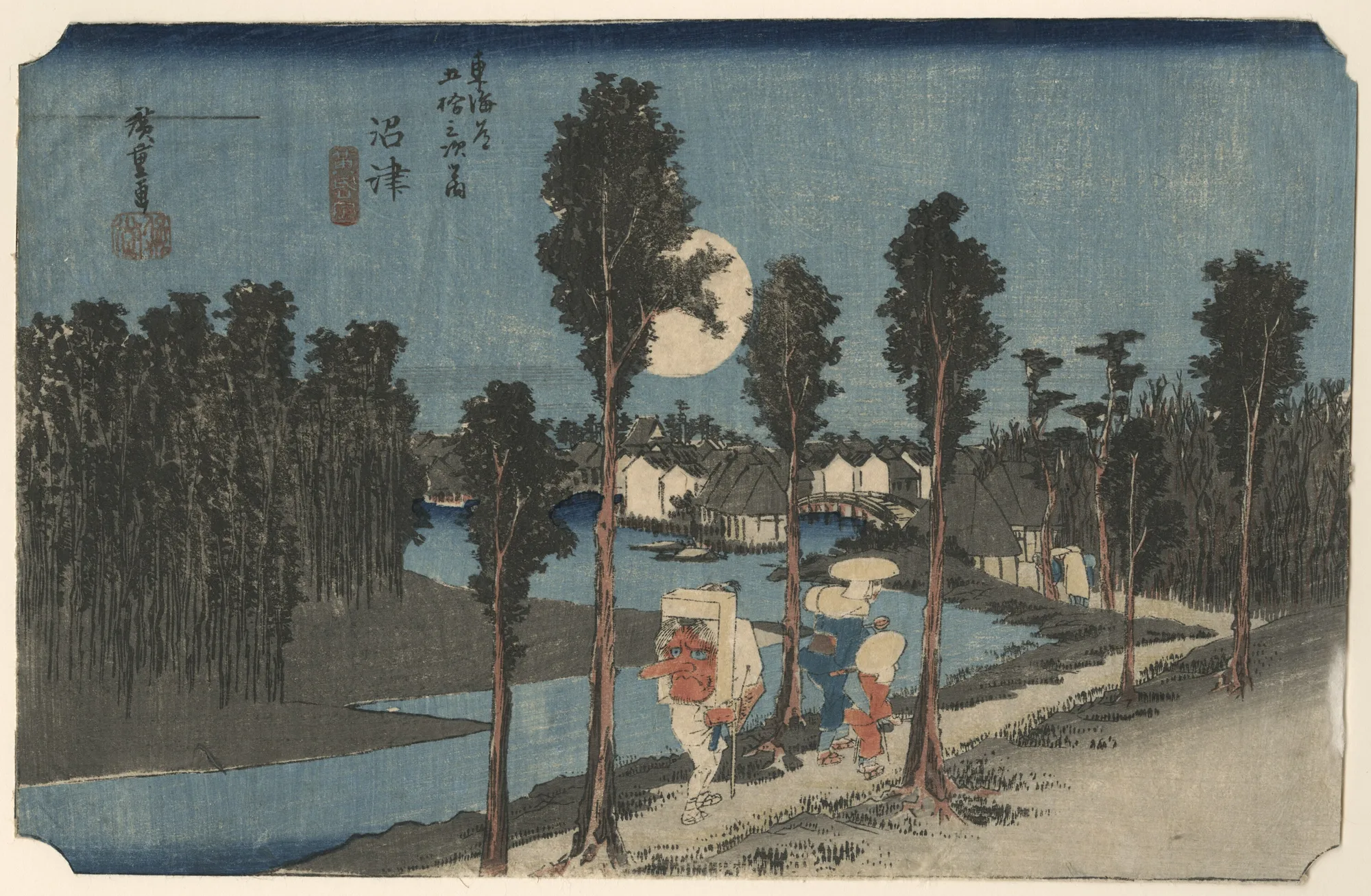
満月の夕暮れ、天狗が歩いてる!?その正体は神さまへのおそなえ。A goblin walking under the full moon!? It is really a pilgrim's offering.
 美術館アンテナ:歌川広重の作品に会える展覧会
この作品のお話
Story夕暮れの青い空に、まんまるの月がのぼっています。川ぞいの道を、旅人たちが宿場へ急ぎます。目をひくのは、赤い顔に長い鼻の大きな天狗のお面を背負った白い着物の男。歌川広重の「東海道五十三次」(保永堂版)の一枚で、江戸から12番目の宿場・沼津(今の静岡県沼津市)を描いています。
A round full moon rises in the blue evening sky. Travelers hurry along a riverside road toward the post town. The most eye-catching figure is a man in white carrying a huge mask of a tengu, a goblin with a red face and a long nose. This is from Utagawa Hiroshige's Fifty-three Stations of the Tōkaidō (Hōeidō edition). It shows Numazu, the 12th post town from Edo.
川は狩野川で、奥に見える橋をわたった先が沼津の宿の入り口です。天狗の面の男は、四国の金毘羅(こんぴら)さんへお参りに行く人と考えられ、お面は神さまにささげる品だとされます。前を行く二人連れは、柄杓(ひしゃく)を持つ尼さんとそのお供だと言われます。広重は、夕暮れの静けさと月の光を、深い青のぼかしで表しました。
The river is the Kano River, and the town entrance is just across the bridge in the distance. The man with the mask is thought to be a pilgrim going to Konpira Shrine in Shikoku, and the mask is said to be an offering to the god there. The two people ahead of him are said to be a traveling nun with a ladle and her companion. Hiroshige showed the quiet evening and the moonlight with soft blue shading.
東海道の旅人は、暗くなる前に宿に入るのが基本でした。この絵には、一日歩き通した人々の「あと少し」という気持ちがにじんでいます。浮世絵は同じ版木から何枚も摺られたので、この図柄も東京国立博物館やボストン美術館など世界中にあります。ここで見ているのは、アメリカのヴァンダービルト大学美術館が持っている一枚です。
Travelers on the Tōkaidō usually tried to reach an inn before dark. This picture shows the feeling of people who have walked all day and are 'almost there.' Many prints were made from the same blocks, so this design is in the Tokyo National Museum, the Museum of Fine Arts, Boston and many other places. The one you see here belongs to the Vanderbilt University Museum of Art in the United States.
これは川ぞいの夕方の道です。空には大きな丸い月があります。男の人が大きな赤いお面を運んでいます。鼻が長いですね!神社へのおくりものとして持っていくのです。
This is an evening road by a river. A big round moon is in the sky. A man carries a big red mask. It has a long nose! He takes it to a shrine as a gift.
英語のレベルは上の「やさしい/ふつう」で切りかえられます。
えっ!?な裏ネタ
Secrets金毘羅宮は山の上にあり、山で修行する山伏たちも多くお参りしました。山伏は天狗と結びつけて考えられたため、天狗の面をそなえる習わしがあったと言われます。このような巡礼者は、大きな面を背負って長い道のりを歩きました。
Konpira Shrine stands on a mountain, and many yamabushi, mountain monks, visited it. Yamabushi were linked with tengu goblins, so people are said to have offered tengu masks there. Pilgrims like him carried large masks on long journeys.
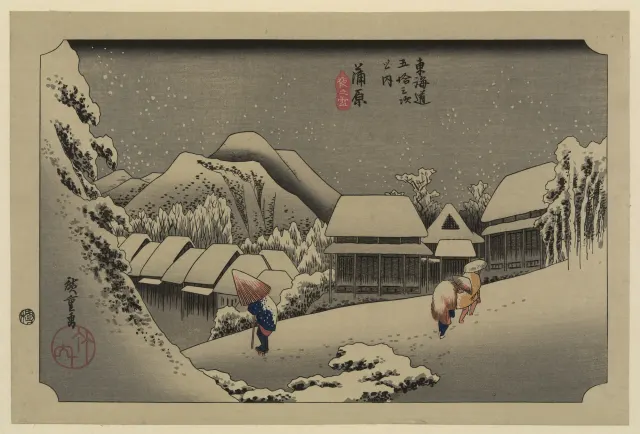
55枚もある保永堂版の東海道シリーズですが、夜空に満月がはっきり描かれているのは、この沼津だけだと言われます。蒲原の雪の夜にも月はありません。シリーズをめくっていくと、この月がぱっと目に飛びこんできます。
The Hōeidō Tōkaidō series has 55 pictures, but this Numazu print is said to be the only one with a clear full moon. Even the snowy night at Kambara has no moon. When you look through the series, this moon really stands out.
江戸時代の旅人は、夜明け前に宿を出て、一日に八〜十里(約30〜40キロ)ほど歩いたと言われます。江戸から京都まで約500キロを、およそ2週間で歩きました。夕方の旅人の足どりが重そうなのも当然ですね。
Travelers in the Edo period usually left their inn before dawn and are said to have walked about eight to ten ri, or 30 to 40 kilometers, a day. They walked the roughly 500 kilometers from Edo to Kyoto in about two weeks. No wonder these evening travelers look tired.
天狗の面の男の前を行く二人のうち、一人は柄杓を手にしています。旅をしながら人々からお金やお米の寄付を受ける尼さん(比丘尼)で、柄杓はその寄付を受けるための道具だったと説明されています。
One of the two people in front of the masked man holds a ladle. She is explained as a traveling nun who received money or rice from people along the road. The ladle was used to collect those gifts.
ここを見て!
Look Closer1満月Full moon
木々のあいだにのぼる満月。夕暮れの青い空に、白く浮かんでいます。
The full moon rises between the trees, floating white in the blue evening sky.
2天狗の面Tengu mask
赤い顔に長い鼻の天狗の面。白い着物の男が背負っています。
A tengu mask with a red face and a long nose, carried on the back of a man in white.
3尼さんとお供A nun and her companion
笠をかぶった二人連れ。柄杓を持つ旅の尼さんだと言われます。
Two travelers in hats. One is said to be a traveling nun carrying a ladle.
4宿場の入り口の橋Bridge to the post town
川の奥にかかる橋。わたった先に沼津の宿があります。
The bridge across the river. The Numazu post town lies just beyond it.
英語で名画を語ろう
Talk about Art in EnglishThe travelers want to reach the inn before dark.
旅人たちは、暗くなる前に宿に着きたいのです。
💡 dark はここでは名詞で「暗やみ、日暮れ」。after dark(日が暮れてから)も覚えましょう。
英語で説明すると… Describe it
これは川辺の夕方の景色です。高い木々のあいだに満月がのぼっています。手前では、白い着物の男が大きな赤いお面を背負い、その前を笠をかぶった二人の旅人が歩いています。奥には橋と小さな町があります。
This is an evening scene by a river. A full moon is rising between tall trees. In the foreground, a man in white is carrying a big red mask, and two travelers in hats are walking ahead of him. In the background, there is a bridge and a small town.
考えてみよう Think & Talk
- 静かな夕暮れの絵に、広重はなぜおもしろいお面を入れたと思いますか?Why do you think Hiroshige put a funny mask in a quiet evening scene?
- この道を夜に歩くとしたら、どんな気持ちになると思いますか?How would you feel walking on this road at night?
この作品の英単語
WordsThe travelers walk home in the twilight.
旅人たちは夕暮れの中を歩いていきます。
The pilgrim carries a big mask on his back.
巡礼者は大きなお面を背負っています。
The mask is an offering to the god.
お面は神さまへのおそなえものです。
They hurry to the inn before dark.
彼らは暗くなる前に宿へ急ぎます。
ミニクイズ
QuizQ. 白い着物の男が背負っているのは?What is the man in white carrying?
金毘羅宮におさめる天狗の面だと考えられています。
It is thought to be a tengu mask to offer at Konpira Shrine.
ウソ?ホント? この絵の時間帯は夕暮れだ。This picture shows the evening.
題名の「黄昏」は夕暮れのこと。月がのぼり、旅人が宿へ急いでいます。
The title word 'tasogare' means twilight. The moon is rising and travelers are hurrying to the inn.
ウソ?ホント? 天狗の面の男は、本物の天狗だ。The man with the mask is a real tengu goblin.
人間の旅人がお面を背負っているだけです。お参りにそなえる品だと考えられています。
He is a human traveler carrying a mask. It is thought to be an offering for a shrine.
 画像の出典とライセンス / Image credit
- PDNumazu- Twilight (Numazu, tasogare zu) - Vanderbilt Fine Arts Gallery - 1972.022.tif(Wikimedia Commons)
ライセンス:Public domain(パブリックドメイン)/作者・撮影者の表記:Utagawa Hiroshige
この作品は、作者の死後長い年月がたち著作権の保護期間が終わった「パブリックドメイン」の作品です。画像は平面の作品を忠実に写したもので、新しい著作権は生じません(Wikimedia Commons の PD-Art の考え方)。 所蔵:ヴァンダービルト大学美術館(画像の摺り)(Vanderbilt University Museum of Art (this impression))。画像は表示のために縮小・WebP 形式に変換しています。
歌川広重のほかの作品