 ワークシート
 ぬりえ
 迷路
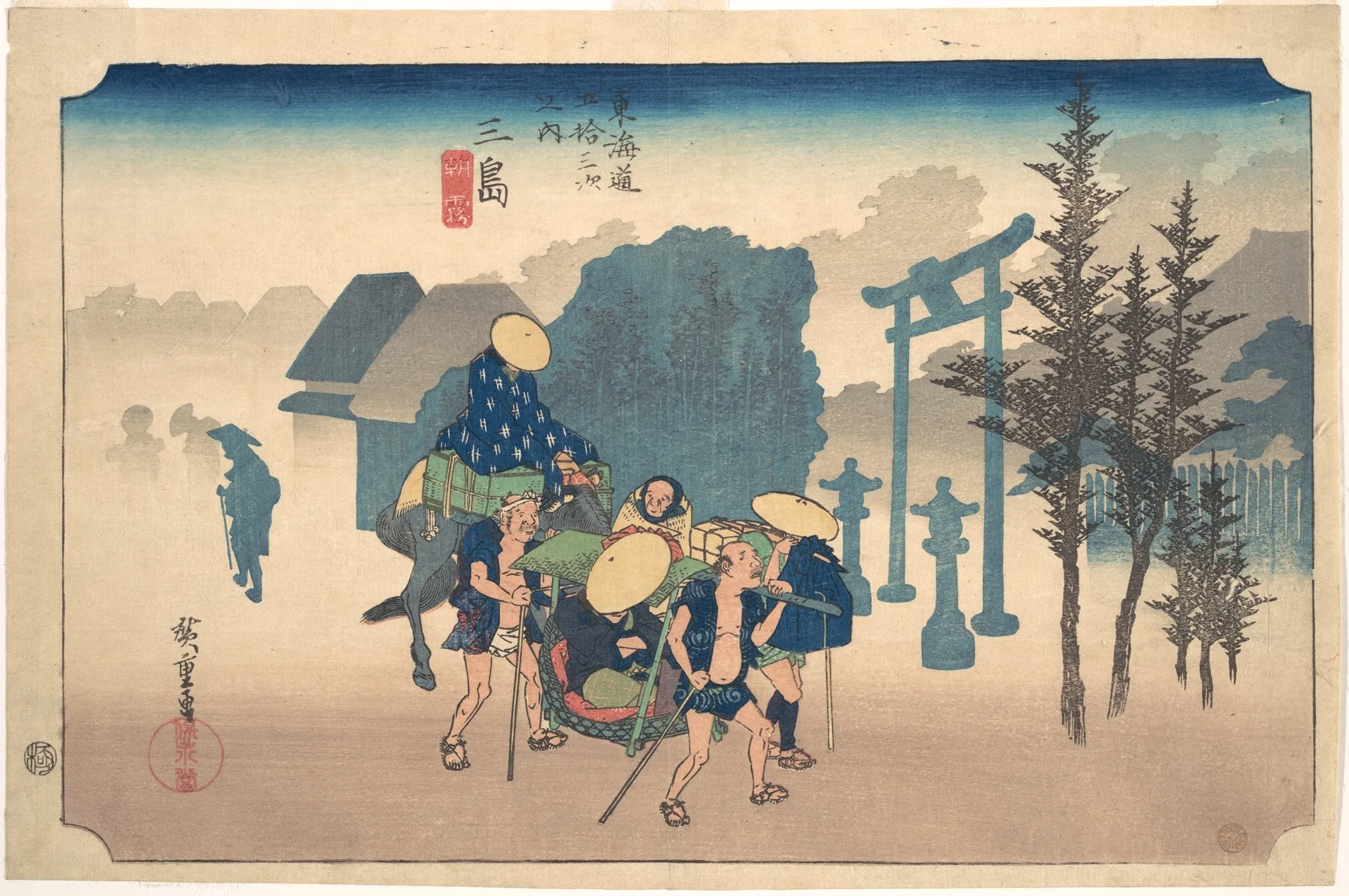
霧の中から旅人がぬっと現れる!背景の線を消して描いた朝の魔法。Travelers step out of the fog! The misty background is printed without outlines.
 美術館アンテナ:歌川広重の作品に会える展覧会
この作品のお話
Storyまだ薄暗い朝、白い霧につつまれた宿場町を、旅人たちが出発していきます。駕籠(かご)をかつぐ二人、馬に乗った旅人、そして右には大きな鳥居。歌川広重の「東海道五十三次」(保永堂版)の一枚で、江戸から11番目の宿場・三島(今の静岡県三島市)を描いています。画像の摺りはメトロポリタン美術館の所蔵です。
Early in the morning, travelers set off from a post town wrapped in white mist. Two men carry a palanquin, another traveler rides a horse, and a large shrine gate stands on the right. This is from Utagawa Hiroshige's Fifty-three Stations of the Tōkaidō (the Hōeidō edition). It shows Mishima, the 11th post town from Edo. This impression is in the Metropolitan Museum of Art.
三島は、けわしい箱根の山のふもとにある宿場です。右の鳥居は、古くから信仰を集めた三嶋大社のもの。広重は、手前の人々だけをくっきり描き、うしろの家や木、人影は輪郭線なしの灰色のシルエットにしました。遠くのものほどぼんやりと淡くすることで、ひんやりとした朝霧の空気を紙の上に生み出したのです。
Mishima is a post town at the foot of the steep Hakone mountains. The gate on the right belongs to Mishima Taisha, a shrine that has been important for centuries. Hiroshige drew only the people in front with clear lines. The houses, trees and figures behind them are gray silhouettes with no outlines. By making faraway things pale and soft, he created the cool air of a misty morning on paper.
保永堂版の東海道シリーズは大ヒットし、広重を風景画の第一人者にしました。雨・雪・霧・月夜など、天気や時間の変化を描き分けたことが人気の理由の一つです。三島の朝霧は、その中でも「空気を描いた」一枚として名高い作品です。浮世絵は同じ版木から何枚も摺られたので、この図柄も世界中の美術館にあります。
The Hōeidō Tōkaidō series became a big hit and made Hiroshige the leading landscape artist of his time. One reason was that he showed many kinds of weather and times of day: rain, snow, mist and moonlit nights. Morning Mist at Mishima is famous as a picture that shows the air itself. Many prints were made from the same blocks, so this design is in museums around the world.
これは朝の町です。霧がたくさん出ています。二人の男が、箱のような乗り物で人を運んでいます。うしろを見てください。家には線がないので、影のように見えます。
This is a town in the morning. There is a lot of fog. Two men carry a person in a box. Look at the back. The houses have no lines, so they look like shadows.
英語のレベルは上の「やさしい/ふつう」で切りかえられます。
えっ!?な裏ネタ
Secrets浮世絵はふつう、墨の輪郭線の版に色をのせて作ります。ところがこの絵の背景は、輪郭線の版を使わず、色の版だけで摺られています。線がないから形がぼやけ、霧の向こうにあるように見えるのです。
Ukiyo-e prints usually have a black outline block, and colors are added to it. But the background of this print uses no outline block, only color blocks. Without lines, the shapes look soft and blurry, as if they are behind the mist.
鳥居の奥の三嶋大社は、伊豆に流されていた源頼朝が、平家に立ち向かう前に祈りをささげたと伝えられる神社です。のちに鎌倉幕府を開いた頼朝の信仰もあって、武士たちに大切にされました。
Mishima Taisha, behind the gate, is said to be the shrine where Minamoto no Yoritomo prayed before he rose up against the Taira clan. Yoritomo later founded the Kamakura shogunate, and warriors respected the shrine for a long time.
三島は「水の都」とも呼ばれます。富士山にふった雨や雪が、長い時間をかけて溶岩の地下をくぐり、町のあちこちで澄んだ湧き水となって出てくるのです。霧の朝の空気がしっとりしているのも、うなずけますね。
Mishima is sometimes called a 'city of water.' Rain and snow that fall on Mount Fuji travel slowly under the old lava, then come up as clear springs all over town. No wonder the morning air here feels so damp and fresh.
「箱根八里」とは、小田原から箱根までの四里と、箱根から三島までの四里を合わせた山道のこと。一里は約4キロなので、約32キロの難所です。三島を朝早く出る旅人は、これから山を登るのかもしれません。
The 'Hakone Eight Ri' was the mountain road made of four ri from Odawara to Hakone and four ri from Hakone to Mishima. One ri is about 4 kilometers, so it was a hard 32-kilometer route. Travelers leaving Mishima early may be about to climb it.
ここを見て!
Look Closer1駕籠と駕籠かきPalanquin and bearers
笠をかぶった客を乗せた駕籠。前と後ろで二人がかつぎ、杖でバランスをとりながら歩きます。
A palanquin carries a passenger in a straw hat. Two men carry it front and back, using sticks to keep their balance.
2馬に乗る旅人Traveler on horseback
荷物をつんだ馬に乗り、背中を丸めて進む旅人。朝の冷えこみが伝わってきます。
A traveler rides a horse loaded with baggage, his back bent. You can feel the morning chill.
3三嶋大社の鳥居Gate of Mishima Taisha
霧にかすむ青い鳥居と石灯籠。三嶋大社の入り口です。
A blue shrine gate and stone lanterns fade into the mist. This is the entrance to Mishima Taisha.
4霧の中の人影Figure in the mist
輪郭線のない灰色の人影。霧の向こうを歩く旅人です。
A gray figure with no outline. It is a traveler walking behind the mist.
英語で名画を語ろう
Talk about Art in EnglishThe travelers emerge from the morning mist.
旅人たちが朝霧の中から現れます。
💡 霧・暗やみ・森などから「姿を現す」ときの表現。come out of よりかたく、絵の説明にぴったりです。
英語で説明すると… Describe it
これは霧の朝の小さな町です。手前では、二人の男が駕籠をかつぎ、旅人が馬に乗っています。右には大きな神社の鳥居があります。うしろの家や木は、霧の中で灰色にぼんやり見えます。
This is a misty morning in a small town. In the foreground, two men are carrying a palanquin, and a traveler is riding a horse. On the right, there is a big shrine gate. The houses and trees in the background look gray and soft in the fog.
考えてみよう Think & Talk
- この絵のどんなところから、朝のひんやりした空気を感じますか?How does the picture make you feel the cold morning air?
- この旅人たちは、今日どこへ向かうのだと思いますか?Where do you think these travelers are going today?
この作品の英単語
WordsThe town is covered in morning mist.
町は朝霧におおわれています。
Two men are carrying a palanquin.
二人の男が駕籠をかついでいます。
The houses in the background have no outlines.
うしろの家には輪郭線がありません。
We can see faint shapes behind the travelers.
旅人たちのうしろに、ぼんやりした形が見えます。
ミニクイズ
QuizQ. この絵で、霧を表すために広重がした工夫は?What did Hiroshige do to show the mist?
背景は輪郭線の版を使わず、色の版だけで摺っています。だから形がぼやけて見えます。
The background has no outline block, only color blocks, so the shapes look blurry.
ウソ?ホント? 三島は、箱根の山のふもとにある宿場町だった。Mishima was a post town at the foot of the Hakone mountains.
三島から箱根の峠までは四里(約16キロ)の山道でした。
From Mishima to the Hakone pass was a mountain road of four ri, about 16 kilometers.
ウソ?ホント? 右の鳥居は、京都の伏見稲荷大社のものだ。The gate on the right belongs to Fushimi Inari Shrine in Kyoto.
三島の町にある三嶋大社の鳥居です。
It is the gate of Mishima Taisha, a shrine in Mishima itself.
 画像の出典とライセンス / Image credit
- CC0東海道五十三次 三島 朝霧-Morning Mist at Mishima MET DP122173.jpg(Wikimedia Commons)
ライセンス:CC0(パブリックドメイン提供)/作者・撮影者の表記:Utagawa Hiroshige
この作品は、作者の死後長い年月がたち著作権の保護期間が終わった「パブリックドメイン」の作品です。画像は平面の作品を忠実に写したもので、新しい著作権は生じません(Wikimedia Commons の PD-Art の考え方)。 所蔵:メトロポリタン美術館(画像の摺り)(The Metropolitan Museum of Art (this impression))。画像は表示のために縮小・WebP 形式に変換しています。
歌川広重のほかの作品