 ワークシート
 ぬりえ
 迷路
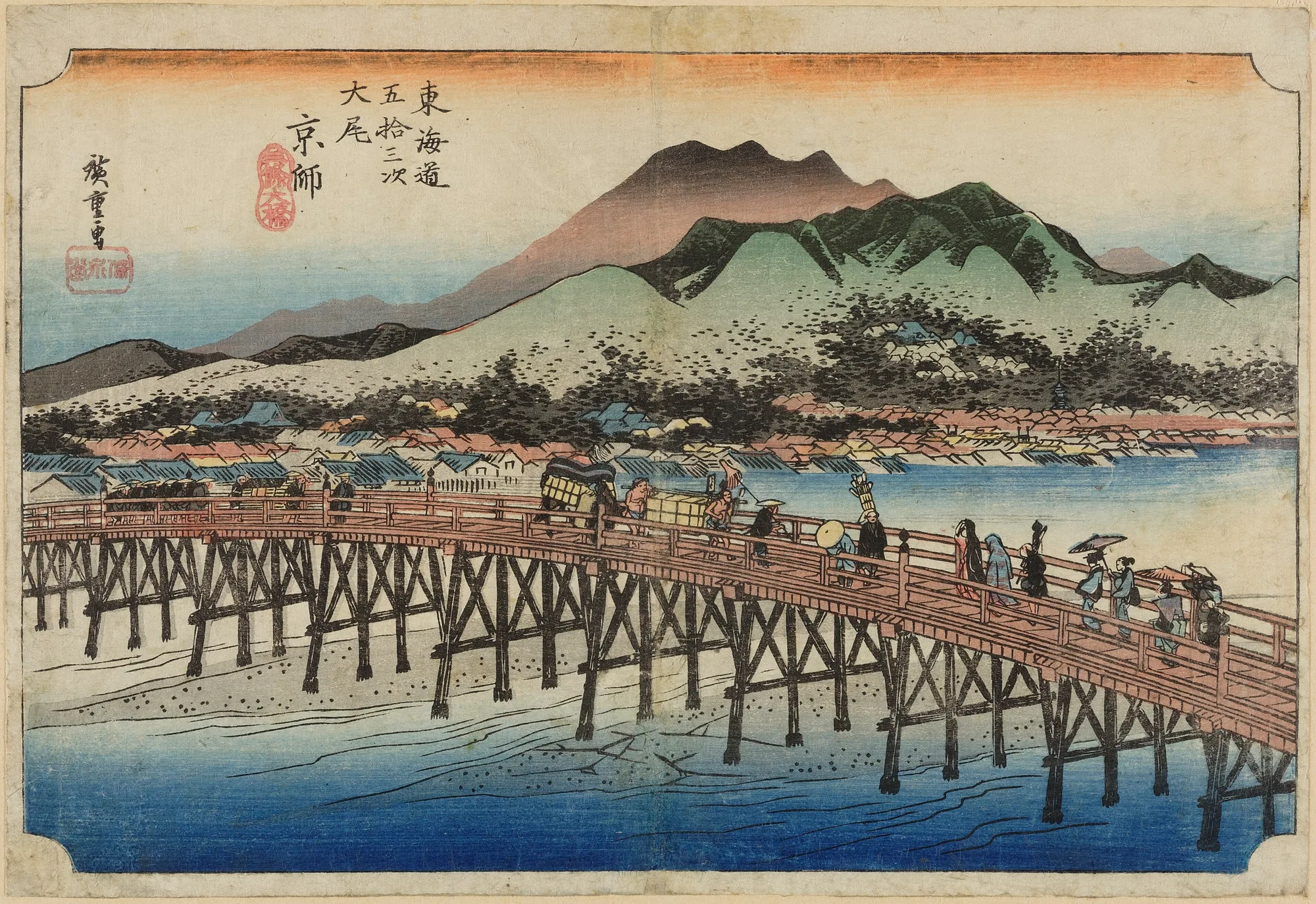
ついにゴール!江戸から約500キロ、旅の終わりは京都の橋の上。The finish line! After about 500 km, the journey ends on a Kyoto bridge.
 美術館アンテナ:歌川広重の作品に会える展覧会
この作品のお話
Story鴨川にかかる長い木の橋を、旅人や荷物を運ぶ人々がわたっていきます。向こう岸には京都の町並み、その奥にはなだらかな東山と、ひときわ高い比叡山。歌川広重の「東海道五十三次」(保永堂版)の最後の一枚で、東海道の終点・京都の三条大橋を描いています。画像の摺りはアメリカのダートマス大学フッド美術館の所蔵です。
People cross a long wooden bridge over the Kamo River, some traveling and some carrying goods. Across the river is the city of Kyoto, and behind it are the gentle Higashiyama hills and tall Mount Hiei. This is the last print of Utagawa Hiroshige's Fifty-three Stations of the Tōkaidō (Hōeidō edition). It shows the Sanjō Bridge in Kyoto, the end of the Tōkaidō. This impression is in the Hood Museum of Art at Dartmouth College.
シリーズは江戸の日本橋から始まり、53の宿場をへて、この三条大橋で終わります。全部で55枚。題名の部分には「東海道五拾三次 大尾 京師」とあり、「京師」は都・京都のこと、「大尾」はシリーズの最後を意味します。広重は、橋を画面の左から右へ大きく弧をえがくように置き、長い旅のゴールにふさわしい、ゆったりとした景色に仕上げました。
The series starts at Nihonbashi in Edo, passes 53 post towns and ends here at the Sanjō Bridge, with 55 prints in all. The title says 'Tōkaidō Gojūsantsugi, Taibi, Keishi.' Keishi means the capital, Kyoto, and taibi means the very end of the series. Hiroshige placed the bridge in a long curve from left to right, making a calm scene that suits the goal of a long journey.
三条大橋は、今も東海道の終点として知られています。今の橋は1950年にかけかえられたものですが、木の手すりや、手すりの柱の上の擬宝珠(ぎぼし)など、昔の姿をしのばせる形が残されています。浮世絵は同じ版木から何枚も摺られたので、この図柄も世界中の美術館にあります。
The Sanjō Bridge is still known as the end of the Tōkaidō. Today's bridge was rebuilt in 1950, but it keeps old features such as wooden railings and giboshi, the onion-shaped tops on the railing posts. Many prints were made from the same blocks, so this design is in museums all over the world.
これは京都の大きな橋です。たくさんの人が歩いています。ここが長い旅のゴールです。旅は遠くの江戸から始まりました。題名には「おしまい」と書いてあります!
This is a big bridge in Kyoto. Many people walk on it. It is the end of a long trip. The trip started in Edo, far away. The title says 'The End'!
英語のレベルは上の「やさしい/ふつう」で切りかえられます。
えっ!?な裏ネタ
Secrets題名の札に書かれた「大尾(たいび)」は、物事の最後、おしまいという意味です。ほかの宿場の絵には「之内」とありますが、この一枚だけは「大尾」。55枚のシリーズをしめくくる、特別な札なのです。
The word 'taibi' on the title label means 'the very end.' The other prints say 'no uchi,' meaning 'one of,' but this one says 'taibi.' It is a special label that closes the 55-print series.
三条大橋は1590年、豊臣秀吉の命令で、石の柱を使った橋にかけかえられたと言われます。今の橋にも、そのころの石の柱や擬宝珠の一部が使われていると言われ、擬宝珠には天正の年号がきざまれています。
In 1590, the Sanjō Bridge is said to have been rebuilt with stone pillars on the orders of Toyotomi Hideyoshi. Some stone parts and giboshi from that time are said to be used in today's bridge, and the giboshi carry dates from that era.
橋の向こうに連なるなだらかな東山を、江戸時代の俳人・服部嵐雪は「ふとん着て寝たる姿や東山」とよみました。広重の絵の山並みも、まさに横になって眠る人のように、ゆったりとした形をしています。
The Edo-period haiku poet Hattori Ransetsu said the gentle Higashiyama hills look like a person sleeping under a futon. In Hiroshige's print, the hills also have that soft, lying-down shape.
三条大橋の擬宝珠には、刀で切りつけたようなきずがあります。1864年、近くの旅館「池田屋」で新選組が浪士たちと戦った「池田屋事件」のときについたものだという言い伝えがあり、今も見に来る人がいます。
One of the giboshi on the bridge has marks that look like sword cuts. A legend says they were made in 1864, during the Ikedaya Incident, when the Shinsengumi fought at a nearby inn. People still come to see the marks.
ここを見て!
Look Closer1「大尾」の題名Title saying 'Taibi'
「東海道五拾三次 大尾 京師」と書かれた題名の札。赤い印には「三条大橋」とあります。
The title label says 'Tōkaidō Gojūsantsugi, Taibi, Keishi.' The red seal reads 'Sanjō Ōhashi.'
2比叡山Mount Hiei
町の奥にそびえる高い山。京都の北東にある比叡山です。
The tall mountain behind the city is Mount Hiei, northeast of Kyoto.
3橋をわたる人々People crossing the bridge
日がさや笠をかぶり、橋をわたる人々。旅の終わりのにぎわいです。
People with parasols and hats cross the bridge. It is the busy end of the journey.
4橋をささえる柱Bridge supports
川の中に並ぶ橋脚と、ななめに組んだ材木。長い橋を支えています。
Rows of posts and crossed beams in the river hold up the long bridge.
英語で名画を語ろう
Talk about Art in EnglishThe travelers finally arrive at the Sanjō Bridge in Kyoto.
旅人たちはついに京都の三条大橋に到着します。
💡 せまい地点には arrive at、都市や国など広い場所には arrive in を使うのが基本です。
英語で説明すると… Describe it
これは川にかかる長い木の橋です。たくさんの人がわたっています。橋のうしろには、屋根がたくさん並ぶ町があります。奥には緑の山々と、高い茶色の山が一つあります。
This is a long wooden bridge over a river. Many people are walking across it. Behind the bridge, there is a city with many roofs. In the background, there are green mountains and one tall brown mountain.
考えてみよう Think & Talk
- 長い旅の終わりに、旅人たちはどんな気持ちだと思いますか?How do you think the travelers feel at the end of their long journey?
- 自分の町の絵のシリーズを作るなら、最後の一枚は何にしますか?If you made a picture series about your town, what would the last picture be?
この作品の英単語
WordsMany people are crossing the bridge.
たくさんの人が橋をわたっています。
The long journey ends in Kyoto.
長い旅は京都で終わります。
Kyoto was the old capital of Japan.
京都は日本の昔の都でした。
This is the final print of the series.
これはシリーズの最後の一枚です。
ミニクイズ
QuizQ. 保永堂版「東海道五十三次」は全部で何枚?How many prints are in the Hōeidō Fifty-three Stations series?
53の宿場に、出発の日本橋と到着の京都を加えて55枚です。
53 post towns plus the start at Nihonbashi and the goal in Kyoto make 55.
ウソ?ホント? この絵は、保永堂版東海道シリーズの最後の一枚だ。This is the last print of the Hōeidō Tōkaidō series.
題名にシリーズの最後を表す「大尾」とあります。
The title includes 'taibi,' which means the end of the series.
ウソ?ホント? 三条大橋がかかっているのは、大阪の淀川だ。The Sanjō Bridge crosses the Yodo River in Osaka.
三条大橋は、京都の鴨川にかかる橋です。
The Sanjō Bridge crosses the Kamo River in Kyoto.
 画像の出典とライセンス / Image credit
- PDThe Great Sanjo Bridge in Kyoto (Keishi Sanjo Ohashi), Station 55, from the series Fifty-Three Stations of the Tokaido Road (Tokaido Gojusantsugi no Uchi), Utagawa Hiroshige, 1832-1834 - PR.972.63.55.tif(Wikimedia Commons)
ライセンス:Public domain(パブリックドメイン)/作者・撮影者の表記:Utagawa Hiroshige
この作品は、作者の死後長い年月がたち著作権の保護期間が終わった「パブリックドメイン」の作品です。画像は平面の作品を忠実に写したもので、新しい著作権は生じません(Wikimedia Commons の PD-Art の考え方)。 所蔵:ダートマス大学フッド美術館(画像の摺り)(Hood Museum of Art, Dartmouth College (this impression))。画像は表示のために縮小・WebP 形式に変換しています。
歌川広重のほかの作品