 ワークシート
 ぬりえ
 迷路
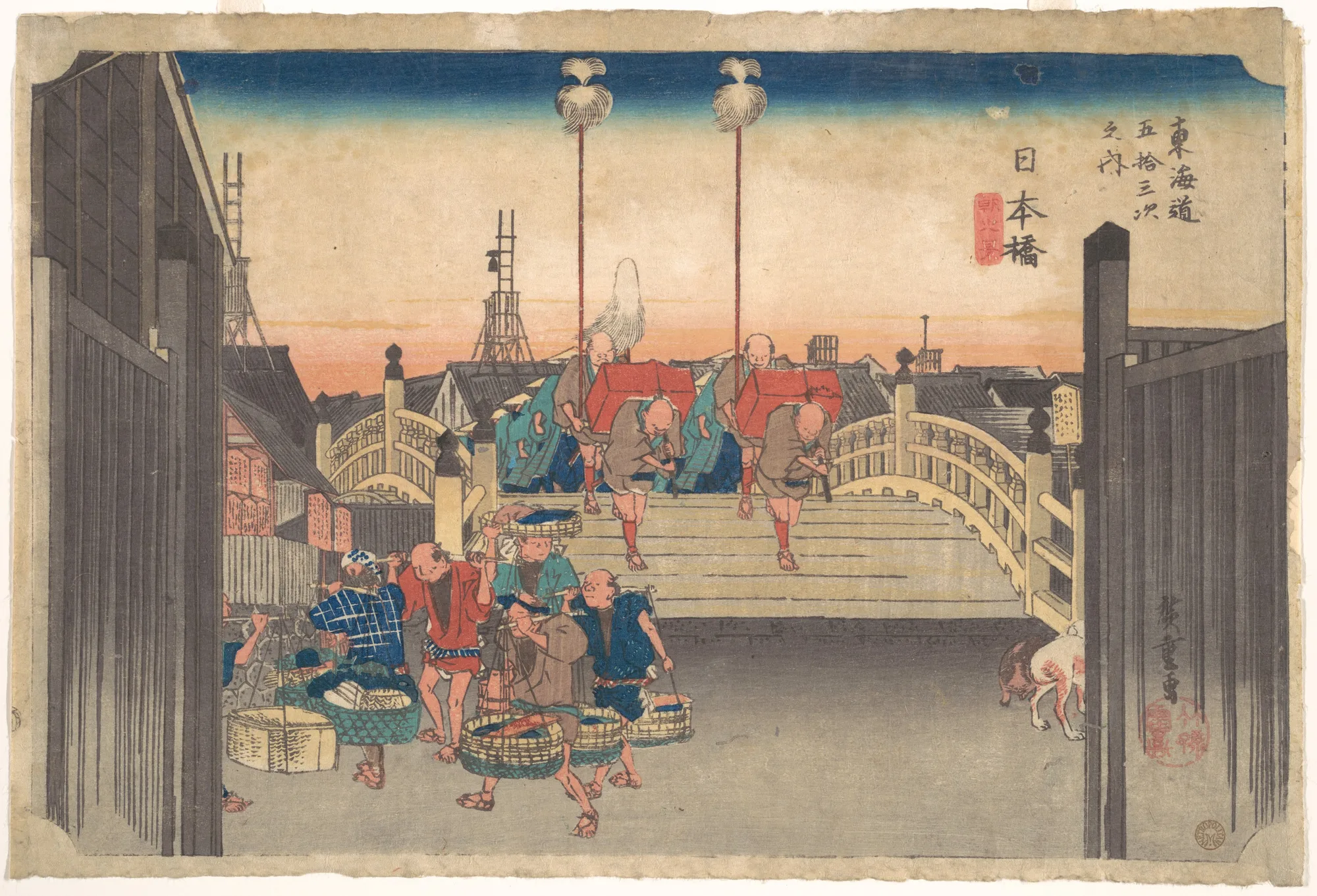
旅はここからスタート!朝焼けの日本橋を、大名行列がわたってくる。The journey starts here! A lord's procession crosses Nihonbashi at dawn.
 美術館アンテナ:この作品に会える展覧会
この作品のお話
Story歌川広重の「東海道五拾三次」(版元の名から「保永堂版」と呼ばれます)の1枚目です。江戸から京都へ向かう東海道の出発点・日本橋の朝。朝焼けの空の下、木戸が開き、毛槍(けやり)をかかげた大名行列が橋をわたってきます。手前では、魚を仕入れた魚売りたちが行き来しています。画像の摺りはメトロポリタン美術館の所蔵です。
This is the first print in Utagawa Hiroshige's Fifty-three Stations of the Tōkaidō. It is called the Hōeidō edition, after the publisher. Nihonbashi Bridge was the starting point of the Tōkaidō road from Edo to Kyoto. In the morning glow, the wooden gates open. A lord's procession with feathered spears comes across the bridge. In front, fish sellers carry their baskets. This impression is in The Metropolitan Museum of Art.
このシリーズは、江戸の日本橋から京都の三条大橋まで、53の宿場に出発と到着を加えた全55図。1833年ごろ、保永堂(竹内孫八)と僊鶴堂(鶴屋喜右衛門)の共同出版で始まり、のちに保永堂の単独出版となりました。広重は旅の途中の天気や時間、人々のくらしを生き生きと描き、大ヒットとなりました。広重は1832年に幕府の行列について京都まで旅したと言われますが、これには疑問もあります。
The series has 55 prints: the 53 post towns plus the start in Edo and the end in Kyoto. Around 1833, it was first published jointly by Hōeidō (Takenouchi Magohachi) and Senkakudō (Tsuruya Kiemon). Later, Hōeidō published it alone. Hiroshige showed the weather, the time of day and the lives of people on the road. The series became a huge hit. It is said that Hiroshige traveled to Kyoto with an official procession in 1832, but some experts doubt this.
日本橋は江戸時代、全国へのびる五街道の出発点でした。今の石造りの橋は1911年にできたもので、橋の真ん中には「日本国道路元標」があります。今も、国道1号・4号・6号など7本の国道が日本橋を起点にしています。1960年代に橋の上を首都高速道路がおおいましたが、今は高速道路を地下に移す工事が進められています。
In the Edo period, Nihonbashi was the starting point of the five main roads of Japan. Today's stone bridge was built in 1911. In the middle of the bridge is Japan's Road Origin Marker. Seven national routes, including Routes 1, 4 and 6, still start at Nihonbashi. In the 1960s, an expressway was built right above the bridge. Now work is going on to move the expressway underground.
これは江戸の日本橋です。朝早い時間です。男たちの長い列が橋をわたっています。背の高い槍や赤い箱を運んでいます。手前では、男たちが魚を運んでいます。東海道の長い旅は、ここから始まりました。
This is Nihonbashi Bridge in Edo. It is early morning. A long line of men is crossing the bridge. They carry tall spears and red boxes. In front, men are carrying fish. Long trips on the Tōkaidō road started here.
英語のレベルは上の「やさしい/ふつう」で切りかえられます。
えっ!?な裏ネタ
Secrets広重は、江戸の火消し(定火消同心)の家に生まれ、若くして家の仕事を継ぎました。武士の消防士として働きながら、絵の道にも進んだのです。のちに火消しの役目は親類にゆずり、絵に専念するようになりました。
Hiroshige was born into a family of official firefighters in Edo. He took over the family job when he was young. He worked as a samurai firefighter while studying painting. Later he passed the job to a relative and focused on art.
手前の魚売りたちは、日本橋のたもとにあった魚河岸(うおがし)で魚を仕入れた人たち。この魚市場は、関東大震災のあと築地へ移りました。魚河岸は「江戸の台所」とも呼ばれ、毎朝たくさんの魚が運びこまれました。
The fish sellers in front bought their fish at the market by Nihonbashi. That fish market moved to Tsukiji after the Great Kantō Earthquake of 1923. The market was called Edo's kitchen, and lots of fish came in every morning.
日本橋の真ん中には「日本国道路元標」がうめこまれ、今も国道1号・4号・6号・14号・15号・17号・20号の7本が、ここを起点にしています。江戸時代から今まで、日本橋は「道のスタート地点」です。本物の元標は道路の真ん中にあるため、橋のたもとには複製が置かれています。
In the middle of the bridge is Japan's 'Road Origin Marker'. Seven national routes—1, 4, 6, 14, 15, 17 and 20—officially start here. From Edo times until now, Nihonbashi has been the starting point of Japan's roads. The real marker is in the middle of the road, so a copy stands by the bridge.
1964年の東京オリンピックの前、日本橋の上に首都高速道路がつくられ、橋から空が見えなくなりました。今、その高速道路を地下に移し、空を取りもどす大工事が進んでいます。
Before the 1964 Tokyo Olympics, an expressway was built over Nihonbashi, and the bridge lost its view of the sky. Now a big project is moving the expressway underground to bring the sky back.
ここを見て!
Look Closer1大名行列Lord's procession
赤い挟箱(はさみばこ)をかついだ家来たちが、橋をわたってきます。
Servants carrying red boxes walk across the bridge.
2毛槍Feathered spears
空に高くかかげられた2本の毛槍。行列の先頭のしるしです。
Two spears with feather tops are held high. They lead the procession.
3魚売りたちFish sellers
天びん棒で魚のおけをかつぐ人々。朝の魚河岸から出てきたところです。
Men carry fish tubs on poles. They have just come from the morning fish market.
42匹の犬Two dogs
右下には犬が2匹。広重の絵には、犬がよく登場します。
Two dogs at the lower right. Dogs often appear in Hiroshige's prints.
英語で名画を語ろう
Talk about Art in EnglishNihonbashi was the starting point of the Tōkaidō road.
日本橋は東海道の出発点でした。
💡 地名や旅の説明に便利。the starting point of +道・旅 の形で使います。
英語で説明すると… Describe it
これは朝の橋の絵です。真ん中では、行列が橋をわたっています。手前では、男たちが魚をかごに入れて運んでいます。右には2匹の犬がいます。空は赤と青です。
This is a picture of a bridge in the morning. In the middle, a procession is crossing the bridge. In the foreground, men are carrying fish in baskets. On the right, there are two dogs. The sky is red and blue.
考えてみよう Think & Talk
- 長い旅に出るなら、どこから出発したいですか?それはなぜ?Where would you like to start a long journey? Why?
- 魚売りたちは、大名行列をどう思っていると思いますか?How do you think the fish sellers feel about the procession?
この作品の英単語
WordsA lord's procession crosses the bridge.
大名行列が橋をわたる。
People cross Nihonbashi early in the morning.
人々が朝早く日本橋をわたる。
There were 53 post towns on the Tōkaidō.
東海道には53の宿場があった。
The sky is red at dawn.
夜明けの空は赤い。
ミニクイズ
QuizQ. 保永堂版「東海道五十三次」は全部で何図?How many prints are in Hiroshige's Hōeidō Tōkaidō series?
53の宿場に、出発の日本橋と到着の京都を加えた55図です。
53 post towns plus the start at Nihonbashi and the end in Kyoto make 55.
ウソ?ホント? 日本橋は東海道の出発点だった。Nihonbashi was the starting point of the Tōkaidō.
東海道をふくむ五街道の起点でした。
It was the starting point of the five main roads, including the Tōkaidō.
ウソ?ホント? この絵の行列は、京都から江戸に到着したところだ。The procession in this print has just arrived in Edo from Kyoto.
朝、日本橋から旅に出発する場面と考えられています。
It is thought to show the start of a journey from Nihonbashi in the morning.
 画像の出典とライセンス / Image credit
- CC0東海道五十三次之内 日本橋 朝之景-Stations One- Morning View of Nihonbashi MET DP122174.jpg(Wikimedia Commons)
ライセンス:CC0(パブリックドメイン提供)/作者・撮影者の表記:Utagawa Hiroshige/提供元:This file was donated to Wikimedia Commons as part of a project by the Metropolitan Museum of Art. See the Image and Data Resources Open Access Policy
この作品は、作者の死後長い年月がたち著作権の保護期間が終わった「パブリックドメイン」の作品です。画像は平面の作品を忠実に写したもので、新しい著作権は生じません(Wikimedia Commons の PD-Art の考え方)。 所蔵:メトロポリタン美術館(The Metropolitan Museum of Art)。画像は表示のために縮小・WebP 形式に変換しています。
歌川広重のほかの作品